
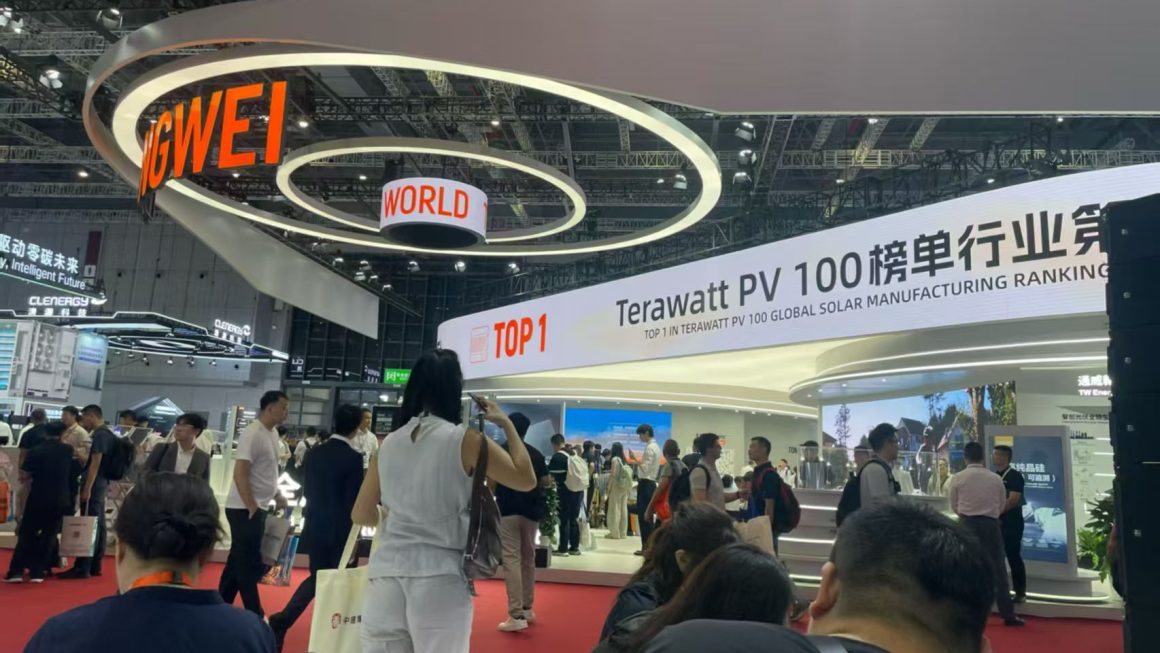
After attending SNEC 2026, I did not leave with a single revolutionary product in mind. Instead, I came away with a much clearer understanding of where the renewable energy industry is heading.
My original goal was to explore flexible photovoltaics, thin-film technologies, and emerging materials. However, the most valuable takeaway was observing how the market is shifting from individual products toward complete energy solutions.
1. Energy Storage Has Become the Main Attraction
Compared with previous years, energy storage clearly dominated this year’s exhibition.
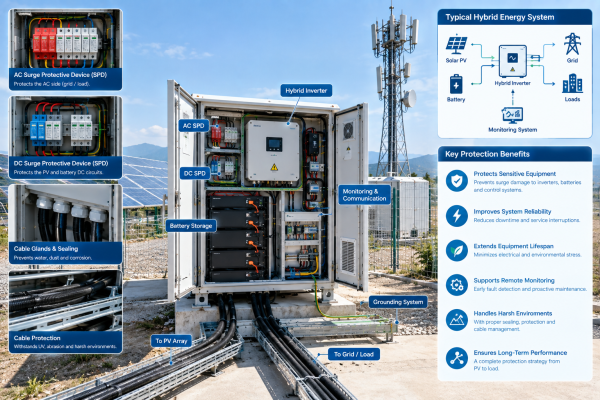
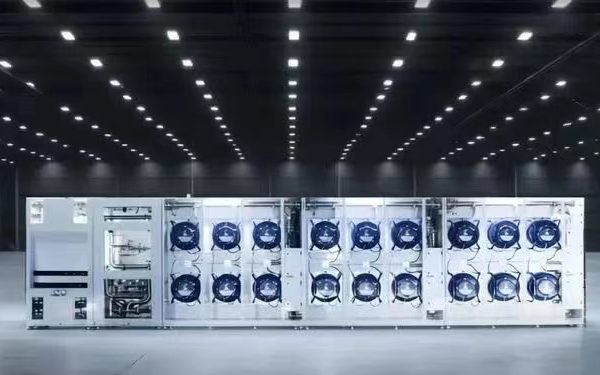
Storage-related booths attracted significantly more visitors than traditional PV module displays. From residential storage systems to utility-scale battery containers, energy management platforms, PCS suppliers, and integrated ESS solutions, the storage sector occupied a much larger presence across the exhibition halls.
The industry’s focus is no longer only about generating electricity.
Today, the discussion has shifted toward:
- How to store energy
- How to manage energy
- How to optimize energy usage
This transition reflects the growing maturity of the solar industry and the increasing importance of system integration.
2. Perovskite Remains Promising but Not Yet Mainstream
Perovskite technology received considerable attention and several companies showcased their latest developments.
However, from a market perspective, crystalline silicon remains the dominant technology.
Most customers are still prioritizing:
- Reliability
- Bankability
- Long-term durability
- Proven field performance
While perovskite continues to show impressive laboratory results, it has not yet become the primary driver of commercial module demand.
At least for now, silicon remains the industry’s most trusted solution.
3. Flexible Modules Were Not the Focus — Steel Frame Modules Were
Before attending the exhibition, I expected to see more activity around:
- OPV
- CIGS
- Flexible thin-film photovoltaics
In reality, these technologies occupied only a small portion of the exhibition.
What attracted significantly more attention was the emergence of steel-frame photovoltaic modules.
Several manufacturers showcased large-format, high-power modules using steel frames as an alternative to traditional aluminum frames. Companies such as Caesar New Energy highlighted solutions designed to:
- Reduce material costs
- Improve structural strength
- Support larger module formats
- Enhance resistance to dust accumulation
- Reduce hotspot risks in challenging environments
This trend reflects an important industry shift.
While much attention is often given to breakthrough technologies, many manufacturers are currently focused on practical innovations that improve cost competitiveness, reliability, and large-scale deployment.
From a commercial perspective, steel-frame modules appear to be gaining more immediate traction than many emerging photovoltaic technologies.
4. PCS Is Becoming a Core Competitive Advantage
One of the most interesting conversations during the exhibition was about PCS (Power Conversion Systems).
In the past, discussions around energy storage often centered on battery cells.
Today, many industry professionals believe that future competition will increasingly depend on:
- PCS performance
- Energy management systems
- Thermal management
- Grid interaction capabilities
As storage projects continue to grow in scale, the importance of intelligent power conversion and system control is becoming more evident.
5. AI Is Entering Energy Management
A phrase I heard repeatedly during the exhibition was:
“Large-scale storage systems are beginning to grow an AI brain.”
This is an interesting way to describe the industry’s direction.
Artificial intelligence is not changing battery chemistry.
Instead, it is being integrated into:
- Energy management systems (EMS)
- Predictive maintenance
- Fault diagnosis
- Load forecasting
- Dispatch optimization
In the future, software intelligence may become as important as hardware performance.
6. Advanced Materials Continue to Find New Applications
Another interesting development was the increasing discussion around graphene in optoelectronic and photovoltaic applications.
Historically, graphene has been associated with:
- Thermal management
- Conductive additives
- Corrosion protection
Today, it is beginning to appear in conversations related to:
- Photovoltaics
- Perovskite solar cells
- Flexible electronics
- Advanced optoelectronic devices
Although large-scale commercialization is still developing, this is a trend worth monitoring closely.
7. The Industry Is Moving from Products to Solutions
Perhaps the most important observation from SNEC 2026 is that the industry is gradually moving beyond individual products.
Customers are increasingly asking for:
- Microgrids
- Off-grid systems
- Integrated energy storage
- Energy management platforms
- Complete application solutions
The discussion is no longer focused solely on batteries, modules, or materials.
The focus is shifting toward solving real-world energy challenges.
Final Thoughts
SNEC 2026 did not reveal a single game-changing technology that will transform the industry overnight.
Instead, it reinforced several important realities:
- Energy storage is becoming the center of the renewable energy ecosystem.
- System integration is creating more value than individual components.
- AI is entering energy management.
- Advanced materials such as graphene continue to expand into new applications.
- Practical innovations often create more immediate impact than headline technologies.
For professionals working across energy storage, advanced materials, and renewable energy systems, understanding these trends may be far more valuable than simply tracking the latest product specifications.