
The Shift Toward Distributed Energy Storage
Energy storage systems are evolving from large centralized installations toward more flexible and distributed architectures.
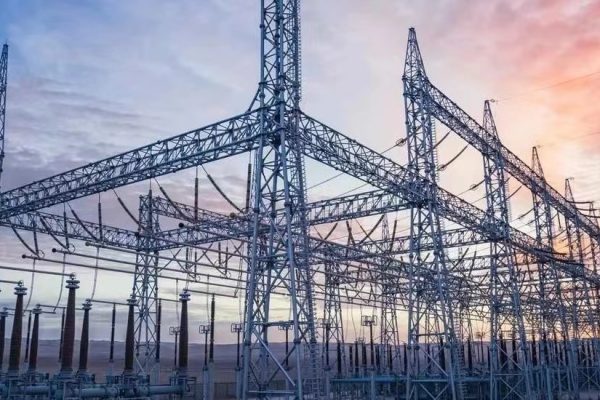
Traditional utility-scale energy storage often relies on a single large battery system located at one central site.
While centralized systems provide significant capacity, they may face challenges related to:
- Grid connection limitations
- Transmission losses
- Long-distance power management
- Complex expansion requirements
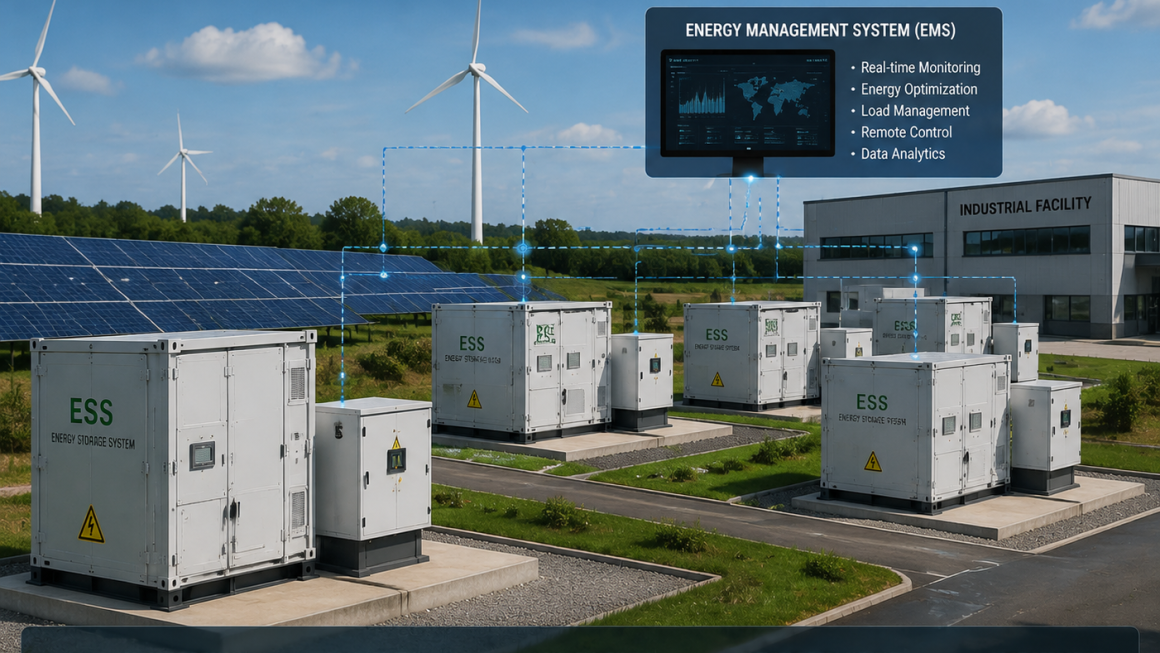
Distributed Energy Storage Systems (DESS) provide an alternative approach by placing multiple smaller storage units closer to energy generation sources and electricity consumers.
This approach improves energy flexibility, scalability, and resilience.
What Is a Distributed Energy Storage System?
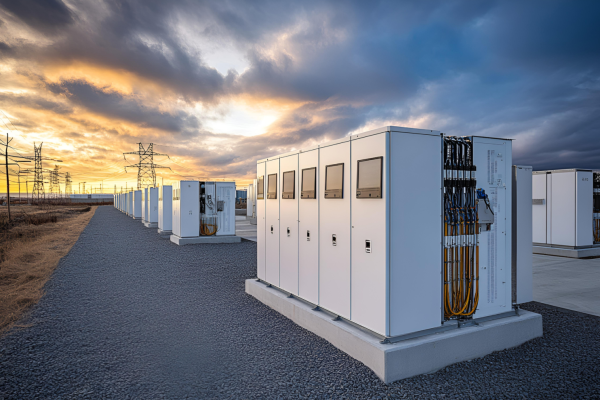
A Distributed Energy Storage System consists of multiple energy storage units deployed across different locations while operating together as part of an integrated energy network.
A distributed architecture may include:
- Battery storage cabinets
- Modular ESS containers
- Local power conversion systems
- Energy management platforms
- Renewable energy sources
- Industrial loads
Instead of relying on one large storage facility, energy capacity is distributed across multiple nodes.
Centralized vs. Distributed Energy Storage
Centralized Energy Storage
A centralized system typically includes:
- Large battery containers
- A single grid connection point
- Centralized control
Advantages:
- High capacity
- Simplified operation
- Efficient large-scale management
Challenges:
- Single-site dependency
- Higher transmission requirements
- More complex expansion
Distributed Energy Storage
Distributed systems use multiple smaller storage units.
Advantages:
- Flexible deployment
- Easier expansion
- Improved local energy utilization
- Better resilience
Challenges:
- More complex coordination
- Requires advanced energy management systems
Why Modular Architecture Is Becoming Important
Modular design is one of the key trends driving modern ESS development.
A modular energy storage system separates the complete system into standardized building blocks.
These modules may include:
- Battery modules
- Power modules
- Cooling modules
- Control modules
- Protection modules
This approach improves flexibility throughout the entire project lifecycle.
Benefits of Modular Energy Storage Architecture
1. Scalable Capacity Expansion
Energy requirements often change over time.
Modular ESS allows operators to expand capacity by adding additional units instead of replacing the entire system.
For example:
Initial installation:
→ 1 MWh system
Future expansion:
→ Add additional battery modules or containers
This reduces upfront investment risk.
2. Faster Installation
Pre-engineered modular systems can be manufactured, tested, and delivered as standardized units.
Benefits include:
- Reduced construction time
- Simplified installation
- Lower commissioning complexity
3. Improved Maintenance Flexibility
Modular systems allow individual units to be serviced without shutting down the entire energy storage facility.
Advantages include:
- Reduced downtime
- Easier troubleshooting
- Simplified replacement
4. Better Adaptation to Different Applications
Different users have different energy requirements.
Modular systems can be configured for:
- Industrial facilities
- Commercial buildings
- Renewable energy plants
- Remote microgrids
Distributed Energy Storage Applications
Industrial Parks
Industrial parks often have complex electricity demand patterns.
Distributed ESS can support:
- Peak shaving
- Load balancing
- Renewable energy integration
- Power quality improvement
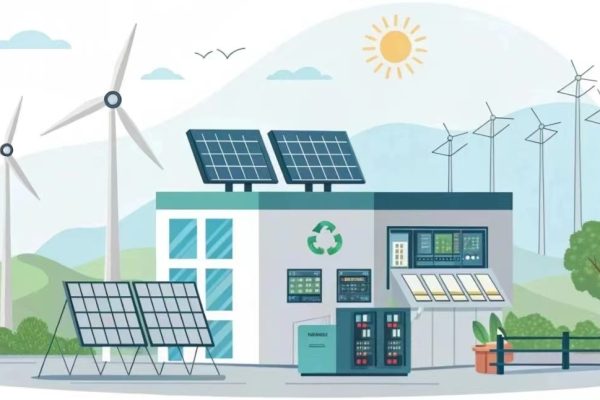
Renewable Energy Projects
Solar and wind generation are naturally variable.
Distributed storage helps:
- Store excess renewable energy
- Reduce curtailment
- Improve renewable utilization
Commercial Buildings
Distributed storage can support:
- Demand management
- Backup power
- Energy cost optimization
Remote Microgrids
Remote areas often require reliable energy supply.
Distributed ESS provides:
- Local energy independence
- Improved reliability
- Reduced fuel dependency
Key Technologies Supporting Modular ESS
Battery Modules
Battery modules provide the basic energy storage building blocks.
Important factors include:
- Energy density
- Cycle life
- Safety performance
- Thermal stability
Modular Power Conversion Systems
PCS units allow flexible energy conversion between:
- Battery DC power
- AC loads
- Grid connection
Modular PCS designs simplify system expansion.
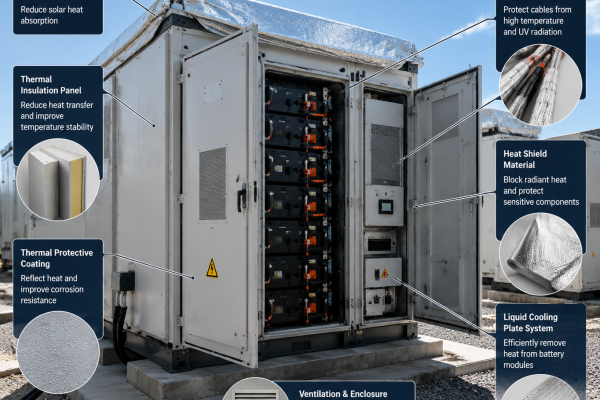
Thermal Management Systems
As storage density increases, thermal control becomes increasingly important.
Modular thermal solutions include:
- Liquid cooling plates
- Cooling manifolds
- Thermal interface materials
- Heat management components
Effective thermal management improves reliability and battery lifespan.
Intelligent Energy Management Systems
Distributed architectures require advanced control.
EMS platforms coordinate:
- Charging schedules
- Discharge strategies
- Renewable generation
- Grid interaction
Smart control enables multiple storage units to operate as one coordinated system.
Design Considerations for Distributed ESS
Location Selection
Distributed storage should be located close to:
- Energy generation
- Industrial loads
- Grid connection points
This reduces energy losses and improves responsiveness.
Environmental Protection
Outdoor distributed systems require protection against:
- Heat
- Humidity
- Dust
- Salt spray
- Corrosion
Important design elements include:
- Battery enclosures
- Protective coatings
- Cable protection systems
- Thermal management solutions
Communication and Control
Multiple storage units require reliable communication networks.
Key requirements include:
- Real-time monitoring
- Remote operation
- Fault detection
- Energy optimization
Future Trends in Modular Energy Storage
The future of ESS architecture is moving toward:
More Intelligent Systems
AI-based energy management will optimize:
- Battery operation
- Electricity cost
- Renewable utilization
More Compact Designs
Advances in:
- Battery chemistry
- Thermal materials
- Structural design
will increase energy density.
More Flexible Deployment
Modular systems will support:
- Fast deployment
- Local energy networks
- Microgrid development
Integration With Smart Grids
Distributed ESS will become an important part of future energy infrastructure by supporting:
- Grid stability
- Renewable integration
- Flexible electricity management
Distributed Energy Storage Systems and modular architectures represent an important trend in the future development of energy infrastructure.
Compared with traditional centralized systems, distributed modular ESS provides greater flexibility, scalability, and resilience.
By combining modular battery systems, intelligent energy management, advanced thermal solutions, and reliable protection technologies, distributed energy storage can support a wider range of industrial, commercial, and renewable energy applications.
As energy systems become more decentralized and renewable generation continues to grow, modular distributed storage will play a critical role in building flexible and resilient energy networks.