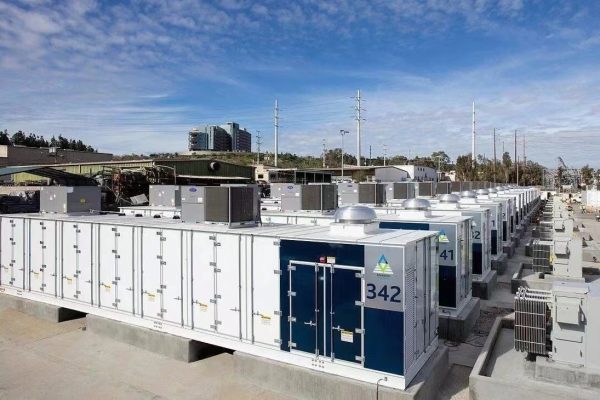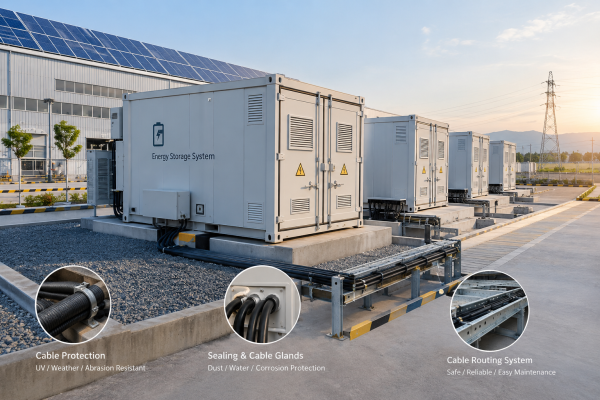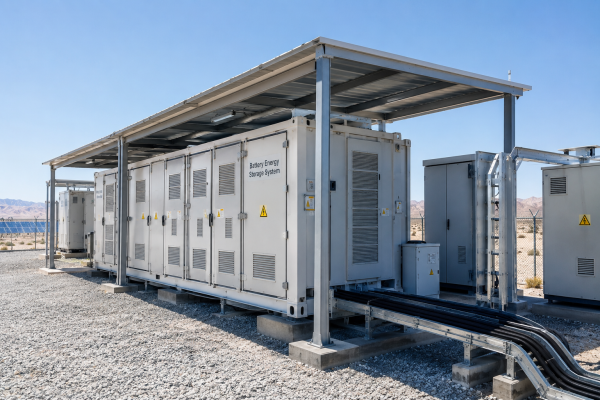

Energy storage systems are often designed to operate outdoors or in semi-outdoor industrial environments.
In these locations, battery containers, electrical enclosures, cables, connectors, cooling systems, and other components may be continuously exposed to environmental stress.
Three factors are particularly important:
Dust, heat, and ultraviolet (UV) radiation.
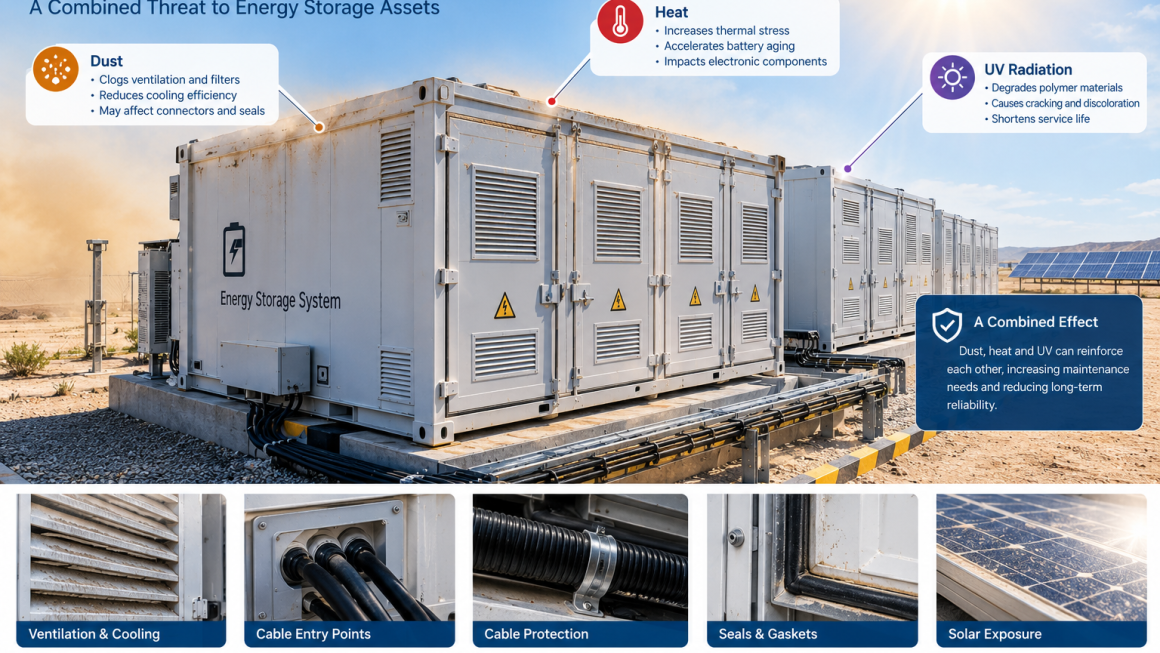
Each factor can create its own maintenance challenge. More importantly, they can interact with one another and gradually increase the stress placed on energy storage assets.
For operators and installers, the key question is therefore not simply:
“Is the equipment weather-resistant?”
It is:
“Can the complete energy storage installation maintain reliable performance when dust, heat, and UV exposure occur continuously over its operating life?”
Why Outdoor Energy Storage Faces Multiple Environmental Risks
An outdoor energy storage installation is exposed to changing environmental conditions every day.
Depending on the location, the equipment may experience:
- High ambient temperatures
- Solar radiation
- UV exposure
- Dust and sand
- Rain and humidity
- Temperature cycling
- Wind
- Mechanical vibration
- Corrosive atmospheres
- Rapid weather changes
These conditions can affect different parts of the system in different ways.
For example:
Dust → affects cooling and ventilation
Heat → increases thermal stress
UV → accelerates material aging
But the three effects can also interact.
A dusty enclosure may have reduced heat dissipation. Higher temperatures can then accelerate the aging of polymers and seals that are already exposed to UV radiation.
This is why environmental protection should be considered as a combined lifecycle issue.
How Dust Affects Energy Storage Systems
Dust is more than a cosmetic problem.
Fine particles can enter or accumulate around:
- Ventilation openings
- Cooling systems
- Cable entry points
- Connectors
- Enclosures
- Electrical cabinets
- Filters
- Fans
- Outdoor equipment surfaces
The impact depends on the equipment design and environmental conditions.
In dry or dusty industrial areas, continuous particle exposure can create additional maintenance requirements.
Dust and Cooling Performance
Thermal management is critical for battery energy storage systems.
Cooling systems may use fans, heat exchangers, air conditioning, or other thermal management technologies depending on the system architecture.
Dust accumulation can reduce the effectiveness of cooling components.
For example:
Dust accumulation → restricted airflow → reduced heat transfer → higher operating temperature
This does not mean that every dusty environment will cause immediate thermal problems.
However, uncontrolled dust accumulation can increase the workload of cooling equipment and make thermal management less efficient.
Regular inspection and appropriate filtration or enclosure design can therefore become important parts of O&M.
Dust Around Electrical Connections
Dust can also accumulate around electrical components.
Potential areas of concern include:
- Cable glands
- Cable entry points
- Connector interfaces
- Junction boxes
- Terminal areas
- Ventilation openings
- Enclosure seams
The actual risk depends on the type of dust, humidity, voltage level, equipment design, and degree of ingress protection.
This is why enclosure sealing and cable-entry protection should be evaluated together with the overall equipment design.
Why Cable Entry Points Matter
An energy storage enclosure may have a robust outer shell, but cable entry points can still represent important interfaces between the protected internal environment and the outside environment.
Cables entering the enclosure may need appropriate:
- Cable glands
- Sealing systems
- Strain relief
- Abrasion protection
- Environmental protection
A poorly managed cable entry can compromise the intended environmental protection of the enclosure.
For outdoor systems, cable protection should therefore be considered part of the enclosure’s overall environmental strategy.
How Heat Affects Energy Storage Assets
High temperature is one of the most important environmental stresses for energy storage equipment.
Battery cells, power electronics, cables, seals, connectors, and other components all have temperature-related operating limits.
High ambient temperatures can increase the thermal load placed on the system.
This can affect:
- Battery aging
- Cooling-system workload
- Electrical component lifetime
- Cable insulation
- Connector materials
- Sealing materials
- Electronic components
The exact effect depends on the battery chemistry, equipment design, operating conditions, and thermal management system.
Heat and Battery Aging
Battery degradation is influenced by multiple factors, including:
- Temperature
- SOC
- Charge/discharge rate
- Cycling frequency
- Calendar aging
High operating temperatures can accelerate certain degradation mechanisms.
This means an energy storage system operating continuously in a hot environment may require more careful thermal management than an identical system installed in a mild climate.
Temperature monitoring should therefore be part of routine energy storage O&M.
Heat Does Not Come Only From the Weather
An important point is that the thermal environment of an energy storage system is determined by more than ambient temperature.
Heat can also be generated internally by:
- Battery cells
- Power conversion equipment
- Electrical resistance
- Fans and cooling equipment
- Charging and discharging
Therefore:
External heat + internal heat generation
determine the actual thermal burden of the system.
A well-designed energy storage installation needs to manage both.
Why Solar Radiation Matters
An outdoor enclosure can be exposed to direct sunlight for many hours each day.
Solar radiation can increase the surface temperature of:
- Battery containers
- Electrical cabinets
- Cable jackets
- Flexible conduits
- Sealing materials
- Protective components
This can create an additional thermal load even when the measured ambient air temperature does not appear extreme.
Equipment layout, shading, ventilation, surface treatment, and thermal management can all influence the resulting temperature.
How UV Radiation Damages Materials
UV radiation is particularly relevant to outdoor polymeric materials.
Long-term UV exposure can contribute to material degradation such as:
- Discoloration
- Embrittlement
- Loss of flexibility
- Surface cracking
- Reduced mechanical strength
- Reduced service life
Potentially affected materials can include:
- Cable jackets
- Flexible conduits
- Protective sleeves
- Seals
- Gaskets
- Plastic connectors
- Outdoor protective components
The rate of degradation depends on the material formulation, UV exposure, temperature, weather conditions, and product design.
UV Exposure and Cable Protection
Energy storage installations can contain large numbers of power and communication cables.
Outdoor cables may be exposed to:
- UV radiation
- Heat
- Rain
- Dust
- Abrasion
- Mechanical movement
Cable protection products therefore need to be selected according to the actual environment.
Depending on the application, installers may consider:
- UV-resistant cable protection
- Abrasion-resistant protection
- Flexible conduit
- Braided protection sleeves
- Self-wrapping protection
- Protective routing systems
The objective is not simply to cover the cable.
It is to maintain mechanical and environmental protection throughout the expected service life.
The Combined Effect of Dust, Heat, and UV
The most important point is that these environmental factors should not always be evaluated separately.
Consider an outdoor energy storage system installed in a hot, dry industrial area.
A simplified chain could look like:
High solar exposure
↓
Higher enclosure and component temperatures
↓
Faster material aging
At the same time:
Dust accumulation
↓
Reduced airflow or increased cooling-system workload
↓
Higher operating temperature
Meanwhile:
UV exposure
↓
Gradual degradation of exposed polymeric materials
↓
Reduced flexibility or mechanical protection
The three effects can therefore reinforce one another.
Why Sealing Becomes Important
Sealing is an important part of environmental protection.
Cable and connector entry points may require appropriate sealing to limit unwanted ingress of:
- Dust
- Water
- Humidity
- Other contaminants
The correct sealing solution depends on the equipment design and required protection level.
Installers should verify that cable glands, gaskets, connectors, and enclosure interfaces are compatible with the intended environmental conditions.
A sealing system should also account for:
- Cable diameter
- Cable movement
- Temperature changes
- Material compatibility
- Installation method
- Maintenance requirements
Environmental Protection Is Also an O&M Issue
A system may be properly installed on day one but gradually become more vulnerable as components age.
For example:
Year 1: Cable protection is intact.
Year 3: UV exposure and temperature cycling have affected exposed materials.
Year 5: A protective sleeve or sealing component may show signs of deterioration.
The exact service life depends on the material and environment, but the principle is important:
Environmental protection requires maintenance, not just initial installation.
What Should Energy Storage Operators Inspect?
A practical environmental inspection can include:
Enclosures
Check for:
- Damage
- Corrosion
- Water ingress
- Dust accumulation
- Degraded seals
Cable Entry Points
Check:
- Cable glands
- Sealing
- Strain relief
- Abrasion
- Movement
Outdoor Cables
Look for:
- Cracking
- Discoloration
- Brittleness
- Mechanical damage
- UV degradation
Cooling Systems
Inspect:
- Filters
- Fans
- Heat exchangers
- Airflow
- Dust accumulation
Protective Components
Check:
- Cable sleeves
- Conduits
- Routing systems
- Mounting points
- Fasteners
Thermal Conditions
Monitor:
- Ambient temperature
- Equipment temperature
- Battery temperature
- Temperature trends
The exact inspection frequency should be determined according to the equipment manufacturer’s requirements and site conditions.
Why Preventive Maintenance Is More Effective Than Reactive Repair
Environmental damage often develops gradually.
A cable jacket may become brittle before it actually fails.
A seal may deteriorate before water ingress becomes visible.
A cooling filter may accumulate dust before equipment temperature rises significantly.
Preventive inspection allows operators to identify these conditions earlier.
Instead of:
Failure → Emergency service → Downtime
the preferred approach is:
Inspection → Early detection → Planned replacement → Continued operation
This can reduce unexpected maintenance events and improve asset availability.
Retrofit Protection for Existing Energy Storage Sites
Environmental protection does not necessarily need to be addressed only during the original installation.
Existing energy storage systems can sometimes be improved through targeted retrofit work.
Potential retrofit measures may include:
- Additional cable protection
- Improved cable routing
- Replacement of degraded cable glands
- Improved sealing
- UV-resistant protective components
- Abrasion protection
- Thermal protection
- Additional shielding
- Cooling-system maintenance
Retrofit decisions should be based on the actual condition of the equipment rather than applying the same solution to every site.
Environmental Conditions Should Influence Product Selection
A component that works well indoors may not be appropriate for continuous outdoor exposure.
When selecting protection components, installers should consider:
- UV resistance
- Temperature range
- Chemical resistance
- Water resistance
- Dust exposure
- Abrasion resistance
- Flexibility
- Mechanical strength
- Expected service life
For industrial energy storage installations, the environmental specification should be treated as part of the technical specification.
A Practical Environmental Risk Matrix
| Environmental Factor | Potential Impact | Key O&M Focus |
|---|---|---|
| Dust | Airflow restriction, contamination | Cleaning and filtration |
| High temperature | Thermal stress, accelerated aging | Temperature monitoring |
| UV exposure | Polymer degradation | Material inspection |
| Solar radiation | Surface heating | Equipment layout and shielding |
| Humidity | Corrosion and moisture ingress | Sealing and inspection |
| Abrasion | Cable damage | Cable protection |
| Temperature cycling | Expansion and contraction | Seals and connections |
The actual risk level depends on the site environment and equipment design.
Questions Installers Should Ask
Before installing or upgrading an outdoor energy storage system, installers can ask:
- What is the expected ambient temperature range?
- How much direct solar exposure will the equipment receive?
- Is the site exposed to dust or sand?
- Are cooling filters required?
- How are cables routed outside the enclosure?
- Are cable glands suitable for the environment?
- Are exposed protective materials UV-resistant?
- How are cable entry points sealed?
- What components require periodic inspection?
- What environmental conditions should trigger additional maintenance?
These questions can help identify environmental risks before they become operational problems.
Designing for the Local Environment
There is no universal environmental protection strategy for every energy storage installation.
A system located in a cool urban environment may face very different conditions from one installed in:
- A desert industrial park
- A coastal area
- A mining site
- A manufacturing facility
- A high-temperature region
- A dusty construction environment
The protection strategy should therefore be based on the actual site.
Environment → Equipment design → Protection → Inspection → Maintenance
This chain provides a more practical approach to lifecycle reliability.
Dust, Heat, and UV Should Be Treated as a Combined Risk
The most effective environmental protection strategy does not address each factor in isolation.
Instead, operators should consider:
Dust management
Thermal management
UV-resistant materials
Sealing
Cable protection
Preventive inspection
Together, these measures can help maintain the condition of energy storage infrastructure over time.
Dust, heat, and UV radiation can create significant long-term environmental stress for outdoor energy storage assets.
Dust can affect cooling and accumulate around equipment interfaces.
High temperatures can increase thermal stress and contribute to battery and component aging.
UV radiation can gradually degrade exposed polymeric materials such as cable jackets, protective sleeves, seals, and other outdoor components.
More importantly, these factors can interact.
A dusty environment can increase cooling requirements. High temperatures can accelerate material aging. UV exposure can weaken protective materials that are already exposed to heat and weather.
For this reason, energy storage operators should evaluate environmental protection as a combined lifecycle strategy.
The most effective approach combines:
Appropriate equipment design + thermal management + sealing + UV-resistant materials + cable protection + preventive inspection + planned retrofit
The goal is not simply to protect an energy storage system from today’s weather.
It is to maintain reliable physical infrastructure throughout years of outdoor operation.