

Liquid cooling is becoming increasingly important as modern electronic and energy systems continue to generate higher heat loads.
AI servers, high-performance computing systems, battery energy storage systems, power electronics, EV charging equipment, and industrial equipment are all moving toward higher power density. As heat generation increases, conventional air cooling becomes more difficult to scale efficiently.
Liquid cooling can remove significantly more heat from compact equipment, but it also introduces a new infrastructure challenge: how to connect, disconnect, service, and expand liquid circuits reliably.
This is where quick disconnects (QDs) become increasingly important.
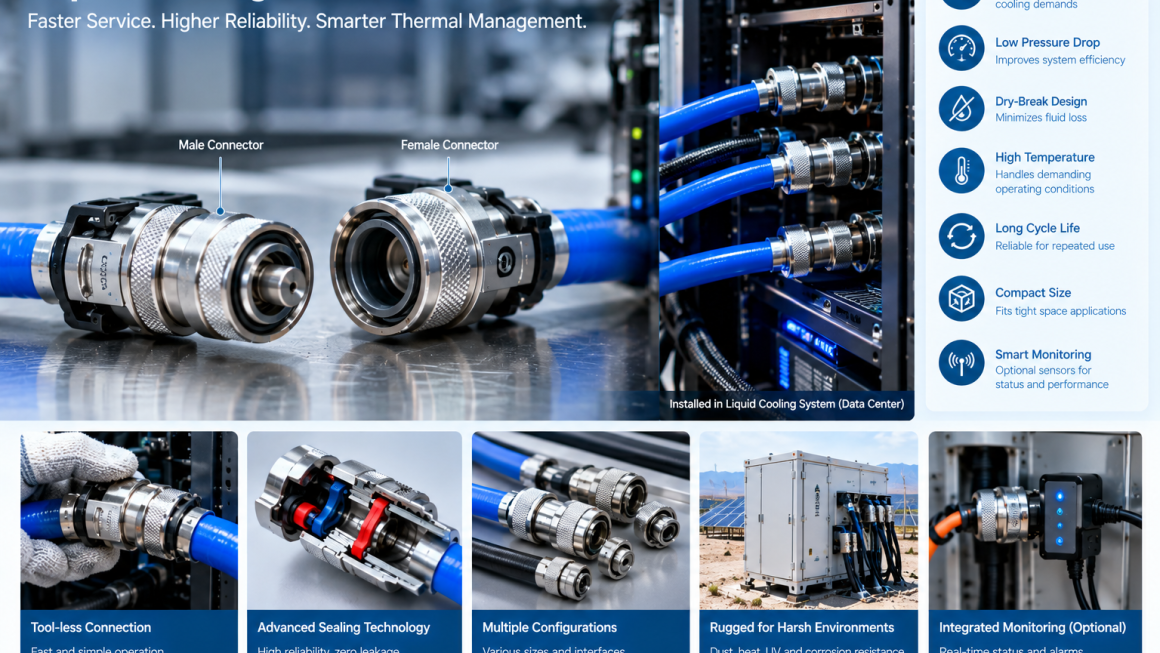
A liquid cooling quick disconnect allows two fluid lines to be connected or separated without requiring a lengthy disassembly process. Modern QD technology is evolving beyond simple mechanical connection. Future designs are increasingly focused on low pressure drop, zero- or near-zero-leak performance, dry-break operation, high-temperature compatibility, compact size, automated serviceability, monitoring, and standardized interfaces.
For liquid cooling systems, the QD is becoming an important part of the overall thermal-management architecture rather than just a plumbing component.
1. Why Quick Disconnect Technology Matters
A liquid cooling system typically includes:
- Cold plates
- Coolant distribution units
- Pumps
- Manifolds
- Heat exchangers
- Hoses
- Rigid piping
- Sensors
- Valves
- Quick disconnects
The QD provides a service interface between different parts of this system.
For example:
Cooling Distribution Unit → QD → Hose → Cold Plate
When equipment needs to be replaced, the QD can allow technicians to isolate and disconnect the cooling circuit without completely rebuilding the piping system.
This becomes increasingly valuable as liquid cooling systems become more modular.
2. The Growth of High-Density Liquid Cooling
One of the strongest drivers of QD development is the growth of high-density computing.
AI accelerators and high-performance processors can generate substantial heat within relatively small physical areas.
Traditional air cooling requires:
- High airflow
- Large heat sinks
- Fans
- Air channels
- Large cooling infrastructure
As power density increases, the physical and energy requirements of air cooling also increase.
Liquid cooling moves heat through a fluid circuit instead.
A simplified thermal relationship is:
Q = ṁ × Cp × ΔT
where:
- Q = heat removed
- ṁ = coolant mass flow rate
- Cp = specific heat capacity
- ΔT = coolant temperature difference
The ability to transport large amounts of heat through relatively compact liquid circuits makes liquid cooling attractive for high-density applications.
As these systems become larger and more modular, the need for reliable connection technology also increases.
3. Trend 1: Higher Flow Rates with Lower Pressure Drop
One of the most important future trends is the development of QDs that support higher coolant flow without creating excessive pressure loss.
Every component in a liquid cooling loop contributes some hydraulic resistance.
A simplified pressure relationship can be expressed as:
ΔP ∝ f × L/D × ρv²/2
where:
- ΔP = pressure loss
- f = friction factor
- L = flow-path length
- D = hydraulic diameter
- ρ = fluid density
- v = flow velocity
The internal geometry of a QD therefore matters.
Poorly designed flow paths can create:
- High pressure drop
- Reduced pump efficiency
- Increased energy consumption
- Lower available flow
- Uneven cooling
Future QDs will increasingly be optimized for hydraulic efficiency rather than simply mechanical connection.
4. Trend 2: Dry-Break and Low-Spill Connections
One of the biggest operational concerns in liquid cooling is coolant leakage.
Traditional fluid connections may release a small amount of liquid when disconnected.
In high-value environments such as:
- AI data centers
- Semiconductor facilities
- Battery laboratories
- Energy storage systems
- Industrial electronics
even a small amount of coolant can create maintenance problems.
Dry-break QDs are designed to minimize fluid loss during connection and disconnection.
The objective is to reduce:
- Leakage
- Spillage
- Air ingress
- Contamination
- Cleanup requirements
As liquid cooling becomes more widely deployed, dry-break performance is likely to become an increasingly important specification.
5. Trend 3: Smaller QDs for Higher-Density Systems
Cooling equipment is becoming more compact.
This creates a challenge for QD manufacturers.
The connector must provide:
- High flow
- Low pressure drop
- Reliable sealing
- Mechanical durability
while occupying less physical space.
This is particularly important inside:
- Server racks
- GPU cooling assemblies
- Compact battery systems
- EV charging equipment
- Power electronics cabinets
The future trend is therefore not simply “larger QDs for more flow.”
Instead, the industry is moving toward higher flow density per unit of connector size.
6. Trend 4: Higher Temperature Compatibility
Different liquid cooling applications use different coolant types and temperature ranges.
Coolants may include:
- Water
- Water-glycol mixtures
- Dielectric fluids
- Specialty thermal fluids
The QD must remain compatible with the selected fluid and operating temperature.
Important considerations include:
- Seal material
- Body material
- Internal spring material
- Corrosion resistance
- Pressure rating
- Temperature cycling
- Chemical compatibility
As thermal-management systems move toward higher operating temperatures, material selection will become increasingly important.
7. Trend 5: Improved Seal Technology
The sealing system is one of the most critical parts of a QD.
Common sealing materials may include elastomers selected according to temperature and coolant compatibility.
Future systems will demand better performance under:
- Pressure cycling
- Temperature cycling
- Vibration
- Repeated connection and disconnection
- Chemical exposure
A QD may perform perfectly during its first installation but experience seal degradation after hundreds or thousands of service cycles.
Therefore, future QD specifications are likely to focus increasingly on life-cycle performance, rather than only initial leakage performance.
8. Trend 6: More Connection and Disconnection Cycles
Modular systems are designed to be serviced.
This means QDs may be disconnected repeatedly during the equipment’s lifetime.
For example, an AI server rack may require component replacement or cooling-loop maintenance.
A battery system may require module replacement.
A laboratory system may be reconfigured for different experiments.
Therefore, QDs need to withstand repeated mechanical cycles without unacceptable degradation.
Important lifecycle parameters include:
- Connection cycles
- Disconnection cycles
- Seal wear
- Locking mechanism durability
- Leakage performance after cycling
- Pressure performance after cycling
The number of connection cycles may become an increasingly important procurement specification.
9. Trend 7: Tool-Less and Faster Maintenance
Maintenance time has a direct relationship with system availability.
Traditional fluid connections may require:
- Tools
- Drainage
- Thread sealing
- Manual tightening
- Reassembly
- Leak testing
A well-designed QD can simplify the process.
Future designs will increasingly focus on:
Connect → Lock → Verify
and:
Isolate → Disconnect → Replace
The objective is not simply convenience.
Faster maintenance can reduce:
- Technician labor
- Equipment downtime
- Coolant loss
- Service complexity
- Human error
10. Trend 8: Error-Proof Connection Designs
As liquid cooling systems become more complex, preventing incorrect connection becomes increasingly important.
Future QDs may incorporate features such as:
- Keyed interfaces
- Color coding
- Mechanical coding
- Different connector sizes
- Lock indicators
- Orientation-specific interfaces
These features can help prevent incorrect assembly.
For example, supply and return lines may use differentiated interfaces to reduce the possibility of cross-connection.
In large data centers or industrial facilities, simple mechanical error prevention can have significant operational value.
11. Trend 9: Integrated Shut-Off and Isolation
A future-oriented QD should not only connect two hoses.
It may also provide controlled fluid isolation.
When disconnected, valves can close automatically to reduce coolant loss.
This creates a functional sequence:
Connect → Open Flow
Disconnect → Close Flow
Such designs can make modular cooling systems significantly easier to service.
The same principle can be applied to:
- Server cooling loops
- Battery thermal-management systems
- Power electronics
- EV charging systems
- Industrial machinery
12. Trend 10: Smart Quick Disconnects
One of the more interesting future directions is the integration of sensing and monitoring.
A smart QD could potentially provide information about:
- Connection status
- Lock status
- Temperature
- Pressure
- Flow
- Leakage
- Service history
For example, a system could identify whether a connector is fully locked before allowing a pump to start.
A more advanced system could detect abnormal pressure or temperature around a connection.
This moves QDs from passive mechanical components toward condition-aware components.
13. Integration with Digital Maintenance Systems
Liquid cooling infrastructure is increasingly connected to monitoring platforms.
A future maintenance architecture could look like:
QD → Sensor → Local Controller → BMS/EMS/DCIM → Remote Monitoring
This can create a digital maintenance record for each connection point.
For large facilities, the system could potentially track:
- Installation date
- Connection cycles
- Pressure history
- Temperature history
- Maintenance events
- Leakage alarms
- Replacement history
This information could support condition-based maintenance.
14. Trend 11: Standardization
As liquid cooling becomes more widespread, interoperability becomes increasingly important.
A data center operator may not want every cooling component to use a completely different interface.
Standardized QD interfaces can simplify:
- Equipment replacement
- Spare parts
- Maintenance
- System expansion
- Supplier qualification
However, standardization must also consider application-specific requirements such as:
- Flow rate
- Pressure
- Temperature
- Coolant
- Mechanical envelope
- Material compatibility
The future will likely involve a balance between standardized interfaces and application-specific performance.
15. Modular Liquid Cooling Architectures
Modularity is another major driver of QD adoption.
Instead of building one large permanent cooling circuit, modern systems can be divided into modules.
For example:
CDU → Manifold → QD → Rack → QD → Return Manifold
This architecture makes it easier to:
- Add capacity
- Replace equipment
- Isolate faults
- Reconfigure cooling zones
- Perform maintenance
The QD becomes a key interface between modules.
This is especially valuable when infrastructure needs to scale over time.
16. Liquid Cooling for AI Data Centers
AI infrastructure is likely to remain one of the strongest application areas for advanced QD technology.
High-performance computing systems can require dense liquid cooling networks connecting:
- GPU cold plates
- CPU cold plates
- Server manifolds
- Rack manifolds
- CDUs
- Facility water loops
At rack level, QDs allow equipment to be installed and serviced without rebuilding the entire cooling infrastructure.
As rack power density increases, the requirements for:
- Flow rate
- Pressure drop
- Leak prevention
- Serviceability
- Connection density
will become increasingly demanding.
17. Liquid Cooling in Energy Storage
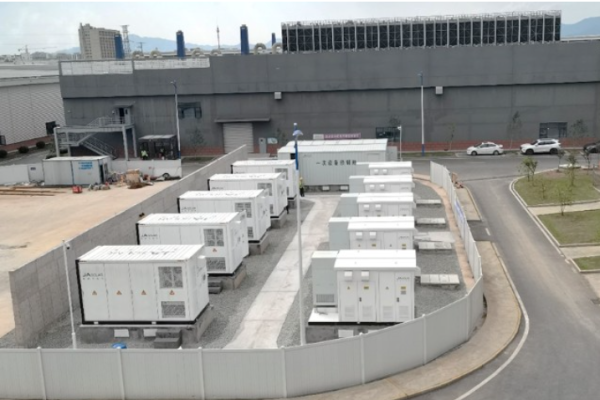
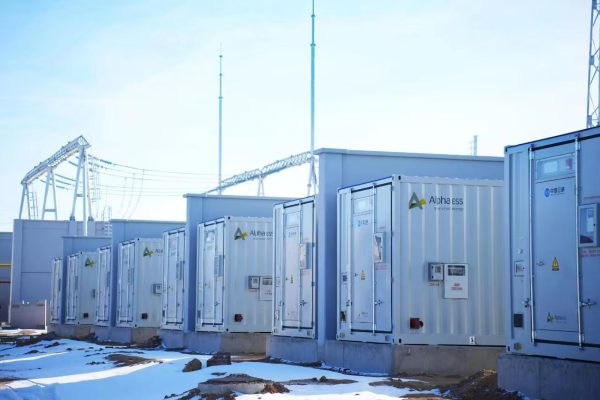
Liquid cooling is also becoming increasingly relevant to BESS.
A liquid-cooled battery system may contain:
- Cooling plates
- Coolant hoses
- Manifolds
- Pumps
- Heat exchangers
- Temperature sensors
QDs can simplify module-level maintenance and thermal-loop servicing.
For energy storage systems, QD reliability must be evaluated together with:
- Battery safety
- Coolant compatibility
- Temperature range
- Vibration
- Outdoor exposure
- Dust
- Humidity
- Corrosion
Outdoor BESS installations may require additional environmental protection around the QD and hose interfaces.
18. EV Charging and Power Electronics
High-power EV charging systems are another potential application.
As charging power increases, thermal management becomes more important for:
- Power modules
- Charging cables
- Power electronics
- DC conversion equipment
Liquid cooling can help remove heat from compact components.
QD technology can simplify service access to cooling circuits while reducing maintenance time.
The same principles apply to industrial power converters and high-power semiconductor systems.
19. Material Innovation
Future QDs will increasingly depend on advanced materials.
Potential areas of development include:
- Corrosion-resistant metals
- Lightweight alloys
- Engineering polymers
- Advanced elastomers
- Low-friction surface treatments
- Improved coatings
- High-temperature sealing materials
Material selection must consider the entire operating environment.
For example, a QD used inside an air-conditioned data center may face very different conditions from one installed in an outdoor BESS in a desert or coastal environment.
20. Corrosion and Galvanic Compatibility
Liquid cooling systems can contain multiple materials.
For example:
- Aluminum
- Copper
- Stainless steel
- Brass
- Engineering polymers
When different metals are exposed to a conductive coolant or moisture, galvanic corrosion can become a concern.
This is particularly important in systems using aluminum cold plates and copper components.
The QD material selection should therefore consider the complete cooling-loop material system rather than evaluating the connector in isolation.
Coolant chemistry also matters.
21. Contamination Control
As cooling systems become more sophisticated, coolant cleanliness becomes increasingly important.
Particles or contamination can affect:
- Valves
- Pumps
- Cold plates
- Filters
- Small flow passages
- QD mechanisms
A QD should therefore be designed and handled as part of a controlled fluid system.
During maintenance, operators should consider:
- Clean connection procedures
- Protective caps
- Dust prevention
- Coolant filtration
- Hose cleanliness
- Connector inspection
This becomes especially important in high-value computing and laboratory applications.
22. Reliability Testing Will Become More Important
Future QD procurement will increasingly require more than basic pressure testing.
Testing may include:
Pressure Testing
Verify performance at specified operating and maximum pressures.
Leakage Testing
Measure leakage during both connected and disconnected conditions.
Cycle Testing
Evaluate performance after repeated connection and disconnection.
Temperature Cycling
Test seals and materials under repeated heating and cooling.
Vibration Testing
Evaluate performance under equipment vibration and transportation conditions.
Chemical Compatibility
Verify compatibility with the intended coolant.
Corrosion Testing
Evaluate performance under relevant environmental conditions.
These tests provide a better indication of long-term field performance.
23. From Leak Prevention to Leak Management
No mechanical connection should be treated as completely risk-free.
Future cooling systems will therefore increasingly combine:
Reliable QD Design + Isolation + Detection + Monitoring + Maintenance
For example:
- QD provides reliable sealing.
- Isolation valve limits coolant loss.
- Pressure sensor detects abnormal conditions.
- Monitoring system generates an alarm.
- Technician replaces the affected component.
This layered approach is more robust than relying on a single mechanical component.
24. The Importance of Installation Quality
Even a high-quality QD can fail prematurely if installation is poor.
Common problems include:
- Excessive hose bending
- Side loading
- Incorrect locking
- Misalignment
- Excessive vibration
- Contaminated sealing surfaces
- Improper hose support
Hose routing is particularly important.
A QD should not be forced to carry the mechanical weight or bending load of a long hose assembly.
Proper brackets, clamps, and cable/hose management can significantly improve service life.
25. Quick Disconnects and Maintenance-Friendly Design
A modern liquid cooling system should be designed around the maintenance process.
Before selecting a QD, engineers should ask:
- How often will the connection be disconnected?
- How much coolant loss is acceptable?
- What flow rate is required?
- What pressure drop is acceptable?
- What coolant will be used?
- What temperature range is required?
- How much installation space is available?
- Will the connector be exposed to vibration?
- Is the environment dusty or corrosive?
- Does the system require automatic isolation?
- Does the connector need status monitoring?
These questions can prevent the common mistake of selecting a QD based only on nominal size.
26. A Practical QD Selection Checklist
For a new liquid cooling project, consider the following parameters.
Hydraulic Performance
- Flow rate
- Pressure rating
- Pressure drop
- Internal flow path
- Port size
Thermal Performance
- Operating temperature
- Maximum temperature
- Temperature cycling
- Thermal expansion
Mechanical Performance
- Connection cycles
- Vibration resistance
- Hose compatibility
- Locking mechanism
- Installation space
Fluid Compatibility
- Coolant type
- Seal compatibility
- Corrosion resistance
- Contamination requirements
Leakage Control
- Static leakage
- Dynamic leakage
- Dry-break performance
- Residual fluid volume
Maintenance
- Connection time
- Disconnection time
- Tool requirements
- Service access
- Protective caps
- Replacement procedure
Monitoring
- Lock detection
- Pressure monitoring
- Temperature monitoring
- Leakage detection
27. What the Future QD May Look Like
The future quick disconnect is likely to become more than a simple mechanical fitting.
A next-generation QD may combine:
High Flow + Low Pressure Drop + Dry Break + Long Cycle Life + Compact Size + Smart Monitoring + Standardized Interface
Such a component could become an intelligent service interface between cooling modules.
The broader trend is clear: as thermal systems become more modular and higher density, the connection point itself must become more reliable, more serviceable, and easier to monitor.
Conclusion
Liquid cooling is moving from specialized applications toward a much broader role in AI infrastructure, data centers, energy storage, EV charging, power electronics, and industrial systems.
As this transition continues, quick disconnect technology will become increasingly important.
The future of QDs is not simply about making connections faster. It is about creating reliable, low-loss, serviceable, scalable, and increasingly intelligent interfaces between cooling-system modules.
The major trends include:
- Higher flow capacity
- Lower pressure drop
- Dry-break and low-spill performance
- Smaller form factors
- Higher temperature capability
- Improved sealing
- Longer connection-cycle life
- Tool-less maintenance
- Error-proof interfaces
- Automatic isolation
- Smart sensing
- Standardization
- Improved material compatibility
For high-density liquid cooling, the QD should therefore be considered part of the thermal-management architecture rather than a minor plumbing accessory.
As systems become more modular and maintenance becomes increasingly data-driven, the performance of these small connection points can have a surprisingly large impact on overall system reliability.
FAQs
What is a quick disconnect in a liquid cooling system?
A quick disconnect is a mechanical fluid connector that allows cooling hoses or fluid circuits to be connected and disconnected rapidly, often with minimal coolant loss.
Why are QDs important for AI liquid cooling?
AI servers and high-density computing systems increasingly use liquid cooling. QDs make it easier to install, replace, and service cooling components without rebuilding the entire cooling loop.
What is a dry-break quick disconnect?
A dry-break QD is designed to minimize fluid release when the connection is disconnected. This helps reduce coolant loss, contamination, and maintenance requirements.
Does a larger QD always provide better cooling performance?
Not necessarily. QD performance depends on flow rate, internal geometry, pressure drop, sealing, and system requirements. A larger connector may provide greater flow capacity but may not be optimal for every application.
How many connection cycles should a QD support?
The required cycle life depends on the application. Systems with frequent maintenance or modular replacement require higher cycle-life performance than permanently installed circuits.
Can QDs be used in battery energy storage systems?
Yes. QDs can be used in liquid-cooled BESS for connections between cooling modules, hoses, manifolds, and other thermal-management components, provided the connector is compatible with the coolant, pressure, temperature, and environmental conditions.
Will future QDs include sensors?
Increasing integration of sensing and monitoring is a potential direction for QD technology. Future systems may monitor connection status, pressure, temperature, leakage, or service history.
What is the most important consideration when selecting a liquid cooling QD?
There is no single parameter that determines suitability. Flow rate, pressure drop, coolant compatibility, temperature, sealing, cycle life, leakage performance, installation constraints, and maintenance requirements should be evaluated together.