
Industrial parks are facing increasingly complex energy challenges. Peak electricity demand, time-of-use tariffs, renewable energy integration, backup power requirements, and the need for more flexible energy management are encouraging facility operators to consider battery energy storage systems (BESS).
For industrial parks, however, the question is not simply whether energy storage works. The more practical question is:
Does a modular energy storage system provide enough operational and financial benefits to justify its investment?
A modular storage approach can offer advantages in deployment flexibility, maintenance, expansion, and lifecycle management. But its economic value depends on electricity tariffs, load profiles, operating conditions, system utilization, and the required level of protection and maintenance.
This article explains how to evaluate the cost-benefit relationship of modular energy storage systems for industrial parks.
What Is a Modular Energy Storage System?
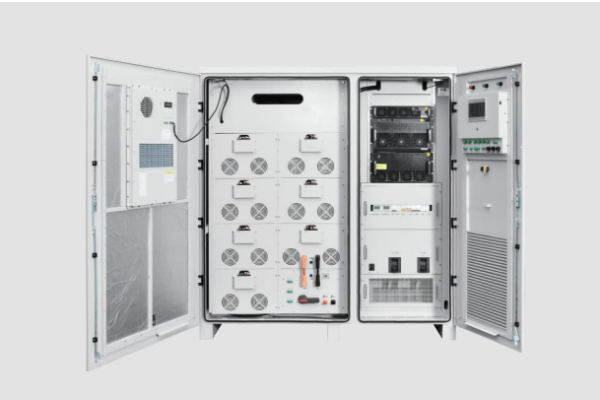
A modular energy storage system is designed around standardized functional units that can be deployed, maintained, or expanded independently.
Instead of treating the entire energy storage installation as one large integrated asset, a modular architecture can divide the system into multiple manageable units.
Typical components may include:
- Battery storage modules
- Power conversion equipment
- Energy management interfaces
- Thermal management systems
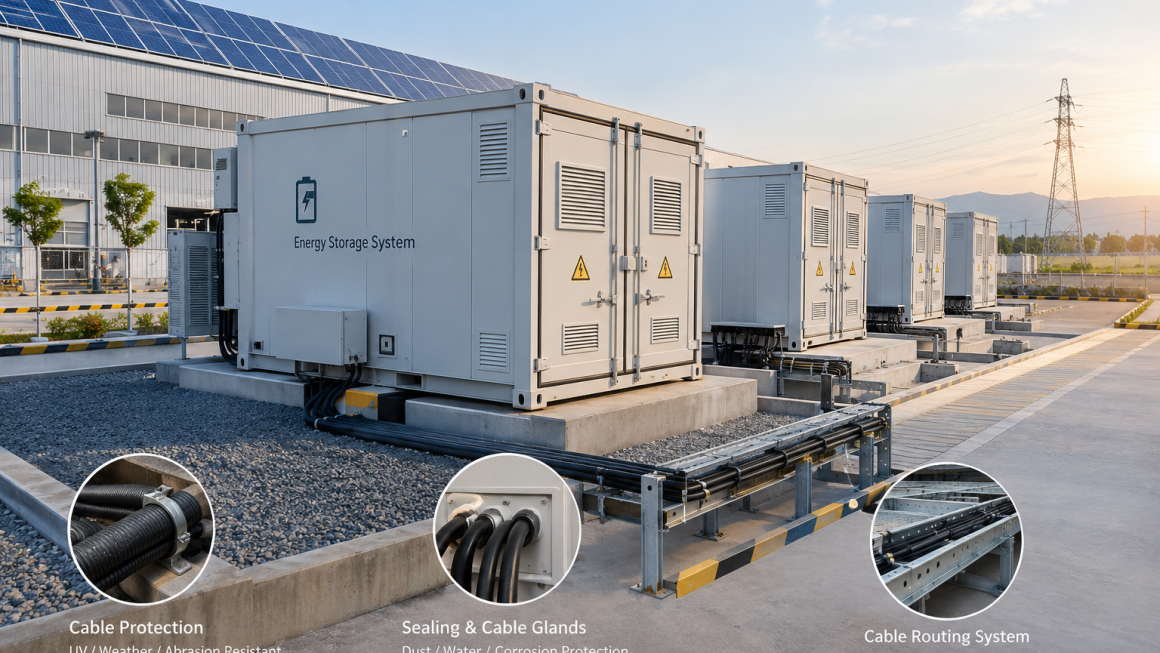
- Cable protection and routing systems
- Fire and thermal protection
- Environmental protection
- Cable glands and sealing systems
- Installation and maintenance accessories
For industrial parks, modularity is particularly relevant because energy demand can change as factories, production lines, warehouses, and commercial facilities are added or modified.
Why Industrial Parks Are Considering Modular Storage
Industrial parks often have highly variable electricity consumption.
A typical site may experience:
- High daytime production loads
- Significant peak demand charges
- Different electricity prices during peak and off-peak periods
- Renewable generation from rooftop solar
- Critical production equipment requiring power continuity
- Multiple buildings with different electrical loads
- Future expansion of manufacturing capacity
A properly designed energy storage system can support several of these requirements simultaneously.
The potential value comes from combining multiple applications rather than relying on a single revenue or savings mechanism.
1. Peak Demand Management
Energy storage can charge during lower-cost periods and discharge during periods of high electricity demand.
For industrial users, reducing short-duration demand peaks can sometimes be as important as reducing total electricity consumption.
The economic calculation should therefore consider both:
Energy cost savings + demand charge reduction
rather than looking only at the battery’s energy capacity.
2. Time-of-Use Energy Arbitrage
Where electricity tariffs vary significantly throughout the day, storage can shift electricity consumption from expensive periods to lower-cost periods.
The basic concept is:
Charge during low-cost periods → discharge during high-cost periods
However, actual savings depend on:
- Electricity price differences
- Round-trip efficiency
- Available storage capacity
- Depth of discharge
- Charging and discharging schedules
- Battery degradation
- System availability
Therefore, the theoretical tariff difference should not be treated as the actual annual saving.
3. Solar Energy Integration
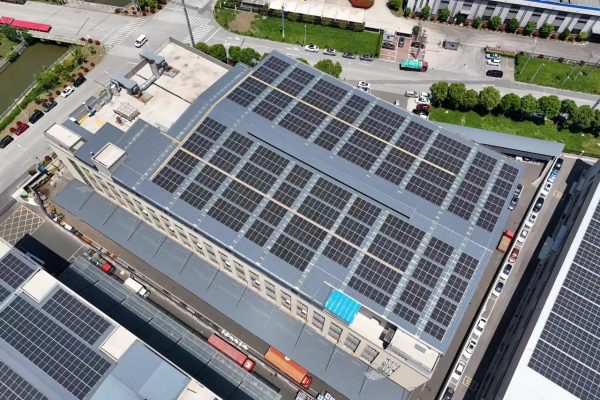
Industrial parks increasingly use rooftop or distributed solar generation.
Without storage, excess solar generation may be curtailed, exported, or used only when the facility load is available.
Adding storage can increase the proportion of locally generated electricity that is consumed by the industrial facility.
A modular system can also be expanded as additional photovoltaic capacity is installed.
4. Backup and Power Resilience
For some industrial facilities, the value of storage is not limited to electricity savings.
Unexpected power interruptions can cause:
- Production downtime
- Equipment restart costs
- Material losses
- Process interruptions
- Data or control-system disruptions
- Additional labor costs
A storage system capable of supporting critical loads can therefore provide an operational resilience benefit.
This benefit can be difficult to capture in a simple ROI calculation because the avoided cost depends on the probability and consequences of power interruptions.
CAPEX vs. Lifecycle Cost
One of the most important considerations when comparing modular storage systems is the difference between initial capital expenditure and total lifecycle cost.
A lower purchase price does not necessarily mean a lower cost over the operating life of the system.
A more complete analysis should consider:
Total Cost of Ownership (TCO) = Initial Investment + Installation + O&M + Replacement + Downtime-Related Costs + End-of-Life Costs
Depending on the project, additional costs may include:
- Electrical installation
- Civil works
- Cable infrastructure
- Cooling and ventilation
- Fire protection
- Environmental protection
- Monitoring and inspection
- Replacement components
- Software or service contracts
- Transportation
- Decommissioning
This is particularly important for industrial parks because storage equipment may operate in demanding outdoor or semi-outdoor environments.
How Modularity Can Reduce Long-Term Costs
The main economic advantage of modular storage is not necessarily a lower initial equipment price.
Instead, modularity can improve the economics of deployment, maintenance, and expansion.
1. Phased Investment
Industrial parks do not always need their final storage capacity on day one.
For example, an industrial park may initially require 2 MWh but expect electricity demand to increase over the next several years.
A modular architecture can allow the operator to start with a smaller installation and add capacity as demand grows.
This can reduce the risk of investing too much capital before actual energy demand is established.
2. Easier Maintenance
When an individual module or protection component requires maintenance, modular architecture can potentially allow technicians to isolate the affected section rather than shutting down the entire installation.
This can reduce:
- Maintenance time
- Service disruption
- Troubleshooting complexity
- Replacement costs
However, the actual benefit depends on the system architecture and isolation capabilities.
3. Reduced Expansion Complexity
Industrial parks often evolve over time.
New factories may be added, production capacity may increase, or renewable generation may expand.
A modular storage system can provide a more flexible pathway for capacity expansion.
Instead of replacing the entire installation, operators may be able to add compatible storage units or supporting infrastructure.
4. Better Spare-Part Management
Standardized modular components can simplify maintenance planning.
Instead of maintaining many different custom components, operators may be able to standardize:
- Cable protection
- Cable glands
- Sealing components
- Installation accessories
- Thermal protection components
- Environmental protection components
This can simplify spare-part inventories and maintenance procedures across multiple energy storage installations.
The Hidden Cost: Environmental Protection
Industrial park storage systems are often installed in environments that are more demanding than laboratory or indoor applications.
Depending on location, equipment may be exposed to:
- Dust
- Sand
- UV radiation
- Rain
- Humidity
- Temperature cycling
- Mechanical vibration
- Corrosive atmospheres
- Salt mist in coastal industrial areas
These conditions can affect cables, connectors, sealing points, cooling components, and other infrastructure around the energy storage system.
Consequently, the economic analysis should not focus only on the battery and power electronics.
Protection infrastructure can influence system availability and maintenance cost over the entire operating lifecycle.
This is where cable protection, sealing, thermal protection, environmental protection, and installation accessories become part of the overall storage reliability strategy.
Modular Storage Economics: Key Cost-Benefit Factors
When evaluating a modular storage project, industrial park operators should consider several factors simultaneously.
| Factor | Potential Cost | Potential Benefit |
|---|---|---|
| Initial storage investment | High CAPEX | Energy cost optimization |
| Modular architecture | Possible higher component complexity | Easier expansion and maintenance |
| Energy arbitrage | Battery degradation | Lower electricity costs |
| Peak shaving | System cycling | Lower demand charges |
| Solar integration | Additional storage CAPEX | Higher renewable self-consumption |
| Backup capability | Additional system capacity | Reduced production interruption risk |
| Environmental protection | Additional components | Improved equipment reliability |
| O&M | Recurring cost | Higher system availability |
| Expansion | Future CAPEX | Capacity aligned with actual demand |
The important point is that not every benefit has the same economic value for every industrial park.
A Practical ROI Framework
A simplified annual benefit calculation can start with:
Annual Storage Benefit = Energy Cost Savings + Demand Charge Savings + Renewable Energy Benefits + Avoided Downtime Costs − Annual O&M Costs
The resulting figure can then be compared with the initial investment.
A simple payback calculation is:
Payback Period = Initial Investment ÷ Annual Net Benefit
However, this should only be considered a preliminary calculation.
A professional investment analysis should also consider:
- Battery degradation
- Discount rate
- Financing costs
- Replacement requirements
- Electricity price changes
- System efficiency
- Utilization rate
- Residual value
- Expected operating lifetime
For larger industrial parks, a discounted cash flow or Net Present Value (NPV) model provides a more meaningful evaluation than simple payback alone.
When Does Modular Storage Make Economic Sense?
Modular storage can be particularly relevant when an industrial park has one or more of the following characteristics:
High Peak Demand
Facilities with significant peak electricity consumption may benefit from peak shaving.
Large Time-of-Use Price Differences
Greater differences between peak and off-peak electricity prices can improve the potential value of energy arbitrage.
Rapid Load Growth
If electricity demand is expected to increase, modular capacity can help avoid excessive upfront investment.
Significant Solar Generation
Storage can help align solar generation with industrial electricity consumption.
High Cost of Production Downtime
Where power interruptions can create substantial operational losses, resilience may contribute significantly to the overall business case.
Multiple Storage Sites
Industrial park developers managing multiple facilities may benefit from standardized components and maintenance procedures.
When Should Operators Be More Cautious?
Modular storage is not automatically the most economical solution.
Careful analysis is required when:
- Electricity price differences are small
- Storage utilization is low
- Available grid capacity is already sufficient
- Solar generation is limited
- The site has very low peak demand
- Maintenance resources are limited
- Environmental conditions require significant additional protection
- The project depends heavily on uncertain future electricity prices
The right system size should therefore be determined by actual load data rather than simply maximizing battery capacity.
The Importance of Protection and O&M in Storage Economics
Energy storage economics are often discussed in terms of batteries, PCS, and energy management systems.
However, long-term operating performance also depends on the infrastructure surrounding these major components.
For industrial park applications, this can include:
- Cable protection sleeves
- High-temperature cable protection
- Braided and self-wrapping protection
- Thermal and fire protection
- UV and weather-resistant protection
- Dust and sand protection
- Cable glands
- Sealing systems
- Installation accessories
- Retrofit protection components
These products may represent a relatively small proportion of the total project CAPEX, but their role can become important when equipment operates continuously in harsh environments.
A relatively low-cost protection component can help prevent mechanical damage, environmental exposure, or maintenance difficulties that would otherwise contribute to larger lifecycle costs.
Modular Storage Should Be Evaluated as a Lifecycle System
The most useful cost-benefit analysis does not ask only:
“How much does the storage system cost?”
It should ask:
“How much value can the storage system deliver over its operating lifetime, and what infrastructure is required to maintain that value?”
For industrial parks, the economic evaluation should therefore combine:
Energy savings + demand management + renewable integration + resilience + maintenance + expansion flexibility
with:
CAPEX + O&M + degradation + replacement + protection + downtime risk
This lifecycle perspective provides a more realistic basis for evaluating modular storage systems.
Modular energy storage systems can provide industrial parks with a flexible approach to managing changing electricity demand, peak loads, renewable generation, and operational resilience.
Their economic value depends on site-specific factors rather than battery capacity alone.
A practical evaluation should examine electricity tariffs, load profiles, storage utilization, system efficiency, battery degradation, maintenance requirements, environmental conditions, and future expansion plans.
For industrial parks, the most important question is therefore not simply whether modular storage is cheaper.
It is whether modular storage can deliver the required energy and operational benefits with an acceptable total lifecycle cost.
When storage infrastructure, cable protection, environmental protection, sealing, thermal protection, and O&M requirements are considered together, operators can make a more complete assessment of long-term storage reliability and economics.