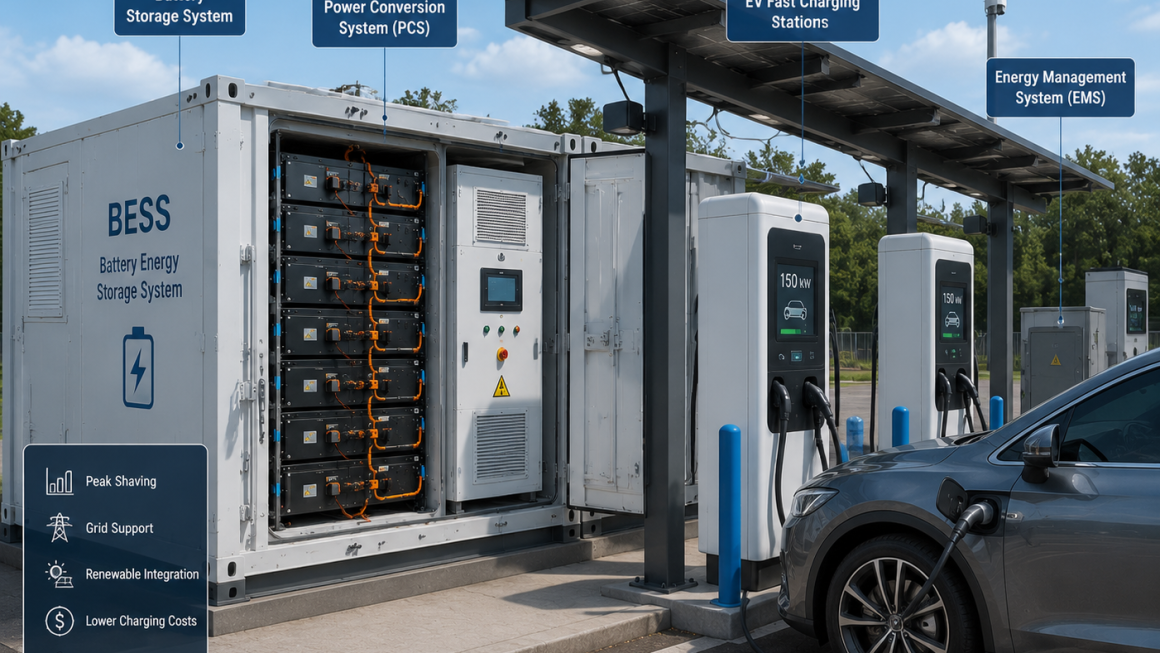
Why Battery Systems Are Becoming Essential for EV Charging
The rapid growth of electric vehicles (EVs) is creating new challenges for charging infrastructure.
High-power EV chargers, especially fast charging stations, can place significant stress on electrical grids due to their sudden and concentrated power demand.
Traditional grid connections may face limitations such as:
- Limited available power capacity
- Expensive grid upgrades
- Peak demand charges
- Long connection approval times
Battery Energy Storage Systems (BESS) provide an effective solution by supporting EV charging infrastructure with local energy storage.
By combining batteries with charging stations, operators can deliver high-power charging while reducing pressure on the grid.
How Battery Systems Support EV Charging
A battery-supported EV charging system works by combining:
- Battery storage
- Power conversion systems (PCS)
- Energy management systems (EMS)
- EV charging equipment
- Grid connection
The basic operating principle is:
Low-demand periods
→ Charge the battery system from the grid or renewable energy
High-demand charging periods
→ Battery supplies additional power to EV chargers
This approach reduces peak grid demand and improves charging flexibility.
Key Benefits of Battery-Integrated EV Charging
1. Reducing Grid Connection Requirements
High-power charging stations require significant electrical infrastructure.
For example, multiple fast chargers operating simultaneously can create large power peaks.
Battery storage helps by:
- Providing additional power locally
- Reducing grid upgrade requirements
- Supporting locations with limited grid capacity
2. Supporting Fast Charging
Modern EV users expect short charging times.
Fast charging requires:
- High power output
- Stable voltage
- Reliable energy supply
Battery systems act as a local energy buffer, allowing charging stations to deliver high power without relying entirely on the grid.
3. Peak Demand Management
Electricity costs in commercial applications often include demand charges.
Battery-supported charging can:
- Reduce peak electricity consumption
- Optimize charging schedules
- Lower operating costs
This is especially valuable for:
- Fleet charging stations
- Logistics centers
- Commercial parking facilities
4. Renewable Energy Integration
Battery systems allow EV charging infrastructure to work together with renewable energy sources.
Examples include:
- Solar-powered charging stations
- Wind energy integration
- Industrial renewable microgrids
Energy storage helps balance:
- Renewable generation fluctuations
- Charging demand variations
Battery System Architecture for EV Charging
A typical battery-supported charging station includes several key components.
Battery Modules and Packs
The battery system provides the energy buffer for charging operations.
Important design factors include:
- Energy capacity
- Power output capability
- Cycle life
- Thermal stability
Lithium-ion batteries are widely used because of their:
- High energy density
- Fast response capability
- Long operating life
Power Conversion System (PCS)
The PCS controls energy flow between:
- Grid
- Battery
- EV chargers
Its functions include:
- Battery charging
- Battery discharge
- DC/AC conversion
- Power regulation
A high-performance PCS ensures efficient and stable operation.
Energy Management System (EMS)
The EMS controls charging strategies based on:
- Electricity prices
- Grid conditions
- Battery status
- Charging demand
Smart EMS platforms can optimize:
- Charging schedules
- Battery utilization
- Energy costs
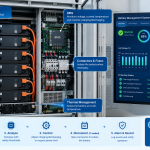
Thermal Management System
Battery performance depends strongly on temperature control.
EV charging applications may involve frequent high-power operation, creating significant heat generation.
Thermal solutions include:
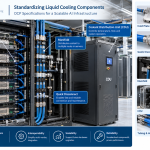
- Liquid cooling systems
- Cooling plates
- Thermal interface materials
- Heat exchangers
Effective thermal management helps extend battery lifespan and maintain safety.
Enclosure and Protection Systems
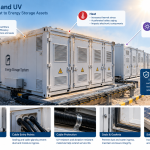
Outdoor EV charging environments expose equipment to:
- Rain
- Dust
- UV radiation
- Humidity
- Temperature changes
Battery enclosures require:
- Weather resistance
- Corrosion protection
- Cable protection
- Thermal management integration
For coastal and industrial environments, enhanced corrosion protection may be required.
Application Scenarios
EV Fast Charging Stations
Battery systems support high-power charging without requiring oversized grid infrastructure.
Highway Charging Hubs
Highway locations often require:
- Multiple fast chargers
- Reliable power availability
- Stable energy supply
Battery storage improves charging capacity and flexibility.
Commercial Fleet Charging
Electric buses, trucks, and delivery fleets require predictable charging schedules.
Battery systems help manage:
- Large charging loads
- Operational costs
- Energy demand peaks
Remote Charging Locations
Areas with limited grid access can use:
- Solar generation
- Battery storage
- EV charging equipment
to create independent charging solutions.
Design Considerations for Battery EV Charging Systems
Power vs Energy Capacity
EV charging requires both:
- High power output
- Sufficient energy storage
System design must balance:
- Charging speed
- Battery size
- Operating costs
Charging Pattern Analysis
Engineers should evaluate:
- Number of vehicles
- Charging frequency
- Peak charging periods
- Daily energy demand
Environmental Conditions
Outdoor installations require protection against:
- Heat
- Humidity
- Corrosion
- Mechanical stress
Reliable enclosure and thermal design are essential.
Future Trends in Battery-Based EV Charging
Ultra-Fast Charging Support
Higher charging power will increase demand for local energy storage.
Renewable-Powered Charging
Future charging stations will increasingly combine:
- Solar
- Wind
- Battery storage
- Intelligent energy management
Vehicle-to-Grid Integration
EV batteries may become part of future energy networks by providing:
- Grid balancing
- Demand response
- Distributed energy resources
Modular Charging Infrastructure
Modular battery systems will enable:
- Faster deployment
- Flexible expansion
- Easier maintenance
Battery systems are becoming an important component of modern EV charging infrastructure.
By combining energy storage with charging stations, operators can overcome grid limitations, support fast charging, reduce peak demand, and integrate renewable energy.
A successful battery-supported EV charging system requires coordinated design of:
- Battery modules
- PCS
- EMS
- Thermal management
- Protective enclosures
As electric vehicle adoption accelerates, battery-integrated charging infrastructure will play a key role in creating flexible, reliable, and efficient transportation energy networks.