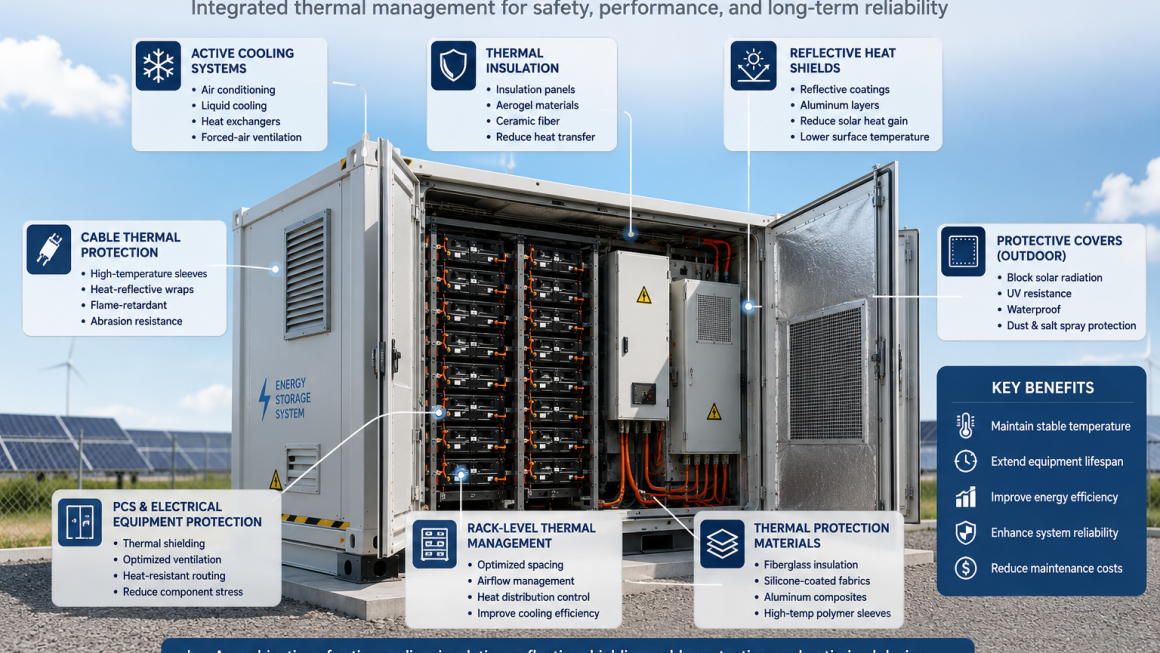
Why Thermal Protection Is Essential for Modern BESS
Battery Energy Storage Systems (BESS) are expected to operate reliably for many years under a wide range of environmental conditions. During normal operation, batteries, power electronics, cables, and cooling equipment continuously generate heat. Outdoor installations must also withstand solar radiation, high ambient temperatures, and seasonal temperature fluctuations.
Without effective thermal protection, excessive heat can accelerate component aging, reduce system efficiency, increase maintenance costs, and shorten equipment lifespan.
For these reasons, thermal protection has become a core element of modern BESS engineering.
Where Does Heat Come From?
A typical BESS experiences heat from both internal and external sources.
Internal Heat Sources
During charging and discharging, several components generate heat, including:
- Battery modules
- Power Conversion Systems (PCS)
- Inverters
- Busbars
- Cable assemblies
- Liquid cooling equipment
The higher the system power density, the greater the thermal load that must be managed.
External Heat Sources
Outdoor installations are also exposed to environmental heat such as:
- Direct solar radiation
- High ambient temperatures
- Hot wind
- Heat reflected from nearby surfaces
In many regions, equipment surface temperatures can rise well above the surrounding air temperature.
Why Thermal Protection Matters
Thermal protection is not only about preventing overheating.
Its broader objectives include:
- Maintaining stable operating temperatures
- Extending component service life
- Improving energy efficiency
- Reducing cooling system workload
- Supporting long-term system reliability
Good thermal management reduces continuous thermal stress before it develops into larger operational issues.
Common Thermal Protection Solutions in BESS
Modern Battery Energy Storage Systems combine several complementary solutions.
Active Cooling Systems
Active cooling removes heat generated during operation.
Common technologies include:
- Air conditioning units
- Forced-air ventilation
- Liquid cooling systems
- Cold plate cooling
- Heat exchangers
These systems continuously regulate internal temperatures.
Thermal Insulation Materials
Passive insulation reduces heat transfer between the external environment and sensitive equipment.
Common materials include:
- Aerogel insulation
- Ceramic fiber boards
- High-temperature insulation panels
- Thermal barrier composites
These materials help stabilize internal temperatures without consuming additional energy.
Reflective Heat Shields
Solar radiation is one of the largest external heat sources for outdoor BESS.
Reflective protection systems reduce solar heat absorption through:
- Reflective aluminum composite layers
- High-reflectivity coatings
- Thermal shielding panels
- Exterior insulation covers
Lower surface temperatures reduce the cooling demand placed on the system.
Cable Thermal Protection
Power cables are exposed to both electrical heating and environmental heat.
Protective solutions include:
- High-temperature cable sleeves
- Heat-reflective wraps
- Flame-retardant insulation
- Abrasion-resistant protective coverings
These products help extend cable lifespan while maintaining electrical reliability.
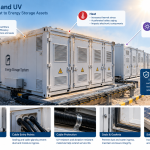
Protective Covers for Outdoor Installations
Energy storage covers provide an additional passive protection layer for outdoor equipment.
They can help reduce exposure to:
- Solar radiation
- UV degradation
- Dust and sand
- Rain
- Salt spray
Modern covers often combine reflective, insulating, and weather-resistant materials in a multi-layer structure.
Thermal Protection for PCS and Electrical Equipment
Power Conversion Systems generate significant heat during operation.
Protection measures may include:
- Thermal shielding around sensitive components
- Improved ventilation pathways
- Heat-resistant cable routing
- Reflective cabinet surfaces
- Optimized equipment spacing
These strategies help reduce thermal stress on electrical systems.
Thermal Protection at the Rack Level
Battery racks influence airflow and heat distribution throughout the enclosure.
Well-designed rack systems provide:
- Adequate ventilation clearance
- Consistent module spacing
- Efficient cooling airflow
- Reduced heat accumulation
Rack design therefore contributes directly to overall thermal performance.
Selecting Materials for Thermal Protection
Material selection depends on the operating environment and system requirements.
Frequently used materials include:
- Aluminum reflective barriers
- Fiberglass insulation
- Ceramic thermal shields
- Silicone-coated fabrics
- High-temperature polymer sleeves
- Composite insulation systems
The goal is to balance thermal performance, durability, mechanical strength, and environmental resistance.
Designing for Harsh Outdoor Environments
Thermal protection should be integrated with broader environmental protection measures.
Outdoor BESS installations often require resistance to:
- High temperatures
- UV exposure
- Humidity
- Salt spray
- Dust
- Wind-driven sand
- Mechanical wear
Combining thermal insulation with corrosion protection and durable materials creates a more resilient energy storage system.
Future Trends in BESS Thermal Protection
As battery systems continue to increase in energy density, thermal protection technologies are becoming more advanced.
Emerging developments include:
- Smart insulation materials
- Nano-engineered thermal coatings
- Lightweight composite heat shields
- Multi-functional cable protection sleeves
- Integrated thermal monitoring systems
- Passive cooling structures with enhanced heat reflection
These innovations aim to improve reliability while reducing operating costs.
Thermal protection is one of the most important aspects of Battery Energy Storage System design.
Rather than relying on a single technology, modern BESS installations combine active cooling, thermal insulation, reflective barriers, cable protection, protective covers, and optimized rack design to manage heat effectively.
By integrating these complementary solutions into a system-level protection strategy, engineers can improve equipment reliability, extend service life, reduce maintenance requirements, and support safe operation in even the most demanding environments.
As outdoor energy storage projects continue to expand worldwide, comprehensive thermal protection will remain a fundamental part of successful BESS engineering.