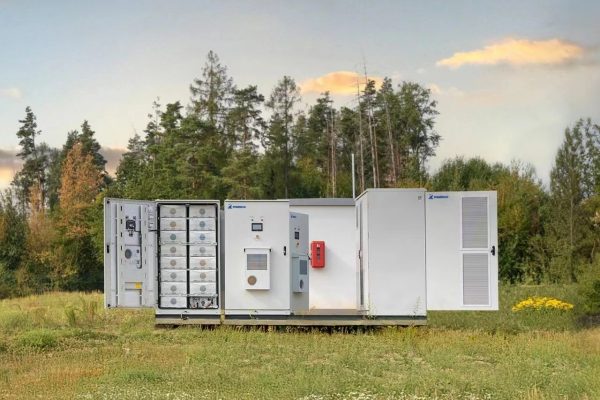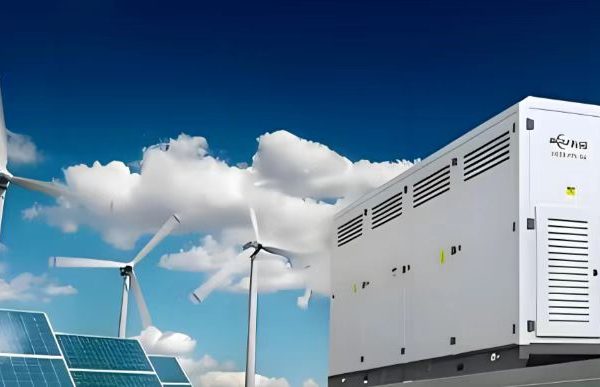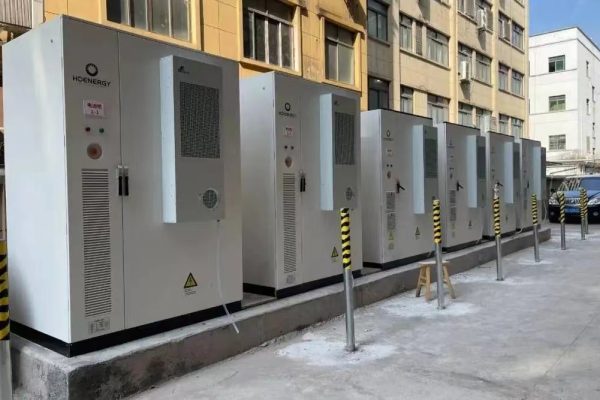

As energy storage systems continue to expand in scale and complexity, Battery Management Systems (BMS) have become one of the most critical technologies for ensuring safe, reliable, and efficient operation. While battery cells store energy, the BMS serves as the intelligence layer that continuously monitors, protects, and optimizes battery performance.
In modern Energy Storage Systems (ESS), battery modules can contain hundreds or even thousands of cells operating under varying temperatures, voltages, and load conditions. Without effective monitoring and control, small irregularities can quickly develop into significant performance losses or safety risks.
This article explores how BMS technology improves safety and performance in ESS battery modules and why it has become an essential component of modern energy storage architecture.
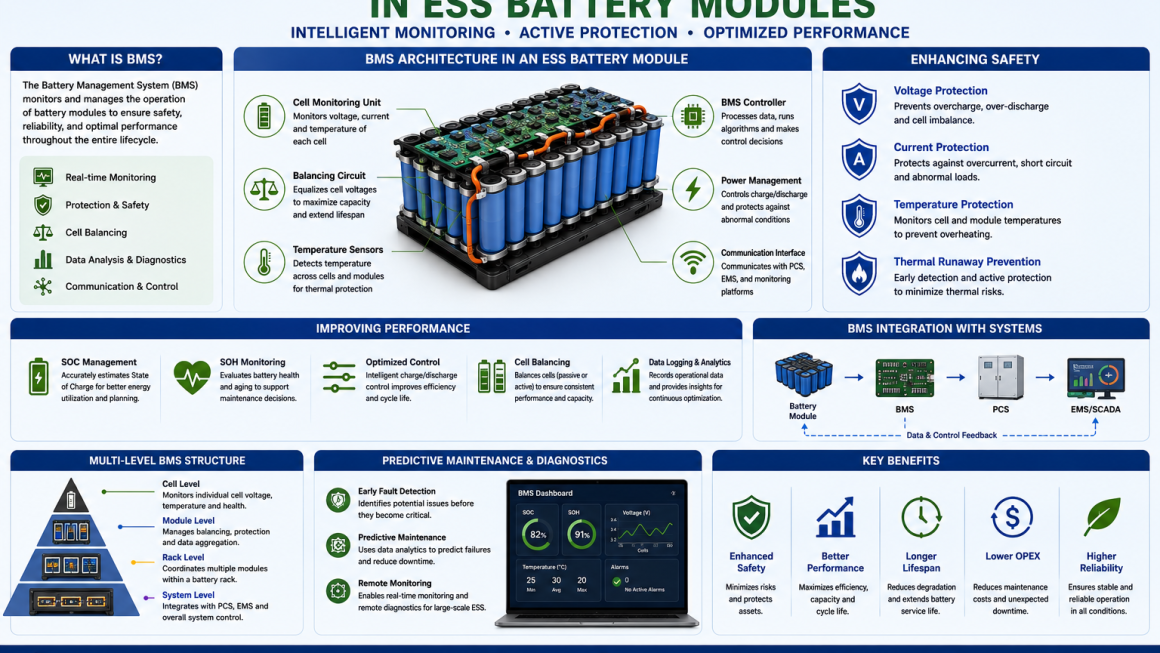
What Is a Battery Management System (BMS)?
A Battery Management System is an electronic control platform responsible for monitoring and managing battery operation.
Its primary functions include:
- Voltage monitoring
- Current monitoring
- Temperature monitoring
- State of Charge (SOC) estimation
- State of Health (SOH) evaluation
- Cell balancing
- Fault detection
- Safety protection
The BMS acts as the central nervous system of a battery energy storage system.
Why ESS Battery Modules Need a BMS
Battery cells are never perfectly identical.
Over time, variations occur due to:
- Manufacturing tolerances
- Operating temperatures
- Charging conditions
- Aging rates
These differences can lead to:
- Cell imbalance
- Capacity loss
- Reduced efficiency
- Accelerated degradation
- Safety risks
A BMS continuously manages these variations to maintain stable operation.
Enhancing Safety Through Continuous Monitoring
Voltage Protection
Each battery cell has a defined safe operating voltage range.
The BMS continuously monitors cell voltages and protects against:
- Overcharging
- Over-discharging
- Cell imbalance
Exceeding voltage limits can damage cells and increase safety risks.
Current Protection
High current conditions can generate excessive heat and stress battery components.
The BMS protects against:
- Overcurrent events
- Short circuits
- Abnormal charging conditions
This helps prevent system damage and improves operational reliability.
Temperature Monitoring
Temperature is one of the most important indicators of battery health.
The BMS monitors thermal conditions across:
- Individual cells
- Battery modules
- Battery racks
Temperature monitoring helps identify:
- Hotspots
- Cooling system failures
- Thermal imbalances
before they become critical issues.
Thermal Runaway Prevention
Thermal runaway remains one of the most serious concerns in lithium-ion battery systems.
Advanced BMS platforms can:
- Detect abnormal temperature rises
- Trigger alarms
- Reduce charging or discharging rates
- Isolate affected modules
These actions significantly reduce the likelihood of thermal events spreading throughout the system.
Improving Battery Performance
State of Charge (SOC) Management
SOC represents the amount of available energy stored in the battery.
Accurate SOC estimation allows:
- Better energy dispatch
- Improved system efficiency
- Optimized charging strategies
Reliable SOC calculations are essential for both grid-scale and commercial ESS applications.
State of Health (SOH) Monitoring
SOH measures battery aging and degradation.
The BMS continuously evaluates:
- Capacity retention
- Internal resistance
- Performance trends
This information helps operators plan maintenance and replacement schedules.
Optimized Charge and Discharge Control
The BMS regulates charging and discharging parameters to:
- Maximize efficiency
- Extend battery lifespan
- Prevent excessive stress on cells
Smart charging strategies are especially important in renewable energy and peak-shaving applications.
The Importance of Cell Balancing
One of the most valuable BMS functions is cell balancing.
Why Cell Imbalance Occurs
Over time, cells naturally develop differences in:
- Voltage
- Capacity
- Internal resistance
Without correction, weaker cells limit overall system performance.
Passive Balancing
Passive balancing removes excess energy from higher-voltage cells through resistive circuits.
Benefits include:
- Simplicity
- Lower cost
- Proven reliability
Active Balancing
Active balancing redistributes energy between cells.
Advantages include:
- Improved efficiency
- Better capacity utilization
- Enhanced system performance
Active balancing is increasingly used in advanced ESS applications.
BMS Integration with Thermal Management Systems
Modern BMS platforms work closely with cooling systems.
The BMS can:
- Monitor thermal conditions
- Control cooling equipment
- Optimize airflow or coolant flow
- Prevent temperature imbalances
This integration improves both performance and safety.
BMS and ESS System Architecture
The BMS is typically integrated at multiple levels.
Cell-Level Monitoring
Provides detailed visibility into individual cell performance.
Module-Level Management
Controls:
- Temperature
- Voltage distribution
- Balancing functions
within battery modules.
Rack-Level Supervision
Coordinates multiple modules within larger ESS installations.
System-Level Control
Communicates with:
- Energy Management Systems (EMS)
- Power Conversion Systems (PCS)
- SCADA platforms
to optimize overall energy storage performance.
Predictive Maintenance and Diagnostics
Modern BMS platforms increasingly use advanced analytics.
Capabilities include:
Early Fault Detection
The BMS can identify:
- Abnormal voltage trends
- Temperature anomalies
- Performance degradation
before failures occur.
Predictive Maintenance
Data analysis enables operators to:
- Schedule maintenance proactively
- Reduce downtime
- Extend asset life
Remote Monitoring
Cloud-connected BMS solutions provide:
- Real-time visibility
- Remote diagnostics
- Fleet management capabilities
for large ESS deployments.
BMS Applications Across ESS Markets
Utility-Scale Energy Storage
Supports:
- Grid balancing
- Renewable integration
- Long-duration operation
Commercial and Industrial ESS
Optimizes:
- Peak shaving
- Demand response
- Backup power systems
EV Charging Infrastructure
Manages high-power charging cycles and thermal loads.
Renewable Energy Projects
Improves battery utilization in solar and wind storage systems.
Data Centers
Ensures reliable backup power and continuous operation.
Emerging Trends in BMS Technology
AI-Driven Battery Analytics
Artificial intelligence is improving:
- Fault prediction
- Performance optimization
- Battery lifespan estimation
Digital Twin Technology
Virtual battery models enable:
- Real-time simulation
- Predictive diagnostics
- System optimization
Wireless BMS
Wireless communication reduces:
- Wiring complexity
- Installation costs
- Maintenance requirements
Cybersecurity Integration
As ESS systems become more connected, cybersecurity is becoming an important BMS feature.
Challenges in BMS Development
Despite significant advances, BMS designers continue to address challenges such as:
- Accurate SOC estimation
- Large-scale data processing
- Thermal runaway prediction
- Communication reliability
- System interoperability
Continuous innovation is improving BMS capabilities across all ESS applications.
Best Practices for BMS Integration
To maximize ESS performance and safety:
- Select a BMS designed for the intended application
- Integrate BMS with thermal management systems
- Implement robust cell balancing strategies
- Utilize predictive diagnostics whenever possible
- Ensure compatibility with PCS and EMS platforms
- Perform regular software updates and system validation
Conclusion
A Battery Management System is far more than a monitoring device—it is the intelligence platform that enables modern energy storage systems to operate safely, efficiently, and reliably. Through continuous monitoring, cell balancing, thermal management integration, and predictive diagnostics, the BMS plays a vital role in protecting battery assets and maximizing system performance.
As ESS deployments continue to expand worldwide, advanced BMS technology will remain one of the most important enablers of safer, smarter, and longer-lasting battery energy storage systems.