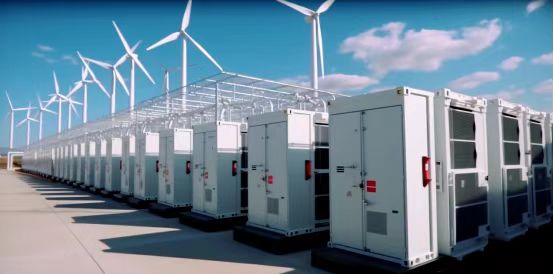

As energy storage systems (ESS) become larger and more complex, reliable power distribution is essential for ensuring safety, efficiency, and long-term performance. One critical but often overlooked component is the Power Distribution Unit (PDU).
While batteries store energy and inverters manage power conversion, the PDU serves as the electrical hub that safely distributes power throughout the energy storage system.
What Is a PDU in an Energy Storage System?
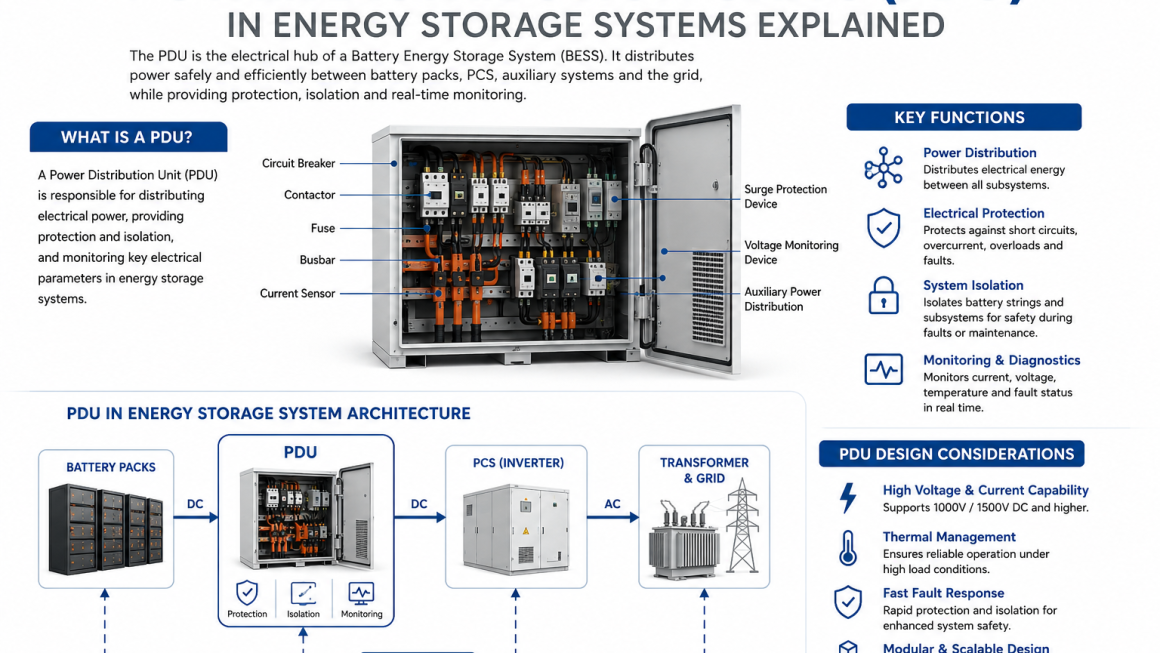
A Power Distribution Unit (PDU) is responsible for distributing electrical power between battery packs, battery management systems (BMS), power conversion systems (PCS), auxiliary equipment, and external grid connections.
In a Battery Energy Storage System (BESS), the PDU acts as a centralized power management and protection platform, integrating key electrical components such as:
- Circuit breakers
- Contactors
- Fuses
- Busbars
- Current sensors
- Voltage monitoring devices
- Surge protection devices
The PDU ensures that electrical energy is delivered safely and efficiently to all parts of the system.
Why Are PDUs Important in Energy Storage Systems?
Modern energy storage installations can contain hundreds or thousands of battery cells operating at high voltages and currents. Without a properly designed power distribution architecture, system reliability and safety can be compromised.
Key functions of a PDU include:
1. Power Distribution
The PDU routes electrical energy from battery modules to inverters, auxiliary systems, cooling units, and monitoring equipment.
2. Electrical Protection
Integrated fuses and breakers help protect equipment from:
- Short circuits
- Overcurrent conditions
- Ground faults
- Electrical overloads
3. System Isolation
Contactors inside the PDU can disconnect battery strings during maintenance, emergencies, or abnormal operating conditions.
4. Monitoring and Diagnostics
Advanced PDUs often include:
- Current monitoring
- Voltage monitoring
- Temperature sensing
- Fault detection
This data can be communicated to the EMS or BMS for real-time system management.
Main Components Inside an ESS PDU
A typical energy storage PDU may contain:
| Component | Function |
|---|---|
| Busbars | Transfer high-current power between subsystems |
| Circuit Breakers | Protect against overcurrent events |
| Fuses | Provide fast fault protection |
| Contactors | Enable switching and isolation |
| Current Sensors | Measure charging and discharging currents |
| Voltage Sensors | Monitor system voltage levels |
| Auxiliary Power Distribution | Supply low-voltage equipment |
| Surge Protection Devices | Protect against transient voltage spikes |
The exact configuration depends on system voltage, power rating, and application requirements.
PDU Design Considerations for Utility-Scale Energy Storage
When designing PDUs for large-scale battery energy storage systems, engineers must consider:
High Voltage Capability
Modern utility-scale ESS platforms commonly operate at:
- 1000 VDC
- 1500 VDC
- Higher-voltage architectures
The PDU must provide adequate insulation and clearance distances.
Thermal Management
High currents generate heat inside busbars, contactors, and protection devices.
Proper thermal design may involve:
- Natural convection cooling
- Forced-air cooling
- Liquid cooling integration
Fault Handling
The PDU should respond rapidly to abnormal conditions, including:
- Short circuits
- Arc faults
- Battery failures
- Ground faults
Scalability
Many energy storage projects require modular designs that can easily scale from hundreds of kilowatt-hours to multi-megawatt-hour installations.
PDU vs PCS vs BMS: What’s the Difference?
These three components are frequently discussed together but perform very different functions.
PDU (Power Distribution Unit)
- Distributes electrical power
- Provides protection and isolation
- Connects electrical subsystems
PCS (Power Conversion System)
- Converts DC battery power to AC grid power
- Manages charging and discharging operations
BMS (Battery Management System)
- Monitors battery health and safety
- Balances cells
- Controls battery operating limits
Together, the PDU, PCS, and BMS form the core electrical architecture of a modern energy storage system.
Emerging Trends in Energy Storage PDU Design
As battery systems continue to increase in capacity and voltage, PDU technology is evolving toward:
- Higher voltage platforms
- Intelligent monitoring capabilities
- Digital diagnostics
- Remote maintenance support
- Compact modular designs
- Integrated safety functions
Manufacturers are increasingly combining power distribution, monitoring, and protection functions into a single intelligent unit to simplify system integration.
Although batteries and inverters often receive most of the attention, the Power Distribution Unit (PDU) plays a critical role in the safety, reliability, and performance of every energy storage system.
A well-designed PDU enables efficient power flow, protects critical equipment, and supports long-term operation across residential, commercial, industrial, and utility-scale battery energy storage projects.
As the global energy storage market continues to expand, advanced PDU solutions will remain an essential part of next-generation battery energy storage infrastructure.