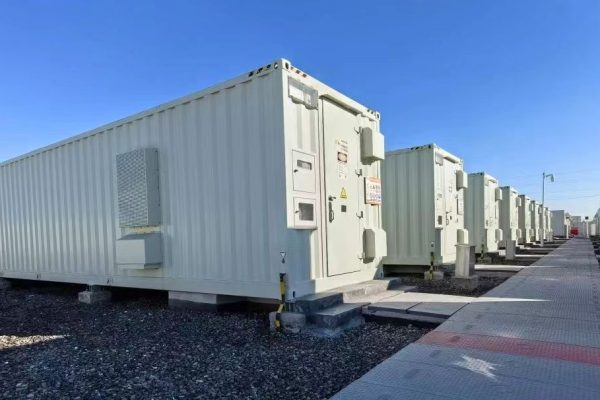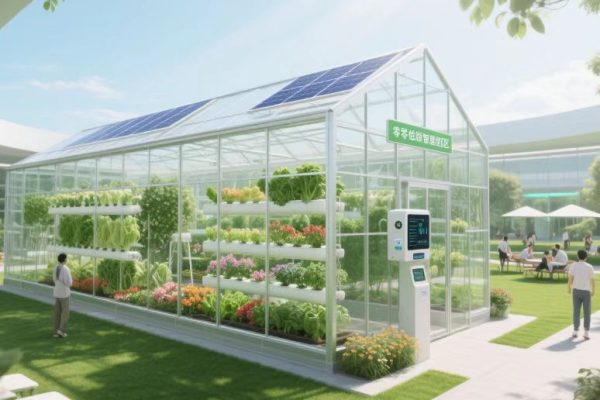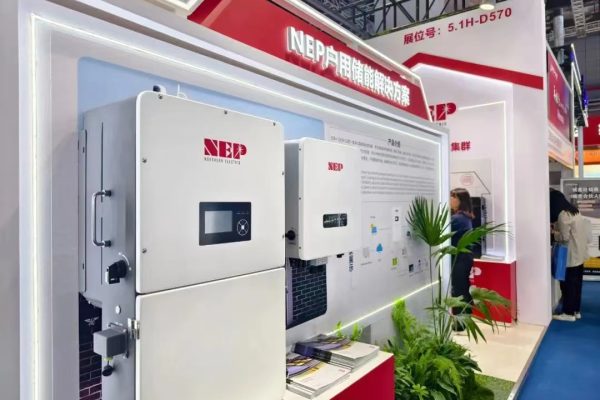

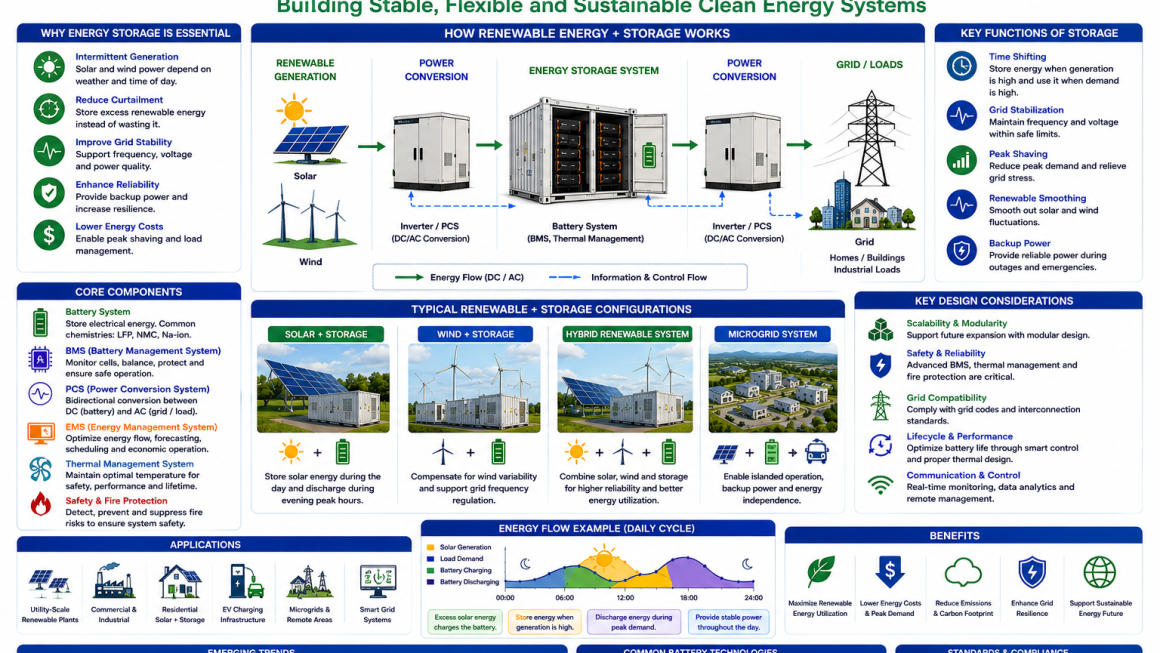
As renewable energy adoption accelerates worldwide, energy storage systems have become essential for creating stable, efficient, and resilient power infrastructure. Solar and wind energy provide clean electricity, but their intermittent nature creates challenges for grid stability and energy reliability.
Energy storage systems solve this problem by storing excess renewable energy and delivering it when demand increases or renewable generation decreases. Today, energy storage is no longer optional—it is a foundational technology for large-scale renewable energy integration.
Why Renewable Energy Needs Energy Storage
Renewable energy output is variable by nature:
- Solar generation depends on sunlight conditions
- Wind generation fluctuates with weather patterns
- Renewable production often does not match real-time energy demand
Without energy storage:
- Excess renewable energy may be curtailed
- Grid instability may increase
- Peak demand becomes difficult to manage
Energy storage bridges the gap between renewable generation and energy consumption.
Core Functions of Energy Storage in Renewable Systems
1. Renewable Energy Time Shifting
Energy storage enables:
- Charging during high renewable generation periods
- Discharging during peak demand hours
Example:
- Solar energy stored during daytime
- Released during evening peak consumption
2. Grid Stabilization
Storage systems help maintain:
- Frequency regulation
- Voltage stability
- Power quality
This becomes increasingly important as renewable penetration grows.
3. Peak Shaving and Load Management
Energy storage reduces:
- Peak electricity demand
- Stress on transmission infrastructure
- Energy costs for industrial and commercial users
4. Renewable Smoothing
Storage compensates for:
- Solar intermittency caused by clouds
- Rapid wind fluctuations
This creates more stable and predictable energy output.
5. Backup Power and Energy Resilience
Energy storage provides:
- Emergency backup power
- Grid outage protection
- Microgrid support for critical infrastructure
Key Components of Renewable Energy Storage Systems
1. Battery Storage System
The battery system stores electrical energy generated from renewable sources.
Common battery chemistries:
- LFP (Lithium Iron Phosphate)
- NMC (Nickel Manganese Cobalt)
- Emerging sodium-ion technologies
Battery systems include:
- Cells
- Modules
- Packs and racks
- High-voltage connections
2. Power Conversion System (PCS)
The PCS performs:
- DC ↔ AC conversion
- Grid synchronization
- Charging and discharging management
It enables communication between batteries, renewable sources, and the grid.
3. Battery Management System (BMS)
The BMS ensures:
- Cell balancing
- Voltage and temperature monitoring
- Fault detection and protection
- Safety management
4. Energy Management System (EMS)
The EMS optimizes:
- Energy dispatch strategies
- Renewable utilization
- Load forecasting
- Real-time power management
Advanced EMS platforms increasingly use AI-driven optimization.
5. Thermal Management System
Thermal management maintains:
- Safe operating temperatures
- Battery performance consistency
- Long-term lifecycle stability
Cooling methods may include:
- Air cooling
- Liquid cooling
- Hybrid thermal systems
Common Renewable + Storage Configurations
Solar + Battery Storage
The most widely deployed renewable storage solution.
Applications:
- Residential solar systems
- Commercial energy management
- Utility-scale solar farms
Wind + Energy Storage
Storage systems help:
- Smooth wind variability
- Improve frequency response
- Stabilize grid interaction
Hybrid Renewable Systems
Integrated systems combining:
- Solar
- Wind
- Battery storage
- Smart EMS control
These systems improve energy utilization and reliability.
Key Design Considerations
Scalability and Modularity
Renewable storage systems should support:
- Flexible deployment
- Future expansion
- Modular architecture
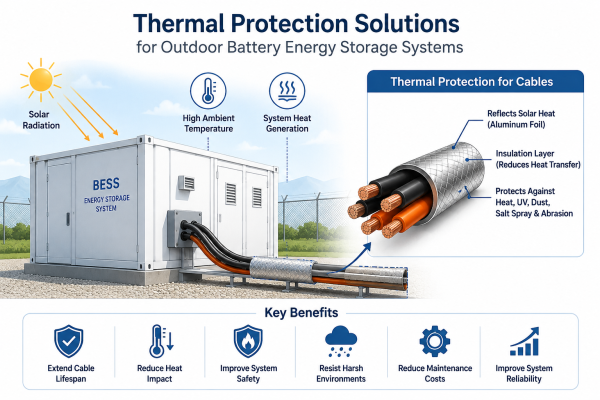
Safety and Thermal Protection
High-density storage systems require:
- Thermal runaway prevention
- Fire suppression systems
- Environmental protection
Grid Compatibility
Systems must comply with:
- Grid codes
- Interconnection standards
- Communication protocols
Lifecycle Optimization
Long-term performance depends on:
- Battery cycling management
- Thermal stability
- Intelligent charging strategies
Challenges in Renewable Energy Integration
Renewable Intermittency
Variable generation creates balancing challenges for the grid.
Grid Infrastructure Constraints
Traditional grids were not designed for distributed renewable systems.
Thermal and Safety Risks
Large-scale battery systems require advanced protection architecture.
Economic Optimization
Balancing lifecycle cost, efficiency, and reliability remains critical.
Emerging Trends
1. Utility-Scale Battery Storage Expansion
Large ESS installations are supporting renewable-heavy grids worldwide.
2. AI-Based EMS Optimization
Predictive analytics improve energy dispatch and efficiency.
3. Hybrid Renewable + Storage Platforms
Integrated systems combining:
- Solar
- Wind
- Storage
- Hydrogen technologies
4. Distributed Renewable Storage
Localized storage improves:
- Grid flexibility
- Community resilience
- Renewable self-consumption
5. High-Voltage Energy Storage Systems
Higher system voltages improve:
- Efficiency
- Power density
- Reduced transmission losses
Applications
- Utility-scale renewable power plants
- Commercial & industrial energy systems
- Residential solar + storage
- Microgrids and remote communities
- EV charging infrastructure
- Smart grid systems
Best Practices
- Integrate energy storage planning early in renewable projects
- Prioritize thermal management and safety architecture
- Use scalable modular ESS platforms
- Optimize EMS for renewable forecasting and grid interaction
- Validate systems through pilot and real-world testing
Energy storage plays a central role in enabling large-scale renewable energy integration. By balancing intermittent generation, improving grid stability, and increasing energy resilience, storage systems make renewable energy more practical, reliable, and scalable.
As global energy infrastructure continues transitioning toward clean and decentralized power systems, renewable energy storage integration will become one of the most important pillars of future energy networks.