
As electric vehicle (EV) adoption accelerates globally, charging infrastructure is becoming one of the most critical components of the transportation transition. However, rapid EV charging places significant pressure on power grids, especially in urban areas, highways, and commercial charging hubs.
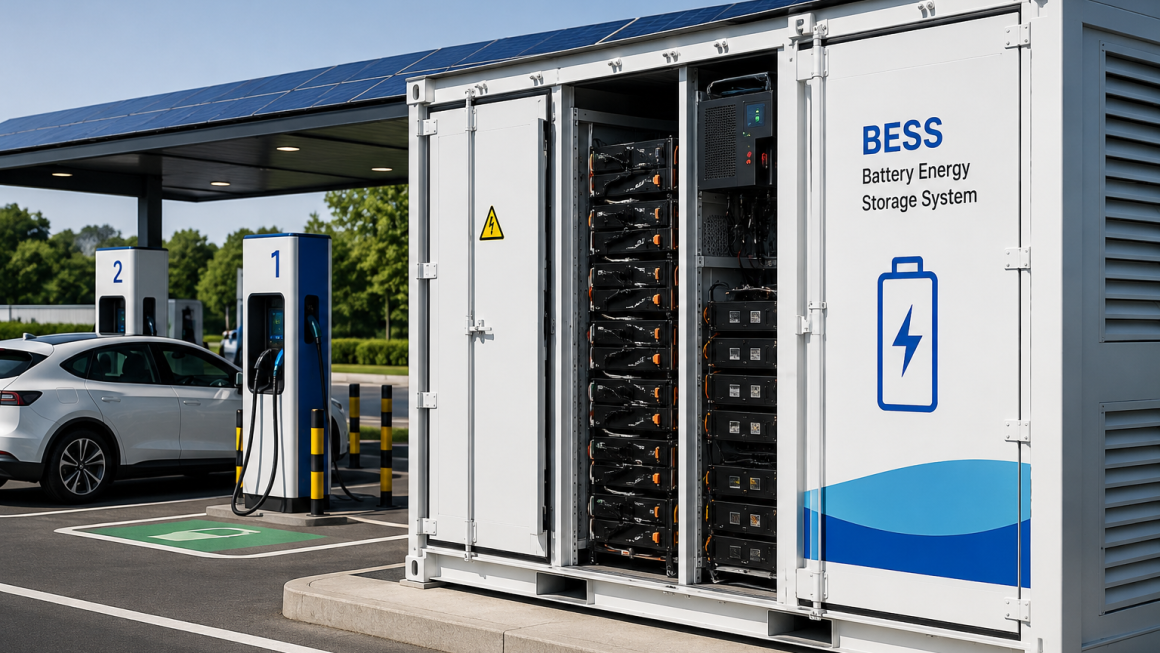
Battery energy storage systems (BESS) are emerging as a key solution for supporting EV charging infrastructure by improving grid stability, enabling fast charging, reducing peak demand, and enhancing energy efficiency.
Why Energy Storage Matters for EV Charging Infrastructure
Fast EV chargers require extremely high power output.
For example:
- DC fast chargers may require hundreds of kilowatts
- Ultra-fast charging stations can exceed megawatt-level demand
Without energy storage:
- Grid upgrades become expensive and time-consuming
- Peak demand charges increase significantly
- Charging performance may become unstable
Battery systems help buffer power demand and optimize charging operations.
Core Functions of Battery Systems in EV Charging
1. Peak Shaving
Battery systems reduce grid stress by:
- Storing energy during low-demand periods
- Supplying additional power during peak charging demand
This lowers:
- Grid load spikes
- Infrastructure upgrade requirements
- Electricity demand charges
2. Fast Charging Support
Battery storage enables:
- Stable high-power charging
- Faster charging response times
- Improved charger utilization
Especially important for:
- Highway charging stations
- Fleet charging hubs
- Urban fast-charging networks
3. Renewable Energy Integration
Battery systems can integrate with:
- Solar charging stations
- Wind-powered EV infrastructure
- Hybrid renewable charging networks
This supports cleaner transportation ecosystems.
4. Backup Power and Reliability
Storage systems provide:
- Emergency backup power
- Stable operation during grid disturbances
- Enhanced charging network resilience
5. Energy Cost Optimization
Battery systems help:
- Store lower-cost electricity during off-peak periods
- Reduce operational electricity costs
- Improve energy management efficiency
Core Components of EV Charging Energy Storage Systems
1. Battery Storage System
The battery system stores and delivers power for charging support.
Common battery chemistries:
- LFP (Lithium Iron Phosphate)
- NMC (Nickel Manganese Cobalt)
- Emerging sodium-ion systems
Battery architecture includes:
- Cells
- Modules
- Packs and racks
- High-voltage DC systems
2. Power Conversion System (PCS)
The PCS manages:
- AC ↔ DC conversion
- Power distribution
- Charging and discharging coordination
It connects the battery system with:
- The utility grid
- Renewable sources
- EV chargers
3. Battery Management System (BMS)
The BMS ensures:
- Cell balancing
- Voltage and temperature monitoring
- Thermal protection
- Safety diagnostics
4. Energy Management System (EMS)
The EMS optimizes:
- Charging schedules
- Power dispatch
- Renewable utilization
- Peak demand reduction
Advanced EMS platforms increasingly use AI-based optimization.
5. Thermal Management System
Fast charging creates significant heat generation.
Thermal systems maintain:
- Stable battery temperatures
- Safe charger operation
- Long-term reliability
Cooling methods include:
- Air cooling
- Liquid cooling
- Integrated thermal architectures
Typical EV Charging + Storage Configurations
Urban Fast-Charging Stations
Battery systems support:
- Limited grid capacity areas
- High charging turnover
- Peak demand management
Highway Charging Networks
Energy storage enables:
- Ultra-fast charging capability
- Reduced grid infrastructure costs
- Reliable long-distance charging corridors
Fleet Charging Infrastructure
Used for:
- Electric buses
- Delivery fleets
- Logistics vehicles
Battery systems help balance large simultaneous charging loads.
Renewable-Powered Charging Stations
Combining:
- Solar PV
- Battery storage
- Smart charging systems
This supports sustainable EV ecosystems.
Key Design Considerations
Power Density and Scalability
Systems must support:
- High charging power
- Future EV adoption growth
- Flexible infrastructure expansion
Thermal and Safety Architecture
Fast charging environments require:
- Advanced thermal management
- Fire protection systems
- Thermal runaway mitigation
Grid Integration
Charging systems must comply with:
- Utility interconnection standards
- Smart grid communication protocols
- Demand response programs
Lifecycle Optimization
Frequent cycling requires:
- Intelligent charge management
- Optimized battery utilization
- Long-term durability strategies
Challenges in EV Charging Energy Storage
High Power Demand
Ultra-fast chargers create significant grid stress.
Thermal Management Complexity
Fast charging generates substantial heat.
Infrastructure Costs
Grid upgrades remain expensive in many regions.
System Integration
Coordinating chargers, batteries, PCS, EMS, and renewable systems increases complexity.
Emerging Trends
1. Ultra-Fast Charging Infrastructure
Megawatt-level charging for commercial vehicles and next-generation EVs.
2. Renewable + Charging + Storage Ecosystems
Integrated solar-powered charging hubs with battery storage.
3. AI-Based Smart Charging
Dynamic optimization of charging demand and energy pricing.
4. Vehicle-to-Grid (V2G)
EV batteries acting as distributed energy storage assets.
5. Containerized Charging Energy Systems
Modular battery systems for scalable deployment.
Applications
- Public fast-charging stations
- Highway charging networks
- Commercial fleet charging
- Urban charging infrastructure
- Renewable-powered EV charging hubs
- Smart city energy systems
Best Practices
- Integrate storage planning early in charging infrastructure projects
- Prioritize thermal and safety design for high-power operation
- Use scalable modular battery architectures
- Optimize EMS for peak shaving and charging management
- Validate systems under real-world charging conditions
Battery systems are becoming essential for the future of EV charging infrastructure. By reducing grid stress, enabling fast charging, improving renewable integration, and optimizing energy management, energy storage systems make EV charging networks more scalable, reliable, and efficient.
As global electrification accelerates, integrated battery storage will play a critical role in building resilient and future-ready EV charging ecosystems.