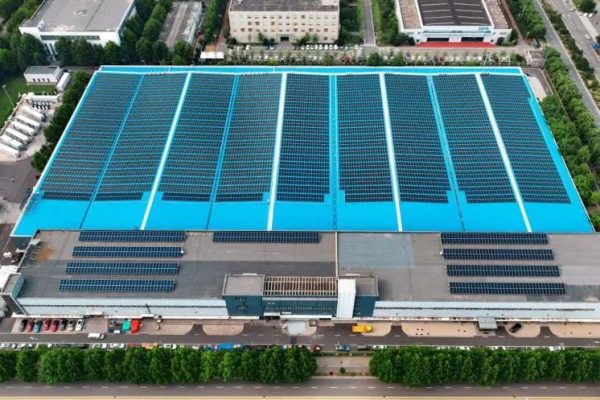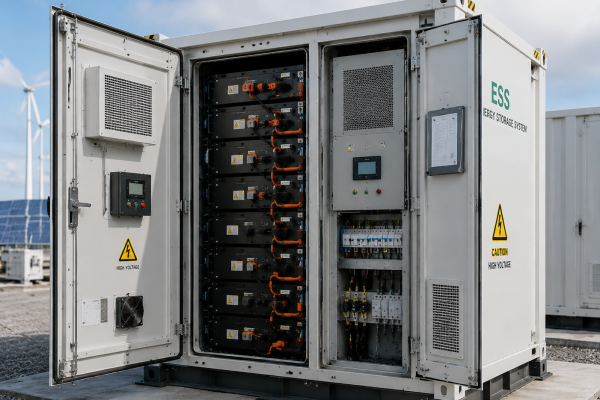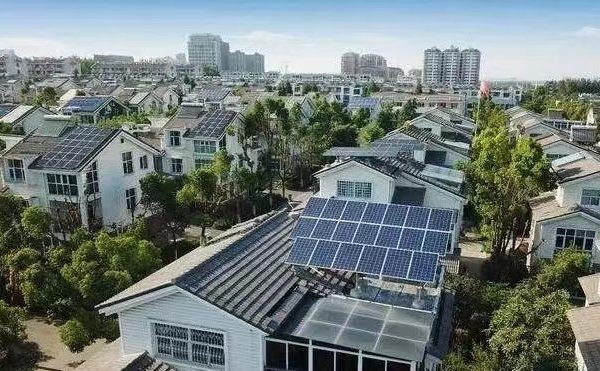

As global energy infrastructure becomes more decentralized, Distributed Energy Storage Systems (DESS) are emerging as a critical solution for improving grid flexibility, renewable integration, and local energy resilience. Unlike centralized storage plants, distributed systems deploy energy storage closer to where energy is generated or consumed.
This distributed architecture enables more responsive, scalable, and efficient energy management across residential, commercial, industrial, and utility-scale applications.
What Is a Distributed Energy Storage System?
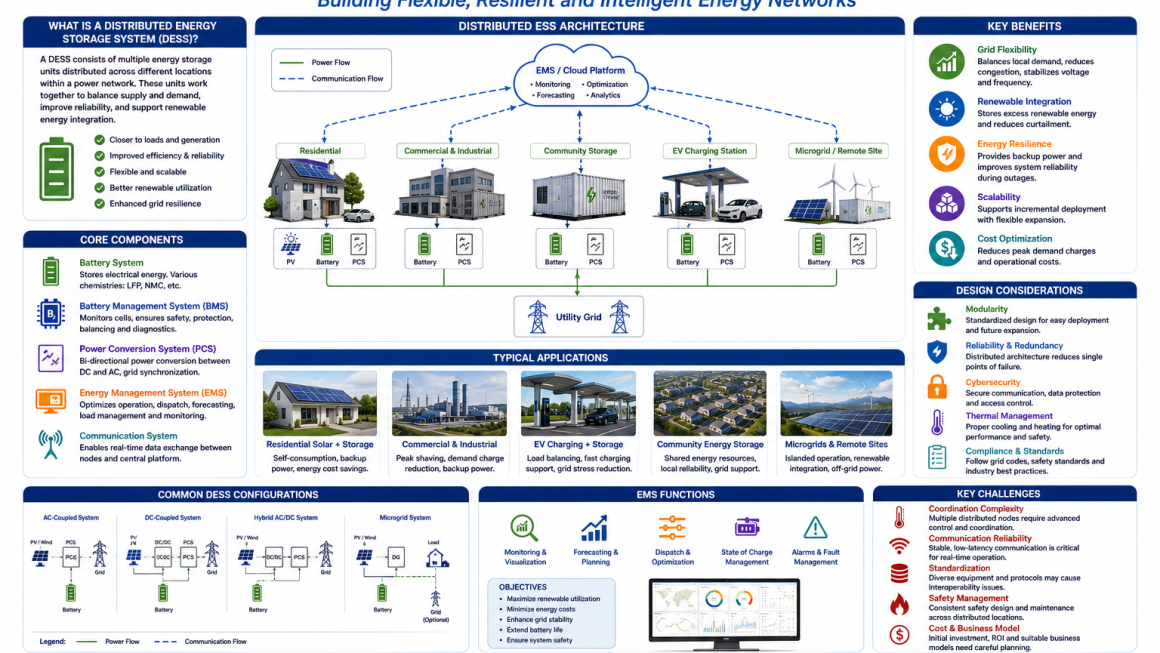
A Distributed Energy Storage System consists of multiple interconnected storage units deployed across different locations within a power network.
These systems may include:
- Residential battery storage
- Commercial & industrial ESS
- Community energy storage
- EV charging storage systems
- Renewable-integrated battery systems
- Microgrid storage platforms
Rather than relying on one centralized energy hub, distributed systems create a network of localized storage assets.
Why Distributed ESS Is Important
1. Grid Flexibility
Distributed storage helps:
- Balance local power demand
- Reduce transmission congestion
- Stabilize voltage and frequency
2. Renewable Energy Integration
Distributed storage enables:
- Local solar and wind energy utilization
- Reduced renewable curtailment
- Smoother renewable power output
3. Energy Resilience
Localized storage improves:
- Backup power capability
- Disaster recovery response
- Grid independence for critical facilities
4. Scalability
Distributed systems allow:
- Incremental deployment
- Flexible expansion
- Reduced upfront infrastructure costs
Core Architecture of Distributed ESS
1. Distributed Battery Units
Installed across:
- Homes
- Factories
- Commercial buildings
- EV charging stations
- Remote sites
These units may vary in:
- Voltage
- Capacity
- Battery chemistry
2. Power Conversion Systems (PCS)
Each storage node typically includes:
- Inverters
- DC/DC converters
- Grid synchronization controls
PCS enables bidirectional energy flow between storage and the grid.
3. Battery Management System (BMS)
The BMS performs:
- Cell monitoring
- Protection functions
- Thermal management coordination
- Diagnostics and balancing
4. Energy Management System (EMS)
EMS coordinates distributed assets through:
- Load forecasting
- Energy dispatch optimization
- Peak shaving strategies
- Renewable coordination
Cloud-based EMS platforms are increasingly common.
5. Communication Infrastructure
Distributed systems require reliable communication between nodes:
Common protocols:
- Modbus
- CAN
- Ethernet
- MQTT
- IEC communication standards
Key Design Principles
Modularity
Systems should support:
- Flexible deployment sizes
- Easy expansion
- Standardized interfaces
Scalability
Architecture must support:
- Additional storage nodes
- Growing energy demand
- Future technology integration
Reliability and Redundancy
Distributed systems improve resilience by avoiding single points of failure.
Cybersecurity
Connected energy systems require:
- Secure communication
- Data protection
- Remote access control
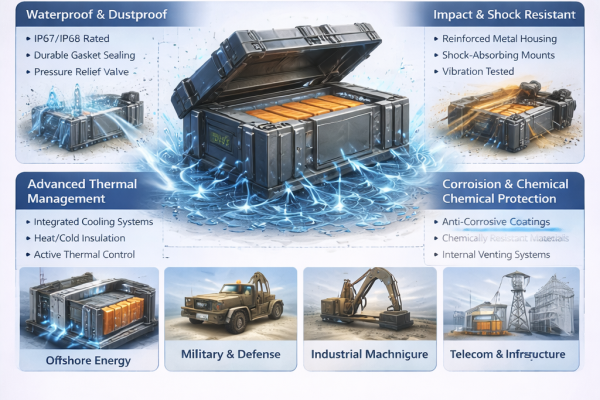
Thermal and Environmental Protection
Distributed ESS may operate in:
- Outdoor environments
- High-temperature regions
- Remote industrial locations
Robust enclosure and thermal design are essential.
Typical Distributed ESS Configurations
Residential Solar + Storage
- Rooftop PV systems
- Home battery storage
- Smart energy management
Commercial & Industrial ESS
- Peak demand management
- Backup power systems
- Energy cost optimization
EV Charging + Storage
- Fast charging support
- Local load balancing
- Reduced grid stress
Community Energy Storage
- Shared local energy infrastructure
- Renewable balancing
- Grid support services
Microgrids
- Islanded operation capability
- Renewable integration
- Remote power systems
Key Challenges
System Coordination
Managing many distributed nodes increases operational complexity.
Communication Reliability
Real-time synchronization is essential for stable operation.
Standardization
Different hardware platforms may create compatibility issues.
Thermal and Safety Management
Distributed installations must maintain consistent safety standards.
Emerging Trends
1. Virtual Power Plants (VPP)
Distributed storage assets aggregated into unified grid resources.
2. AI-Driven Energy Optimization
Predictive control and real-time dispatch optimization.
3. Bidirectional EV Integration
EV batteries functioning as distributed storage assets.
4. Edge Energy Intelligence
Local processing and autonomous energy decisions at node level.
5. Renewable + Distributed Storage Ecosystems
Integrated local energy networks combining:
- Solar
- Wind
- Storage
- Smart loads
Best Practices
- Design with modular scalability from the start
- Integrate EMS and communication architecture early
- Prioritize cybersecurity and remote monitoring
- Optimize thermal and safety systems for distributed environments
- Validate interoperability across all system components
Distributed Energy Storage System design is reshaping the future of modern energy infrastructure. By deploying storage closer to generation and consumption points, distributed ESS enables greater grid flexibility, renewable integration, resilience, and operational efficiency.
As energy systems continue moving toward decentralization and intelligent control, distributed storage architectures will become a foundational component of next-generation power networks.