
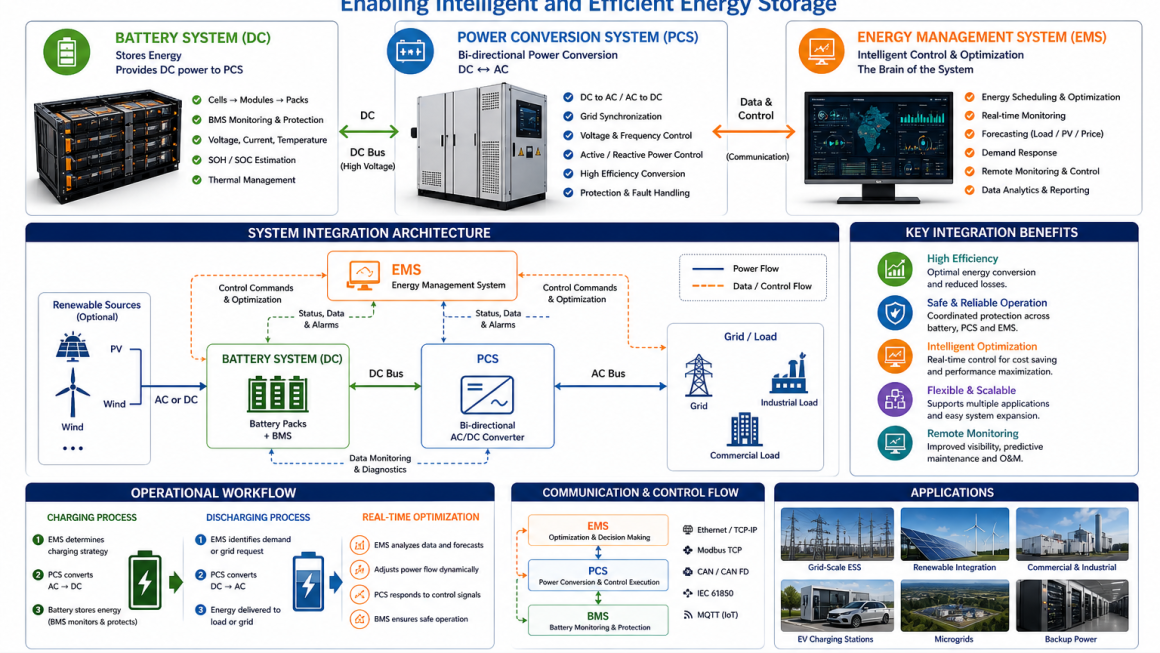
As energy storage systems (ESS) become more advanced and widely deployed, the integration between battery systems, Power Conversion Systems (PCS), and Energy Management Systems (EMS) is critical to achieving optimal performance, safety, and efficiency. These three components form the core operational backbone of any modern ESS.
Why Integration Matters
Battery systems alone store energy—but without proper integration with PCS and EMS, they cannot effectively interact with the grid, renewable sources, or end-use applications.
Seamless integration enables:
- Efficient energy conversion and utilization
- Real-time system control and optimization
- Safe and stable operation under dynamic conditions
- Intelligent response to grid and load demands
Key Components Overview
1. Battery System
- Stores electrical energy (DC)
- Composed of cells, modules, and packs
- Includes Battery Management System (BMS) for monitoring and protection
2. Power Conversion System (PCS)
- Converts DC (battery) ↔ AC (grid/load)
- Controls charging and discharging processes
- Ensures synchronization with grid parameters (voltage, frequency)
3. Energy Management System (EMS)
- Acts as the “brain” of the system
- Optimizes energy flow based on demand, pricing, and availability
- Interfaces with grid, renewable sources, and user loads
Integration Architecture
1. Electrical Integration
- Battery connects to PCS via DC bus
- PCS interfaces with grid/load through AC side
- Proper voltage matching and protection coordination are essential
Key considerations:
- High-voltage design (e.g., 800V–1500V systems)
- Busbar and cable optimization
- Isolation and grounding
2. Communication and Control Integration
- BMS communicates battery status to PCS and EMS
- EMS sends control commands based on system-level strategy
- PCS executes real-time power conversion accordingly
Communication protocols may include:
- CAN, Modbus, Ethernet
- Real-time data acquisition systems
3. Thermal and Safety Coordination
- Battery thermal management must align with PCS operation
- EMS monitors temperature and adjusts system behavior
- Safety systems must operate across all layers
Operational Workflow
Charging Process
- EMS determines charging strategy (e.g., off-peak charging)
- PCS converts AC → DC
- Battery stores energy under BMS supervision
Discharging Process
- EMS identifies demand or grid request
- PCS converts DC → AC
- Energy is delivered to load or grid
Real-Time Optimization
- EMS adjusts power flow dynamically
- PCS responds instantly to control signals
- BMS ensures safe battery operation
Key Integration Challenges
1. System Compatibility
- Matching battery voltage with PCS input range
- Ensuring communication protocol alignment
2. Response Time
- Fast coordination between BMS, PCS, and EMS is critical
- Delays can impact efficiency and safety
3. Thermal Coupling
- PCS generates heat that can affect battery performance
- Integrated thermal design is required
4. Safety Coordination
- Fault detection must trigger coordinated responses across systems
- Includes shutdown, isolation, and protection mechanisms
Advanced Integration Strategies
1. DC-Coupled Systems
- Batteries directly connected to renewable sources (e.g., solar)
- Higher efficiency with fewer conversion steps
2. AC-Coupled Systems
- Batteries connected via PCS to AC bus
- Greater flexibility for retrofitting existing systems
3. Hybrid Architectures
- Combine AC and DC coupling for optimized performance
4. Smart EMS Integration
- AI-based optimization
- Predictive energy management
- Real-time grid interaction
Applications
- Grid-scale energy storage
- Commercial & industrial ESS
- Renewable energy integration (solar + storage)
- EV charging infrastructure
- Microgrids and off-grid systems
Best Practices
- Design integration from the early stage—not as an afterthought
- Ensure compatibility across electrical and communication interfaces
- Optimize thermal and safety systems jointly
- Validate integration through pilot and system-level testing
- Use modular and standardized architectures
The integration of battery systems with PCS and EMS is essential for transforming energy storage from a passive component into an intelligent, responsive, and efficient system. By aligning electrical, thermal, and control layers, modern ESS can deliver optimized performance across a wide range of applications.
As energy systems become more complex and interconnected, seamless integration will be the key to unlocking their full value.