
As energy storage systems (ESS) evolve to support renewable integration, electrification, and grid stability, architecture design has become a decisive factor in system performance. A well-structured ESS architecture ensures not only efficiency and safety, but also scalability, maintainability, and long-term reliability.
This article outlines the key design principles behind modern energy storage system architecture.
What Is Energy Storage System Architecture?
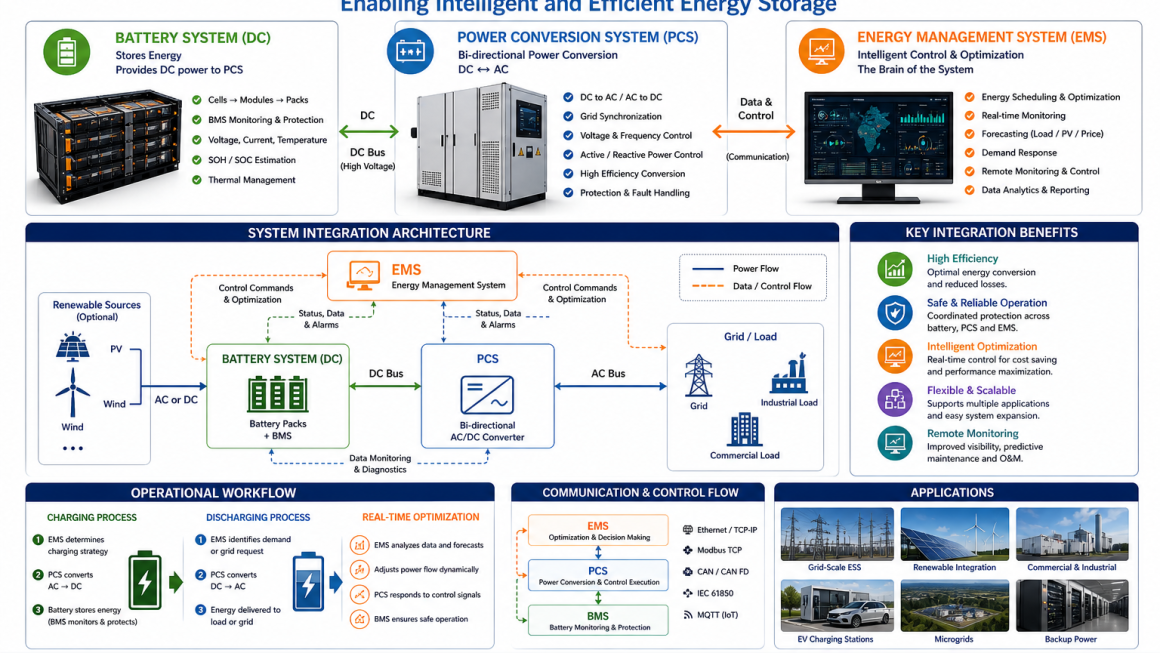
ESS architecture refers to how different components—battery modules, power electronics, control systems, and structural elements—are organized and integrated into a complete system.
A typical architecture includes:
- Battery modules and packs
- Battery Management System (BMS)
- Power Conversion System (PCS)
- Thermal management system
- Energy Management System (EMS)
- Enclosure and structural framework
The way these components interact defines system performance.
Core Design Principles
1. Modularity and Scalability
A modern ESS must be designed for flexible expansion.
Key strategies:
- Standardized battery modules
- Rack-based or containerized configurations
- Plug-and-play electrical and thermal interfaces
Benefits:
- Easy system expansion
- Faster deployment
- Simplified maintenance
2. Electrical Architecture Optimization
Efficient electrical design minimizes losses and ensures safe operation.
Considerations:
- Voltage level selection (e.g., 400V, 800V, 1500V systems)
- Series/parallel configuration of modules
- Busbar design and current distribution
- Protection coordination (fuses, breakers, contactors)
3. Thermal Management Integration
Thermal design must be embedded into the architecture—not added later.
Approaches:
- Air cooling for low-density systems
- Liquid cooling for high-density applications
- Hybrid cooling solutions
- Uniform temperature control across modules
4. Safety-Centric Design
Safety must be integrated at every architectural layer:
- Cell-level protection
- Module-level thermal barriers
- Pack-level isolation
- System-level fire detection and suppression
A multi-layer safety architecture reduces risk and improves system resilience.
5. Mechanical and Structural Design
Structural architecture supports both performance and durability:
- Rigid frames and enclosures
- Vibration-resistant mounting systems
- Load distribution and stress management
- Environmental sealing (IP-rated enclosures)
6. Intelligent Control and Monitoring
Modern ESS relies on advanced control systems:
- BMS for cell-level monitoring and protection
- EMS for system-level optimization
- Real-time data acquisition and diagnostics
- Remote monitoring and predictive maintenance
7. System Integration and Compatibility
ESS must integrate seamlessly with external systems:
- Grid connection and compliance
- Renewable energy sources (solar, wind)
- Industrial loads and microgrids
- EV charging infrastructure
Architecture Layers in Practice
Cell → Module → Pack → System
A hierarchical structure is commonly used:
- Cell Level: energy storage unit
- Module Level: grouped cells with thermal and structural support
- Pack Level: integrated modules with electrical connections
- System Level: full ESS with control, conversion, and enclosure
Each layer adds functionality and complexity.
Key Design Challenges
- Balancing energy density with safety
- Managing heat in large-scale systems
- Ensuring reliability over long lifecycles
- Achieving cost-effective scalability
- Meeting international standards and regulations
Emerging Architectural Trends
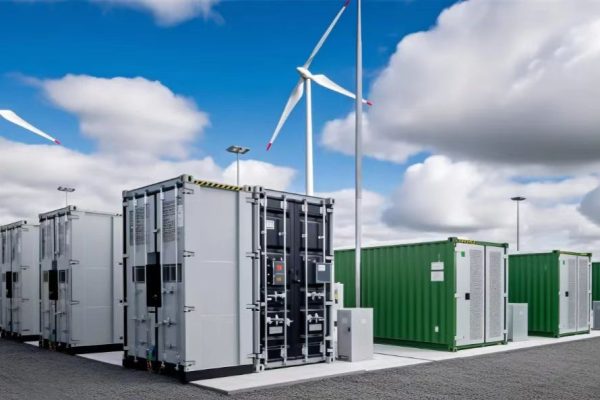
1. Containerized ESS
Pre-integrated systems for rapid deployment.
2. High-Voltage Architectures
Improved efficiency and reduced current losses.
3. Integrated Thermal-Structural Designs
Combining cooling and mechanical support functions.
4. Digital and Smart Systems
AI-driven EMS and predictive analytics.
5. Standardization
Industry movement toward standardized module and system interfaces.
Best Practices
- Design architecture with scalability from the start
- Integrate thermal and safety systems early
- Use standardized components where possible
- Validate architecture through pilot and system-level testing
- Ensure compliance with global safety standards
Energy storage system architecture is the backbone of modern energy solutions. By applying key design principles—modularity, safety, thermal integration, and intelligent control—engineers can build systems that are not only efficient but also scalable and reliable.
As energy storage continues to expand across industries, robust architectural design will be essential to unlocking its full potential.