
Why High Temperatures Are a Growing Challenge for Outdoor BESS
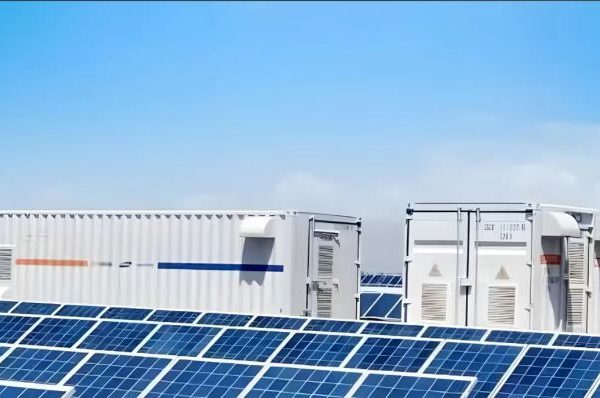
Battery Energy Storage Systems (BESS) are increasingly deployed in outdoor environments where they are exposed to direct sunlight, elevated ambient temperatures, dust, humidity, and other harsh weather conditions.
In regions such as the Middle East, Australia, Southeast Asia, and parts of North America, outdoor energy storage systems may operate under ambient temperatures exceeding 40°C (104°F). Under direct solar radiation, the external surface of a battery container can become significantly hotter.
Without effective thermal management, excessive heat can reduce system efficiency, shorten component lifespan, and increase safety risks.
For this reason, managing high temperatures has become a key consideration in the design of modern outdoor BESS installations.
Where Does the Heat Come From?
Outdoor battery energy storage systems experience heat from several sources simultaneously.
Solar Radiation
Direct sunlight is often the largest external heat source.
Steel enclosures, cable trays, and electrical cabinets absorb solar energy throughout the day, increasing the temperature of surrounding components.
High Ambient Temperature
In hot climates, elevated air temperatures reduce the cooling efficiency of equipment and make it more difficult to remove internally generated heat.
Internal Heat Generation
Heat is also produced during normal system operation by:
- Battery charging and discharging
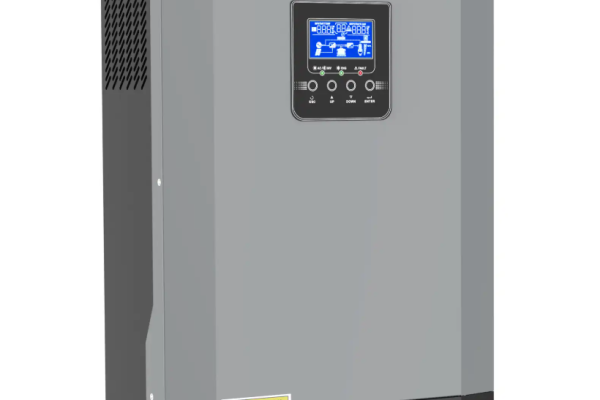
- Power Conversion Systems (PCS)
- Inverters
- Busbars
- Electrical cables
- Cooling equipment
When external and internal heat combine, localized hot spots may develop inside the container.
Components Most Affected by Heat
Although battery cells receive the most attention, several other components are equally sensitive to prolonged thermal exposure.
These include:
- Power cables
- Cable connectors
- PCS cabinets
- Busbars
- Battery racks
- Control electronics
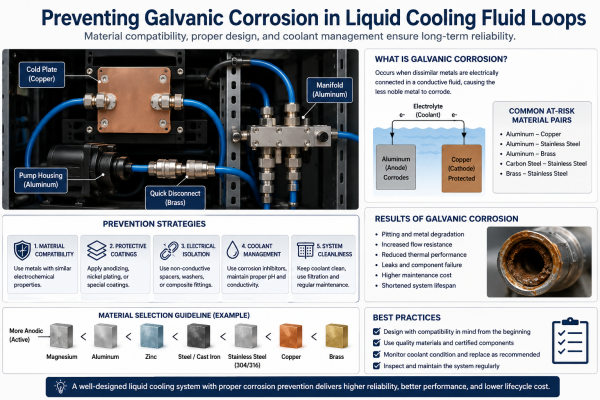
- Cooling manifolds
- Liquid cooling connectors
Protecting these components improves the overall reliability of the energy storage system.
How Outdoor BESS Handle High Temperatures
Modern energy storage systems rely on multiple layers of thermal management rather than a single solution.
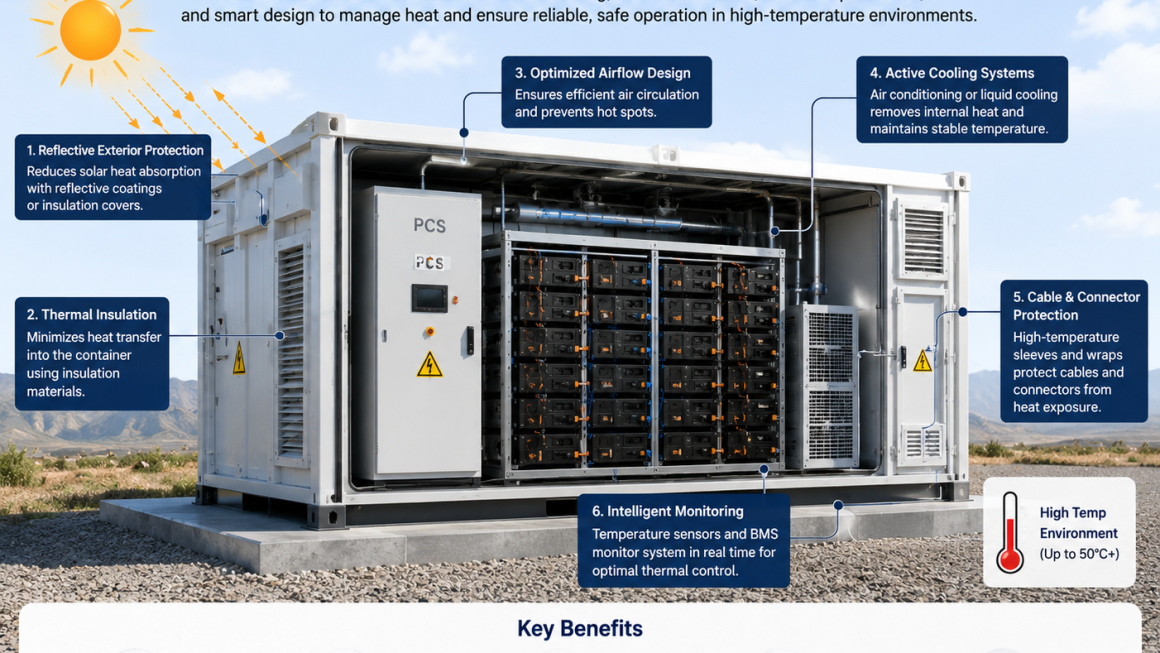
Active Cooling Systems
Many utility-scale BESS use active cooling technologies such as:
- Air conditioning
- Forced-air ventilation
- Liquid cooling
- Cold plate cooling
These systems remove internally generated heat and maintain operating temperatures within the recommended range.
Optimized Airflow Design
Container layouts are designed to improve heat dissipation by:
- Separating heat-generating equipment
- Creating dedicated airflow paths
- Reducing thermal congestion
- Preventing localized hot spots
Proper airflow improves cooling efficiency throughout the enclosure.
Thermal Insulation Materials
Passive insulation materials help reduce heat transfer from the exterior into sensitive equipment.
Typical materials include:
- Aerogel insulation
- Ceramic fiber boards
- High-temperature insulation panels
- Thermal barrier composites
These materials reduce thermal loading without consuming additional energy.
Reflective Exterior Protection
Reflective surfaces help reduce solar heat absorption before it reaches the enclosure.
Common solutions include:
- Reflective coatings
- Aluminum foil composite barriers
- High-reflectivity insulation covers
- Solar heat shields
Lower surface temperatures reduce the overall cooling demand.
Cable and Connector Protection
Power cables and connectors are often exposed to elevated temperatures near PCS units and outdoor cable routes.
Protective products may include:
- High-temperature cable sleeves
- Heat-reflective wraps
- Abrasion-resistant protective tubing
- UV-resistant cable coverings
These solutions help extend cable service life while improving long-term reliability.
Designing for Harsh Outdoor Environments
Temperature is only one environmental challenge.
Outdoor BESS installations also require protection against:
- Dust and sand
- Rain and humidity
- UV radiation
- Salt spray
- Mechanical vibration
- Corrosive industrial atmospheres
Modern system designs therefore combine thermal protection with environmental protection to ensure reliable long-term operation.
Best Practices for High-Temperature BESS Projects
To improve system performance in hot climates, engineers commonly recommend:
- Reducing direct solar exposure where practical
- Using reflective exterior materials
- Installing thermal insulation around sensitive components
- Protecting exposed cable assemblies with high-temperature sleeves
- Maintaining adequate ventilation around PCS cabinets
- Selecting corrosion-resistant materials for outdoor installations
- Monitoring equipment temperatures continuously through the Battery Management System (BMS)
These measures help reduce thermal stress while extending the service life of critical components.
Future Trends in Outdoor Thermal Management
As battery energy density and rack power continue to increase, thermal management is becoming more sophisticated.
Emerging technologies include:
- Smart thermal insulation materials
- Advanced reflective coatings
- Lightweight composite heat shields
- Improved liquid cooling architectures
- Integrated thermal monitoring systems
- Multi-functional protective materials combining insulation, fire resistance, and environmental protection
These innovations aim to improve system efficiency while reducing maintenance requirements.
Outdoor Battery Energy Storage Systems operate in increasingly demanding environments where high temperatures can affect batteries, power electronics, cables, and structural components.
Rather than relying on cooling equipment alone, modern BESS designs combine active cooling, passive insulation, reflective barriers, optimized airflow, and protective materials to manage thermal stress effectively.
By integrating these complementary solutions, developers can improve system reliability, reduce maintenance costs, and extend the operational lifespan of outdoor energy storage installations.
As global deployments continue to expand into hotter climates, comprehensive thermal management will remain one of the most important factors in achieving safe, efficient, and long-lasting BESS performance.