
Why Corrosion Protection Matters in Outdoor ESS
Battery Energy Storage Systems (BESS) are increasingly installed in challenging outdoor environments, including:
- Coastal regions
- Industrial areas
- Desert locations
- Offshore renewable energy sites
In these environments, metal structures and electrical components are continuously exposed to:
- Salt spray
- Humidity
- Temperature fluctuations
- Industrial pollutants
- Condensation
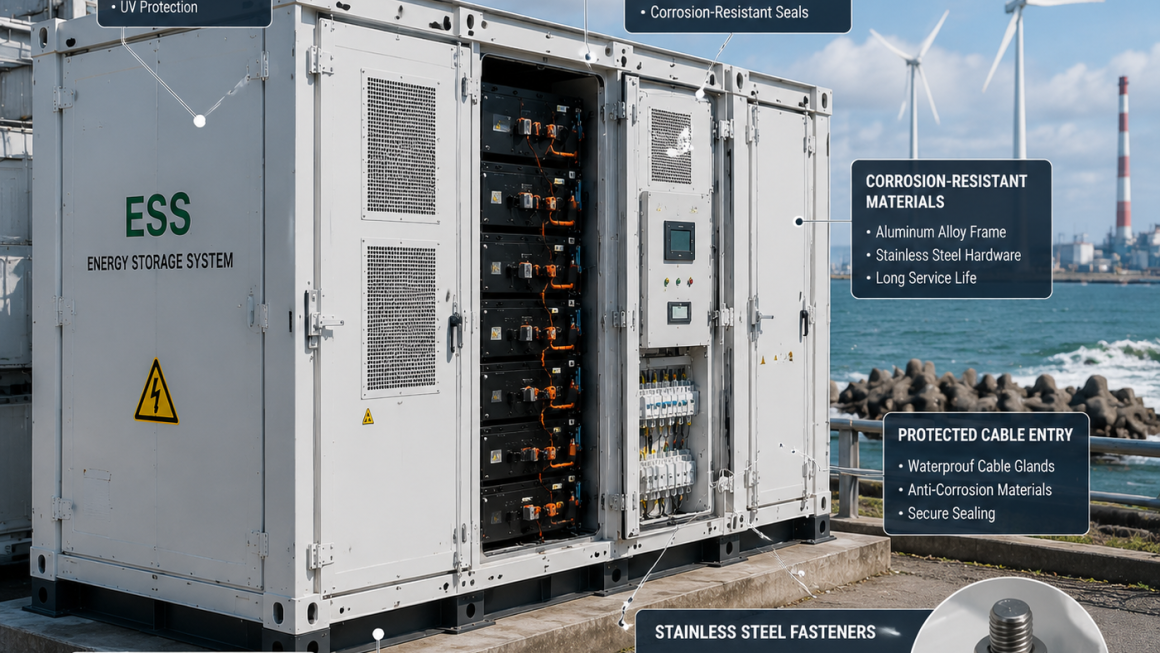
Without proper corrosion protection, structural components, enclosures, fasteners, and electrical interfaces may gradually degrade, affecting system reliability and service life.
For harsh outdoor applications, C5 corrosion protection has become an important consideration in energy storage system design.
What Is C5 Corrosion Protection?
C5 is one of the highest atmospheric corrosion categories defined in international corrosion classification standards.
It represents environments with very high corrosion risk.
Typical C5 environments include:
C5-I: Very High Industrial Corrosion
Examples:
- Chemical plants
- Heavy industrial zones
- Areas with high levels of pollution
Main risks:
- Industrial gases
- Chemical contaminants
- Moisture accumulation
C5-M: Very High Marine Corrosion
Examples:
- Coastal installations
- Offshore environments
- Marine infrastructure
Main risks:
- Salt spray
- High humidity
- Chloride exposure
Why Outdoor ESS Requires C5-Level Protection
Energy storage systems often operate outdoors for 10–20 years or longer.
During this period, corrosion can affect multiple components.
Corrosion Risks in ESS Components
Battery Enclosures
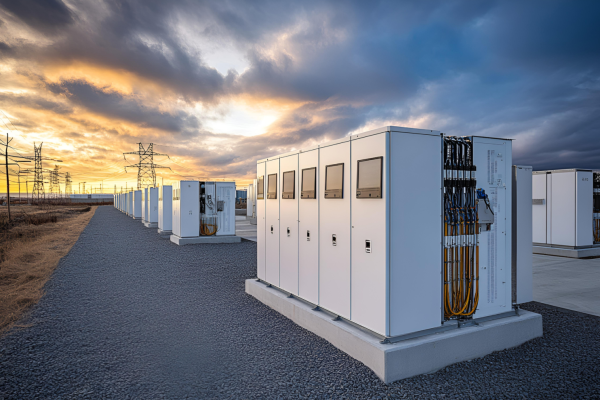
Outdoor battery cabinets and containers are exposed to:
- Rain
- Salt particles
- UV radiation
- Moisture cycling
Potential issues include:
- Coating degradation
- Surface corrosion
- Reduced mechanical strength
Structural Frames and Racks
Metal structures support heavy battery modules.
Corrosion may reduce:
- Structural integrity
- Load-bearing capability
- Long-term reliability
Cable Protection Components
Cable systems may include:
- Cable glands
- Metal conduits
- Protective sleeves
- Mounting hardware
Corrosion at connection points may increase maintenance requirements.
Fasteners and Hardware
Small components can become weak points.
Common risks include:
- Bolt corrosion
- Connection loosening
- Galvanic corrosion
How C5 Corrosion Protection Is Achieved
C5 protection is usually not achieved by one single material.
Instead, it requires a complete protection system.
Solution 1: Protective Coatings
Coatings create a barrier between metal surfaces and the environment.
Common systems include:
Epoxy Primer + Polyurethane Topcoat
Advantages:
- Strong adhesion
- Good chemical resistance
- UV protection
Commonly used for:
- Steel enclosures
- Industrial equipment
Powder Coating
Advantages:
- Good appearance
- Durable surface protection
- Efficient manufacturing process
Applications:
- Battery cabinets
- Aluminum structures
Fluoropolymer Coatings
Advantages:
- Excellent weather resistance
- Strong UV durability
Used in demanding outdoor applications.
Solution 2: Material Selection
Material choice strongly affects corrosion performance.
Aluminum
Advantages:
- Natural oxide protection
- Lightweight
- Good outdoor durability
Common applications:
- ESS frames
- Heat dissipation components
- Enclosures
Additional surface treatment may improve performance.
Stainless Steel
Advantages:
- Excellent corrosion resistance
- High mechanical strength
Suitable for:
- Marine environments
- Critical components
Coated Carbon Steel
Advantages:
- High strength
- Cost-effective
Requires:
- Proper coating system
- Surface preparation
Solution 3: Surface Treatment
Before coating, proper surface preparation is essential.
Common processes include:
- Cleaning
- Sand blasting
- Chemical conversion coating
- Anodizing for aluminum
Good surface preparation improves coating adhesion and service life.
Solution 4: Sealing and Design Protection
Corrosion prevention is not only about materials.
Mechanical design also matters.
Important features include:
- Sealed enclosure joints
- Water-resistant cable entries
- Drainage structures
- Reduced moisture traps
Good design prevents water accumulation.
C5 Protection for Different ESS Applications
Coastal Battery Storage
Main risks:
- Salt spray
- High humidity
- Marine atmosphere
Recommended solutions:
- C5-M coating systems
- Stainless steel hardware
- Sealed enclosures
Industrial Energy Storage
Main risks:
- Chemical pollution
- Industrial gases
Recommended solutions:
- Chemical-resistant coatings
- Robust enclosure designs
Desert Energy Storage
Although deserts have low humidity, corrosion can still occur due to:
- Dust contamination
- Temperature cycling
- Condensation events
Solutions include:
- Durable coatings
- Dust-resistant enclosure designs
C5 Protection and Thermal Management
A challenge in ESS design is balancing corrosion protection and heat dissipation.
Highly sealed structures improve environmental protection but may affect:
- Heat release
- Ventilation
- Cooling efficiency
Therefore, modern ESS designs combine:
- Corrosion-resistant materials
- Thermal management systems
- Proper airflow design
- Liquid cooling solutions
C5 Protection and Product Selection
For ESS suppliers and integrators, corrosion protection should be considered during component selection.
Important products include:
- Battery enclosures
- Aluminum structural components
- Cable protection sleeves
- Cable glands
- Fasteners
- Cooling system components
Each component should match the expected environmental exposure.
Future Trends in ESS Corrosion Protection
Future energy storage systems will require:
- Longer service life
- Lower maintenance requirements
- Multi-functional coatings
- Lightweight corrosion-resistant materials
- Smart corrosion monitoring
Advanced protection strategies will combine material science, coating technology, and system-level design.
C5 corrosion protection is an important engineering consideration for outdoor and industrial Energy Storage Systems.
In harsh environments such as coastal and industrial areas, corrosion can gradually affect enclosures, structures, cables, and electrical connections.
A reliable C5 protection strategy combines:
- Appropriate materials
- Advanced coating systems
- Proper surface treatment
- Effective sealing design
- Environmental-specific engineering
By designing corrosion protection into the ESS from the beginning, operators can improve system reliability, reduce maintenance costs, and extend the operational lifetime of energy storage installations.