
Why Energy Storage Is Important for Renewable Microgrids
Renewable energy sources such as solar and wind are becoming increasingly important in modern microgrids.
However, renewable generation is naturally variable.
Solar power changes with:
- Time of day
- Weather conditions
- Cloud coverage
- Seasonal conditions
Wind generation can also fluctuate depending on local wind conditions.
At the same time, electricity demand does not necessarily follow the same pattern.
This creates a fundamental challenge:
Renewable generation and electricity demand do not always occur at the same time.
Energy storage provides the flexibility needed to bridge this gap.
By storing excess renewable electricity and releasing it when needed, Battery Energy Storage Systems (BESS) can significantly improve renewable energy utilization within a microgrid.
How Energy Storage Supports Renewable Integration
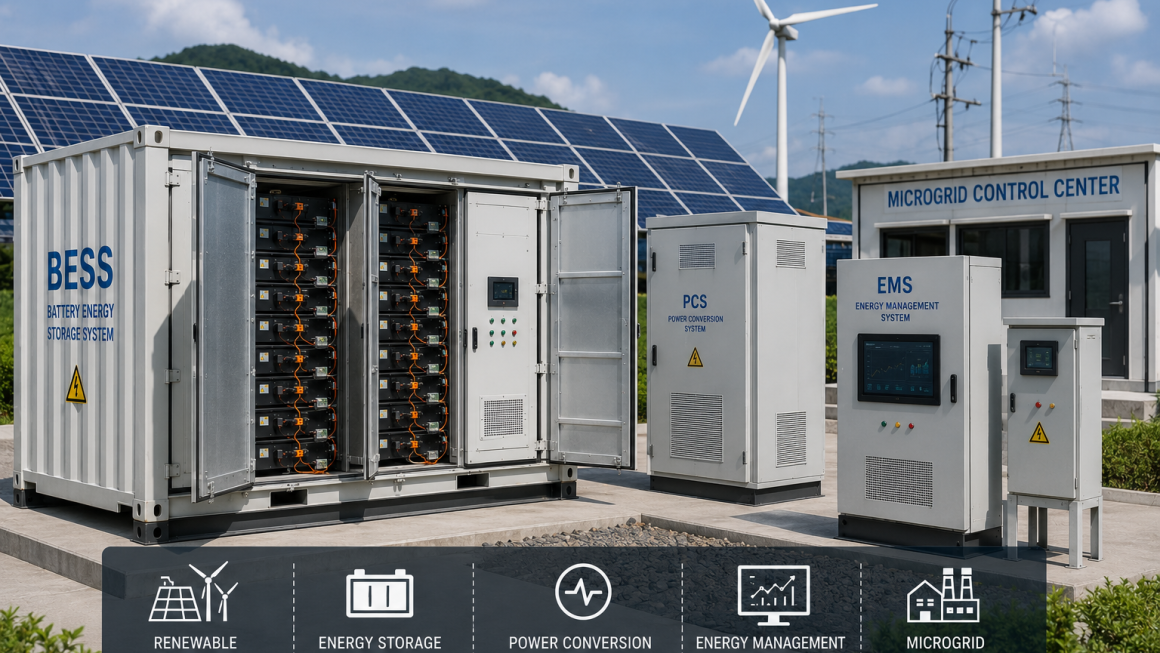
A renewable-powered microgrid typically includes:
- Solar PV
- Wind generation
- Battery Energy Storage System
- Power Conversion System (PCS)
- Energy Management System (EMS)
- Local electrical loads
- Grid connection
The energy flow can be simplified as:
Renewable Generation
↓
Energy Management System
↓
Battery Storage / Local Load
↓
Microgrid
↓
Industrial or Commercial Loads
When renewable generation exceeds demand, surplus electricity can be stored.
When renewable generation decreases, the battery can discharge to support the load.
1. Storing Excess Solar Energy
Solar power generation is usually strongest during the middle of the day.
However, electricity demand may remain high during:
- Morning
- Evening
- Nighttime
Without energy storage, excess solar electricity may need to be exported or curtailed.
With BESS:
High Solar Generation
↓
Excess Energy
↓
Battery Charging
↓
Evening Load
↓
Battery Discharge
This allows more locally generated renewable energy to be consumed on-site.
2. Reducing Renewable Energy Curtailment
Renewable curtailment occurs when available renewable generation cannot be fully utilized.
This can happen because:
- Local demand is too low
- Grid export capacity is limited
- Renewable generation temporarily exceeds system capacity
Battery storage provides an additional destination for excess electricity.
Instead of immediately reducing renewable generation, the microgrid can charge the battery and use the stored energy later.
This improves the overall utilization of renewable assets.
3. Supporting Renewable Energy During Low Generation
Renewable generation can change quickly.
For example:
A cloud passes over a solar installation.
↓
Solar output decreases.
↓
Battery discharge increases.
↓
Microgrid load remains stable.
This buffering effect helps reduce the impact of renewable fluctuations on local electrical systems.
4. Improving Microgrid Stability
High penetration of renewable energy can create challenges for power system stability.
Energy storage can respond rapidly to changes in power demand and generation.
Depending on the system design, BESS can support:
- Voltage regulation
- Frequency response
- Power balancing
- Load stabilization
This makes energy storage an important component of renewable-heavy microgrids.
Main Energy Storage Solutions for Renewable Microgrids
Battery Energy Storage Systems
Lithium-ion BESS is currently one of the most widely used technologies for renewable integration.
Advantages include:
- High energy density
- Fast response
- Modular architecture
- Flexible installation
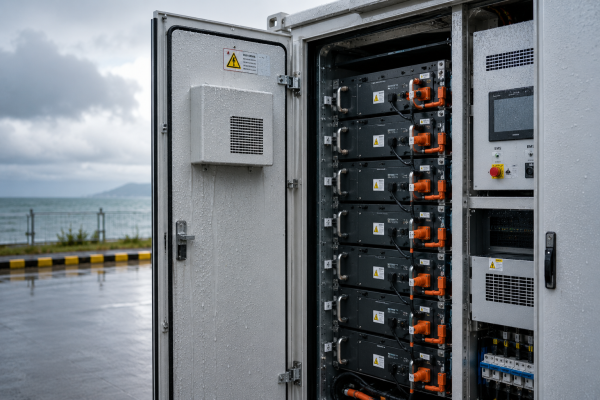
Battery systems can be deployed as:
- Indoor battery cabinets
- Outdoor ESS cabinets
- Containerized BESS
- Distributed battery systems
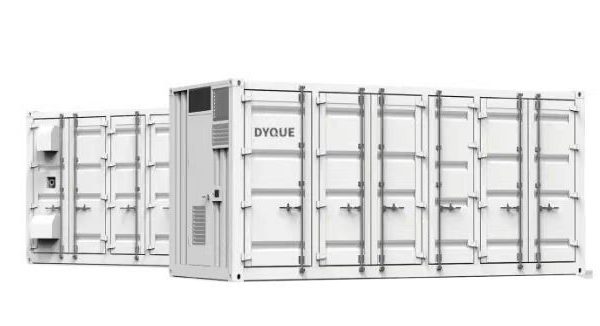
Containerized Energy Storage
Containerized ESS provides a practical solution for larger renewable energy projects.
A typical system can integrate:
- Battery racks
- PCS
- EMS
- Thermal management
- Fire protection
- Environmental protection
Containerized systems are particularly suitable for:
- Solar farms
- Wind farms
- Industrial microgrids
- Remote energy systems
Distributed Energy Storage
Instead of placing all batteries in one location, multiple storage units can be distributed across a microgrid.
This architecture can improve:
- Scalability
- Local energy utilization
- System flexibility
- Resilience
Distributed storage is particularly useful for large industrial parks and multi-building energy networks.
The Role of EMS in Renewable Integration
Energy storage alone does not determine when electricity should be stored or released.
The Energy Management System coordinates the entire microgrid.
The EMS can monitor:
- Renewable generation
- Battery state of charge
- Electricity demand
- Grid conditions
- Electricity prices
It can then determine:
When to charge
When to discharge
When to use renewable power directly
When to import electricity from the grid
Renewable Forecasting and Energy Storage
Advanced EMS platforms can use renewable generation forecasts to improve battery operation.
For example:
If strong solar generation is expected tomorrow:
→ Battery capacity can be preserved for expected midday charging.
If a period of low renewable generation is forecast:
→ The EMS can maintain a higher battery state of charge.
This predictive approach can improve battery utilization and microgrid efficiency.
Thermal Management for Renewable Energy Storage
Renewable integration can increase the frequency of battery charging and discharging.
This makes thermal management increasingly important.
Battery systems may use:
- Air cooling
- Liquid cooling
- Cooling plates
- Heat exchangers
- Thermal interface materials
Maintaining a stable battery temperature helps support:
- Battery life
- System efficiency
- Safety
- Long-term reliability
For high-power renewable storage systems, liquid cooling can provide more precise thermal control.
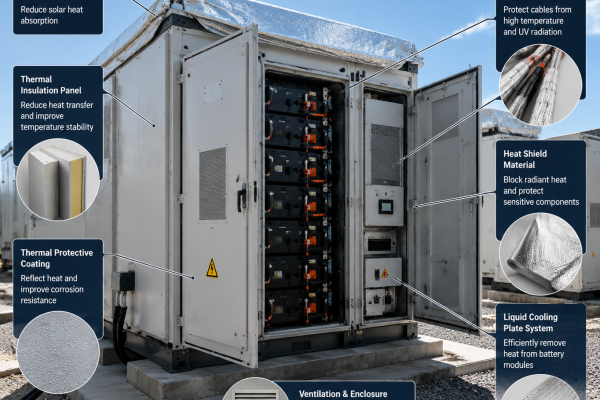
Environmental Protection for Outdoor Renewable ESS
Many renewable energy projects are installed outdoors.
Battery systems may be exposed to:
- Solar radiation
- Rain
- Humidity
- Dust
- High temperatures
- Salt spray
Protective solutions may include:
- Weather-resistant enclosures
- Protective covers
- Corrosion-resistant materials
- Cable protection
- Sealed electrical connections
Coastal renewable projects may require additional corrosion protection because of salt spray and high humidity.
Applications
Solar Microgrids
Solar + BESS is one of the most common renewable microgrid configurations.
Energy storage helps shift daytime solar generation toward evening demand.
Wind Microgrids
Battery storage can smooth short-term fluctuations in wind generation and provide additional flexibility.
Industrial Parks
Industrial parks can combine:
- Solar PV
- Battery storage
- Grid electricity
- Industrial loads
- EMS
This allows energy resources to be coordinated at the site level.
Remote Microgrids
Remote locations can combine renewable generation and storage to reduce dependence on diesel generators or weak grid connections.
Typical applications include:
- Remote industrial facilities
- Islands
- Mining sites
- Rural infrastructure
Designing the Right Storage System
The correct storage configuration depends on the characteristics of the renewable energy project.
Engineers should evaluate:
Renewable Capacity
How much solar or wind generation is available?
Load Profile
When and how much electricity is consumed?
Storage Duration
How long should the battery provide power?
Power Requirement
How quickly must the battery respond?
Environmental Conditions
Will the system operate in:
- Hot climates?
- Coastal environments?
- Dusty industrial areas?
Future Expansion
Can additional battery modules or containers be added later?
Modular Architecture for Future Expansion
Renewable energy projects often grow over time.
A modular ESS architecture allows additional storage capacity to be added as energy demand increases.
For example:
Initial Solar + BESS
↓
Additional Battery Modules
↓
Additional ESS Containers
↓
Expanded Renewable Capacity
This approach reduces the need to redesign the entire energy infrastructure.
Future Trends
Higher Renewable Penetration
As renewable energy accounts for a larger share of electricity generation, storage will become increasingly important for balancing supply and demand.
Intelligent Energy Management
AI-assisted EMS platforms will improve:
- Renewable forecasting
- Load prediction
- Battery scheduling
- Energy cost optimization
Higher-Density Battery Systems
Improved battery technology and thermal management will enable more energy to be stored within a smaller footprint.
Integrated Renewable + Storage Systems
Future projects will increasingly treat renewable generation, storage, charging infrastructure, and energy management as one integrated energy platform.
Energy storage is a key technology for integrating renewable generation into modern microgrids.
By storing excess solar and wind energy, reducing renewable curtailment, balancing fluctuations, and supporting local loads, BESS can make renewable energy more flexible and reliable.
A successful renewable microgrid requires more than batteries alone.
The complete solution combines:
- Renewable generation
- Battery energy storage
- PCS
- EMS
- Thermal management
- Environmental protection
- Modular system architecture
As renewable energy deployment continues to expand, integrated microgrid energy storage will become increasingly important for creating flexible, resilient, and efficient energy infrastructure.