

Why Microgrid Optimization Is Becoming Important
Modern energy systems are becoming more complex as renewable energy, energy storage, and distributed loads continue to expand.
Traditional power systems mainly depend on centralized electricity generation and one-way energy flow.
However, modern industrial facilities and commercial sites increasingly operate with:
- Solar power systems
- Battery Energy Storage Systems (BESS)
- Electric vehicle charging
- Variable industrial loads
- Backup power requirements
To coordinate these different energy sources, microgrids require intelligent control systems.
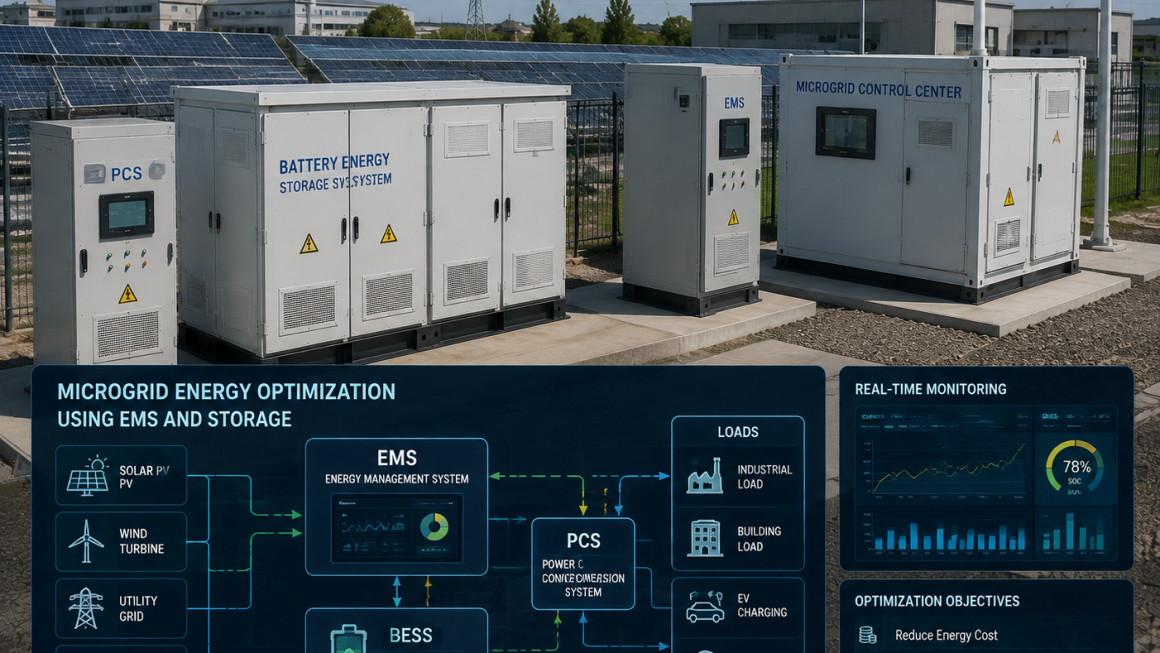
The combination of Energy Management Systems (EMS) and battery storage enables microgrids to optimize energy usage, improve reliability, and increase energy flexibility.
What Is a Microgrid?
A microgrid is a localized energy network that can operate:
- Connected to the main grid
- Independently in island mode
A typical microgrid includes:
- Renewable energy generation
- Battery storage systems
- Local electrical loads
- Power conversion equipment
- Energy management systems
Unlike traditional electricity systems, microgrids can actively control energy production, storage, and consumption.
The Role of Energy Storage in Microgrids
Battery Energy Storage Systems provide flexibility by acting as an energy buffer.
They can:
- Store excess renewable energy
- Supply power during peak demand
- Support grid stability
- Provide backup power
Without storage, renewable energy generation may not always match electricity demand.
For example:
Solar generation:
→ High during daytime
Energy demand:
→ Higher during morning and evening periods
Battery storage bridges this gap by shifting energy availability.
What Is an Energy Management System (EMS)?
An Energy Management System is the intelligent control platform responsible for monitoring and optimizing energy flow within a microgrid.
The EMS collects data from:
- Solar systems
- Battery systems
- PCS equipment
- Smart meters
- Industrial loads
- Grid connections
Based on this information, the EMS determines the most efficient operating strategy.
How EMS Optimizes Microgrid Operation
1. Energy Scheduling
EMS predicts energy demand and generation patterns.
It can decide:
- When to charge batteries
- When to discharge stored energy
- When to use grid power
- When to consume renewable energy
The goal is to reduce energy costs while maintaining reliability.
2. Peak Shaving
One of the most common applications is reducing peak electricity demand.
During high-demand periods:
Grid demand increases
↓
Battery supplies additional power
↓
Facility reduces grid consumption
Benefits include:
- Lower demand charges
- Reduced electricity costs
- Improved grid efficiency
3. Renewable Energy Optimization
Renewable generation is naturally variable.
EMS helps maximize renewable utilization by:
- Storing excess solar energy
- Reducing renewable curtailment
- Coordinating charging schedules
Example:
Solar generation exceeds factory demand
↓
EMS directs excess energy into batteries
↓
Stored energy is used later when solar output decreases
4. Load Management
Industrial and commercial facilities often have flexible loads.
EMS can coordinate:
- Production schedules
- HVAC systems
- EV charging
- Industrial equipment
This allows energy consumption to move toward more efficient periods.
Main Components of an EMS-Based Microgrid
Battery Energy Storage System (BESS)
The BESS provides the energy storage capability.
Key parameters include:
- Energy capacity
- Power output
- State of charge
- Battery health
Power Conversion System (PCS)
The PCS controls energy conversion between:
- Battery DC power
- AC electrical systems
- Grid connection
It enables:
- Charging
- Discharging
- Power regulation
Smart Meters and Sensors
Real-time measurement is essential.
Monitoring includes:
- Voltage
- Current
- Power consumption
- Renewable generation
- Battery status
Control Platform
The EMS software analyzes data and sends control commands.
Functions include:
- Optimization algorithms
- Remote monitoring
- Fault detection
- Operation scheduling
Microgrid Energy Optimization Strategies
Cost Optimization
EMS can reduce electricity costs by:
- Charging during low-price periods
- Discharging during expensive periods
- Reducing peak demand
Renewable Maximization
The system prioritizes renewable energy usage.
Strategies include:
- Solar self-consumption
- Renewable energy storage
- Renewable forecasting
Reliability Optimization
For critical facilities, EMS can maintain backup energy reserves.
Applications include:
- Hospitals
- Data centers
- Manufacturing plants
Grid Support
Advanced microgrids can support the electrical grid through:
- Frequency regulation
- Demand response
- Peak support
Applications of EMS-Controlled Microgrids
Industrial Parks
Industrial parks can combine:
- Solar generation
- Shared battery storage
- Multiple electricity users
EMS coordinates energy usage across the entire site.
Manufacturing Facilities
Factories benefit from:
- Reduced energy costs
- Improved power reliability
- Better load management
Commercial Buildings
Applications include:
- Office buildings
- Shopping centers
- Hotels
Energy storage helps manage electricity demand.
Remote Communities
Microgrids provide reliable electricity in areas with limited grid access.
They can integrate:
- Solar
- Wind
- Battery storage
Thermal and Protection Considerations in Microgrid Storage
Although EMS controls energy operation, physical system reliability remains essential.
Battery storage systems require:
Thermal Management
To maintain battery performance:
- Liquid cooling
- Cooling plates
- Thermal interface materials
- Heat dissipation systems
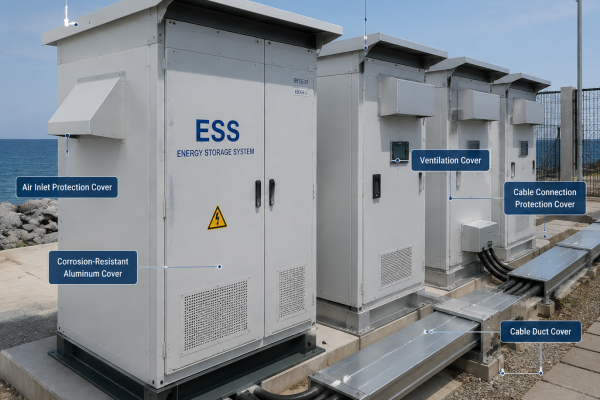
Environmental Protection
Outdoor microgrid systems require protection against:
- Humidity
- Dust
- Salt spray
- UV exposure
Solutions include:
- Protective enclosures
- Corrosion-resistant materials
- Cable protection systems
Future Trends in EMS and Microgrid Optimization
AI-Based Energy Management
Future EMS platforms will use AI to improve:
- Load forecasting
- Renewable prediction
- Battery optimization
Virtual Power Plants (VPP)
Multiple distributed storage systems can operate together as a virtual power plant.
Benefits include:
- Grid flexibility
- Energy trading
- Demand response
Autonomous Microgrids
Future systems may automatically optimize:
- Energy generation
- Storage operation
- Load control
with minimal human intervention.
Microgrid optimization using EMS and energy storage represents the future direction of intelligent energy management.
Battery systems provide the flexibility to store and release energy, while EMS platforms determine the most efficient way to operate the entire system.
By combining:
- Renewable generation
- Battery storage
- Smart control
- Thermal management
- Reliable protection systems
microgrids can achieve lower energy costs, improved reliability, and greater energy independence.
As industrial and commercial energy systems become more complex, EMS-driven storage optimization will become a key technology for building flexible and resilient energy networks.