

Why Demand Charges Matter for Industrial Parks
Industrial parks often contain multiple factories, warehouses, workshops, and commercial facilities operating simultaneously.
Their electricity consumption can vary significantly throughout the day.
Large industrial equipment such as:
- Motors
- Compressors
- HVAC systems
- Pumps
- Production lines
- Refrigeration systems
- EV charging infrastructure
can create short periods of very high electricity demand.
In markets where electricity tariffs include demand charges, these short-duration peaks can significantly increase the total electricity bill.
This is where modular energy storage systems can provide an effective solution.
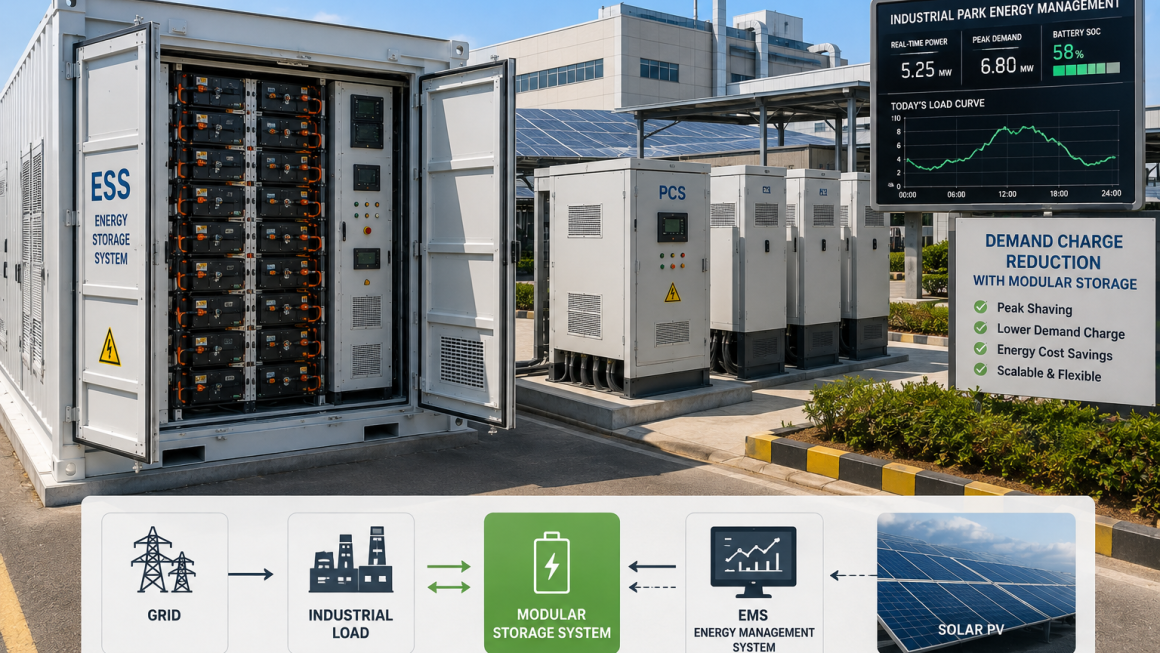
By storing electricity during lower-demand periods and discharging during peak-load periods, Battery Energy Storage Systems (BESS) can help industrial parks reduce grid demand and improve energy flexibility.
What Is a Demand Charge?
Energy bills may include both:
Energy Charges
and
Demand Charges
Energy charges are generally based on how much electricity is consumed over a period.
Demand charges are typically related to the highest power demand recorded during a billing period.
For an industrial facility:
Normal Load → 5 MW
Short Peak → 8 MW
Even if the 8 MW peak lasts only for a relatively short period, it can influence the demand-related electricity cost.
The objective of peak shaving is therefore to reduce the amount of power drawn from the grid during these high-demand periods.
How Modular Storage Reduces Demand Charges
A BESS can be positioned behind the meter at an industrial park.
During normal operation:
Grid → Industrial Loads
When demand approaches a predefined threshold:
Grid + BESS → Industrial Loads
The battery supplies part of the required power.
This reduces the instantaneous power drawn from the grid.
The basic strategy is:
Monitor Load
↓
Detect Approaching Peak
↓
Discharge BESS
↓
Reduce Grid Demand
↓
Avoid or Reduce Demand Charge
Why Modular Storage Is Suitable for Industrial Parks
Industrial parks rarely have completely static energy requirements.
New factories may be added.
Production capacity may increase.
EV charging demand may grow.
Renewable energy capacity may also expand.
A modular storage architecture allows the energy storage system to grow with the industrial park.
Instead of installing the maximum possible capacity from the beginning, operators can deploy storage in stages.
Modular BESS Architecture
A modular system can be structured as:
Battery Modules
↓
Battery Racks
↓
ESS Cabinets
↓
PCS
↓
EMS
↓
Industrial Park Grid
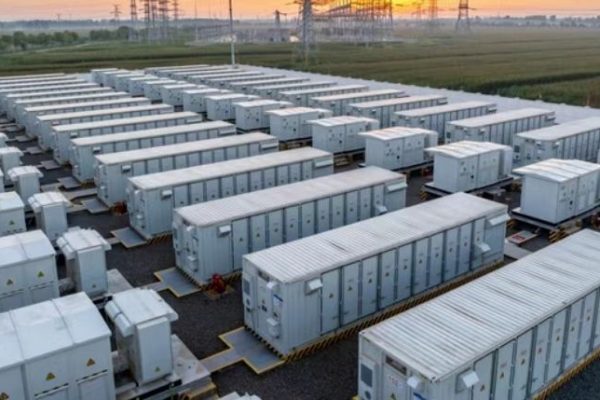
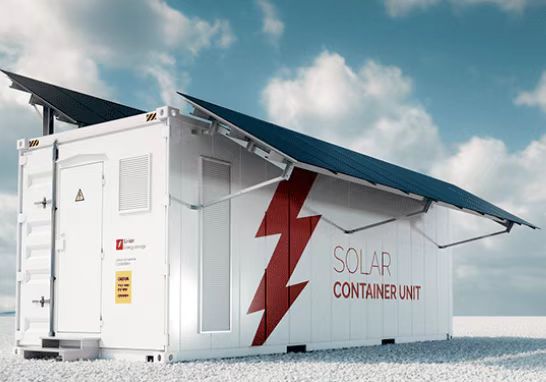
Multiple storage cabinets or containers can operate together as one coordinated energy system.
This allows both power and energy capacity to be scaled according to project requirements.
1. Flexible Initial Deployment
An industrial park may begin with a relatively small BESS installation.
For example:
Phase 1
Initial production loads
→ Deploy basic storage capacity
Phase 2
New factories added
→ Add additional battery modules
Phase 3
Industrial demand increases
→ Add additional ESS cabinets or containers
This approach can reduce the need for oversized initial investment.
2. Peak Shaving Across Multiple Loads
Industrial parks typically contain multiple electricity users.
Different factories may have different operating schedules.
For example:
- Factory A: high demand in the morning
- Factory B: high demand in the afternoon
- Factory C: high HVAC load in the evening
A centralized or distributed BESS can coordinate these load profiles.
The EMS can identify the combined demand peak and dispatch the battery accordingly.
Role of the EMS
The Energy Management System is critical for demand charge reduction.
The EMS continuously monitors:
- Total site power
- Individual load profiles
- Battery SOC
- Electricity tariffs
- Renewable generation
- Demand thresholds
It can establish a target grid power level.
For example:
Target Grid Demand = 6 MW
When industrial load reaches:
7 MW
The BESS can provide:
1 MW
The grid therefore remains close to the target level.
Predictive Peak Shaving
Advanced EMS platforms can move beyond simply reacting to demand peaks.
The system can predict upcoming load increases based on:
- Historical consumption
- Production schedules
- Weather conditions
- Equipment operation
- EV charging schedules
The battery can then reserve sufficient capacity before a predicted peak occurs.
This improves the effectiveness of peak shaving.
Combining Solar and Modular Storage
Industrial parks often have significant rooftop or ground-mounted solar potential.
Combining solar with modular storage creates additional flexibility.
During the daytime:
Solar → Industrial Loads
Excess Solar → Battery
During evening or peak periods:
Battery → Industrial Loads
This allows the industrial park to increase self-consumption while reducing grid demand.
Storage-Assisted Load Management
Modular BESS can also support flexible industrial loads.
Examples include:
- HVAC systems
- Water pumping
- Refrigeration
- Battery charging
- EV charging
The EMS can coordinate battery operation with flexible loads.
For example:
High Industrial Load
→ Reduce non-critical flexible loads
→ Discharge BESS
↓
Lower Grid Demand
This combined strategy can be more effective than battery storage alone.
Centralized vs Distributed Storage
Industrial parks can consider two major architectures.
Centralized BESS
A large BESS is installed at a central electrical substation.
Advantages:
- Easier centralized control
- Simplified maintenance
- Large-scale capacity
- Centralized EMS management
Distributed BESS
Smaller storage systems are installed near individual facilities or load centers.
Advantages:
- Reduced local transmission losses
- Flexible deployment
- Easier expansion
- Local peak shaving
The optimal configuration depends on:
- Site layout
- Electrical infrastructure
- Load distribution
- Expansion plans
Thermal Management for Modular BESS
Industrial park storage systems may operate under high charging and discharging loads.
Thermal management therefore becomes an important design consideration.
Depending on system power density, solutions may include:
- Air cooling
- Liquid cooling
- Cooling plates
- Heat exchangers
- Thermal interface materials
Stable battery temperatures can help maintain:
- Battery performance
- System efficiency
- Safety
- Service life
Outdoor Protection for Industrial Park ESS
Many industrial parks install BESS outdoors.
The equipment may be exposed to:
- Rain
- Dust
- UV radiation
- High temperatures
- Humidity
- Industrial pollutants
Protective measures may include:
- Weather-resistant battery enclosures
- Protective covers
- Corrosion-resistant materials
- Sealed cable entries
- Cable protection systems
For industrial parks located near the coast, salt spray and corrosion protection should receive additional attention.
Modular Storage and Maintenance
Modular architecture can simplify maintenance.
Instead of shutting down an entire storage system, individual modules or cabinets may be serviced depending on the system design.
Potential benefits include:
- Shorter maintenance periods
- Easier component replacement
- Reduced downtime
- Simplified inventory management
Quick disconnect systems can also support easier service of certain electrical or liquid cooling connections.
Economic Considerations
The value of modular BESS should not be measured only by battery capacity.
Project evaluation should consider:
- Demand charge savings
- Energy arbitrage
- Renewable energy utilization
- Equipment investment
- Battery degradation
- Maintenance costs
- System lifetime
A properly sized system should balance:
Storage Investment
against
Expected Energy Cost Savings
Oversizing the battery may increase capital expenditure without providing proportional economic benefits.
Example of Industrial Park Peak Shaving
Consider an industrial park with a high-demand period during the afternoon.
Without BESS:
Industrial Load = 8 MW
Grid Supply = 8 MW
With modular BESS:
Industrial Load = 8 MW
BESS Output = 2 MW
Grid Supply = 6 MW
The battery effectively reduces the grid demand by 2 MW during the peak period.
The actual economic benefit will depend on the local tariff structure, demand-charge methodology, battery capacity, operating strategy, and project load profile.
Future Expansion
One of the biggest advantages of modular storage is the ability to scale with industrial development.
A future industrial park may evolve from:
Initial Industrial Load
↓
Additional Factories
↓
Higher Electricity Demand
↓
More Renewable Generation
↓
Expanded BESS
The storage system can therefore become part of the long-term energy infrastructure rather than a fixed one-time installation.
Future Trends
AI-Based Peak Prediction
Future EMS platforms will increasingly use AI and machine learning to forecast:
- Industrial demand
- Renewable generation
- Battery availability
- Peak periods
Distributed Storage Networks
Multiple BESS units across an industrial park may operate as one coordinated energy network.
Storage + EV Charging
As industrial EV fleets expand, BESS can reduce the grid impact of high-power EV charging.
Renewable + Storage + EMS
Future industrial parks will increasingly combine:
Solar
Modular BESS
EMS
Flexible Loads
Grid
This creates a more flexible and controllable industrial energy system.
Industrial parks can face significant electricity costs when multiple facilities create high power-demand peaks.
Modular Battery Energy Storage Systems provide a flexible way to reduce these peaks by supplying power when grid demand approaches a predefined threshold.
The combination of:
- Modular BESS
- EMS
- Peak shaving
- Renewable energy
- Flexible load management
- Thermal management
- Outdoor protection
allows industrial parks to build a more flexible energy infrastructure.
The key is not simply installing the largest possible battery.
Instead, the storage system should be properly sized, intelligently controlled, and designed for future expansion.
As industrial parks become more electrified and renewable energy adoption increases, modular storage will become an increasingly important tool for managing demand charges and improving overall energy flexibility.