
Why Cable Protection Matters in Coastal BESS Projects
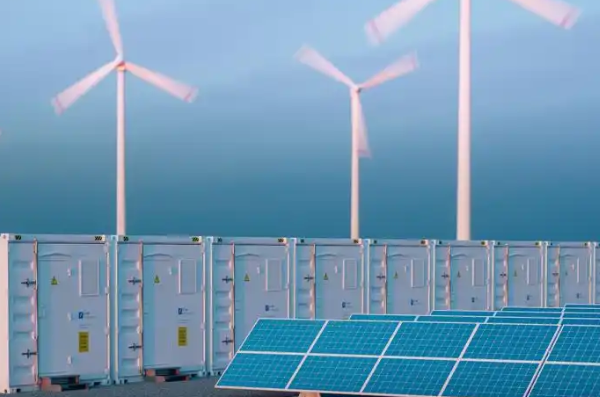
Battery Energy Storage Systems (BESS) are increasingly deployed in coastal environments to support renewable energy integration, offshore wind projects, industrial microgrids, and grid stabilization.
However, coastal locations create some of the most challenging operating conditions for electrical cable systems.
Unlike battery cells or power electronics, cables are often exposed across the entire installation area. They must continuously withstand:
- Salt spray
- High humidity
- UV radiation
- Temperature fluctuations
- Mechanical stress
- Dust and environmental contamination
Without proper protection, cable degradation can become a major reliability risk for long-term BESS operation.
Why Coastal Environments Are Challenging for Energy Storage Cables
Salt Spray and Corrosion
Marine environments contain airborne salt particles that can settle on cable surfaces and connection points.
Over time, salt contamination may contribute to:
- Connector corrosion
- Metal fitting degradation
- Moisture penetration
- Increased electrical resistance
Cable protection systems help reduce direct exposure to marine contaminants.
High Humidity and Moisture
Coastal regions often experience high humidity levels.
Moisture can affect:
- Cable insulation
- Terminal connections
- Sealing interfaces
Long-term moisture exposure may reduce insulation performance and increase maintenance requirements.
UV Radiation
Outdoor cables are continuously exposed to sunlight.
UV exposure can cause:
- Jacket aging
- Surface cracking
- Loss of mechanical flexibility
UV-resistant protection is especially important for cables installed outside containers or cabinets.
Temperature Cycling
Coastal BESS installations often experience daily temperature changes.
Repeated thermal expansion and contraction can affect:
- Cable jackets
- Connection points
- Protective materials
Thermal-resistant protection helps maintain cable reliability over long operating periods.
Common Cable Failure Risks in Coastal BESS
Insulation Degradation
Environmental exposure may accelerate aging of cable insulation materials.
Potential results include:
- Reduced dielectric performance
- Higher failure probability
- Increased maintenance needs
Connector and Terminal Corrosion
Cable terminals are particularly sensitive because they combine:
- Electrical current
- Metal interfaces
- Environmental exposure
Corrosion may increase contact resistance and create localized heating.
Mechanical Damage
Outdoor cable routes may experience:
- Wind movement
- Vibration
- Installation stress
- Accidental impact
Mechanical protection prevents abrasion and physical damage.
Cable Protection Requirements for Coastal Applications
An effective protection strategy should address multiple challenges simultaneously.
Corrosion Resistance
Protection materials should resist:
- Salt spray
- Humidity
- Chemical exposure
Thermal Performance
Protection solutions should avoid excessive heat accumulation.
The challenge is balancing:
- Environmental shielding
- Heat dissipation
UV Resistance
Materials should maintain:
- Mechanical strength
- Flexibility
- Long-term durability
under continuous sunlight exposure.
Mechanical Protection
Cable protection should provide resistance against:
- Abrasion
- Impact
- Compression
- Bending stress
Cable Protection Solutions for Coastal BESS
Protective Cable Sleeves
Cable sleeves provide an additional barrier between cables and harsh environments.
Common materials include:
Fiberglass Sleeves
Advantages:
- High temperature resistance
- Good mechanical protection
- Flame resistance
Suitable for:
- Battery cabinets
- High-temperature areas
- Power cable protection
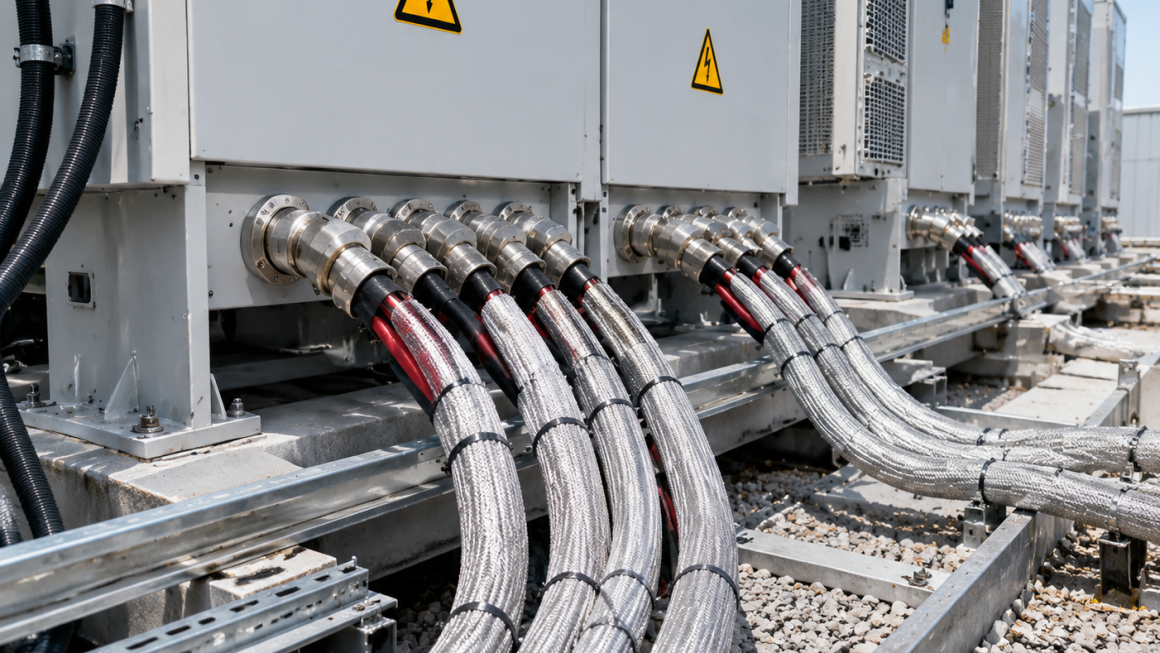
Aluminum Foil Fiberglass Sleeves
These combine:
- Reflective aluminum layer
- Fiberglass insulation
Benefits include:
- Heat reflection
- Salt spray protection
- UV resistance
They are useful for outdoor BESS applications exposed to strong solar radiation.
PET Braided Sleeves
Advantages:
- Flexible installation
- Abrasion resistance
- Lightweight protection
Suitable for:
- Cable bundles
- Internal routing
- Maintenance applications
Cable Glands and Sealing Systems
Cable entry points are critical protection areas.
Proper sealing prevents:
- Water ingress
- Dust penetration
- Salt contamination
Solutions include:
- Waterproof cable glands
- Sealing boots
- Compression fittings
- IP-rated cable entries
Protective Routing Systems
Cable routing design directly affects reliability.
Good practices include:
- Avoiding direct ground contact
- Providing mechanical support
- Maintaining bending radius
- Separating high-temperature zones
Multi-Layer Cable Protection Strategy
For harsh coastal environments, a layered approach is often more effective.
Inner Layer: Cable Insulation Protection
Purpose:
- Electrical insulation
- Moisture resistance
Middle Layer: Mechanical Protection
Solutions:
- Braided sleeves
- Flexible conduits
Purpose:
- Abrasion resistance
- Mechanical reinforcement
Outer Layer: Environmental Protection
Solutions:
- Aluminum foil fiberglass sleeves
- UV-resistant covers
Purpose:
- Salt spray protection
- Heat reflection
- Weather resistance
Balancing Protection and Heat Dissipation
One of the biggest design challenges is that excessive protection may reduce heat dissipation.
A fully sealed protective layer can trap heat generated by:
- Electrical current
- High ambient temperatures
- Solar radiation
Therefore, cable protection design must balance:
Protection strength
+
Thermal performance
+
Maintenance requirements
The best solution is not always the thickest protection layer, but the most appropriate protection system.
Material Selection Considerations
Different environments require different solutions.
| Environment | Recommended Protection |
|---|---|
| Coastal salt spray | Aluminum foil fiberglass sleeve |
| High temperature area | Fiberglass or silicone sleeve |
| Cable movement area | PET braided sleeve |
| High mechanical risk | Reinforced conduit |
| Outdoor exposed cable | UV-resistant protection |
Future Trends in Coastal BESS Cable Protection
As energy storage systems expand into more demanding environments, cable protection technologies are evolving toward:
- Multi-functional protective sleeves
- Lightweight composite materials
- Thermal reflective layers
- Fire-resistant cable protection
- Integrated corrosion and thermal protection
Future cable systems will require not only electrical performance but also environmental durability.
Cable protection is a critical but often underestimated part of coastal Battery Energy Storage System reliability.
Salt spray, humidity, UV radiation, and temperature changes can gradually degrade cable assemblies and reduce system performance.
A successful coastal BESS cable protection strategy combines:
- Corrosion-resistant materials
- Thermal management
- Mechanical protection
- Proper sealing
- Environment-specific design
By treating cables as a key reliability component rather than a simple accessory, engineers can significantly improve the lifespan, safety, and maintainability of coastal energy storage installations.