
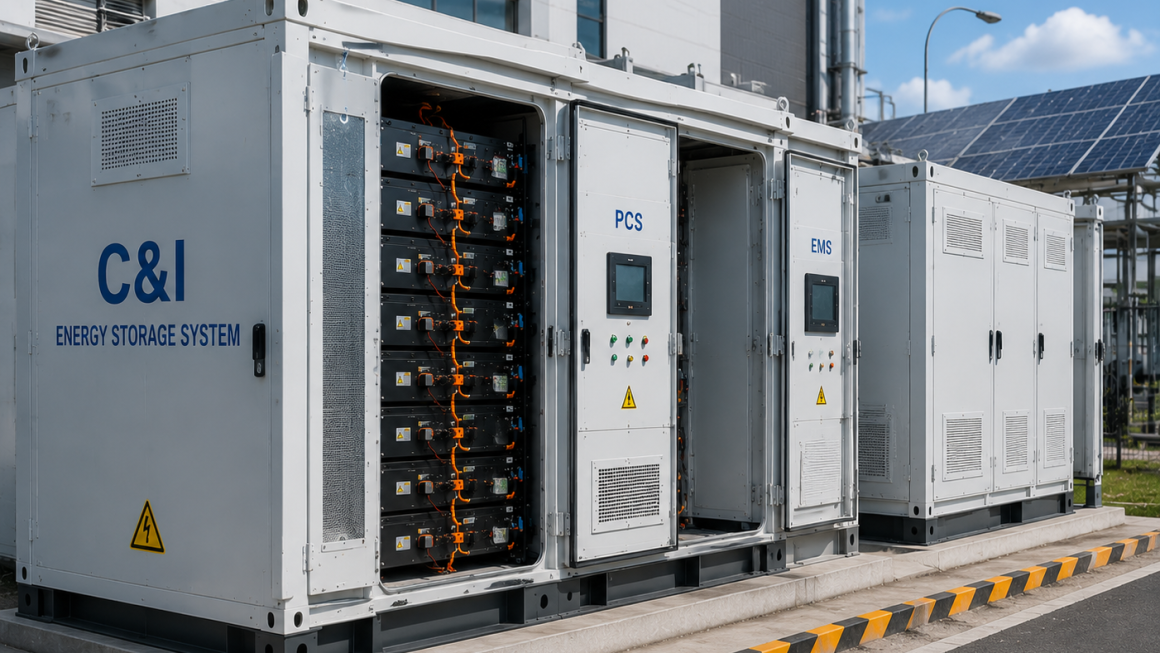
What Are Commercial and Industrial Energy Storage Systems?
Commercial and Industrial (C&I) Energy Storage Systems are battery-based energy solutions designed to support businesses, factories, industrial parks, commercial buildings, and other large electricity consumers.
Unlike residential energy storage systems, C&I ESS are designed for higher power requirements and more complex operating conditions.
They are commonly used for:
- Reducing electricity costs
- Managing peak demand
- Improving energy reliability
- Integrating renewable energy
- Supporting microgrid operation
As electricity demand increases and renewable energy adoption accelerates, C&I energy storage has become an important tool for modern energy management.
Why Businesses Are Adopting C&I Energy Storage
Industrial and commercial users often face several energy challenges:
- Increasing electricity prices
- Peak demand charges
- Grid capacity limitations
- Power reliability requirements
- Renewable energy fluctuations
Energy storage provides a flexible solution by allowing companies to control when and how electricity is used.
Instead of simply consuming electricity from the grid, businesses can actively manage their energy flow.
How C&I Energy Storage Systems Work
A typical C&I ESS operates by storing electricity when energy is available or inexpensive and supplying power when demand is higher.
The basic operation includes:
Charging Period
The system charges batteries from:
- The electrical grid
- Solar photovoltaic systems
- Other renewable energy sources
Energy Storage Period
Battery modules store electrical energy and maintain system readiness.
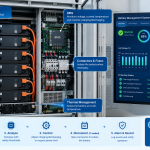
The Battery Management System (BMS) continuously monitors:
- Voltage
- Temperature
- Current
- State of charge
Discharging Period
During peak demand periods, stored energy is released to:
- Support facility loads
- Reduce grid consumption
- Improve energy efficiency
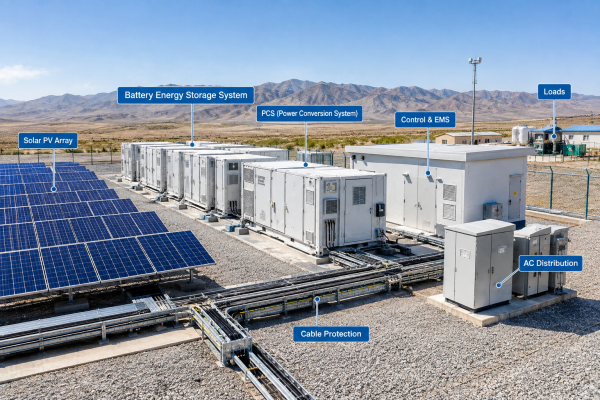
Main Components of C&I Energy Storage Systems
Battery System
The battery is the core energy storage component.
Important factors include:
- Energy capacity
- Power output
- Cycle life
- Safety performance
Lithium-ion batteries are commonly selected due to:
- High energy density
- Fast response
- Long service life
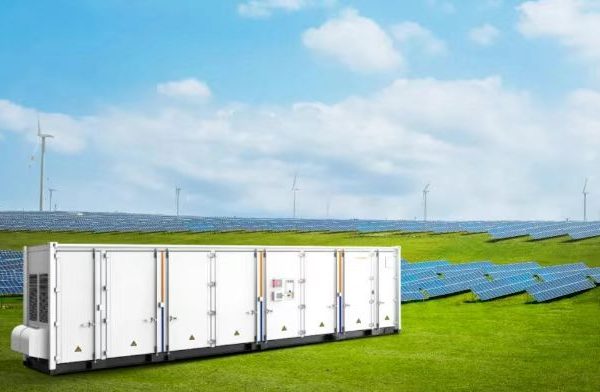
Battery Rack and Enclosure
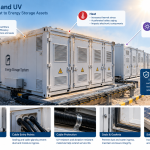
C&I systems require strong mechanical structures to support battery modules.
Key requirements include:
- Structural stability
- Environmental protection
- Easy maintenance access
- Thermal management integration
Outdoor installations may require:
- Weather-resistant enclosures
- Corrosion protection
- C5-level protection for coastal environments
Power Conversion System (PCS)
The PCS manages energy conversion between:
- Battery DC power
- Facility AC power
- Grid electricity
Functions include:
- Charging control
- Discharging control
- Power regulation
- Grid interaction
Energy Management System (EMS)
The EMS controls the overall operation strategy.
It analyzes:
- Electricity prices
- Load demand
- Renewable generation
- Battery conditions
The goal is to optimize:
- Energy costs
- Battery utilization
- System performance
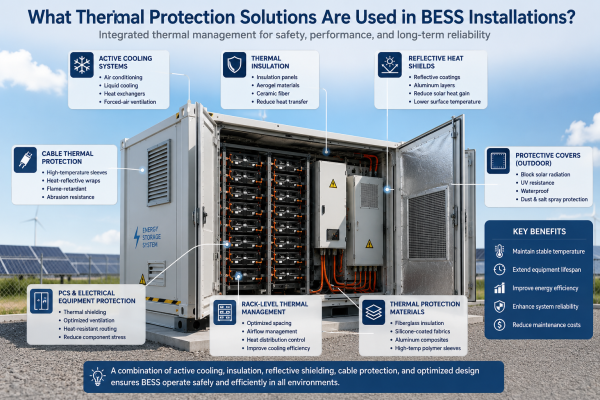
Thermal Management System
Temperature control is essential for battery reliability.
C&I ESS may use:
- Air cooling
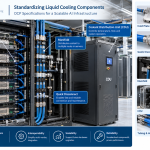
- Liquid cooling
- Cooling plates
- Thermal interface materials
Effective thermal management helps:
- Reduce temperature differences
- Improve battery lifespan
- Maintain stable operation
Key Applications of C&I Energy Storage
1. Peak Shaving
Peak shaving is one of the most common applications.
The ESS provides power during high-demand periods to reduce electricity consumption from the grid.
Benefits include:
- Lower demand charges
- Improved energy cost control
- Reduced grid pressure
2. Renewable Energy Integration
Many commercial and industrial facilities install:
- Rooftop solar
- Distributed renewable systems
However, renewable generation is often inconsistent.
ESS helps by:
- Storing excess energy
- Increasing renewable utilization
- Providing power when generation decreases
3. Backup Power
C&I ESS can provide backup support for critical facilities.
Applications include:
- Manufacturing plants
- Data centers
- Hospitals
- Logistics centers
4. Microgrid Support
Energy storage is an important component of modern microgrids.
It helps coordinate:
- Renewable generation
- Local loads
- Grid connection
Typical C&I Energy Storage Applications
Manufacturing Facilities
Factories often have:
- High electricity consumption
- Large equipment loads
- Variable production schedules
ESS helps optimize energy usage and reduce operating costs.
Industrial Parks
Industrial parks can use shared energy storage for:
- Multiple tenants
- Renewable integration
- Energy flexibility
Commercial Buildings
Office buildings, shopping centers, and hotels can use ESS for:
- Demand management
- Backup power
- Renewable energy utilization
Logistics and Warehousing
Warehouses with:
- Refrigeration systems
- EV fleets
- Automated equipment
can benefit from flexible energy management.
Design Considerations for C&I ESS
Installation Environment
C&I systems may be installed in:
- Indoor facilities
- Outdoor yards
- Industrial environments
- Coastal areas
Environmental factors include:
- Temperature
- Humidity
- Dust
- Corrosion
Thermal Management Design
High-power operation generates significant heat.
Engineers must consider:
- Cooling method
- Heat dissipation pathways
- Thermal interface materials
- Battery temperature uniformity
Safety Protection
Modern C&I ESS incorporates:
- Battery monitoring
- Fire detection
- Thermal protection
- Emergency shutdown systems
Safety design must cover the complete system lifecycle.
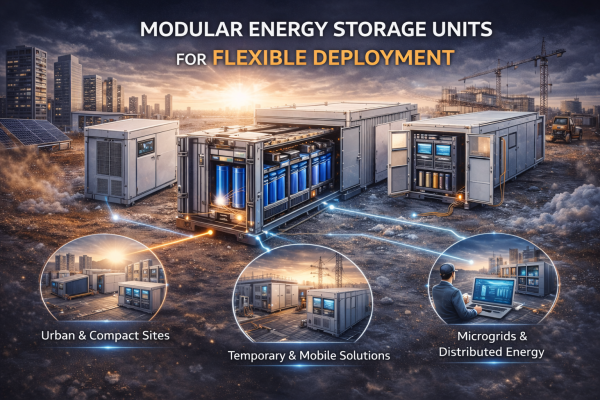
Modular Architecture
Modular systems provide:
- Easier installation
- Flexible expansion
- Simplified maintenance
Additional modules can be added as energy requirements grow.
Future Trends in C&I Energy Storage
Intelligent Energy Management
AI-based EMS platforms will improve:
- Energy prediction
- Charging optimization
- Cost reduction
Higher Energy Density
Advances in:
- Battery chemistry
- Thermal management
- System integration
will enable more compact designs.
Integrated Renewable Energy Systems
Future C&I solutions will combine:
- Solar
- Storage
- EV charging
- Smart energy management
More Durable Outdoor Systems
Future ESS designs will focus on:
- Better corrosion protection
- Improved thermal performance
- Longer service life
Commercial and Industrial Energy Storage Systems provide businesses with greater control over electricity usage, improved energy flexibility, and enhanced operational reliability.
By combining battery systems, PCS, EMS, thermal management, and protective structures, C&I ESS can support a wide range of applications from peak shaving to renewable energy integration.
As energy costs increase and companies seek more resilient power solutions, C&I energy storage will continue to become an important part of modern industrial and commercial energy infrastructure.