
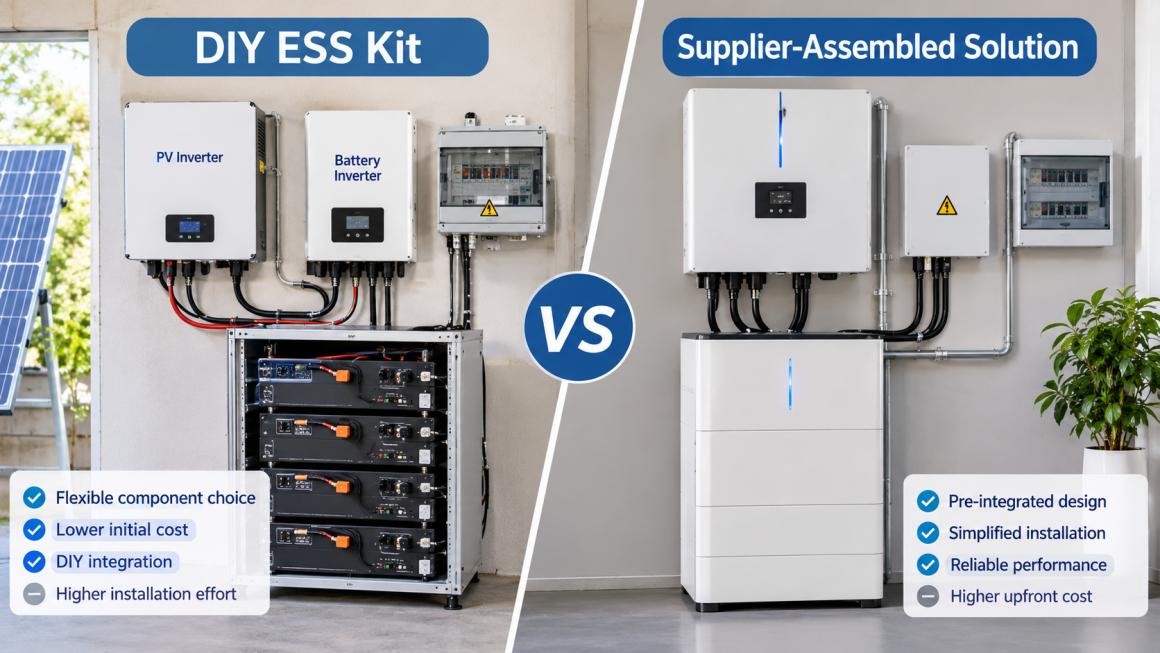
Comparing Cost, Installation, Safety, and Long-Term Reliability in Energy Storage Systems
As energy storage becomes increasingly accessible to residential users, installers, and small commercial businesses, more purchasing options are available than ever before.
One important decision is whether to purchase a DIY Energy Storage System (ESS) kit or choose a supplier-assembled solution.
DIY ESS kits generally provide a collection of components that customers or installers assemble and integrate according to the system requirements. Supplier-assembled solutions, on the other hand, are prepared and configured by a manufacturer or specialized supplier before delivery, with the level of integration depending on the product and project scope.
Both approaches can support battery energy storage applications. However, they differ in installation responsibilities, equipment compatibility, technical support, quality control, and maintenance requirements.
A DIY kit may offer flexibility and greater control over component selection. A supplier-assembled solution may reduce integration work and provide a more coordinated equipment package.
So, which option is better?
The answer depends on the project size, available technical expertise, installation environment, local electrical requirements, and expectations for long-term operation.
This guide compares both approaches and explains the factors that should be considered before selecting an ESS solution.
1. What Is a DIY ESS Kit?
A DIY ESS kit is a package of energy storage components supplied for assembly and integration by the buyer or an appointed installer.
Depending on the supplier, a kit may include:
- Battery cells or battery modules.
- Battery management system (BMS).
- Inverter or power conversion equipment.
- Battery enclosure or cabinet.
- Electrical connection components.
- Communication cables and accessories.
- Monitoring or control equipment.
- Basic installation documentation.
The exact contents vary significantly between suppliers.
Some DIY kits are relatively complete packages designed around compatible components. Others provide only selected equipment, leaving the buyer responsible for sourcing additional parts and coordinating system integration.
Typical DIY ESS Configuration
A typical system may contain:
Battery modules: Store electrical energy for later use.
BMS: Monitors battery operating conditions and manages battery protection functions.
Inverter or PCS: Converts electrical energy between DC and AC according to the system architecture.
EMS or monitoring system: Coordinates energy use, charging, discharging, and system monitoring where applicable.
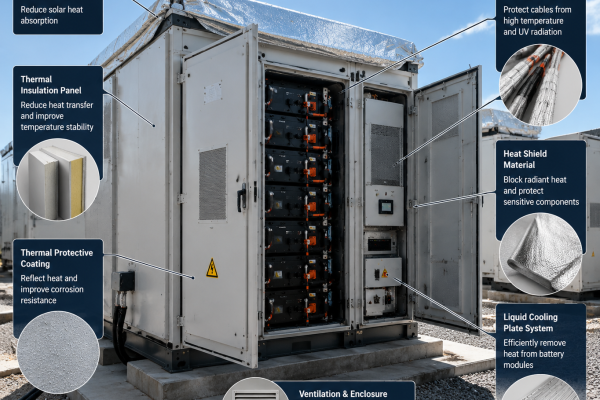
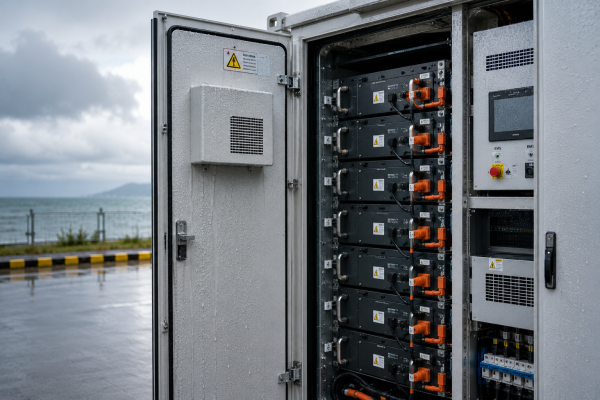
Enclosure and accessories: Provide mechanical housing, electrical connections, cable routing, and environmental protection.
Advantages of DIY ESS Kits
1. Greater component selection flexibility
Buyers may have more freedom to select battery modules, inverters, enclosures, and accessories according to their preferences and project requirements.
2. Potentially lower initial equipment costs
For technically capable buyers who already have suitable installation resources, purchasing individual components as a kit may reduce some integration or service costs.
However, the final cost must include additional components, labor, testing, commissioning, and compliance requirements.
3. Suitable for technically experienced installers
Professional installers and engineering teams may prefer DIY kits when they already have the knowledge and infrastructure to manage system integration.
4. Greater customization opportunities
Depending on component compatibility and manufacturer restrictions, buyers may be able to adjust battery capacity, enclosure arrangements, or system configurations.
Limitations of DIY ESS Kits
DIY kits also transfer more responsibility to the buyer or installer.
Potential challenges include:
- Confirming compatibility between components.
- Managing installation and electrical connections.
- Verifying protection and communication arrangements.
- Coordinating equipment documentation.
- Arranging inspection and commissioning.
- Managing warranty conditions across different manufacturers.
- Identifying responsibility when system-level problems occur.
A package containing compatible-looking components does not automatically represent a fully validated energy storage system.
The complete configuration must meet the applicable technical, safety, and regulatory requirements.
2. What Are Supplier-Assembled ESS Solutions?
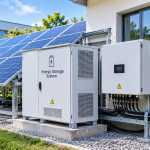
Supplier-assembled ESS solutions are energy storage packages prepared by a manufacturer or specialized supplier before delivery.
Depending on the product, the supplier may complete equipment selection, mechanical assembly, electrical integration, internal wiring, configuration, and factory testing.
The degree of integration can vary.
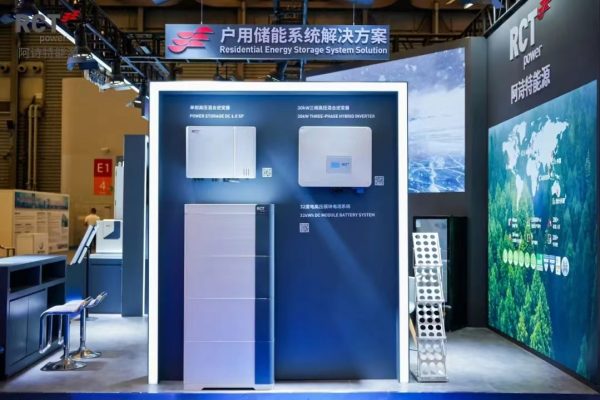
For example, some solutions may provide a battery module and BMS package, while others may include an integrated battery cabinet, inverter, monitoring equipment, and associated protection components.
Customers should confirm exactly what is included rather than assuming that every supplier-assembled solution is a complete, ready-to-operate system.
Typical Characteristics
A supplier-assembled solution may offer:
- Pre-selected compatible components.
- Factory mechanical assembly.
- Internal electrical connections completed according to the design.
- Configured battery management and communication interfaces.
- Product documentation and installation instructions.
- Factory inspection and testing records.
- Defined warranty and technical support arrangements.
Advantages of Supplier-Assembled Solutions
1. Reduced integration workload
A coordinated equipment package can reduce the amount of component matching and assembly work required at the project site.
2. Clearer technical coordination
When the supplier takes responsibility for defined integration activities, customers may have a clearer technical contact for questions concerning the supplied package.
3. More consistent assembly processes
Factory assembly can support standardized production procedures, inspection, and documentation.
Actual quality still depends on the supplier’s manufacturing controls and verification processes.
4. Easier project planning
Predefined equipment configurations can help installers estimate space requirements, connection interfaces, delivery schedules, and installation work more accurately.
5. More structured after-sales support
A supplier offering integrated products may provide a more coordinated process for warranty claims, replacement parts, and technical assistance.
However, the warranty scope and responsibilities must be confirmed in writing.
Limitations of Supplier-Assembled Solutions
Supplier-assembled solutions may also involve trade-offs.
1. Higher initial purchase price
The quoted price may include assembly, configuration, inspection, documentation, and technical support.
This can make the initial purchase price higher than that of a basic component kit.
2. Less freedom to change components
The supplier may restrict battery, inverter, or BMS substitutions because the configuration has been designed and validated as a specific package.
3. Dependence on supplier support
Customers may rely more heavily on the original supplier for replacement parts, technical updates, and system modifications.
4. Potentially limited customization
Standardized products may not fit every installation environment or project requirement.
3. DIY ESS Kits vs. Supplier-Assembled Solutions: Key Differences
The following table summarizes the main differences.
| Comparison | DIY ESS Kits | Supplier-Assembled Solutions |
|---|---|---|
| Component selection | Often more flexible | Usually based on predefined configurations |
| Initial equipment price | Potentially lower | Often higher |
| Integration responsibility | Mainly buyer or installer | Supplier handles defined assembly scope |
| Installation workload | Generally higher | May be reduced |
| Compatibility verification | Requires buyer or installer coordination | Usually coordinated within supplied package |
| Factory assembly | Limited or not included | Included according to product scope |
| Documentation | Varies by component supplier | May provide coordinated package documentation |
| Customization | Potentially greater | Depends on supplier capability |
| Warranty coordination | May involve multiple manufacturers | May be more centralized |
| Technical support | Depends on individual suppliers | Often coordinated through the package supplier |
| Project suitability | Experienced installers and custom projects | Projects prioritizing coordinated delivery |
Neither option is automatically superior.
The correct choice depends on the total project requirements and the actual responsibilities included in the purchase agreement.
4. Initial Cost vs. Total Project Cost
One of the biggest mistakes when comparing DIY and supplier-assembled ESS solutions is focusing only on the initial purchase price.
A DIY kit may have a lower quoted equipment cost, but the buyer must also consider the additional resources needed to complete the system.
Costs Associated with DIY ESS Kits
Potential additional costs include:
- Additional electrical components.
- Enclosure and mechanical accessories.
- Professional installation labor.
- System integration and configuration.
- Testing and commissioning.
- Required inspections and compliance work.
- Documentation and system verification.
- Future maintenance and troubleshooting.
Costs Associated with Supplier-Assembled Solutions
The purchase price may already include some of these activities, depending on the supplier’s scope.
However, buyers should still consider:
- Transportation and delivery.
- Site preparation.
- External electrical connections.
- Installation and commissioning.
- Additional protective accessories.
- Maintenance and replacement parts.
- Warranty exclusions and service costs.
A More Useful Cost Comparison
Instead of comparing two headline prices, buyers should calculate the total cost of ownership.
A practical comparison includes:
- Equipment purchase cost.
- Installation and labor cost.
- Additional component cost.
- Testing and commissioning cost.
- Operating and maintenance cost.
- Expected replacement costs.
- Warranty and technical support conditions.
A lower initial purchase price does not necessarily mean a lower lifetime project cost.
5. Safety, Compatibility, and Quality Control
Energy storage systems combine batteries, power electronics, electrical connections, monitoring equipment, and protective devices.
The quality of the complete installation depends on how these elements work together.
This is particularly important for DIY ESS projects, where different components may come from multiple manufacturers.
5.1 Battery and Inverter Compatibility
Battery voltage range, charging limits, discharge current, communication protocols, and inverter operating parameters must be compatible.
Buyers should verify that the selected battery and inverter combination is supported by the relevant manufacturers.
5.2 BMS and Protection Coordination
The BMS is responsible for monitoring battery conditions and managing defined battery protection functions.
It must operate correctly with the selected battery configuration and associated power conversion equipment.
The complete system also requires appropriate electrical protection, isolation, grounding, and installation arrangements according to applicable standards and manufacturer instructions.
5.3 Electrical Connection Quality
Electrical connections must be designed and installed according to the equipment specifications.
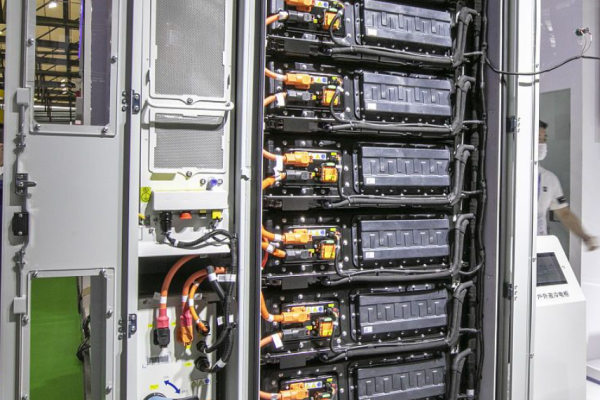
Poorly managed connections can contribute to overheating, mechanical stress, or unreliable operation.
For this reason, connection quality, cable selection, terminal compatibility, and installation verification should be treated as essential project requirements.
5.4 Documentation and Traceability
Buyers should request relevant documentation, including:
- Component specifications.
- Battery and inverter compatibility information.
- Installation instructions.
- Applicable conformity and certification documents.
- Factory inspection records where available.
- Warranty terms.
- Maintenance requirements.
A supplier-assembled package may simplify documentation coordination, but customers should still verify the actual documents and their applicability to the complete system.
6. Installation and Environmental Protection: Details That Should Not Be Overlooked
Whether a system is DIY or supplier-assembled, installation conditions can have a significant impact on long-term performance.
Battery cabinets, inverters, electrical distribution equipment, and external cable connections may be exposed to different environmental conditions.
These conditions should be considered during the design and installation stages.
6.1 Cable Protection
Cables may be exposed to:
- Mechanical abrasion.
- UV radiation.
- Dust and sand.
- Elevated temperatures.
- Moisture and weather exposure.
- Vibration or movement.
- Restricted installation spaces.
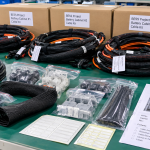
Suitable cable protection products may include:
- Braided cable sleeves.
- Self-wrapping protective sleeves.
- High-temperature protective sleeves.
- Protective conduits.
- Cable supports and routing accessories.
The correct selection depends on cable dimensions, operating conditions, environmental exposure, and installation requirements.
6.2 Cable Entry and Sealing
Cable entry points are important interfaces between electrical equipment and the surrounding environment.
Cable glands, grommets, and sealing accessories should be selected according to cable dimensions, enclosure design, and the required ingress protection rating.
Incorrect installation can compromise the enclosure’s intended protection level.
6.3 Thermal and Mechanical Considerations
Cable protection products and accessories must be suitable for the actual temperature and mechanical conditions.
They should not obstruct equipment ventilation, interfere with cable bending requirements, or create unnecessary stress on electrical connections.
6.4 Maintenance Accessibility
A good installation should allow technicians to inspect, replace, and maintain relevant components without unnecessary dismantling.
Removable protective sleeves, organized routing, clear cable identification, and accessible connections can support more efficient maintenance.
These details are important for both DIY and supplier-assembled systems.
7. Which Solution Is Better for Different Project Types?
The most suitable approach depends on the buyer’s capabilities and the project’s complexity.
Scenario A: Experienced Installer or Engineering Team
DIY ESS kits may be worth considering.
This approach can provide greater component flexibility for professional teams that already have integration experience, qualified personnel, and suitable testing and commissioning resources.
The key requirement is that all components and the complete installation are properly verified.
Scenario B: Residential Homeowner
A supplier-assembled solution is often more practical.
Most homeowners do not have the technical resources to independently verify battery compatibility, electrical protection, system configuration, and commissioning requirements.
A coordinated package from a qualified supplier and installation professional can reduce the burden of managing multiple component interfaces.
Scenario C: Small Commercial Energy Storage
Both options should be evaluated.
A business with an experienced electrical engineering team may consider a customized component package.
A company prioritizing predictable project delivery may prefer a supplier-assembled solution with clearly defined technical and service responsibilities.
Scenario D: Customized or Non-Standard Installation
A project-specific solution may be necessary.
Some installations have unusual space limitations, environmental conditions, cable routing requirements, or equipment interfaces.
In these cases, the most important factor is not whether the system is DIY or supplier-assembled, but whether the selected supplier can provide a technically suitable and properly documented configuration.
8. What Should Buyers Ask Before Purchasing an ESS Solution?
Before purchasing either a DIY kit or a supplier-assembled system, buyers should clarify several important questions.
About the system configuration
- What components are included?
- Are the battery and inverter compatible?
- What is the rated energy capacity?
- What is the continuous power output?
- What communication protocols are supported?
About installation
- Who is responsible for system integration?
- Who performs installation and commissioning?
- What site preparation is required?
- Are external cables and protective accessories included?
- Are installation drawings and instructions available?
About safety and compliance
- Which applicable standards and certifications are supported?
- What protection functions are included?
- What inspections and tests are required?
- Who verifies the completed installation?
About after-sales support
- What is covered by the warranty?
- Who handles technical troubleshooting?
- Are replacement components available?
- What maintenance is required?
- How are future system expansions handled?
Clear answers to these questions help prevent misunderstandings between buyers, installers, and suppliers.
9. The Role of Installation Accessories in Long-Term ESS Reliability
The reliability of an energy storage system is not determined by battery cells and inverters alone.
Electrical connections, cable routing, mechanical protection, sealing, and environmental protection also contribute to the quality of the complete installation.
This applies equally to DIY kits and supplier-assembled solutions.
For example, a supplier may deliver a preassembled battery cabinet, but external cable connections and site-level routing still need to be completed correctly.
Similarly, a DIY kit may contain the main electrical components but leave the installer responsible for selecting appropriate cable protection and sealing accessories.
Depending on the application, relevant accessories may include:
- Cable protection sleeves.
- Cable conduits and routing accessories.
- Cable glands and grommets.
- Sealing components.
- Mechanical cable supports.
- Protective covers and identification accessories.
Selecting these components according to actual installation conditions can help improve organization, reduce avoidable mechanical damage, and support future maintenance.
At GR-NEWenergy, our focus is on these installation and O&M protection requirements rather than supplying complete battery or inverter systems.
10. Choose Based on Capability, Responsibility, and Long-Term Value
DIY ESS kits and supplier-assembled solutions serve different project requirements.
DIY kits may provide greater flexibility and potentially lower initial equipment costs for experienced installers who can manage component selection, integration, testing, and commissioning.
Supplier-assembled solutions may be more practical for customers who prefer coordinated equipment packages, reduced integration workload, and clearer supplier support.
However, neither approach removes the need for qualified installation, compatibility verification, appropriate protection, and compliance with local electrical requirements.
The best decision should consider:
- Project complexity.
- Technical expertise.
- Equipment compatibility.
- Total installed cost.
- Installation responsibility.
- Safety and compliance.
- Warranty and technical support.
- Long-term maintenance requirements.
A reliable ESS project is not simply about choosing the right battery package. It is about ensuring that all components, connections, protection measures, and installation details work together throughout the system’s operating life.
At GR-NEWenergy, we support energy storage installation and O&M requirements through cable protection sleeves, routing accessories, sealing components, and related protective solutions.
Whether an ESS project uses a DIY kit or a supplier-assembled package, practical installation protection remains an important part of long-term system reliability.
Frequently Asked Questions
1. What is the difference between a DIY ESS kit and a supplier-assembled solution?
A DIY ESS kit provides components for the buyer or installer to assemble and integrate. A supplier-assembled solution is prepared by the supplier, with the scope of assembly, configuration, and testing defined by the product or project agreement.
2. Are DIY ESS kits cheaper?
They may have a lower initial equipment price. However, additional costs for components, professional labor, integration, testing, commissioning, and maintenance should be included when comparing total project costs.
3. Are supplier-assembled ESS solutions safer?
Not automatically. Safety depends on product quality, system compatibility, design, manufacturing controls, documentation, and proper installation. Buyers should verify the relevant technical and compliance information.
4. Can DIY ESS kits be used for residential energy storage?
Some kits are designed for residential applications, but installation and commissioning must comply with local electrical regulations and manufacturer requirements. Qualified professionals should handle work requiring electrical expertise or authorization.
5. What should be included in a supplier-assembled ESS package?
Depending on the product scope, it may include battery modules, BMS, inverter or PCS, enclosure, internal connections, monitoring equipment, documentation, and factory testing records. Buyers should confirm each included item in writing.
6. Can supplier-assembled systems be customized?
Some suppliers offer customization of battery capacity, enclosure dimensions, connection interfaces, or other configuration details. Customization depends on the equipment design, compatibility requirements, and supplier capabilities.
7. Why are cable protection accessories important in ESS installations?
They help protect cables against application-specific environmental and mechanical exposure, organize routing, and support maintenance. Products must be selected according to cable dimensions, temperature, UV exposure, and installation conditions.
Q1: What is the main difference between DIY ESS kits and supplier-assembled solutions?
DIY ESS kits provide components for buyer-led or installer-led integration, while supplier-assembled solutions are prepared by a supplier with a defined scope of assembly, configuration, and testing.
Q2: Are DIY energy storage kits more cost-effective?
They may offer lower initial equipment costs, especially for experienced installers. However, total project cost should include integration, installation, testing, commissioning, compliance, and maintenance.
Q3: Are supplier-assembled ESS solutions suitable for residential applications?
They can be suitable for residential projects where customers prefer coordinated equipment packages and professional installation support. Actual suitability depends on system capacity, local regulations, equipment compatibility, and installation conditions.
Q4: What should buyers check before purchasing an ESS kit?
Buyers should verify battery and inverter compatibility, BMS communication, rated power and capacity, protection arrangements, documentation, warranty conditions, installation responsibilities, and technical support.
Q5: Do supplier-assembled energy storage systems still require installation accessories?
Yes. Even preassembled systems usually require site-level electrical connections, cable routing, protection, sealing, and mounting arrangements. These must be selected according to the installation environment.