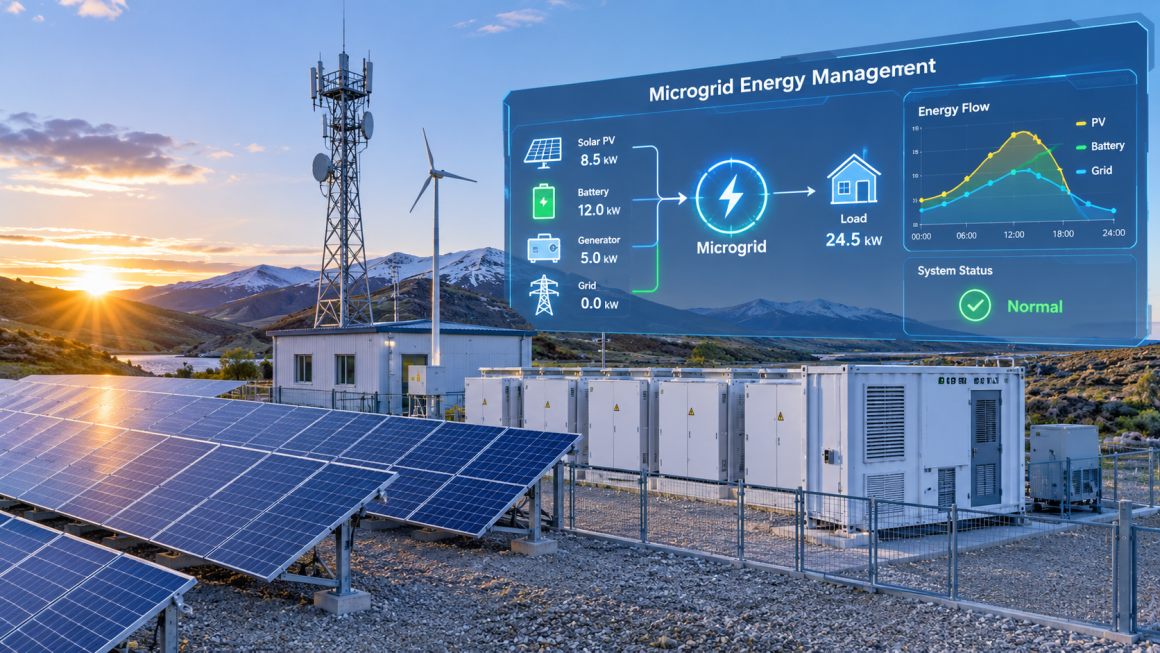
Remote communities, industrial sites, mining operations, communication facilities, islands, and agricultural installations often face significant challenges in securing a stable electricity supply. Extending the main utility grid to these locations can be technically difficult and economically unattractive. Even where a grid connection exists, weak infrastructure and frequent outages may limit its reliability.
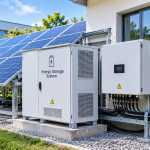
Microgrids offer an alternative. By combining local generation, energy storage, power conversion equipment, and an energy management system (EMS), a microgrid can coordinate electricity production and consumption according to local operating conditions.
However, successful microgrid deployment involves more than installing solar panels and battery storage. Energy management strategies must account for variable renewable generation, changing loads, limited maintenance access, fuel availability, environmental exposure, and the consequences of equipment failure.
This article explains how microgrid energy management works in remote locations, which technical factors influence system reliability, and how appropriate installation and maintenance practices can support long-term operation.
1. Why Remote Locations Need Microgrid Energy Management
Remote energy systems operate under constraints that are often less significant in conventional grid-connected installations.
1.1 Limited grid access
Some remote locations have no utility connection. Others rely on long distribution lines, small local networks, or isolated power infrastructure.
These conditions can lead to:
- High electricity transmission and distribution costs
- Voltage fluctuations and unstable supply
- Frequent interruptions caused by weather or infrastructure damage
- Limited access to emergency repair services
- Dependence on diesel or other transported fuels
A locally managed microgrid can reduce dependence on external electricity infrastructure and improve control over available energy resources.
1.2 Variable renewable generation
Solar and wind generation can reduce fuel consumption, but their output is not always aligned with demand.
For example, a remote solar-powered facility may generate excess electricity during midday but experience its highest demand in the evening. Without sufficient storage or coordinated load management, the system may still need to rely heavily on backup generation.
1.3 High consequences of equipment failure
In urban environments, a failed component may be supported by nearby service providers or alternative power connections. In remote installations, even a relatively small failure can cause extended downtime.
Common risks include:
- Battery protection or power conversion equipment faults
- Damaged cables and connectors
- Cooling or ventilation failures
- Communication interruptions between controllers
- Water ingress, dust accumulation, corrosion, and overheating
For this reason, remote microgrid management should consider equipment reliability and maintainability from the initial design stage.
2. Typical Architecture of a Remote Microgrid
A remote microgrid usually consists of several interconnected subsystems. The exact configuration depends on load requirements, available renewable resources, local environmental conditions, and the required level of autonomy.
| Subsystem | Main function | Key considerations |
|---|---|---|
| Solar PV | Converts sunlight into electricity | Solar resource, shading, module condition |
| Wind generation | Provides electricity from wind resources | Wind availability, mechanical maintenance |
| Battery energy storage | Stores surplus energy and supplies power when generation is insufficient | Capacity, operating temperature, protection |
| Diesel or gas generator | Provides dispatchable backup power | Fuel logistics, operating hours, maintenance |
| PCS / inverter | Converts and controls electrical power | Power rating, grid-forming capability, compatibility |
| EMS | Coordinates generation, storage, and loads | Forecasting, control logic, communication |
| Distribution system | Delivers power to connected loads | Protection coordination, cable routing, grounding |
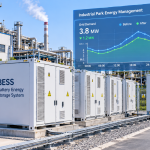
The EMS is the coordination layer. It uses information from generation equipment, storage systems, meters, and load controllers to determine how the microgrid should operate.
A reliable architecture also needs clearly defined electrical protection, communication interfaces, operating modes, and fallback arrangements.
3. Core Functions of an Energy Management System
An EMS does not simply monitor energy production. It helps determine when and how different resources should operate.
3.1 Renewable energy prioritization
Where technically and economically appropriate, the EMS can prioritize renewable generation to reduce fuel consumption.
A typical operating sequence may be:
- Supply active loads using available renewable generation.
- Use surplus generation to charge the battery.
- Reduce renewable output when storage is full and loads cannot absorb additional energy.
- Dispatch backup generation when renewable output and available battery energy are insufficient.
Actual control priorities depend on system design, battery operating limits, generator characteristics, and reliability requirements.
3.2 Battery charging and discharging control
Battery storage helps balance differences between electricity generation and demand.
The EMS may manage:
- Charging power limits
- Discharging power limits
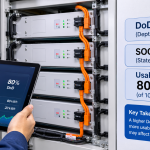
- State of charge (SOC) targets
- Reserve capacity for critical loads
- Battery operating schedules
- Coordination with generators and renewable sources
For remote installations, maintaining an appropriate reserve is particularly important. A system designed only to maximize daily renewable energy utilization may leave insufficient energy for prolonged cloudy weather or unexpected demand.
3.3 Generator dispatch optimization
Diesel generators remain important in many remote microgrids because they can provide controllable power when renewable generation is insufficient.
The EMS can determine when to start or stop generators based on factors such as:
- Current load demand
- Renewable generation forecasts
- Battery SOC
- Minimum generator loading requirements
- Fuel availability and operating costs
- Required backup reserve
Generator scheduling should also consider minimum run times, start-up limitations, maintenance intervals, and manufacturer operating requirements.
3.4 Load management and prioritization
Not all loads have the same operational importance.
A remote facility may include:
- Critical communication equipment
- Safety and monitoring systems
- Water pumping and treatment
- Lighting and HVAC
- Workshops and production machinery
- Non-essential auxiliary loads
An EMS can support load prioritization by maintaining critical services while reducing or temporarily disconnecting non-essential loads during periods of limited energy availability.
This strategy is particularly useful when a microgrid must operate through extended periods of low renewable generation.
4. Operating Strategies for Different Remote Microgrid Conditions
There is no single operating strategy suitable for every remote microgrid. The control approach should reflect the generation mix, load profile, fuel logistics, and required autonomy.
4.1 Solar-plus-storage microgrids
Solar PV combined with battery storage is suitable for locations with good solar resources and relatively predictable demand.
During daylight hours, solar generation supplies loads and charges the battery. After sunset, the battery supplies electricity until it reaches its defined operating reserve.
For extended periods of low solar production, backup generation or controlled load reduction may be necessary.
Important design considerations include:
- Solar generation variability
- Seasonal energy availability
- Battery capacity and power rating
- Depth-of-discharge limits
- Critical-load autonomy requirements
- Equipment temperature management
4.2 Hybrid solar, battery, and diesel microgrids
Hybrid systems combine renewable generation with dispatchable backup power.
Their main advantage is operational flexibility. Renewable energy can reduce fuel consumption, while generators provide additional power when renewable resources are insufficient.
The EMS should avoid unnecessary generator starts and inefficient operation while ensuring that battery reserves remain adequate.
4.3 Wind-solar-storage microgrids
In some remote coastal, island, and high-altitude locations, wind and solar resources complement each other.
For example, wind generation may remain available during periods when solar output is low. Combining the two resources can reduce the need for battery capacity or backup fuel, depending on the local resource profile.
However, the system requires coordinated control of multiple generation sources, power converters, and storage equipment.
4.4 Microgrids with critical industrial loads
Remote mining, telecommunications, water treatment, and industrial facilities may have loads that cannot tolerate extended interruptions.
These installations require particular attention to:
- Load classification
- Backup power capacity
- Power quality
- Redundancy
- Fault isolation
- Recovery procedures
The energy management strategy should distinguish between maintaining essential services and optimizing operating costs.
5. Energy Forecasting and Demand Management
Energy forecasting helps the EMS make decisions before a shortage or surplus occurs.
5.1 Renewable generation forecasting
Solar forecasts may use weather information, historical generation data, and current PV performance. Wind forecasting may consider wind speed, direction, and historical turbine output.
Forecast accuracy is not perfect. Therefore, the EMS should retain operational margins rather than depending entirely on predicted generation.
5.2 Load forecasting
Remote facilities often have recognizable demand patterns.
For example:
- Telecommunications sites may have relatively stable baseline consumption.
- Mining facilities may experience significant variations during production shifts.
- Agricultural pumping loads may follow irrigation schedules.
- Remote communities may experience morning and evening demand peaks.
Historical load data can help the EMS estimate future consumption and prepare appropriate storage or generator schedules.
5.3 Demand response
Demand response adjusts electricity consumption according to available supply.
Possible measures include:
- Scheduling water pumping during periods of high renewable generation
- Shifting non-critical industrial processes
- Reducing discretionary HVAC consumption
- Delaying selected charging activities
- Temporarily disconnecting non-essential loads
Demand response can reduce peak power requirements and improve the utilization of renewable generation without necessarily increasing battery capacity.
6. Communication, Monitoring, and Control Reliability
An EMS depends on accurate information from field equipment. Communication failures can therefore affect system coordination.
Typical communication arrangements may include industrial Ethernet, Modbus RTU, Modbus TCP, CAN-based interfaces, and other manufacturer-supported protocols.
Before commissioning, project teams should verify:
- Communication compatibility between devices
- Register mapping and data definitions
- Time synchronization
- Alarm and fault reporting
- Remote access permissions
- Network segmentation and cybersecurity controls
- Local fallback operation when communication is lost
A remote microgrid should not become completely dependent on a cloud connection or external communication network for basic electrical stability.
Where supported by the equipment, local controllers should retain essential protection and control functions if remote monitoring becomes unavailable.
7. Environmental and Installation Challenges in Remote Locations
Remote microgrids are frequently installed in environments that accelerate equipment deterioration.
7.1 Dust and sand exposure
Desert and dry-region installations may experience fine dust, sand accumulation, and abrasive particles.
Potential consequences include:
- Blocked ventilation openings
- Reduced cooling efficiency
- Contamination of electrical enclosures
- Increased wear on exposed mechanical components
- Accelerated deterioration of cable protection materials
Appropriate enclosure ratings, ventilation design, filtration, inspection, and cleaning procedures are important.
7.2 High temperatures and solar exposure
High ambient temperatures can affect battery performance, inverter operation, and the service life of electrical accessories.
Cables and protective materials exposed to direct sunlight may also deteriorate if they are not designed for the relevant UV and temperature conditions.
Selection should be based on the actual operating temperature, exposure duration, and product specifications rather than general material descriptions.
7.3 Moisture and corrosion
Coastal islands and humid remote locations may expose equipment to salt-laden air, condensation, and moisture.
Potential weak points include:
- Cable glands and enclosure entry points
- Connector interfaces
- Fasteners and mounting hardware
- Cable trays and support structures
- Exposed metallic accessories
Material compatibility, sealing design, drainage, corrosion-resistant finishes, and periodic inspection should be considered together.
7.4 Mechanical damage and vibration
Remote facilities may be exposed to vehicle movement, machinery vibration, wildlife, and accidental impact.
Cables routed near equipment, access paths, or moving structures may require additional mechanical protection and secure fastening.
Protective accessories should be selected according to the actual abrasion, impact, temperature, and installation requirements.
8. Cable Protection and Electrical Reliability
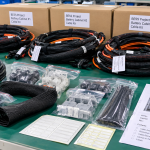
Cable systems are essential to the operation of remote microgrids. They connect PV arrays, battery systems, inverters, generators, distribution panels, monitoring devices, and auxiliary equipment.
A cable failure can interrupt a critical circuit even when the generation and storage equipment remain operational.
8.1 Common cable-related risks
| Risk | Possible consequence | Relevant protection approach |
|---|---|---|
| UV exposure | Jacket degradation | UV-resistant cable or compatible protective sleeve |
| Abrasion | Damage to cable insulation | Braided sleeve or suitable mechanical conduit |
| Vibration | Movement, fatigue, or connector stress | Secure routing and suitable fastening |
| High temperature | Accelerated material ageing | Temperature-rated cable and thermal protection |
| Dust and sand | Contamination and abrasion | Suitable enclosure and routing protection |
| Moisture ingress | Corrosion or electrical faults | Correct glands, seals, and enclosure design |
| Sharp edges | Localized insulation damage | Edge protection and grommets |
8.2 Selecting suitable cable protection accessories
Different installation conditions require different protection products.
- Split braided sleeves: Useful for protecting cable bundles where cables have already been installed or where later inspection is required.
- Self-wrapping sleeves: Provide convenient coverage for irregular cable bundles and retrofit applications.
- Corrugated conduits: Offer structured mechanical protection where a more enclosed routing solution is needed.
- Fiberglass or aluminum-foil-based thermal protection: Can help reduce exposure to radiant heat when the product is appropriately rated and installed.
- Cable glands and sealing accessories: Help maintain the intended enclosure entry protection when correctly matched to the cable and enclosure.
- Edge protectors and grommets: Reduce the risk of cable damage at metal openings and panel cut-outs.
No single sleeve or conduit provides universal protection. Selection must consider cable diameter, bend radius, installation space, temperature, UV exposure, abrasion, moisture, and relevant electrical safety requirements.
9. Maintenance Strategies for Remote Microgrids
Because maintenance access may be limited, remote microgrids benefit from structured inspection and preventive maintenance.
9.1 Routine inspections
Inspection frequency should be determined by equipment manufacturers, operating conditions, risk assessments, and site maintenance procedures.
Typical inspection items include:
- PV module condition and cleanliness
- Battery alarms and operating temperature
- Inverter and PCS status
- Generator condition and fuel supply
- Cable routing and support integrity
- Cable sleeves, conduits, and glands
- Enclosure seals and ventilation
- Grounding and bonding connections
- Communication and monitoring status
9.2 Condition-based maintenance
Monitoring system performance can help identify abnormal conditions before they lead to failures.
Useful indicators include:
- Battery temperature and SOC trends
- Unexpected energy losses
- Repeated inverter alarms
- Abnormal generator operating hours
- Temperature changes at electrical connections
- Communication interruptions
- Visible deterioration of cable protection materials
Thermal imaging and electrical testing may also be appropriate when performed by qualified personnel using suitable procedures.
9.3 Spare parts planning
A remote site may not be able to obtain replacement components immediately.
A practical spare-parts strategy should identify components that are both critical and difficult to replace, such as selected fuses, connectors, communication devices, cable glands, protective sleeves, and other installation accessories.
The objective is not to stock every possible component. It is to reduce the impact of foreseeable failures and long procurement lead times.
10. Practical Case Example: A Remote Island Microgrid
Consider a hypothetical island facility that supplies electricity to a small community, water pumping equipment, communication infrastructure, and essential public services.
The existing system depends heavily on diesel generation. Fuel transportation is expensive, and interruptions can affect both daily life and critical services.
A hybrid microgrid is introduced with:
- Solar PV generation
- Battery energy storage
- Diesel generator backup
- PCS and distribution equipment
- EMS-based monitoring and control
- Local electrical protection and communication infrastructure
10.1 Operating approach
During periods of strong sunlight, PV generation supplies the active loads and charges the battery.
In the evening, stored energy supplies the community and essential equipment. If the battery approaches its defined reserve and renewable generation is insufficient, the EMS can dispatch the diesel generator.
Non-essential loads may be shifted or temporarily reduced during periods of limited energy availability.
10.2 Installation and maintenance priorities
The island environment introduces additional requirements:
- Select equipment suitable for humidity and salt exposure.
- Protect cable routes from mechanical damage and UV exposure.
- Use appropriate sealing accessories at enclosure entries.
- Maintain access for inspection and replacement.
- Monitor battery and power conversion equipment temperatures.
- Establish local operating procedures for communication or EMS failures.
- Keep critical replacement accessories available on site.
10.3 Expected operational benefits
A well-designed and properly maintained hybrid microgrid can help reduce diesel consumption, improve local energy autonomy, and provide more predictable electricity availability.
Actual savings and reliability improvements depend on the renewable resource, system sizing, load profile, equipment performance, fuel costs, and maintenance quality. They should be verified using project-specific operating data.
11. How GR-NEWenergy Supports Remote Microgrid Installation and O&M
Reliable microgrid operation depends on more than generation equipment and energy management software. Cable routing, environmental protection, installation accessories, and maintenance readiness also influence system performance.
GR-NEWenergy focuses on supporting products and services for energy storage installation and operation and maintenance.
Relevant product categories include:
- Cable protection sleeves for exposed and bundled cable routes
- Split and self-wrapping sleeves for retrofit applications
- High-temperature cable protection materials
- Aluminum foil and fiberglass-based thermal protection
- Cable glands, grommets, and sealing accessories
- Cable routing, fastening, and installation accessories
- Replacement protection components for maintenance and upgrades
For remote microgrid projects, these products can help address practical installation challenges such as abrasion, UV exposure, heat, dust, vibration, and selected environmental risks, subject to the specifications of each product.
GR-NEWenergy does not position itself as a battery, PCS, EMS, BMS, or complete microgrid system supplier. Its role is to support the installation and maintenance side of energy storage and related electrical infrastructure.
12. Common Mistakes in Remote Microgrid Energy Management
Several mistakes can reduce the effectiveness of a remote microgrid even when the main equipment is correctly selected.
Mistake 1: Designing around average demand only
Average energy consumption does not represent peak demand or critical-load requirements. Load profiles and operating scenarios should be evaluated.
Mistake 2: Using battery storage without an appropriate reserve strategy
A battery that is regularly operated close to its minimum permitted SOC may leave insufficient backup capacity for unexpected conditions.
Mistake 3: Depending entirely on remote cloud monitoring
Basic protection and essential local control should remain available if external communications fail.
Mistake 4: Underestimating environmental exposure
Dust, UV radiation, humidity, salt, vibration, and temperature can affect equipment and cable accessories throughout the project lifecycle.
Mistake 5: Ignoring cable routing and installation accessories
Poor routing, unsupported cables, sharp edges, and unsuitable protection materials can create avoidable maintenance problems.
Mistake 6: Failing to plan for replacement parts
Long procurement lead times can turn a minor component failure into an extended interruption.
Mistake 7: Treating commissioning as the end of system optimization
Microgrid operating conditions change over time. Load growth, battery ageing, seasonal weather, and generator performance should be reviewed periodically.
Microgrid energy management is essential for remote locations where grid access is limited, fuel logistics are challenging, and reliable electricity is important for daily operations.
A well-managed microgrid coordinates renewable generation, battery storage, backup generators, and electricity demand. Forecasting, load prioritization, communication reliability, and appropriate reserve strategies all contribute to stable operation.
However, energy management software alone cannot guarantee long-term reliability. Electrical installation quality, cable protection, environmental suitability, inspection procedures, and spare-parts planning are equally important.
For remote energy projects, a lifecycle approach that considers both system-level control and practical field maintenance can help improve resilience and reduce avoidable downtime.
1. What is microgrid energy management?
Microgrid energy management is the process of coordinating local electricity generation, energy storage, and electrical loads to maintain reliable and efficient operation. An EMS typically monitors system conditions and manages operating priorities.
2. Why are microgrids useful in remote locations?
Microgrids can provide local electricity where utility grid access is unavailable, unreliable, or expensive. They can combine renewable generation, batteries, and backup generators to improve energy autonomy.
3. Can a remote microgrid operate without diesel generators?
Yes, some systems can operate without diesel generators when renewable resources, storage capacity, load flexibility, and reliability requirements are appropriately matched. However, long periods of low renewable generation must be considered.
4. What is the role of batteries in a remote microgrid?
Batteries store surplus electricity and supply power when renewable generation is insufficient. They can also support power balancing and short-term load changes, depending on system design.
5. What happens if the EMS loses communication?
The response depends on the system architecture. Properly designed systems should retain essential local protection and control functions even when remote communication is interrupted.
6. How can cable protection improve remote microgrid reliability?
Suitable cable protection can reduce exposure to abrasion, UV radiation, vibration, heat, and other environmental or mechanical risks. Product selection must match the actual installation conditions and required protection level.
7. What maintenance is important for remote microgrids?
Important activities include inspecting PV equipment, batteries, inverters, generators, cable routes, connectors, enclosures, ventilation, grounding, and communication systems. Maintenance intervals should follow manufacturer recommendations and site risk assessments.
8. How can remote microgrids reduce operating costs?
They can reduce fuel consumption through renewable energy utilization, improve generator scheduling, shift flexible loads, and reduce avoidable equipment downtime. Actual savings depend on local conditions and project economics.
Primary Keyword: Microgrid energy management in remote locations
Q: How does an EMS manage energy in a remote microgrid?
A: An EMS coordinates renewable generation, battery charging and discharging, backup generator dispatch, and load priorities according to system conditions and operating requirements.
Q: What energy sources are commonly used in remote microgrids?
A: Common sources include solar PV, wind generation, battery storage, and diesel or gas generators. The combination depends on local resources, load demand, and reliability requirements.