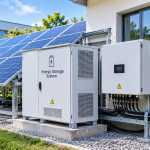
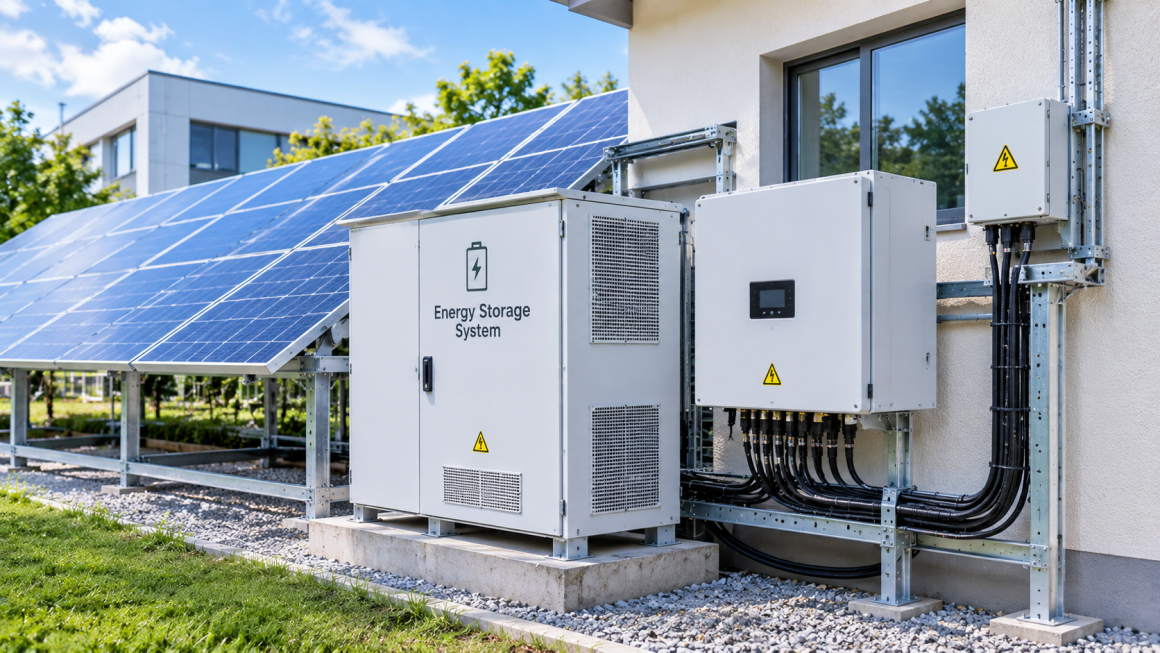
Small photovoltaic (PV) and battery energy storage systems are increasingly used in residential buildings, small commercial facilities, remote sites, agricultural operations, communication infrastructure, and distributed energy projects.
Compared with large utility-scale installations, small PV + Storage systems are often easier to transport, install, and deploy. Modular equipment also allows projects to start with a relatively modest capacity and expand as electricity demand grows.
However, smaller installations are not necessarily simpler from an engineering perspective. Limited installation space, changing load profiles, battery sizing, inverter compatibility, cable routing, environmental exposure, and maintenance access can all influence system performance.
Experience from distributed deployments shows that the success of a small PV + Storage project depends not only on the performance of individual components, but also on how well they work together under actual operating conditions.
This article reviews practical lessons from small PV + Storage deployments, highlighting common design and installation challenges and the measures that can improve long-term reliability.
1. Why Small PV + Storage Systems Are Becoming More Common
Small modular PV + Storage systems provide an alternative to relying entirely on grid electricity or standalone diesel generation.
Typical applications include:
- Residential and small commercial buildings
- Shops, offices, and workshops
- Farms and agricultural facilities
- Remote monitoring stations
- Telecommunications and security installations
- Small industrial facilities
- Rural and off-grid communities
- Backup power for essential equipment
These applications have different electricity requirements, but they share several characteristics: limited installation space, variable energy consumption, and a need for practical system maintenance.
1.1 Distributed energy generation
Small PV systems can generate electricity close to the point of consumption.
This can reduce dependence on grid electricity and, where local conditions permit, lower energy costs.
1.2 Energy storage flexibility
Battery storage allows surplus solar electricity to be used later, particularly during evening periods or temporary interruptions in solar generation.
It can also provide backup power for selected loads when configured with appropriate inverter functionality and electrical isolation.
1.3 Modular expansion
A modular architecture allows project owners to deploy an initial system and consider additional PV or battery capacity later.
However, future expansion must be considered during the initial design. Electrical connection capacity, inverter compatibility, protection coordination, physical space, and control architecture may limit what can be added.
2. Lesson One: Understand the Actual Load Before Selecting Equipment
One of the most common mistakes in small PV + Storage projects is selecting equipment based on estimated daily electricity consumption without understanding when electricity is actually used.
Two facilities may consume the same amount of electricity per day but require very different system configurations.
For example:
- A small office may have most of its demand during daylight hours.
- A residential property may experience its highest demand in the evening.
- A farm may operate pumps intermittently with relatively high starting power.
- A remote monitoring station may have low but continuous electricity consumption.
The load profile influences PV capacity, battery capacity, inverter rating, and backup requirements.
2.1 Collect practical load information
Before equipment selection, project teams should identify:
- Daily electricity consumption in kWh
- Maximum simultaneous load in kW
- Operating hours
- Critical and non-critical loads
- Motor starting or surge requirements
- Seasonal demand changes
- Expected future load growth
Where possible, measured interval data is more useful than estimates based only on appliance nameplate ratings.
2.2 Separate critical and non-critical loads
Not every electrical load needs backup during an outage.
A practical approach is to divide loads into different categories.
| Load category | Typical examples | Design consideration |
|---|---|---|
| Critical | Communication, security, essential lighting | Prioritize backup availability |
| Important | Refrigeration, selected pumps, office equipment | Define acceptable interruption |
| Flexible | Water heating, scheduled charging | Shift operation where possible |
| Non-essential | Discretionary equipment | May be disconnected during limited supply |
This classification can help prevent unnecessary oversizing and improve the effective use of battery capacity.
3. Lesson Two: Battery Capacity and Inverter Power Must Be Evaluated Separately
Battery energy capacity and inverter power rating describe different system characteristics.
- kWh indicates how much energy can be stored or delivered.
- kW indicates how much power the system can supply or absorb at a given moment.
A system may have sufficient energy capacity for several hours of operation but still be unable to start a high-power motor or support multiple appliances running simultaneously.
3.1 Estimating usable battery energy
A simplified estimate is:
[
E_{\text{usable}} = P_{\text{load}} \times t
]
Where:
- (P_{\text{load}}) is the average supported load in kW.
- (t) is the required operating duration in hours.
For example, a critical load averaging 1 kW for five hours requires 5 kWh of delivered energy before accounting for system losses and battery operating limits.
The installed battery capacity must account for:
- Permitted depth of discharge
- Battery operating reserve
- Conversion efficiency
- Temperature conditions
- Battery ageing
- Manufacturer operating limits
3.2 Check inverter power and surge capability
Some small installations include pumps, compressors, refrigerators, or other motor-driven equipment.
These loads may require significantly more power during startup than during normal operation.
Project teams should verify:
- Continuous inverter output
- Short-duration surge rating
- Surge duration
- Starting characteristics of connected equipment
- Whether multiple loads can start simultaneously
A battery with sufficient kWh capacity does not automatically guarantee that the inverter can support the required peak power.
4. Lesson Three: PV Generation and Battery Capacity Must Match the Actual Operating Pattern
Installing more solar panels does not automatically solve every energy supply problem.
PV generation changes throughout the day and across seasons. Battery charging opportunities depend on solar availability, load consumption, inverter limits, and charging control settings.
4.1 Avoid sizing based only on ideal sunshine conditions
Actual PV output can be affected by:
- Cloud cover
- Seasonal solar variation
- Module orientation and tilt
- Shading
- Dust and surface contamination
- High module temperature
- Inverter conversion losses
A system designed around ideal midday production may underperform during cloudy periods or seasons with lower solar availability.
4.2 Evaluate the relationship between PV and battery capacity
A small PV + Storage system should balance three main factors:
- How much electricity the PV array can generate.
- How much of that electricity the loads consume directly.
- How much surplus energy remains available to charge the battery.
If the PV array is too small relative to consumption, the battery may not recharge sufficiently.
If the battery is oversized relative to available solar generation, it may rarely reach its intended operating range.
4.3 Consider seasonal operating conditions
A system that performs well during summer may experience insufficient generation during winter or prolonged cloudy weather.
For off-grid installations, seasonal energy balance is especially important because there may be no utility connection to provide supplementary electricity.
5. Lesson Four: Equipment Compatibility Matters More Than Component Count
Small PV + Storage systems often combine equipment from different manufacturers.
The main components may include:
- PV modules
- Solar inverter or hybrid inverter
- Battery modules
- BMS
- Energy management or monitoring equipment
- AC and DC distribution equipment
- Protection devices
- Communication interfaces
Compatibility should be verified before procurement and installation.
5.1 Battery and inverter compatibility
The battery and inverter must support compatible electrical operating ranges and communication requirements.
Important items include:
- Battery voltage range
- Maximum charging and discharging current
- BMS communication protocol
- Supported battery models
- Charging and discharging control limits
- Firmware compatibility
- Manufacturer-approved configurations
A battery may have the correct nominal voltage but still be incompatible with a particular inverter or BMS communication configuration.
5.2 Communication and monitoring
Monitoring equipment should provide sufficient information for daily operation and troubleshooting.
Useful information includes:
- PV generation
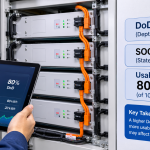
- Battery SOC
- Charging and discharging power
- Grid import and export
- Inverter operating status
- Active alarms
- Historical energy data
Remote monitoring can be particularly useful for installations where technicians cannot visit the site frequently.
However, basic protection and essential system control should not depend entirely on an external internet connection.
6. Lesson Five: Installation Space and Cable Routing Are Often Underestimated
Small installations frequently have limited available space.
Equipment may be installed in utility rooms, garages, outdoor enclosures, small equipment shelters, or existing electrical rooms.
This can create practical problems when battery cabinets, inverters, distribution panels, and cable routes are arranged without sufficient attention to access and ventilation.
6.1 Plan the equipment layout before installation
The installation layout should consider:
- Manufacturer-required equipment clearances
- Battery ventilation and thermal management
- Electrical isolation access
- Maintenance and replacement access
- Cable entry locations
- Fire safety and emergency access
- Protection from direct sunlight and water exposure
Clearances and installation requirements must follow the equipment manufacturer’s documentation and applicable local regulations.
6.2 Keep cable routes organized
A small system can still contain multiple cable types:
- PV DC cables
- Battery power cables
- AC output cables
- Communication cables
- Monitoring and sensor wiring
- Grounding and bonding conductors
Cable routing should avoid sharp edges, excessive bending, unnecessary crossing, and unsupported sections.
Power and communication cables should be routed according to the system design and applicable electromagnetic compatibility requirements.
6.3 Select suitable cable protection
Depending on the installation environment, protective accessories may include:
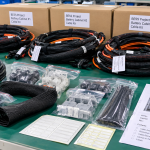
- Corrugated conduits for structured mechanical protection
- Split braided sleeves for existing cable bundles
- Self-wrapping sleeves for irregular or branching routes
- Cable glands for enclosure entries
- Grommets and edge protectors for panel openings
- UV-resistant sleeves for exposed outdoor cable sections
- Suitable thermal protection near identified heat sources
The correct product depends on cable diameter, temperature, UV exposure, moisture, abrasion, and maintenance requirements.
A cable sleeve should not be treated as a replacement for correct cable insulation, electrical protection, or enclosure sealing.
7. Lesson Six: Outdoor Environmental Protection Should Be Designed at the Beginning
Small PV + Storage systems are often installed outdoors to save indoor space.
However, outdoor equipment faces a wider range of environmental conditions.
7.1 UV and solar exposure
Direct sunlight can affect cable jackets, protective sleeves, plastic accessories, and enclosure components.
Use products with documented suitability for the intended UV exposure.
7.2 Rain and moisture
Water exposure can affect enclosure entries, connectors, cable joints, and electrical accessories.
Important measures include:
- Correct enclosure protection ratings
- Compatible cable glands
- Proper sealing arrangements
- Appropriate drainage
- Protection against water accumulation
- Inspection of damaged seals
A textile cable sleeve does not provide waterproof protection unless the specific product has been tested and rated for that purpose.
7.3 Dust and sand
Dust can accumulate around battery cabinets, ventilation openings, connectors, and exposed cable routes.
The installation should allow appropriate inspection and cleaning without compromising electrical safety or equipment protection.
7.4 Temperature management
Battery performance and service life are affected by operating temperature.
The installation should follow battery manufacturer requirements for temperature limits, ventilation, cooling, and spacing.
Cable protection should also be compatible with the operating temperature and should not unnecessarily restrict heat dissipation.
8. Lesson Seven: Commissioning and Configuration Need More Attention
A system can contain correctly selected equipment and still perform poorly if commissioning is incomplete.
Commissioning should verify the complete system rather than checking each component independently.
Typical checks include:
- Electrical connections and polarity
- Grounding and bonding
- Protection device configuration
- Battery and inverter communication
- Charging and discharging limits
- Operating modes
- Backup transfer functionality, where applicable
- Monitoring and alarm functions
- Emergency shutdown arrangements
- Documentation and user instructions
8.1 Test realistic operating scenarios
Where permitted by the system design, commissioning should evaluate different operating conditions.
Examples include:
- Normal PV generation
- Battery charging
- Battery discharging
- Low battery SOC
- Grid interruption
- Backup supply operation
- High load demand
- Communication loss
Testing should follow approved procedures and be carried out by qualified personnel.
9. Lesson Eight: Small Systems Still Need a Practical Maintenance Plan
Smaller installations may receive less frequent professional maintenance because owners assume that fewer components mean fewer problems.
However, distributed systems are often spread across multiple locations, making inspection and service coordination more difficult.
A simple maintenance plan should include:
| Inspection area | What to check | Purpose |
|---|---|---|
| PV modules | Dirt, shading, visible damage | Maintain generation performance |
| Battery system | Alarms, SOC trends, temperature | Identify abnormal operating conditions |
| Inverter | Operating status, alarms, ventilation | Maintain conversion performance |
| Cable routes | Abrasion, loose supports, exposed sections | Reduce cable damage risks |
| Cable protection | Cracking, fraying, UV deterioration | Replace degraded accessories |
| Enclosure entries | Glands, seals, cable movement | Maintain intended protection |
| Electrical connections | Signs of overheating or deterioration | Identify potential electrical problems |
| Monitoring system | Data availability and alarm reporting | Maintain operational visibility |
Inspection frequency should be determined by manufacturer recommendations, environmental conditions, and the project’s maintenance risk assessment.
Electrical testing and work inside energized equipment must be performed by qualified personnel using appropriate safety procedures.
10. Practical Deployment Example: A Small Commercial PV + Storage Installation
Consider a small commercial facility with daytime electricity demand and an additional evening load.
The owner wants to reduce grid electricity consumption and provide backup power for selected essential equipment.
A modular PV + Storage system is installed with:
- Rooftop solar modules
- A hybrid inverter
- Modular battery storage
- AC and DC distribution equipment
- Monitoring and protection devices
- Dedicated backup circuits
10.1 Initial design considerations
The project team reviews daily electricity consumption, peak demand, operating hours, and the critical loads requiring backup.
The battery is sized according to the expected energy requirement and permitted operating range. The inverter is checked against simultaneous load demand and startup requirements.
10.2 Installation challenges
The facility has limited equipment space and an existing electrical room.
The project therefore requires careful consideration of:
- Equipment clearances
- Cable entry locations
- Separation of power and communication wiring
- Access to isolation devices
- Cable support and mechanical protection
- Ventilation and heat management
10.3 Operational lessons
After commissioning, the facility finds that actual electricity demand differs from its original estimates.
Some loads operate later than expected, and the battery does not always recharge to the desired SOC before evening.
The operating schedule is reviewed using actual PV generation and load data.
This illustrates an important lesson: commissioning is the beginning of operational optimization, not the end of system design.
10.4 Maintenance lessons
The project also benefits from maintaining accessible cable routes, documenting circuit identification, and using replaceable protective accessories at locations exposed to mechanical damage.
These measures make later inspections and localized repairs easier.
11. Common Mistakes in Small PV + Storage Deployments
Mistake 1: Selecting equipment based only on daily electricity consumption
Daily kWh consumption does not indicate the required inverter power or startup capability.
Mistake 2: Ignoring seasonal solar conditions
A system designed around favorable weather may not provide the expected performance throughout the year.
Mistake 3: Assuming all battery and inverter combinations are compatible
Electrical and communication compatibility must be confirmed before procurement.
Mistake 4: Installing equipment without adequate maintenance access
Insufficient clearance can make inspection, cleaning, and replacement difficult.
Mistake 5: Treating cable protection as an optional finishing item
Cable routing and protection should be included in the installation design, not added only after problems appear.
Mistake 6: Overlooking environmental exposure
Outdoor installations require appropriate consideration of UV, moisture, dust, temperature, and corrosion.
Mistake 7: Failing to review actual operating data
Real operating conditions may differ from the original assumptions. Performance monitoring should inform later adjustments.
Mistake 8: Planning no pathway for future expansion
Even small projects may grow. Reserved space, compatible equipment architecture, and accessible cable routes can make later upgrades more practical.
12. How GR-NEWenergy Supports Small PV + Storage Installation and O&M
GR-NEWenergy focuses on supporting products and services for energy storage installation and operation and maintenance.
Small PV + Storage projects may require fewer accessories than large installations, but the need for appropriate cable protection and installation materials remains important.
Relevant product categories include:
- Split braided cable sleeves
- Self-wrapping and wraparound sleeves
- Corrugated cable conduits
- UV-resistant cable protection materials
- High-temperature fiberglass sleeves
- Aluminum foil and fiberglass thermal protection
- Cable glands and sealing accessories
- Grommets and edge protection
- Cable fastening and routing accessories
- Replacement components for retrofit and maintenance
These products can help address mechanical abrasion, selected environmental exposure, cable movement, and enclosure entry requirements when correctly selected.
For project evaluation, useful information includes cable diameter, cable bundle configuration, installation location, exposure conditions, temperature requirements, and maintenance access requirements.
GR-NEWenergy does not position itself as a PV module, battery, PCS, inverter, BMS, EMS, or complete energy storage system supplier. Its focus is on installation support, cable protection, and O&M-related accessories.
13.
Small PV + Storage systems offer a flexible way to improve local energy utilization, reduce grid dependence, and provide backup electricity for selected loads.
However, deployment experience shows that system size does not determine engineering complexity.
Accurate load analysis, appropriate battery and inverter selection, PV generation assessment, equipment compatibility, environmental protection, cable routing, and commissioning all influence actual performance.
Long-term reliability also depends on practical maintenance planning. Accessible equipment layouts, organized cable routes, suitable protective accessories, and clear documentation can reduce unnecessary service work.
The most successful small PV + Storage installations are not simply those with the largest battery or highest PV capacity. They are systems designed around real operating requirements, installed with attention to practical details, and maintained throughout their service life.
Frequently Asked Questions
1. What are small PV + Storage systems?
Small PV + Storage systems combine solar photovoltaic generation with battery energy storage. They are commonly used in residential, commercial, agricultural, and remote applications to improve solar self-consumption and provide backup electricity.
2. How do you size a small PV + Storage system?
System sizing should consider daily energy consumption, peak power demand, load timing, critical backup requirements, solar resource, battery operating limits, and future expansion plans.
3. What is the difference between battery capacity and inverter power?
Battery capacity, measured in kWh, describes stored energy. Inverter power, measured in kW, describes the rate at which electricity can be supplied or converted. Both must match the application.
4. Can a small PV + Storage system operate off-grid?
Yes, if the system is specifically designed for off-grid operation with suitable generation, storage, inverter capability, protection, and load management. Backup generation or load reduction may be needed during extended periods of insufficient solar generation.
5. Why is battery and inverter compatibility important?
The battery and inverter must operate within compatible voltage, current, control, and communication limits. Incompatible equipment may cause operating restrictions, communication errors, or system faults.
6. What cable protection is suitable for small PV + Storage installations?
Depending on the application, suitable options may include corrugated conduits, split braided sleeves, self-wrapping sleeves, UV-resistant protection, cable glands, and grommets.
7. How often should small PV + Storage systems be maintained?
Maintenance frequency depends on manufacturer requirements, installation conditions, operating data, and environmental exposure. Outdoor or dusty installations may require more frequent visual inspections.
8. Can a small PV + Storage system be expanded later?
Many modular systems can be expanded, but additional capacity must be checked against inverter compatibility, electrical infrastructure, protection coordination, installation space, and control system limitations.
9. What are the most common problems in small PV + Storage deployments?
Common issues include incorrect load estimates, insufficient battery capacity, inverter power limitations, equipment incompatibility, poor cable routing, inadequate environmental protection, and insufficient maintenance access.