Why Backup Power Is Critical for Communication Base Stations
Communication base stations are essential infrastructure for mobile networks, wireless communication, and increasingly connected digital services.
Even a short power interruption can affect:
- Mobile communication
- Data transmission
- Emergency communications
- Industrial connectivity
- Remote monitoring systems
For this reason, reliable backup power is a fundamental requirement for modern communication infrastructure.
Traditional base stations often rely on batteries combined with backup generators. However, the industry is increasingly moving toward more efficient and intelligent battery-based backup systems.
How Base Station Backup Power Works
A typical backup power system includes:
- Grid power supply
- Rectifier system
- Battery storage
- Power distribution equipment
- Monitoring and control system
- Optional backup generator
Under normal conditions:
Grid Power
↓
Rectifier
↓
Communication Equipment
↓
Battery Charging
When grid power fails:
Battery System
↓
DC Power
↓
Communication Equipment
The battery immediately takes over to maintain continuous operation.
Key Backup Power Strategies
1. Battery Backup
Battery storage is one of the most widely used backup solutions for communication sites.
Common battery technologies include:
- Lead-acid batteries
- Lithium-ion batteries
- Lithium iron phosphate (LFP) batteries
Lithium-based systems are increasingly attractive because of their:
- Higher energy density
- Longer cycle life
- Lower maintenance requirements
- Compact footprint
2. Hybrid Battery and Generator Systems
For sites requiring extended backup duration, batteries can be combined with diesel generators.
The basic strategy is:
Grid Failure
↓
Battery Provides Instant Backup
↓
Generator Starts
↓
Generator Provides Long-Duration Power
This approach combines the fast response of batteries with the long-duration capability of generators.
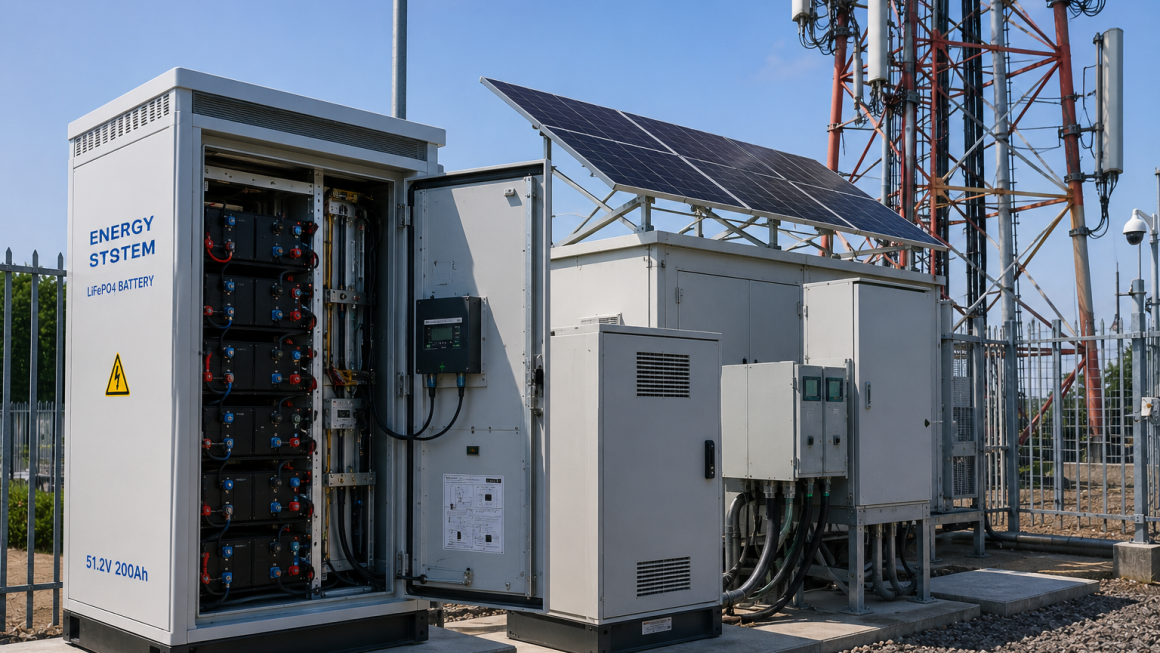
3. Solar + Battery Backup
Remote communication stations can combine photovoltaic generation with battery storage.
During the day:
Solar → Load + Battery Charging
At night:
Battery → Communication Equipment
This reduces dependence on grid electricity and can reduce generator operating time.
Solar + battery systems are particularly useful for:
- Remote base stations
- Rural communication networks
- Off-grid sites
- Difficult-to-access locations
Battery Capacity and Backup Duration
Battery sizing should be based on the actual power requirements of the communication site.
Important parameters include:
- Base station load
- Required backup duration
- Battery usable capacity
- Temperature
- Battery aging
- System efficiency
A site requiring several hours of backup will need a significantly different battery configuration from a site requiring only short-duration ride-through power.
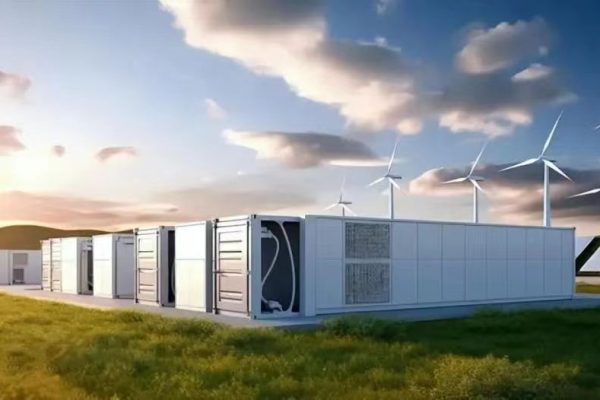
Outdoor Battery Enclosures
Communication base station batteries are often installed outdoors.
The enclosure therefore needs to protect batteries and electrical components from:
- Rain
- Dust
- UV radiation
- Humidity
- High temperatures
- Corrosive environments
Important enclosure features include:
- Weather-resistant construction
- Effective sealing
- Ventilation or cooling
- Cable entry protection
- Corrosion-resistant materials
For coastal communication sites, additional salt-spray and corrosion protection may be required.
Thermal Management
Temperature has a major impact on battery performance and service life.
Outdoor communication sites may experience significant temperature fluctuations.
High temperatures can accelerate battery degradation, while low temperatures can reduce available battery capacity.
Thermal management strategies may include:
- Natural ventilation
- Forced-air cooling
- Air conditioning
- Thermal insulation
- Liquid cooling for higher-density systems
The appropriate solution depends on battery chemistry, enclosure design, and local climate.
Battery Monitoring and Intelligent Control
Modern communication backup systems increasingly use intelligent monitoring.
A Battery Management System (BMS) can monitor:
- Battery voltage
- Current
- Temperature
- State of charge (SOC)
- State of health (SOH)
Remote monitoring can also help operators identify:
- Battery degradation
- Abnormal temperatures
- Charging problems
- Communication failures
This allows maintenance teams to identify potential failures before they affect network availability.
Modular Backup Power Architecture
Modular battery systems provide greater flexibility for communication networks.
Instead of installing one oversized battery system, operators can use multiple standardized battery modules.
Benefits include:
- Easier installation
- Flexible capacity expansion
- Simplified replacement
- Easier maintenance
Modular architecture is particularly useful when communication traffic and power requirements increase over time.
Cable and Connection Protection
Reliable backup power depends not only on the battery itself but also on the associated electrical connections.
Outdoor cable systems should be protected against:
- UV exposure
- Rain
- Humidity
- Mechanical damage
- Corrosion
Useful protection components include:
- Cable glands
- Protective conduits
- Cable covers
- Sealed connectors
- Corrosion-resistant fittings
Weak cable connections can become failure points even when the battery system itself is properly protected.
Backup Power for Harsh Environments
Communication infrastructure may be installed in challenging locations such as:
- Coastal regions
- Desert environments
- Tropical climates
- Mountainous areas
- Industrial zones
Each environment creates different protection requirements.
Coastal Sites
Main risks:
- Salt spray
- Humidity
- Corrosion
Recommended strategies:
- Corrosion-resistant materials
- Protective coatings
- Sealed enclosures
- Cable protection
Hot Climates
Main risks:
- High ambient temperature
- Solar heat exposure
- Accelerated battery aging
Recommended strategies:
- Thermal insulation
- Ventilation
- Cooling systems
- Solar shielding
How to Improve Base Station Backup Reliability
A reliable backup power strategy should combine several layers of protection:
Reliable Grid Connection
↓
Battery Backup
↓
Intelligent Monitoring
↓
Thermal Management
↓
Environmental Protection
↓
Cable & Connection Protection
↓
Preventive Maintenance
This layered approach reduces the risk of a single component failure interrupting communication services.
Future Trends in Communication Backup Power
Higher-Density Lithium Battery Systems
Compact lithium battery systems will allow more backup capacity within smaller spaces.
Renewable Integration
More remote communication sites will combine:
- Solar
- Battery storage
- Intelligent energy management
to reduce reliance on diesel generators.
Intelligent Battery Monitoring
Remote diagnostics and predictive maintenance will become increasingly important for large communication networks.
Modular Energy Storage
Standardized battery modules will make it easier to expand and maintain distributed communication infrastructure.
Reliable backup power is essential for maintaining communication network availability.
Modern base station backup strategies are moving beyond traditional battery-only systems toward integrated solutions combining:
- Lithium battery storage
- Solar generation
- Backup generators
- Intelligent BMS monitoring
- Thermal management
- Outdoor enclosures
- Cable and corrosion protection
The best solution depends on the site’s power demand, required backup duration, climate, accessibility, and maintenance strategy.
For remote and outdoor communication infrastructure, battery reliability and environmental protection must be designed together to achieve long-term network availability.