


Why Industrial Load Management Is Becoming More Important
Industrial facilities are among the largest electricity consumers in modern energy systems.
Factories, manufacturing plants, data centers, and industrial parks often experience significant variations in electricity demand throughout the day.
Typical patterns include:
- High-power production periods
- Equipment startup peaks
- Seasonal electricity fluctuations
- Increased demand from electrification
These fluctuations can increase operating costs and create additional pressure on electrical infrastructure.
To address these challenges, many industrial users are adopting Energy Storage Systems (ESS) combined with intelligent load management strategies.
One of the most common applications is:
Storage-assisted peak shaving.
What Is Peak Shaving?
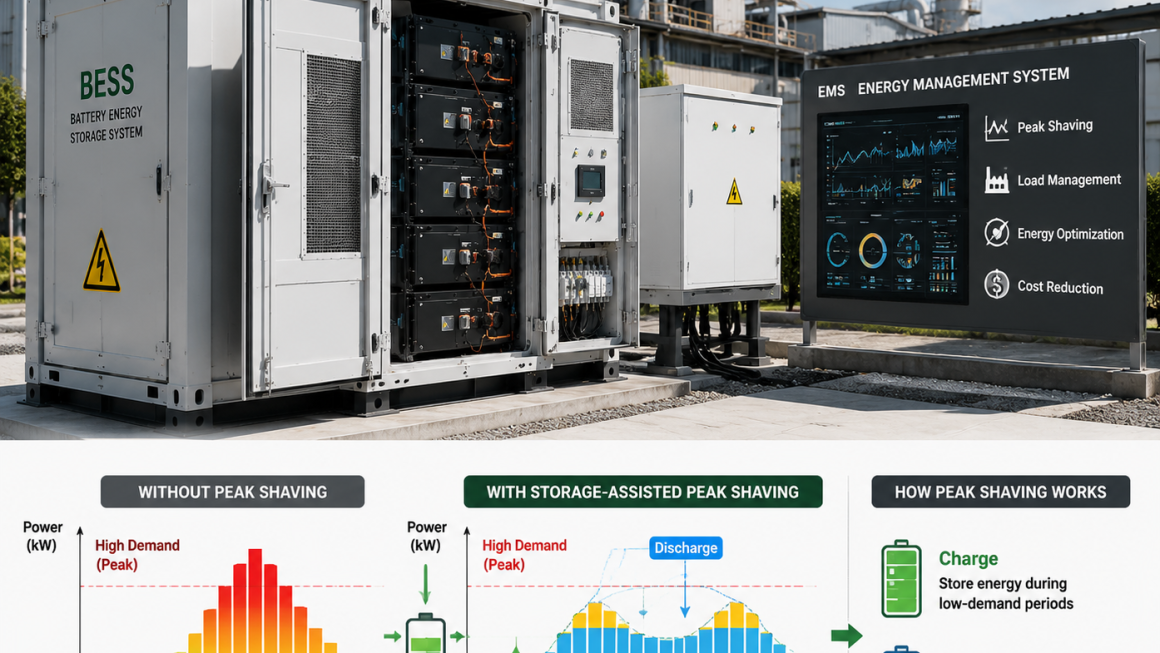
Peak shaving is an energy management strategy that reduces electricity demand during high-consumption periods.
Instead of relying entirely on the grid during peak demand, an ESS provides stored energy to support industrial loads.
The basic principle is:
Low-demand period
→ Charge the energy storage system
High-demand period
→ Discharge stored energy to reduce grid consumption
This allows industrial users to smooth their electricity demand profile.
How Storage-Assisted Peak Shaving Works
A typical peak shaving system includes:
- Battery Energy Storage System (BESS)
- Power Conversion System (PCS)
- Energy Management System (EMS)
- Battery Management System (BMS)
- Electrical monitoring equipment
The EMS continuously monitors:
- Load demand
- Electricity prices
- Battery status
- Grid conditions
Based on this information, the system determines when to charge and discharge.
The Benefits of Industrial Peak Shaving
1. Reducing Peak Electricity Costs
Many industrial electricity tariffs include demand charges based on maximum power consumption.
A short period of high demand can significantly affect monthly electricity expenses.
By using ESS during peak periods, companies can reduce their grid power demand.
2. Improving Energy Flexibility
Industrial operations often cannot easily change production schedules.
Energy storage provides flexibility by allowing companies to:
- Store electricity when available
- Use energy when needed
- Respond to grid conditions
This creates a more adaptable energy system.
3. Supporting Renewable Energy Integration
Many industrial facilities are installing:
- Rooftop solar systems
- On-site renewable generation
However, renewable energy output does not always match industrial demand.
ESS helps by:
- Storing excess solar energy
- Reducing renewable energy waste
- Increasing self-consumption
4. Reducing Grid Stress
Large industrial loads can create sudden demand changes.
Peak shaving helps:
- Smooth electricity consumption
- Reduce local grid pressure
- Improve power stability
Industrial Applications of Storage-Assisted Peak Shaving
Manufacturing Plants
Manufacturing facilities often experience:
- Motor startup loads
- Production schedule fluctuations
- High daytime electricity demand
ESS can help stabilize energy consumption.
Industrial Parks
Industrial parks contain multiple energy users with different load patterns.
Energy storage can support:
- Shared energy management
- Renewable integration
- Demand optimization
Data Centers
Data centers require continuous power availability.
ESS can support:
- Peak load management
- Backup power strategies
- Energy cost optimization
Cold Storage and Logistics Facilities
Facilities with refrigeration systems often have significant energy fluctuations.
ESS can help manage:
- Compressor loads
- Seasonal demand changes
- Renewable energy utilization
Key Hardware Components Behind Peak Shaving Systems
Although peak shaving is an energy management strategy, reliable hardware determines system performance.
Battery System
The battery determines:
- Available energy capacity
- Discharge duration
- Cycle life
Battery selection depends on:
- Load profile
- Operating strategy
- Required response speed
PCS (Power Conversion System)
PCS controls energy conversion between:
- Battery DC power
- Industrial AC loads
- Grid connection
Important performance factors include:
- Conversion efficiency
- Response speed
- Reliability
Thermal Management System
Industrial ESS systems operate under demanding conditions.
Thermal solutions include:
- Air cooling
- Liquid cooling plates
- Cooling loops
- Thermal protection materials
Effective thermal management improves battery lifespan and system reliability.
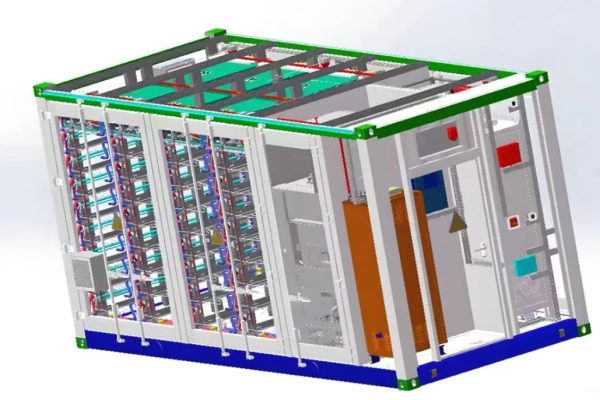
Enclosure and Protection Systems
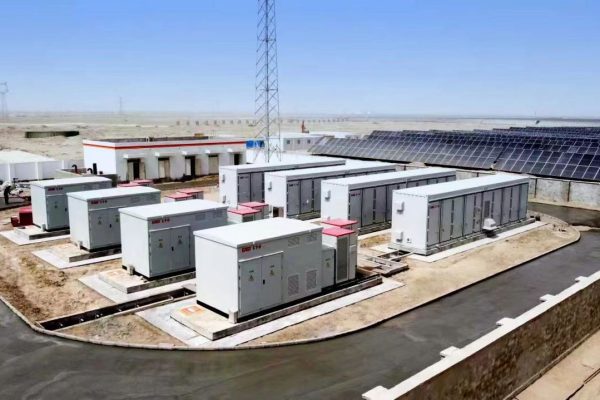
Outdoor industrial ESS requires protection against:
- Heat
- Dust
- Humidity
- Corrosion
Key components include:
- Battery enclosures
- Cable protection systems
- Weather-resistant structures
The Role of Intelligent Energy Management
Modern peak shaving systems rely on advanced control strategies.
EMS platforms analyze:
- Historical consumption
- Electricity pricing
- Weather forecasts
- Production schedules
The goal is to optimize:
- Energy cost
- Battery utilization
- Grid interaction
Design Considerations for Industrial ESS Peak Shaving
Battery Capacity Selection
Oversizing increases investment cost.
Undersizing may reduce peak shaving effectiveness.
The optimal design depends on:
- Peak demand level
- Duration of peaks
- Electricity tariff structure
Installation Environment
Industrial ESS may operate in:
- Outdoor yards
- Factory buildings
- Industrial parks
- Remote locations
Environmental protection must be considered during system design.
Maintenance Requirements
Long-term operation requires:
- Easy access
- Reliable cable management
- Thermal monitoring
- Component protection
Future Trends in Industrial Energy Management
Storage-assisted peak shaving is evolving toward:
- AI-based energy optimization
- Grid interaction services
- Virtual power plants
- Renewable-energy-driven industrial systems
- Modular ESS deployment
Future industrial energy systems will not only consume electricity but actively manage energy flows.
Industrial load management with storage-assisted peak shaving provides an effective approach for reducing demand peaks, improving energy flexibility, and supporting renewable integration.
By combining battery storage, intelligent energy management, reliable power electronics, and robust system protection, industrial facilities can achieve greater control over their energy consumption.
As electricity demand continues to increase and renewable energy adoption expands, ESS-based peak shaving will become an important strategy for building more efficient and resilient industrial energy systems.