



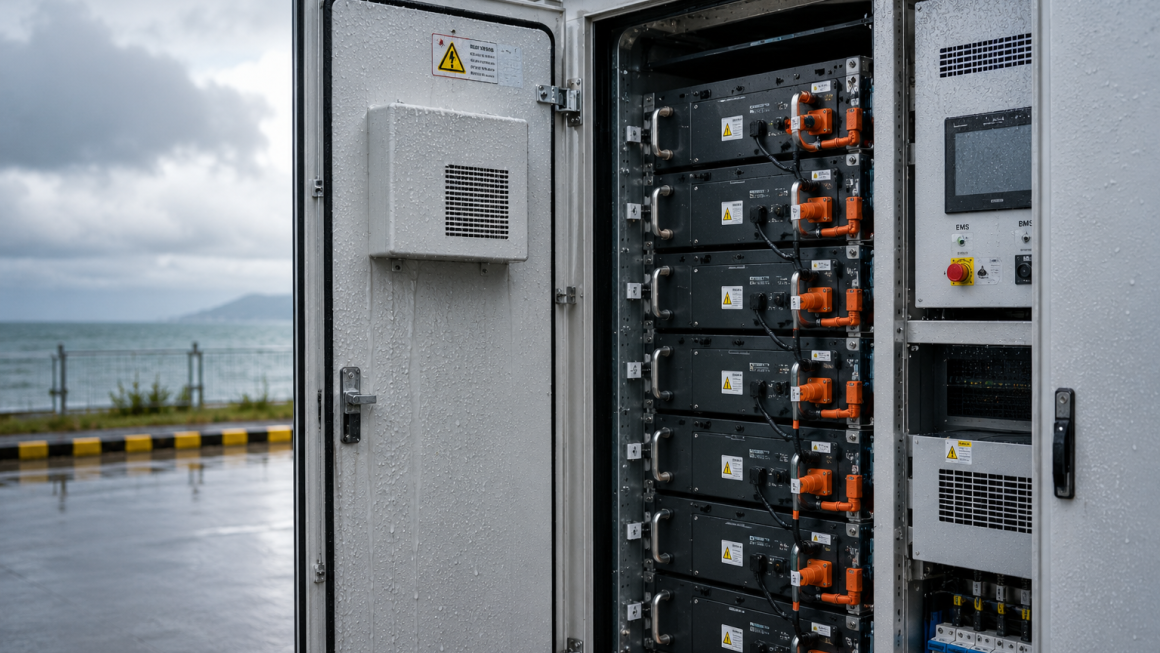
Why Humidity Is a Critical Challenge for Coastal BESS
Battery Energy Storage Systems (BESS) are increasingly deployed in coastal regions to support renewable energy integration, industrial facilities, ports, and island microgrids.
While salt spray often receives significant attention, high humidity is another major environmental factor that can gradually reduce system reliability.
Moisture in the air can penetrate enclosures, condense on surfaces during temperature changes, and accelerate the aging of electrical, mechanical, and thermal management components.
For long-term outdoor operation, humidity control is just as important as thermal management and corrosion protection.
Understanding Coastal Humidity
Coastal environments typically experience:
- High relative humidity throughout the year
- Frequent rainfall
- Morning dew and condensation
- Large day-to-night temperature fluctuations
- Moist marine air
These conditions increase the likelihood of moisture accumulation inside equipment, even when the enclosure appears properly sealed.
How Humidity Affects BESS Components
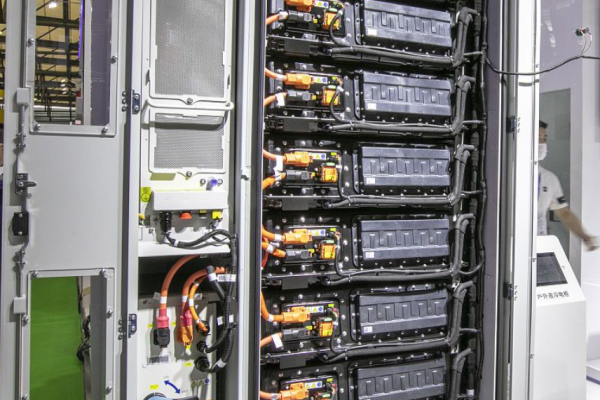
Battery Modules
Although battery cells are sealed, prolonged exposure to moisture can affect surrounding components such as:
- Module housings
- Electrical connections
- Busbars
- Insulation materials
Humidity may also contribute to condensation during rapid temperature changes.
Cable Assemblies
Outdoor cable systems are continuously exposed to moisture.
Potential effects include:
- Insulation aging
- Moisture ingress at cable terminations
- Increased leakage current
- Reduced dielectric performance
High-quality cable sleeves and sealed cable glands help reduce long-term moisture exposure.
Electrical Connectors
Humidity can accelerate oxidation at connector interfaces.
Possible consequences include:
- Increased contact resistance
- Localized heat generation
- Unstable electrical performance
- Higher maintenance frequency
Using corrosion-resistant connectors and reliable sealing systems helps maintain stable electrical connections.
Battery Racks and Structural Components
Repeated moisture exposure may gradually affect:
- Protective coatings
- Fasteners
- Welded joints
- Structural frames
Selecting corrosion-resistant materials and durable surface treatments improves long-term durability.
Liquid Cooling Components
Condensation around:
- Quick disconnect couplings
- Manifolds
- Cooling pipes
- Heat exchangers
may increase the likelihood of corrosion if moisture remains trapped for extended periods.
Condensation: The Hidden Risk
Humidity alone is not always the primary concern.
The greatest risk often comes from condensation.
When warm, humid air contacts a cooler surface, water droplets may form on:
- Cooling pipes
- Metal enclosures
- Cable glands
- Connectors
Over time, repeated condensation cycles can accelerate corrosion and insulation degradation.
Engineering Solutions for Humidity Protection
High-Performance Enclosures
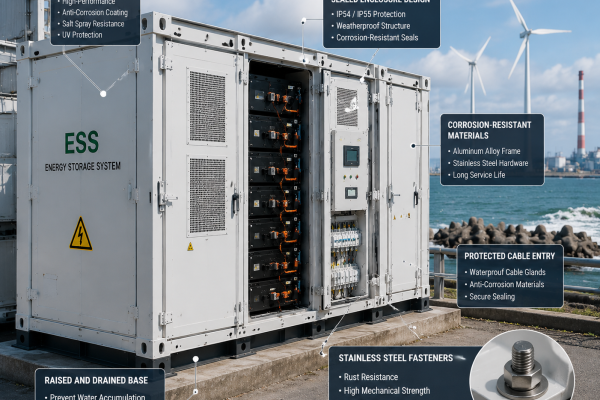
Outdoor BESS enclosures should provide effective protection against moisture intrusion.
Important design features include:
- High IP-rated sealing
- Durable door gaskets
- Moisture-resistant cable entry systems
- Pressure equalization vents
These measures help reduce internal humidity while maintaining enclosure integrity.
Moisture-Resistant Cable Protection
Cable protection systems should provide resistance to:
- Humidity
- Water ingress
- UV exposure
- Mechanical wear
Common solutions include:
- Fiberglass cable sleeves
- Aluminum foil fiberglass sleeves
- UV-resistant protective conduits
- Waterproof cable glands
Corrosion-Resistant Materials
Material selection plays an important role in humid environments.
Common choices include:
- Anodized aluminum
- Stainless steel
- Engineering polymers
- Corrosion-resistant fasteners
These materials help maintain mechanical strength and electrical reliability over long service periods.
Protective Coatings
Industrial coatings create an additional barrier against moisture.
Common options include:
- Epoxy primers
- Polyurethane topcoats
- Conversion coatings
- Anti-corrosion surface treatments
Proper coating systems reduce moisture penetration and improve durability.
Thermal and Humidity Management
Temperature and humidity are closely related.
Effective thermal management can reduce the likelihood of condensation by maintaining more stable internal temperatures.
Common approaches include:
- Liquid cooling systems
- Controlled ventilation
- Thermal insulation
- Reflective exterior surfaces
Managing both heat and humidity together provides better long-term reliability.
A System-Level Protection Strategy
Reliable coastal BESS installations combine multiple layers of protection:
Environmental Layer
Protects against:
- Rain
- Humidity
- UV radiation
- Salt spray
Mechanical Layer
Provides:
- Structural stability
- Durable enclosures
- Corrosion-resistant hardware
Electrical Layer
Includes:
- Moisture-resistant connectors
- Protected cable routing
- Reliable insulation systems
Thermal Layer
Supports:
- Stable operating temperatures
- Reduced condensation
- Efficient cooling performance
Future Trends in Humidity Protection
As coastal energy storage deployments continue to grow, new technologies are improving environmental resistance.
Emerging developments include:
- Smart humidity monitoring sensors
- Advanced breathable membrane vents
- Nano-scale moisture-resistant coatings
- Composite corrosion-resistant materials
- Integrated thermal and humidity management systems
These innovations help extend service life while reducing maintenance requirements.
High coastal humidity is a long-term environmental challenge that can significantly influence the reliability of Battery Energy Storage Systems.
Moisture and condensation may gradually affect battery modules, cable assemblies, connectors, cooling systems, and structural components if not properly managed.
By combining sealed enclosures, corrosion-resistant materials, durable cable protection, protective coatings, and effective thermal management, engineers can greatly improve the reliability and service life of coastal BESS installations.
As energy storage projects continue expanding into humid coastal regions, designing for moisture resistance will remain a fundamental part of successful BESS engineering.