



Why Quick Disconnect Couplings Matter in Liquid Cooling Systems
As thermal loads increase in AI servers, high-performance computing (HPC), and Battery Energy Storage Systems (BESS), liquid cooling has become an essential technology for efficient heat management.
A complete liquid cooling system includes:
- Cold plates
- Pumps
- Manifolds
- Heat exchangers
- Fluid hoses
- Quick disconnect couplings
Among these components, quick disconnect couplings (QDs) play a critical role in maintaining system reliability.
They allow technicians to connect and disconnect cooling circuits quickly while minimizing coolant leakage.
For high-value equipment such as AI servers and battery systems, traditional connectors are often insufficient. This has increased the adoption of non-spill quick disconnect couplings.
What Is a Non-Spill Quick Disconnect Coupling?
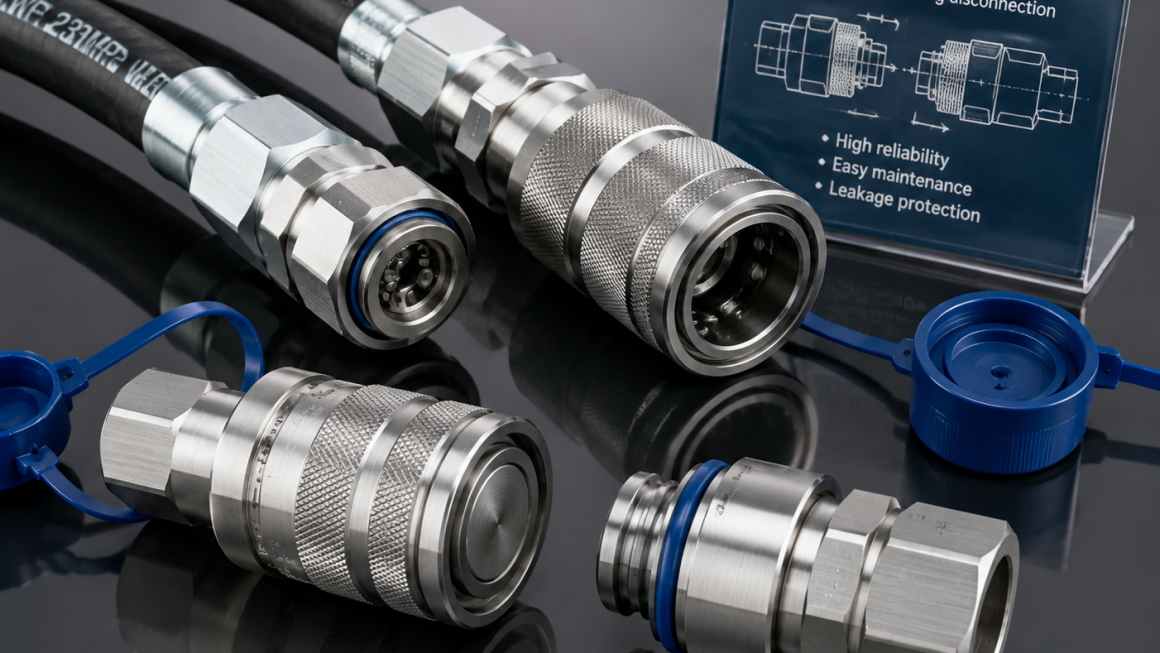
A non-spill quick disconnect coupling is a specialized connector designed to join and separate fluid lines while preventing significant coolant loss.
Unlike conventional fluid connectors, non-spill QDs contain internal shut-off mechanisms that automatically close when disconnected.
This design helps protect:
- Electronic components
- Cooling equipment
- Operators
- Cleanroom environments
from coolant contamination.
How Does a Non-Spill QD Work?
A non-spill quick disconnect coupling typically consists of two main parts:
- Male half
- Female half
Each side contains an internal valve mechanism.
When connected:
- The two halves align.
- Internal valves are pushed open.
- Coolant flows through the combined channel.
- The connection creates a sealed fluid path.
When disconnected:
- The locking mechanism releases.
- Internal valves automatically close.
- Coolant flow stops.
- Leakage is minimized.
This automatic shut-off function is the key feature of non-spill technology.
The Internal Structure of Non-Spill QDs
A typical non-spill quick disconnect includes:
Valve Mechanism
The valve controls coolant flow during connection and separation.
It must provide:
- Reliable sealing
- Low pressure drop
- Long cycle life
Sealing Elements
Seals prevent coolant leakage under operating conditions.
Common sealing materials include:
- EPDM
- FKM (Viton)
- Silicone
- Specialized elastomers
Material selection depends on:
- Coolant type
- Temperature range
- Chemical compatibility
Locking Mechanism
The locking structure ensures:
- Secure connection
- Prevention of accidental separation
- Repeatable maintenance operation
Fluid Channel Design
The internal flow path affects:
- Pressure drop
- Flow rate
- Cooling efficiency
Optimized designs minimize restriction while maintaining reliability.
Why Non-Spill QDs Are Important for Liquid Cooling
1. Preventing Coolant Leakage
Liquid cooling systems operate close to sensitive electronics.
Even small coolant leaks may cause:
- Equipment damage
- Electrical risks
- Maintenance downtime
Non-spill QDs significantly reduce leakage during service operations.
2. Simplifying Maintenance
Modern AI racks and ESS systems require regular maintenance.
Quick disconnects allow technicians to:
- Replace modules
- Service cooling components
- Expand systems
without draining the entire cooling loop.
3. Improving System Reliability
Reliable connections reduce risks related to:
- Loose fittings
- Fluid contamination
- Air entering the loop
- Cooling performance degradation
Applications of Non-Spill QDs
AI Data Center Liquid Cooling
High-density AI servers generate extreme heat loads.
Liquid cooling systems use QDs for:
- Rack-level cooling
- Cold plate connections
- CDU integration
- Server maintenance
Battery Energy Storage Systems
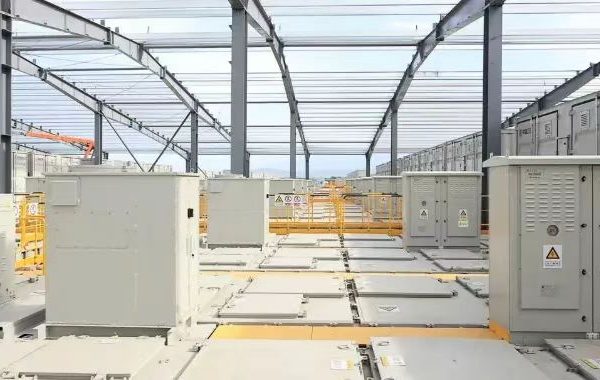
In ESS applications, liquid cooling helps maintain battery temperature consistency.
Non-spill QDs are used in:
- Battery pack cooling loops
- Module-level cooling
- Containerized ESS systems
Industrial Power Electronics
Applications include:
- Inverters
- Power modules
- Semiconductor cooling
where reliable thermal management is essential.
Material Selection for Non-Spill Quick Disconnects
Material selection affects:
- Corrosion resistance
- Weight
- Cost
- Service life
Aluminum QDs
Advantages:
- Lightweight
- Good thermal applications
- Suitable for weight-sensitive systems
Considerations:
- Requires proper surface treatment
- Must avoid galvanic corrosion risks
Brass QDs
Advantages:
- Excellent machinability
- Good sealing performance
- Cost-effective
Common in industrial fluid systems.
Stainless Steel QDs
Advantages:
- Excellent corrosion resistance
- High mechanical strength
- Suitable for demanding environments
Applications:
- Marine environments
- High reliability cooling systems
Key Design Considerations
Pressure Drop
A good QD design should maintain:
- High flow efficiency
- Low resistance
- Stable cooling performance
Thermal Compatibility
Materials must withstand:
- Temperature cycling
- Long-term coolant exposure
- Thermal expansion
Corrosion Prevention
Mixed-metal systems require attention to:
- Galvanic corrosion
- Coolant chemistry
- Surface treatment
Reliability Under Repeated Connection Cycles
Industrial systems may require hundreds or thousands of connection cycles.
Important factors include:
- Seal durability
- Valve wear resistance
- Mechanical strength
Non-Spill QDs and Future Liquid Cooling Systems
As AI infrastructure and energy storage systems continue to grow, cooling systems are becoming:
- Higher density
- More modular
- Easier to maintain
Future QD technologies will focus on:
- Lower pressure drop
- Higher flow capacity
- Smart monitoring
- Lightweight materials
- Improved corrosion resistance
Non-spill quick disconnect couplings will remain a critical enabling technology for next-generation liquid cooling systems.
Non-spill quick disconnect couplings provide a reliable method for connecting and disconnecting liquid cooling circuits while minimizing coolant leakage.
Through automatic shut-off valves, durable sealing systems, and optimized fluid channels, QDs improve maintenance efficiency and system reliability.
In AI data centers, HPC systems, and Battery Energy Storage Systems, these small but critical components play an important role in ensuring stable thermal management performance.
As liquid cooling becomes increasingly important, reliable quick disconnect technology will continue to support safer, more efficient, and more maintainable cooling infrastructures.