Why Urban Energy Storage Requires Compact Design
As cities continue to electrify transportation, buildings, and industrial activities, the demand for flexible energy infrastructure is increasing rapidly.
However, urban environments present unique challenges for energy storage deployment:
- Limited installation space
- Strict safety requirements
- Noise restrictions
- Complex electrical infrastructure
- High demand for reliability
Traditional large-scale energy storage systems designed for open areas are often difficult to deploy in dense urban locations.
This has created growing demand for compact Energy Storage Systems (ESS) that provide high performance while minimizing physical footprint.
What Is Compact ESS?
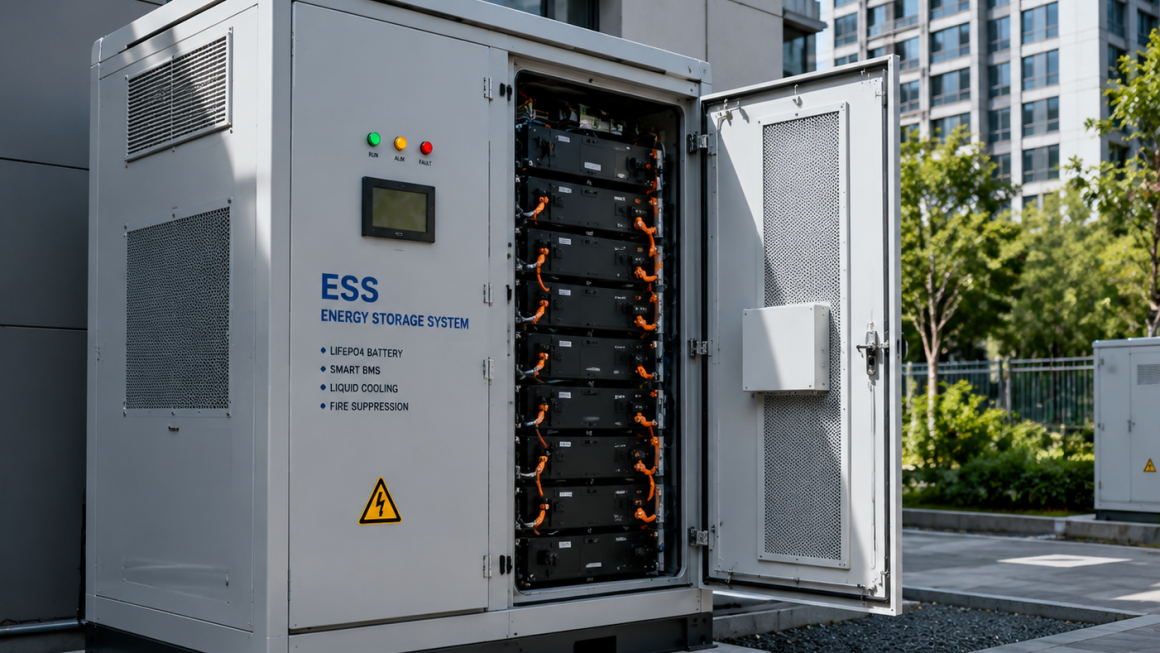
Compact ESS refers to energy storage systems designed to achieve higher energy density and easier integration within space-constrained environments.
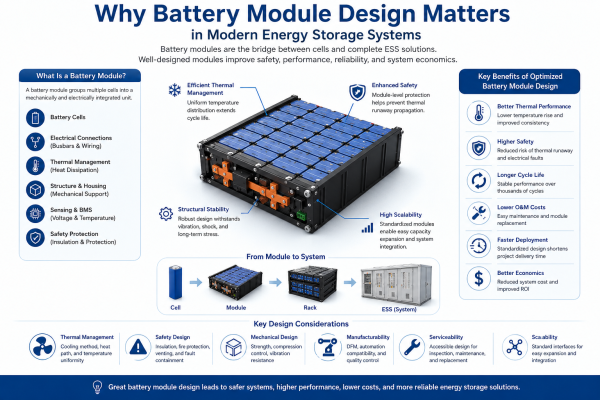
A compact ESS typically integrates:
- Battery modules
- Battery Management System (BMS)
- Power Conversion System (PCS)
- Thermal management system
- Fire protection system
- Control and monitoring system
By optimizing mechanical design and system integration, compact ESS solutions deliver significant energy capacity within a smaller installation area.
Why Cities Need Compact Energy Storage
1. Limited Available Space
Urban environments often have strict space limitations.
Potential installation locations include:
- Commercial buildings
- Parking facilities
- Industrial facilities
- Data centers
- Renewable energy sites
- Microgrid applications
Compact ESS enables energy storage deployment where traditional containerized systems may not be practical.
2. Increasing Energy Demand
Modern cities require more electricity due to:
- Electric vehicle charging
- Data centers
- Smart buildings
- Industrial electrification
Energy storage helps balance demand by:
- Reducing peak loads
- Improving renewable energy utilization
- Supporting grid flexibility
3. Renewable Energy Integration
Urban solar installations are expanding through:
- Rooftop photovoltaic systems
- Building-integrated solar
- Commercial renewable projects
However, solar generation is intermittent.
Compact ESS allows cities to:
- Store excess renewable energy
- Improve self-consumption
- Reduce dependence on grid fluctuations
Key Design Principles of Compact ESS
High Energy Density Architecture
Compact ESS requires optimized internal design.
Important factors include:
- Battery module arrangement
- Space utilization
- Component integration
- Thermal pathway optimization
Higher energy density allows more storage capacity within limited space.
Integrated Thermal Management
Compact systems create higher heat density.
Therefore, thermal management becomes critical.
Solutions include:
- Liquid cooling plates
- Optimized airflow design
- Thermal insulation materials
- Heat dissipation structures
Effective thermal control improves:
- Battery lifespan
- Safety performance
- System efficiency
Modular Architecture
Modularity is one of the most important trends in compact ESS design.
Benefits include:
- Flexible capacity expansion
- Easier installation
- Simplified maintenance
- Faster deployment
Modular systems can adapt to different urban applications without requiring complete redesign.
Safety Considerations for Compact ESS
Because compact systems place more components into smaller spaces, safety design becomes increasingly important.
Thermal Runaway Management
Compact ESS requires:
- Temperature monitoring
- Thermal isolation
- Fire-resistant materials
- Effective ventilation strategies
Fire Protection
Integrated protection systems may include:
- Fire detection
- Fire suppression
- Pressure relief
- Cell-level isolation
Safety design must consider the entire system, not only the battery cells.
Electrical Safety
Compact ESS requires reliable:
- Cable management
- Connector protection
- Insulation design
- Grounding systems
Proper electrical protection improves long-term reliability.
Mechanical Design for Urban ESS
Urban installations often require compact but durable structures.
Important design elements include:
Compact Rack Structures
Battery racks must provide:
- Structural stability
- Space optimization
- Easy maintenance access
Cable Management Systems
Dense electrical layouts require:
- Organized routing
- Protection sleeves
- Sealed cable entries
- Heat-resistant protection
Enclosure Design
Outdoor urban ESS enclosures should consider:
- Weather resistance
- Noise control
- Dust protection
- Corrosion resistance
Thermal Challenges in Compact ESS
Higher energy density creates greater thermal challenges.
Heat sources include:
- Battery cells
- PCS components
- Power electronics
- Charging and discharging losses
Without proper thermal design, compact ESS may experience:
- Reduced efficiency
- Faster aging
- Increased cooling demand
Advanced solutions include:
- Aluminum cooling plates
- Liquid cooling loops
- Thermal interface materials
- Reflective heat protection layers
Applications of Compact ESS in Urban Environments
Commercial Buildings
Compact ESS can support:
- Peak shaving
- Backup power
- Renewable energy utilization
EV Charging Infrastructure
Energy storage helps:
- Reduce grid impact
- Support fast charging
- Improve charging flexibility
Data Centers
Compact ESS supports:
- Backup power
- Grid stabilization
- Energy optimization
Urban Microgrids
Energy storage enables:
- Local renewable integration
- Energy resilience
- Flexible electricity management
Materials and Components Supporting Compact ESS
Compact designs depend on advanced materials and components.
Key technologies include:
Aluminum Structures
Advantages:
- Lightweight
- Corrosion resistance
- Modular manufacturing capability
Thermal Protection Materials
Including:
- Heat shields
- Insulation layers
- Reflective materials
Cable Protection Systems
Including:
- High-temperature sleeves
- UV-resistant covers
- Mechanical protection layers
Liquid Cooling Components
Including:
- Cooling plates
- Quick disconnects
- Fluid connectors
Future Trends in Urban Energy Storage
Future compact ESS development will focus on:
- Higher energy density
- Smaller footprint
- Intelligent thermal management
- Modular expansion
- Integrated safety systems
- Lightweight structural materials
Urban energy storage will increasingly become part of city infrastructure rather than an independent energy device.
Compact ESS design is becoming essential for deploying energy storage in urban environments.
By combining modular architecture, advanced thermal management, optimized mechanical structures, and reliable safety systems, compact energy storage solutions can overcome the challenges of limited space and increasing energy demand.
As cities move toward electrification and renewable energy integration, compact ESS will play a critical role in creating flexible, resilient, and intelligent urban energy networks.