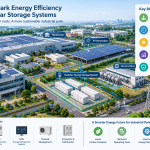
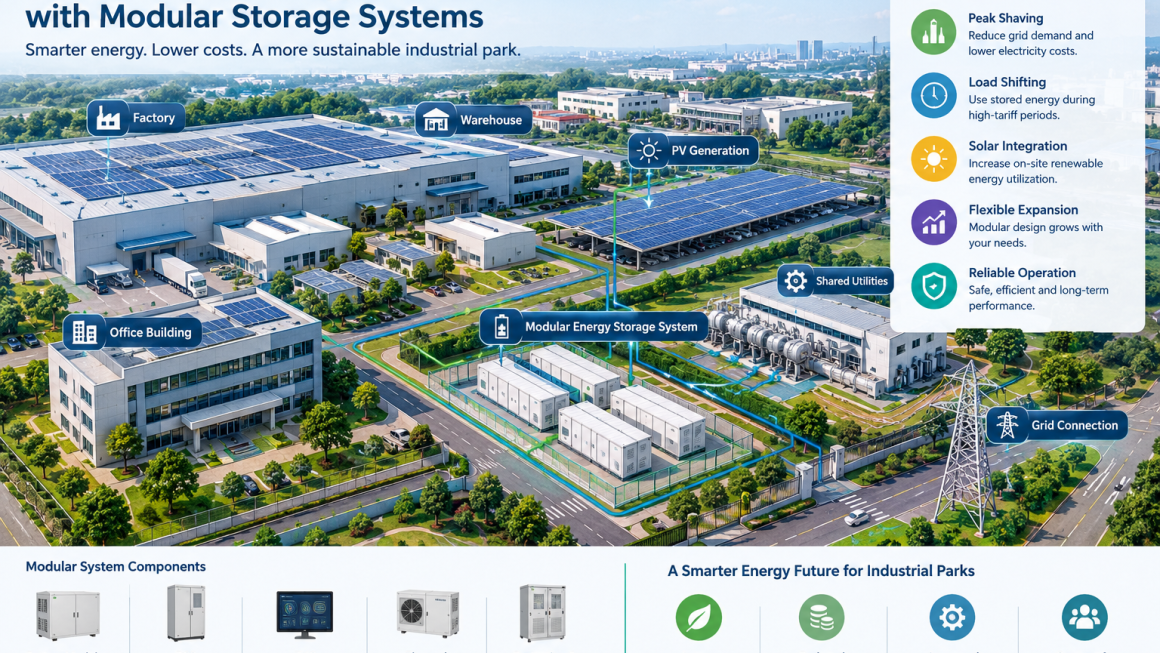
Industrial parks bring together manufacturing plants, warehouses, office buildings, logistics facilities, and other energy-intensive operations within a shared geographical area. Although these facilities may have different production schedules and electricity requirements, they often face similar challenges: rising energy costs, fluctuating power demand, renewable energy integration, and the need for reliable electrical infrastructure.
Modular battery energy storage systems offer one approach to addressing these challenges. By deploying storage capacity in manageable units, industrial parks can develop energy management solutions that align with actual demand, expand as requirements change, and support a more flexible approach to electricity consumption.
However, energy efficiency does not come from battery installation alone. Effective results depend on understanding site-wide energy demand, coordinating distributed energy resources, selecting suitable control strategies, and maintaining reliable electrical connections and supporting infrastructure.
This article explores how modular storage systems can improve industrial park energy efficiency, which applications offer the greatest potential, and what project developers should consider before implementation.
1. Why Industrial Parks Need Better Energy Management
Industrial parks often have complex energy profiles because multiple businesses operate different types of equipment on different schedules.
A manufacturing facility may experience high electricity demand during production shifts, while a warehouse may consume more energy during loading and distribution hours. Office buildings typically have daytime HVAC and lighting loads, and shared utilities may operate continuously.
These differences create several energy management challenges.
1.1 Fluctuating Electricity Demand
When multiple facilities operate high-power equipment simultaneously, total demand can rise sharply. Depending on the electricity tariff and metering arrangement, these peaks may increase electricity costs or place additional constraints on the site’s electrical infrastructure.
Energy storage can help reduce selected demand peaks by supplying part of the required power locally.
1.2 Increasing Electricity Costs
Industrial electricity bills may include energy charges, demand charges, time-of-use pricing, or other tariff components. The financial impact varies by location and utility arrangement.
A coordinated energy management strategy can identify when to charge storage systems, when to discharge them, and when it is more economical to obtain electricity directly from the grid.
1.3 Renewable Energy Integration
Industrial parks increasingly consider rooftop solar, carport photovoltaics, and other on-site renewable energy resources.
Solar generation does not always match facility demand. Surplus electricity may occur during periods of low consumption, while grid electricity is still required in the evening or during production peaks.
Modular storage can help shift some available renewable energy to later periods, subject to system capacity, efficiency, and operating conditions.
1.4 Changing Business and Production Requirements
Industrial parks evolve over time. New tenants may introduce production lines, electric vehicle charging, refrigeration, automation, or other electrical loads.
A rigid energy infrastructure may be difficult or expensive to expand. Modular storage offers a way to add capacity in stages, provided that the electrical connection, control architecture, site layout, and safety provisions are designed to accommodate future expansion.
2. What Are Modular Energy Storage Systems?
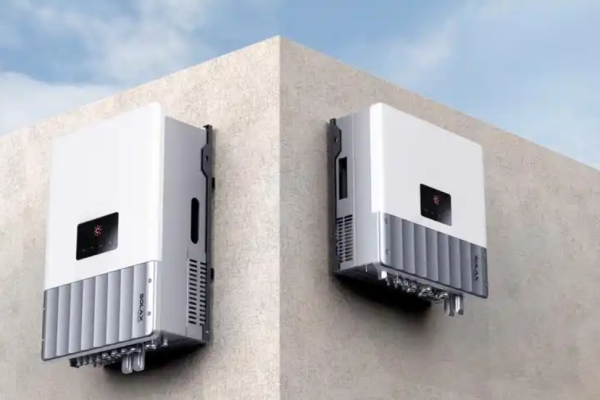
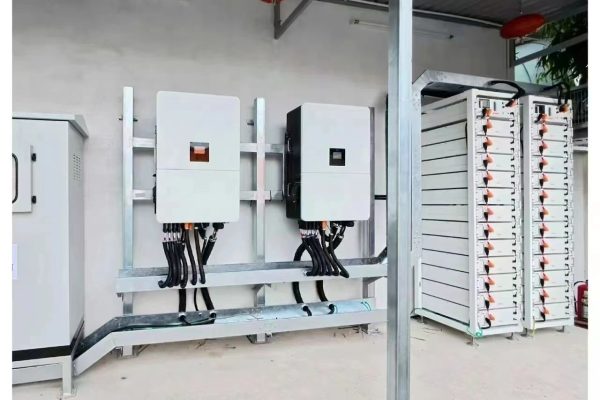
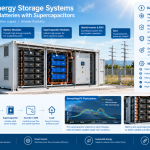
A modular energy storage system is built from standardized or repeatable units that can be combined to achieve a required power and energy capacity.
Depending on the product architecture, a module may refer to a battery unit, battery cabinet, power conversion unit, or integrated storage block. The term should therefore be defined clearly during project planning.
A complete system may include:
- Battery modules and battery management systems (BMS)
- Power conversion systems (PCS)
- Energy management and monitoring systems (EMS)
- Electrical distribution and protection equipment
- Thermal management and fire safety provisions
- Enclosures, cable routing, and installation accessories
- Communication interfaces and metering equipment
These components perform different functions. The BMS monitors battery operating conditions and enforces battery-related limits. The PCS manages power conversion between the battery and the electrical system. The EMS coordinates dispatch according to demand, prices, renewable generation, and operating constraints.
The actual system architecture depends on project size, grid connection, battery technology, applicable standards, and the required operating modes.
3. How Modular Storage Improves Industrial Park Energy Efficiency
Modular storage can support energy efficiency in several ways. Some benefits relate directly to electricity costs, while others involve improved operational flexibility or the use of locally generated electricity.
3.1 Peak Shaving Across Selected Facilities
Peak shaving reduces the amount of electricity drawn from the grid during selected high-demand intervals.
For example, a shared industrial utility area may experience a demand spike when several large motors, compressors, or HVAC systems operate simultaneously. A properly controlled storage system can discharge during that period to reduce grid demand.
Whether storage should be installed centrally or distributed among individual facilities depends on the metering arrangement, electrical network, ownership structure, and tariff.
A shared storage system may be attractive when a common connection point allows its benefits to be allocated appropriately. Individual systems may be more suitable when tenants have separate meters, different operating requirements, or independent investment decisions.
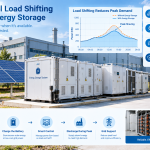
3.2 Load Shifting and Time-of-Use Optimization
When electricity prices vary by time of day, storage can charge during lower-cost periods and discharge during more expensive periods.
A modular design allows the project team to match installed capacity to the expected load-shifting opportunity rather than immediately building for the largest possible future demand.
The operating strategy should account for round-trip efficiency, battery degradation, available charging time, and the duration of the target peak period.
3.3 Increasing Solar Self-Consumption
Industrial parks may have substantial rooftop areas suitable for solar installations. However, the electricity generated at midday may exceed the demand of some facilities.
A storage system can absorb part of the surplus and discharge it when demand increases or solar output falls.
This approach may increase on-site renewable energy utilization, although the outcome depends on solar output, load patterns, storage capacity, and the economics of exporting electricity to the grid.
3.4 Managing Shared Electrical Infrastructure
Industrial parks may operate common utilities, including water pumps, compressed-air systems, central cooling equipment, lighting, and charging infrastructure.
Storage can provide additional flexibility when these loads create concentrated demand peaks.
Before investing in batteries, however, operators should also examine opportunities to improve equipment scheduling, reduce unnecessary standby consumption, repair compressed-air leaks, and optimize cooling controls. These measures may reduce the amount of storage required.
3.5 Supporting Electrification
As industrial parks adopt electric forklifts, electric vehicle charging, electric process equipment, and heat pumps, electricity demand patterns may change.
Modular storage can help manage selected peaks caused by these new loads. Its usefulness depends on charging schedules, available grid capacity, connection limits, and the expected frequency of high-demand events.
Storage should be evaluated alongside load management and electrical infrastructure upgrades rather than treated as a universal substitute for them.
4. Centralized vs. Distributed Modular Storage
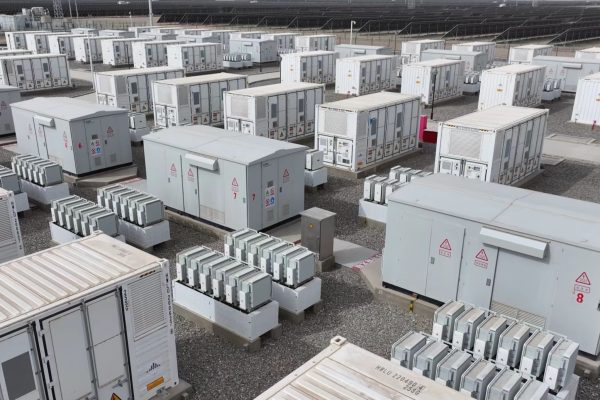
Industrial park developers generally need to decide whether to deploy storage at a shared point or near individual loads.
Centralized Storage
A centralized system is installed at a common electrical connection or shared energy facility.
Potential advantages include:
- Centralized monitoring and maintenance
- Shared use of storage capacity across compatible loads
- Potentially simpler coordination of park-wide energy objectives
- A single location for certain supporting equipment
Potential limitations include shared ownership and billing complexity, electrical distribution constraints, and the need to allocate costs and benefits fairly among tenants.
Distributed Storage
Distributed systems are installed near selected buildings, production areas, or electrical loads.
Potential advantages include:
- Closer alignment with individual load profiles
- Independent expansion for different facilities
- Reduced dependence on a single storage location
- Potentially clearer allocation of project costs and savings
Potential limitations include more equipment locations to inspect, potentially duplicated supporting infrastructure, and more complex coordination across multiple systems.
Which Architecture Is Better?
There is no universally superior option. A centralized system may suit an industrial park with common metering and coordinated energy management. Distributed systems may be more appropriate when facilities have separate ownership, different tariffs, or distinct operating requirements.
A hybrid architecture is also possible, combining a shared storage facility with smaller systems near selected high-demand loads.
The decision should follow an electrical and commercial feasibility study rather than being based on modularity alone.
5. A Practical Example: Modular Storage for an Industrial Park
Consider an illustrative industrial park with several factories, warehouses, and shared utility facilities.
The park experiences a predictable afternoon demand peak. It also has rooftop solar generation, but some surplus solar electricity is available before the evening shift begins.
The project team identifies three objectives:
- Reduce selected grid-demand peaks.
- Increase the use of available on-site solar electricity.
- Allow future storage capacity to be added as tenant demand grows.
The team evaluates a modular storage installation with a control system that forecasts demand, monitors solar generation, and schedules charging and discharging.
During periods of surplus solar generation, the system charges within its operating limits. Before the expected demand peak, the EMS checks the battery’s state of charge and reserves sufficient energy for the planned discharge period. If a higher-priority operating constraint applies, the control strategy adjusts accordingly.
After commissioning, the operator compares measured grid demand, electricity costs, solar self-consumption, and battery throughput with the original model.
The final capacity should be determined from actual interval-meter data, tariff rules, electrical constraints, and the intended dispatch strategy. This example describes a planning approach rather than a guarantee of specific savings.
6. How to Size Modular Storage for an Industrial Park
Sizing should begin with the energy management objective, not with the maximum number of modules that can fit on-site.
Step 1: Collect Energy Data
Gather interval-meter data for each relevant facility, including electricity demand, consumption, operating schedules, and seasonal variations.
Where solar generation or other distributed resources exist, collect corresponding generation data.
Step 2: Identify the Main Objective
Determine whether the project primarily targets:
- Peak shaving
- Time-of-use load shifting
- Solar self-consumption
- Demand management for new electrical loads
- A combination of compatible objectives
Different objectives may require different discharge durations and reserve policies.
Step 3: Determine Required Power
Power capacity, measured in kilowatts (kW), determines how much load the system can offset at a given moment.
The required power should reflect the target demand reduction, the expected duration of high-load events, and the limitations of the site’s electrical connection.
Step 4: Determine Required Energy
Energy capacity, measured in kilowatt-hours (kWh), determines how much energy the system can deliver.
For a simplified constant-power case:
Required delivered energy = Target discharge power × Discharge duration.
For example, a target reduction of 200 kW over two hours requires 400 kWh of delivered energy under idealized assumptions.
The installed battery capacity may need to be higher to account for conversion losses, usable state-of-charge limits, degradation, reserve requirements, and temperature effects.
Step 5: Define the Expansion Plan
Determine whether future modules can be added without major redesign of the electrical connection, protection scheme, communications network, thermal management, or physical layout.
Modular expansion is most useful when future interfaces and capacity limits have been considered from the beginning.
Step 6: Simulate Actual Operation
Test the proposed configuration against historical load data and realistic operating assumptions. Compare different module counts, dispatch strategies, reserve settings, and electricity tariffs.
A simulation should also consider periods when storage cannot charge as expected or when multiple facilities experience demand peaks at the same time.
7. Coordinating Modular Storage With an Energy Management System
A modular system becomes more valuable when its operating decisions are coordinated with the industrial park’s actual energy requirements.
The EMS may consider:
- Grid demand and demand thresholds
- Electricity prices and tariff periods
- Solar generation forecasts
- Battery state of charge and available power
- Battery temperature and manufacturer operating limits
- Planned production schedules
- Backup reserve requirements, where applicable
- Utility or grid-interconnection constraints
For a multi-tenant park, the control system also needs a clear hierarchy of objectives. The operator should define how storage capacity is allocated when different facilities require power at the same time.
Monitoring should provide useful operating records, alarms, and performance reports. Communication failures and unexpected load changes should not cause the system to exceed its permitted operating limits.
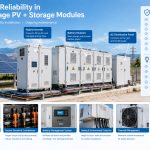
8. Installation and Infrastructure Considerations
Energy efficiency projects are often evaluated through battery capacity and electricity savings. However, the supporting infrastructure also influences long-term reliability and maintainability.
8.1 Electrical Distribution and Protection
The connection design should account for switchgear, isolation, grounding, overcurrent protection, short-circuit conditions, and applicable electrical standards.
Cable sizes and connection methods must be selected by qualified electrical professionals based on current, installation conditions, temperature, voltage drop, and other relevant requirements.
8.2 Cable Routing and Mechanical Protection
Industrial parks may contain outdoor cable routes, equipment rooms, underground service areas, and locations exposed to vibration, abrasion, dust, or weather.
Suitable cable glands, protective sleeves, routing accessories, and strain-relief components can help address specific installation risks when selected for the environment and cable requirements.
These accessories support installation reliability but do not replace electrical insulation design, circuit protection, fire protection, or proper cable sizing.
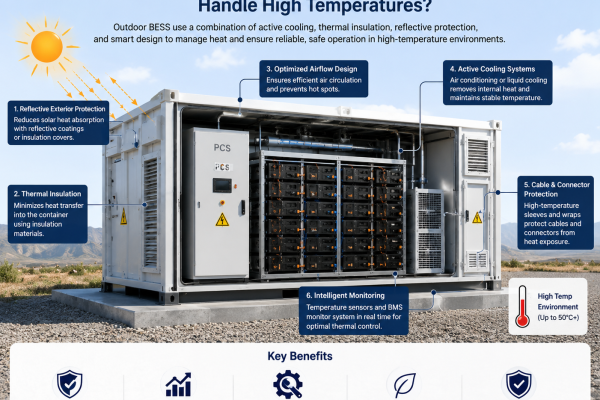
8.3 Thermal Management and Ventilation
Battery systems and power conversion equipment generate heat during operation. The site design should follow manufacturer requirements for ambient temperature, ventilation, heat rejection, spacing, and service access.
Protective covers and cable sleeves must not obstruct required airflow or create an unapproved heat-retention problem.
8.4 Environmental Protection
Outdoor and industrial installations may require protection against moisture, dust, corrosion, UV exposure, vibration, and mechanical impact.
The required level of protection depends on the actual environment. Enclosure ratings, material compatibility, sealing methods, and accessory specifications should be checked against project requirements rather than assumed from appearance alone.
8.5 Maintenance Access
A modular design should allow technicians to inspect, isolate, replace, and service relevant components safely.
The project layout should consider cable identification, routing access, connector inspection, spare parts, replacement procedures, and the effect of maintenance activities on other modules.
9. Measuring Energy Efficiency Improvements
The success of an industrial park storage project should be evaluated using measurable indicators.
Peak grid demand: The highest relevant grid demand before and after implementation, measured over the applicable billing interval.
Electricity cost: The actual bill or modeled cost under comparable operating conditions and tariff rules.
Solar self-consumption: The share of on-site solar generation used locally rather than exported or curtailed.
Storage round-trip efficiency: The ratio of energy discharged to energy used for charging over a defined measurement boundary.
Battery utilization: The frequency and depth of cycling, interpreted alongside degradation and warranty limits.
System availability: The proportion of time the system is available to perform its intended function.
Maintenance performance: Inspection findings, fault frequency, repair time, and the condition of supporting electrical infrastructure.
Where possible, comparisons should account for changes in production volume, operating hours, weather, tariffs, and tenant occupancy. Otherwise, apparent improvements may reflect changing business conditions rather than the storage system itself.
10. Common Mistakes in Modular Storage Projects
Installing Storage Before Understanding the Load Profile
A modular product may be easy to expand, but the initial configuration still needs to match the site’s real operating requirements.
Assuming Modularity Automatically Reduces Costs
Standardized modules can simplify deployment and expansion, but total project costs also depend on installation, electrical integration, controls, safety systems, and maintenance.
Ignoring Tenant Metering and Ownership
A shared storage system may create allocation challenges when tenants have different meters, tariffs, ownership structures, or operating priorities.
Oversizing for Uncertain Future Demand
Installing capacity well beyond current requirements can increase upfront investment and leave modules underutilized. A staged expansion plan may be more appropriate when future demand is uncertain.
Treating Storage as a Replacement for Energy Efficiency
Storage shifts electricity across time; it does not automatically reduce the energy required by inefficient equipment. Equipment optimization and operational improvements should be evaluated alongside storage.
Overlooking Supporting Infrastructure
Cable routing, electrical protection, ventilation, environmental exposure, monitoring, and maintenance access should be included in the project design from the beginning.
11. A Roadmap for Industrial Park Energy Optimization
A practical project can follow a staged process.
- Assess current consumption: Collect interval demand, tariff, production, and renewable-generation data.
- Identify improvement opportunities: Examine peak demand, load shifting, solar utilization, and operational efficiency.
- Compare architectures: Evaluate centralized, distributed, and hybrid modular storage.
- Develop a preliminary design: Establish power and energy requirements, controls, safety provisions, and expansion options.
- Validate economics: Model electricity costs, efficiency losses, degradation, installation expenses, and maintenance.
- Plan site integration: Review electrical distribution, cable routes, thermal management, environmental protection, and service access.
- Commission and measure: Verify system controls, operating limits, monitoring, and actual performance.
- Optimize over time: Review operational data and adjust dispatch strategies as demand and tariffs change.
12. Frequently Asked Questions
How can modular storage improve industrial park energy efficiency?
It can help reduce selected grid-demand peaks, shift electricity use between tariff periods, and store surplus renewable electricity for later use. The actual benefit depends on load profiles, tariffs, system efficiency, and dispatch strategy.
Is centralized or distributed storage better for an industrial park?
Centralized storage can simplify shared monitoring and coordinated dispatch, while distributed storage can better match individual facility requirements. The best choice depends on metering, ownership, electrical infrastructure, and commercial arrangements.
Can modular storage expand as an industrial park grows?
Yes, if the system architecture, electrical connection, protection, controls, thermal management, and physical layout support future expansion. The maximum permitted capacity and compatibility of additional modules should be verified in advance.
Does modular storage reduce total electricity consumption?
Not necessarily. Storage primarily shifts the timing of electricity supply and demand. Charging and discharging losses can increase total electricity consumption, although the system may reduce costs or improve renewable energy utilization.
Can modular storage work with industrial rooftop solar?
Yes. It can store part of the surplus solar generation and discharge it when site demand increases or solar output decreases, subject to capacity, operating limits, and project economics.
What should be considered when installing storage in an industrial park?
Key factors include load data, tariff structures, electrical connection capacity, protection systems, environmental conditions, cable routing, thermal management, monitoring, maintenance access, and future expansion requirements.
Industrial park energy efficiency requires coordinated decisions across electricity procurement, production scheduling, renewable energy, storage, and electrical infrastructure. Modular storage systems provide a flexible way to deploy capacity in stages and adapt energy management to changing industrial demand.
Their value depends on more than the number of installed battery modules. A successful project combines accurate load analysis, appropriate system sizing, effective energy management, realistic financial modeling, and reliable installation and maintenance.
For industrial park operators, modularity can support a phased investment strategy while allowing future capacity to follow verified demand. Careful planning of cable routing, environmental protection, thermal management, and maintenance access also helps support long-term operational reliability.
GR-NEWenergy focuses on energy storage integration and O&M-related solutions, including cable protection, installation accessories, and practical protection measures for industrial and energy infrastructure. These supporting products can be selected according to the project’s operating environment and maintenance requirements as part of a broader, properly engineered energy storage solution.
- How do modular storage systems improve industrial park energy efficiency? They help manage peak demand, shift electricity use between tariff periods, and store surplus renewable generation for later use.
- What are the advantages of modular energy storage? Modular systems can support phased deployment, capacity expansion, and configurations tailored to different industrial demand profiles.
- Should an industrial park use centralized or distributed storage? The choice depends on electrical infrastructure, metering, tenant ownership, tariff structures, and energy management objectives.
- Can modular storage reduce industrial electricity costs? It can where tariff differences, demand-charge savings, or improved renewable energy utilization outweigh storage losses, degradation, and project costs.
- What installation factors affect long-term storage reliability? Electrical protection, cable routing, thermal management, environmental conditions, monitoring, and maintenance access all contribute to reliable operation.