

How Specialized Component Suppliers Can Support Energy Storage Projects from the Early Design Stage
Energy storage system integration involves much more than combining batteries, power conversion systems (PCS), energy management systems (EMS), and electrical components into a functional installation.
A successful project also depends on how these systems are connected, protected, installed, maintained, and operated under real-world conditions.
During the early stages of a project, system integrators often need to coordinate with multiple suppliers to confirm component compatibility, installation requirements, cable routing, environmental protection, and maintenance accessibility.
This creates an opportunity for specialized component suppliers to become the first point of contact in system integration.
Rather than simply supplying products after specifications have been finalized, a capable supplier can participate earlier, help identify practical installation requirements, and provide coordinated solutions for cable protection, routing, sealing, and equipment accessories.
For energy storage projects, this early coordination can improve installation efficiency and reduce avoidable problems during operation and maintenance.
1. What Does Being the First Point of Contact Mean?
In system integration, the first point of contact is the supplier or technical partner that project teams approach when they need to evaluate a particular component category or solve an installation-related requirement.
This does not necessarily mean taking responsibility for the entire system design.
Instead, it means understanding the project requirements well enough to guide customers toward suitable components, identify missing information, and coordinate technical discussions before procurement and installation begin.
For energy storage applications, this role may involve:
- Understanding the installation environment and equipment layout.
- Identifying cable protection and routing requirements.
- Recommending suitable sleeves, conduits, glands, and sealing accessories.
- Reviewing temperature, UV, dust, abrasion, and moisture exposure.
- Supporting component selection and customization.
- Coordinating samples, technical documents, and installation feedback.
- Providing replacement and maintenance-related product support.
The value is not simply the number of products supplied. It is the ability to connect component selection with practical project requirements.
2. Why System Integrators Need Early Supplier Coordination
System integrators are responsible for coordinating multiple technical subsystems. However, not every installation detail can be fully resolved during the initial system design stage.
Some issues only become visible when equipment layouts, cable routes, installation spaces, and environmental conditions are considered together.
2.1 Cable Routing and Protection
Power and signal cables connect batteries, PCS units, distribution equipment, control systems, and auxiliary devices.
Their routing conditions can vary significantly depending on the system configuration.
Potential concerns include:
- Mechanical abrasion during installation and operation.
- Exposure to sunlight and outdoor weather.
- Dust and sand accumulation.
- Elevated temperatures near electrical equipment.
- Restricted bending radius and installation space.
- Cable movement, vibration, and repeated maintenance access.
Early coordination allows the project team to select suitable protection products before cable routing and installation arrangements become difficult to change.
2.2 Compatibility Between Components
A protection accessory may appear suitable based on its basic dimensions, but actual compatibility also depends on installation conditions.
For example, selecting a cable sleeve requires consideration of:
- Cable bundle diameter.
- Required operating temperature.
- Installation method.
- Abrasion resistance.
- Flexibility and bending requirements.
- Environmental exposure.
- Maintenance and replacement requirements.
A technically appropriate product must fit the actual application rather than simply match a general product description.
2.3 Installation Efficiency
Late-stage component changes can cause unnecessary delays.
If cable sleeves, glands, sealing components, and routing accessories are considered only after equipment installation begins, the project may encounter dimensional mismatches or installation difficulties.
Early supplier involvement helps identify these requirements before they become installation problems.
3. The Key Areas Where Specialized Suppliers Can Add Value
A specialized supplier can become a useful integration partner by focusing on clearly defined component categories.
| Application area | Typical requirements | Possible product solutions |
|---|---|---|
| Cable protection | Abrasion, heat, UV, dust | Braided sleeves, high-temperature sleeves, protective conduits |
| Cable routing | Organized installation and maintenance access | Self-wrapping sleeves, cable management accessories |
| Cable entry | Sealing and mechanical protection | Cable glands, grommets, sealing accessories |
| Outdoor installation | Weather and environmental exposure | UV-resistant and weather-resistant protection products |
| Equipment connections | Protection around electrical interfaces | Insulation and protective accessories |
| Maintenance | Replacement and inspection access | Reusable, removable, and retrofit-friendly products |
The objective is to provide a coordinated range of compatible components rather than treating every item as an isolated purchase.
4. Moving from Product Supply to Application-Based Support
Traditional procurement often starts with a product specification:
A customer requests a certain sleeve diameter, material, temperature rating, or quantity.
However, system integration projects frequently require a different approach.
Instead of asking only what product the customer wants, a supplier should first understand where and how the product will be used.
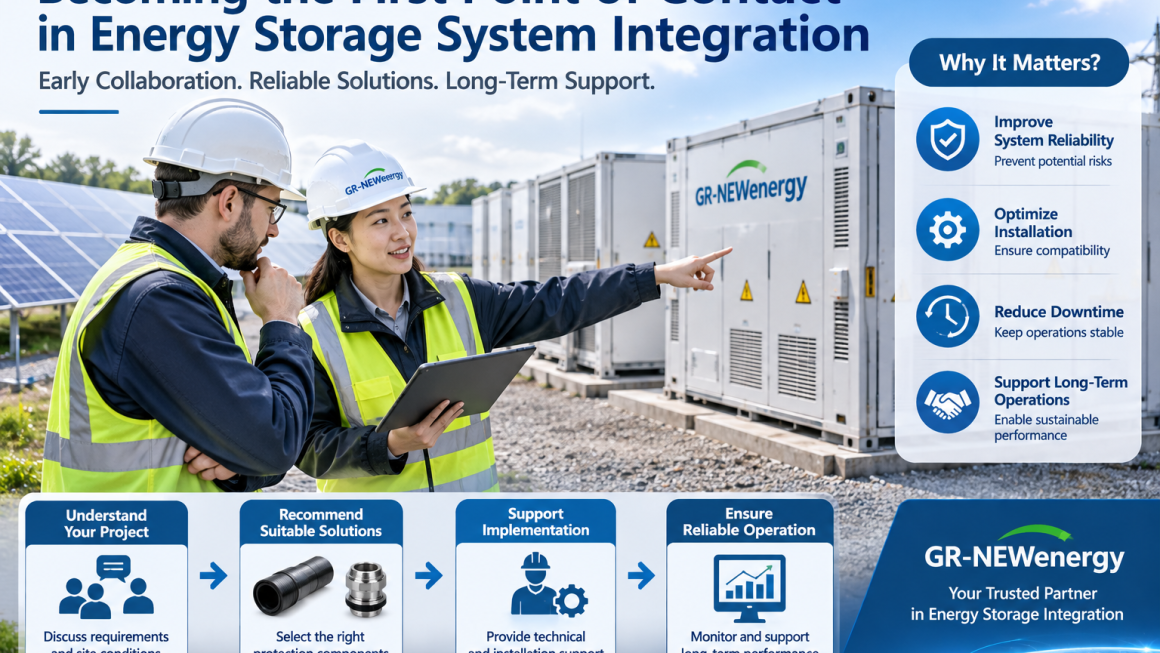
A practical workflow includes four stages.
Stage 1: Understand the Project
Collect the basic application information:
- Energy storage system type.
- Indoor or outdoor installation.
- Equipment configuration.
- Cable dimensions and routing conditions.
- Operating temperature and environmental exposure.
- Installation and maintenance requirements.
Stage 2: Identify Component Requirements
Translate the application into measurable product requirements.
For example, an outdoor battery installation may require UV-resistant cable protection, suitable abrasion resistance, secure cable entry, and accessories that remain serviceable during maintenance.
Stage 3: Confirm Technical Compatibility
Review product dimensions, materials, performance data, installation methods, and relevant testing information.
Where necessary, arrange samples for evaluation under actual installation conditions.
Stage 4: Support Procurement and Implementation
Once the technical requirements are confirmed, the supplier can provide:
- Product specifications and technical documentation.
- Samples and trial quantities.
- Quotation and delivery planning.
- Packaging and identification requirements.
- Batch consistency and quality documentation.
- Follow-up support for replacement or additional requirements.
This process creates a more structured relationship between the component supplier and the system integrator.
5. Why Application Knowledge Matters More Than a Large Product Catalog
A broad product catalog does not automatically make a supplier a valuable integration partner.
System integrators need suppliers who understand how components behave in actual installations.
For example, a cable protection sleeve selected for an indoor control cabinet may not be suitable for an outdoor installation exposed to direct sunlight, temperature fluctuations, and mechanical abrasion.
Similarly, a high-temperature sleeve is not necessarily the best solution for every application. Its installation method, flexibility, dimensions, and surrounding materials must also be considered.
A supplier with application knowledge can help customers avoid unsuitable selections and unnecessary product changes.
This requires more than sales experience. It requires an understanding of materials, installation environments, product limitations, and quality requirements.
6. Supporting Retrofit and Long-Term O&M Requirements
The relationship between a component supplier and a system integrator should not end when the initial project is delivered.
Energy storage installations operate over extended periods, and their maintenance requirements can change.
Cable protection products and installation accessories may need to be inspected, replaced, or upgraded due to:
- Aging and environmental exposure.
- Mechanical damage.
- Changes in cable routing.
- Equipment replacement.
- Additional monitoring or communication cables.
- Maintenance access requirements.
A supplier that understands the original application can support later replacement and retrofit activities more efficiently.
This is particularly important for existing energy storage projects where upgrading protection components may be more practical than modifying the entire electrical installation.
7. What System Integrators Should Look for in a Component Partner
When selecting a specialized supplier, system integrators should evaluate more than product price and availability.
Important considerations include:
Technical understanding
Can the supplier understand the application and translate installation conditions into product requirements?
Product range
Can the supplier support related requirements such as cable sleeves, conduits, glands, sealing products, and installation accessories?
Customization capability
Can dimensions, materials, colors, packaging, or product structures be adjusted when standard products are unsuitable?
Quality consistency
Can the supplier provide clear specifications, inspection records, and batch traceability where required?
Sample and testing support
Can the supplier provide samples and relevant performance information for customer evaluation?
Communication and responsiveness
Can the supplier coordinate technical questions, documentation, quotations, and delivery requirements efficiently?
Long-term support
Can the supplier support replacement products, additional project quantities, and maintenance-related requirements after initial delivery?
A reliable component partner should make the integration process easier, not introduce additional coordination complexity.
8. A Practical Example: Early Coordination of Cable Protection in a BESS Project
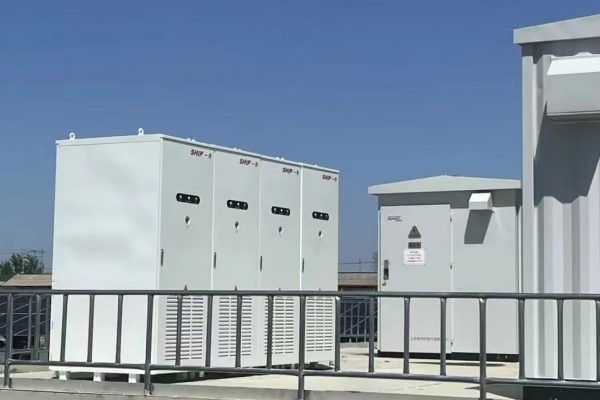
Consider an outdoor battery energy storage installation involving battery containers, PCS equipment, auxiliary electrical systems, and external cable connections.
During the initial procurement stage, the system integrator may focus primarily on electrical equipment specifications and system performance.
However, the project also needs to consider cable protection and installation details.
A specialized supplier can participate in the early coordination process by reviewing:
- Cable bundle dimensions and routing paths.
- Exposure to UV radiation, dust, rain, and mechanical abrasion.
- Temperature conditions around equipment and cable connections.
- Cable entry and sealing requirements.
- Installation space and maintenance accessibility.
Based on the confirmed conditions, the supplier may recommend suitable braided sleeves, self-wrapping sleeves, protective conduits, cable glands, and sealing accessories.
Samples can then be evaluated during installation trials.
The result is a more coordinated component selection process, with fewer avoidable changes during installation.
This is an illustrative workflow. Actual product selection and performance must be verified against the project’s technical specifications and operating conditions.
9. Building a Long-Term Relationship with System Integrators
Becoming the first point of contact is not achieved through a single quotation or product delivery.
It develops through consistent technical communication, reliable supply, and the ability to support projects beyond the initial purchasing stage.
A practical long-term cooperation model can include:
- Early-stage application discussions.
- Product selection and technical matching.
- Sample evaluation and project trials.
- Customized component development where justified.
- Coordinated procurement and delivery.
- Quality documentation and traceability.
- Replacement and retrofit support.
For suppliers, this approach also creates a clearer understanding of customer requirements and future project opportunities.
Instead of competing only on individual product prices, suppliers can build relationships around application knowledge and dependable project support.
System integration requires coordination across equipment, electrical connections, installation details, environmental protection, and long-term maintenance.
Specialized component suppliers can create additional value by becoming involved before product specifications are finalized.
For energy storage projects, this means helping system integrators identify cable protection, routing, sealing, and installation accessory requirements at the right stage.
The role is not to replace the system integrator, but to make component selection and implementation more efficient.
At GR-NEWenergy, our focus is on energy storage installation and O&M protection solutions, including cable protection sleeves, routing accessories, sealing components, and related products.
By combining application understanding with practical product support, we aim to become a reliable first point of contact for system integrators and project teams.
Frequently Asked Questions
1. What does first point of contact mean in energy storage system integration?
It refers to a supplier or technical partner that project teams can approach early to discuss specific component requirements, application conditions, product compatibility, and installation support.
2. Does a component supplier need to be a complete system integrator?
No. A specialized supplier can support defined application areas, such as cable protection, routing, sealing, and installation accessories, without supplying batteries, PCS, EMS, or complete energy storage systems.
3. Why should cable protection be considered during the early design stage?
Early consideration helps identify environmental exposure, cable dimensions, installation space, and maintenance requirements before routing and equipment layouts are finalized.
4. What products can support energy storage system integration?
Typical products include braided cable sleeves, self-wrapping sleeves, high-temperature protective sleeves, protective conduits, cable glands, grommets, and sealing accessories.
5. Can specialized suppliers support existing energy storage projects?
Yes. They can provide replacement protection products, retrofit accessories, and application-based recommendations for existing installations, subject to site conditions and technical verification.
6. How can system integrators evaluate a component supplier?
They should assess technical understanding, product compatibility, customization capability, quality consistency, sample support, delivery reliability, and long-term maintenance support.
Q1: How can a component supplier support energy storage system integration?
A component supplier can support system integration by helping project teams select compatible cable protection, routing, sealing, and installation accessories based on actual application and environmental requirements.
Q2: What should system integrators look for in an energy storage component supplier?
System integrators should evaluate technical understanding, product quality, customization capabilities, sample availability, documentation, delivery reliability, and long-term O&M support.
Q3: Why is early supplier involvement important in BESS projects?
Early supplier involvement helps identify installation and component requirements before equipment layouts and cable routing are finalized, reducing avoidable modifications and procurement delays.
Q4: Can a specialized supplier become a long-term partner without supplying the complete BESS system?
Yes. Suppliers specializing in cable protection, sealing, routing, and installation accessories can establish long-term relationships by supporting project implementation, maintenance, and retrofit requirements.