

As electrification accelerates across EVs, grid storage, and industrial applications, high-voltage battery modules (typically 400V–1500V) have become a cornerstone of modern energy systems. Their design and integration directly impact system efficiency, safety, scalability, and overall performance.
What Are High-Voltage Battery Modules?
High-voltage battery modules consist of multiple cells connected in series and/or parallel to achieve elevated voltage levels required for:
- Electric vehicles (EVs)
- Energy storage systems (ESS)
- Industrial power systems
- Renewable energy integration
Higher voltage enables lower current for the same power output, reducing resistive losses and improving system efficiency.
Why High Voltage Matters
1. Improved System Efficiency
Higher voltage reduces current (I = P/V), minimizing I²R losses in cables and components.
2. Faster Charging Capability
High-voltage architectures (800V+) support ultra-fast charging with reduced thermal stress.
3. Reduced System Weight
Lower current allows for thinner cables and smaller components, improving energy density at the system level.
Core Design Considerations
1. Cell Configuration and Architecture
- Series configuration increases voltage
- Parallel configuration increases capacity
- Balance between energy density, safety, and thermal behavior
Common formats:
- Prismatic cells
- Pouch cells
- Cylindrical cells
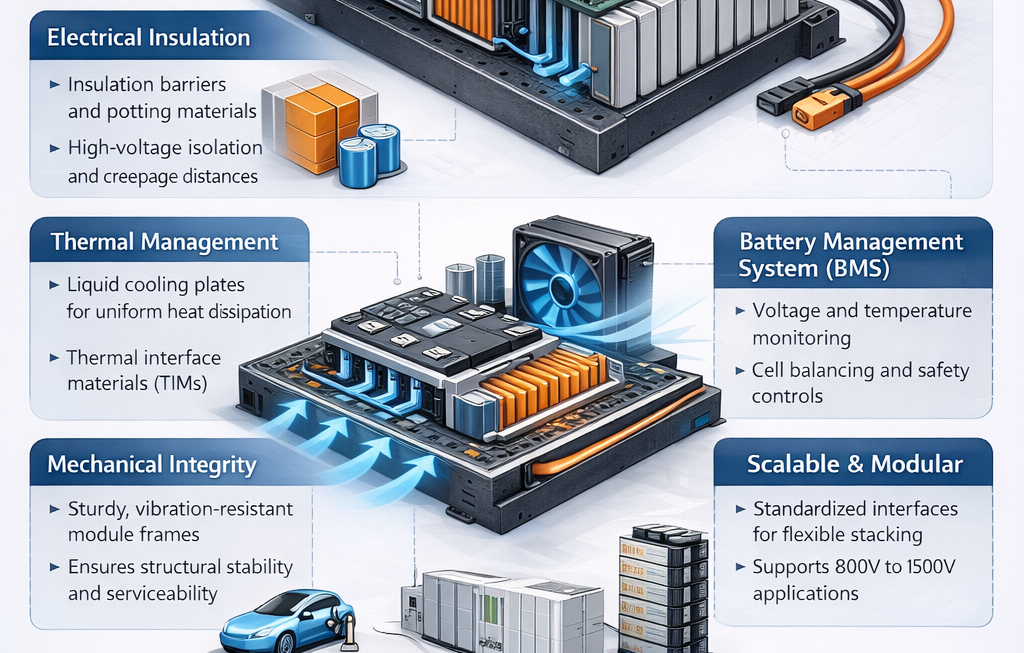
2. Electrical Insulation and Isolation
High-voltage systems require strict insulation design to prevent:
- Electrical arcing
- Leakage currents
- Insulation breakdown
Key elements include:
- Insulation layers and barriers
- Potting materials
- Dielectric coatings
3. Thermal Management Integration
High-voltage modules generate significant heat, especially during fast charging/discharging.
Critical strategies:
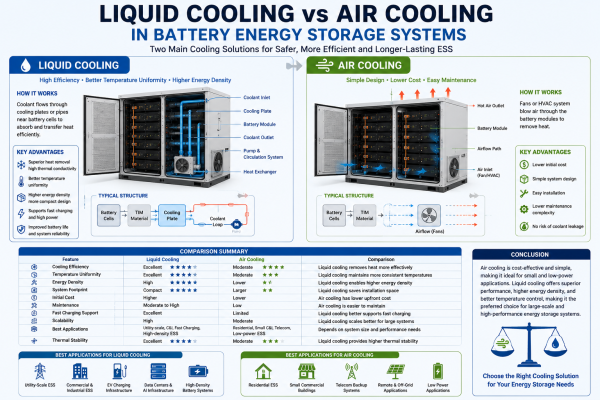
- Liquid cooling plates for uniform temperature control
- Thermal interface materials (TIMs) for efficient heat transfer
- Temperature gradient control across cells (<5°C preferred)
4. Battery Management System (BMS)
The BMS is essential for safe operation of high-voltage modules:
- Voltage and temperature monitoring
- Cell balancing
- Fault detection and protection (overvoltage, overcurrent, short circuit)
- Communication with system-level controllers
5. Mechanical Design and Structural Integrity
High-voltage modules must withstand:
- Vibration and shock (especially in EVs)
- Thermal expansion and contraction
- Long-term mechanical stress
Design features include:
- Rigid module frames
- Compression systems for pouch/prismatic cells
- Modular, serviceable structures
Integration Challenges
1. Safety and Compliance
High-voltage systems must meet strict standards:
- IEC, UL, and automotive safety regulations
- Isolation resistance requirements
- Thermal runaway containment strategies
2. System-Level Integration
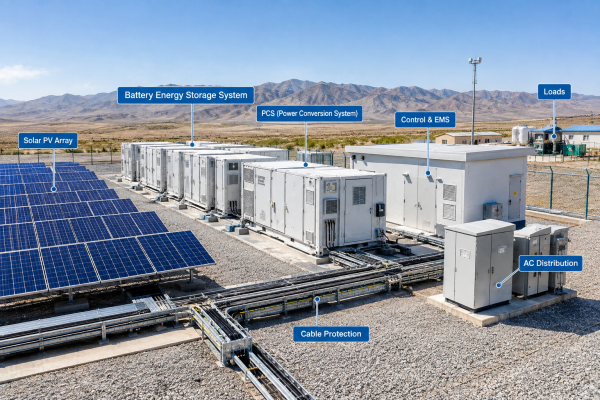
Battery modules must integrate seamlessly with:
- Inverters and converters
- Cooling systems
- Energy management systems (EMS)
This requires coordinated electrical, thermal, and communication design.
3. Scalability and Modularity
Modern systems demand flexible scaling:
- Modular stacking for different voltage/capacity requirements
- Standardized interfaces
- Plug-and-play architecture for faster deployment
Emerging Trends
1. 800V and 1000V+ Architectures
Widely adopted in next-generation EV platforms and large-scale ESS for higher efficiency and faster charging.
2. Integration with Power Electronics
Closer coupling between battery modules and inverters reduces losses and improves system compactness.
3. Advanced Materials
Use of lightweight composites and carbon-based thermal materials enhances both thermal and structural performance.
4. Smart and Connected Modules
Integration with AI-driven BMS enables predictive maintenance and optimized performance.
Best Practices for High-Voltage Module Design
- Ensure robust insulation and creepage distance design
- Optimize thermal pathways early in the design phase
- Use high-performance TIMs for efficient heat transfer
- Design for manufacturability and serviceability
- Validate through pilot-scale testing before mass production
High-voltage battery modules are critical enablers of next-generation electrification. Their successful design and integration require a multidisciplinary approach—combining electrical engineering, thermal management, materials science, and system architecture.
As systems move toward higher voltages and greater complexity, optimized module design will play a decisive role in achieving safer, more efficient, and scalable energy solutions.