
As battery systems scale in complexity and deployment—from EV platforms to stationary energy storage—structural design becomes a critical factor in ensuring long-term reliability. Beyond electrical and thermal performance, the mechanical integrity of battery modules directly influences safety, durability, and lifecycle consistency.
Why Structural Design Matters
Battery modules operate under continuous stress conditions:
- Thermal expansion and contraction
- Mechanical vibration and shock
- Long-term material fatigue
- Environmental exposure (humidity, dust, corrosion)
Poor structural design can lead to:
- Cell deformation or swelling
- Electrical connection failure
- Thermal interface degradation
- Reduced cycle life and safety risks
A robust structural framework ensures stability throughout the entire lifecycle.
Core Structural Design Objectives
1. Mechanical Stability and Strength
The module must maintain structural integrity under dynamic conditions:
- Reinforced frames (aluminum, steel, or composite materials)
- Load distribution across cells
- Shock and vibration resistance (especially for EVs and mobile systems)
2. Controlled Cell Compression
For pouch and prismatic cells, proper compression is essential:
- Maintains electrode contact and performance
- Prevents swelling-related degradation
- Ensures consistent thermal and electrical behavior
Design approaches include:
- Spring-loaded systems
- Elastomeric pads
- Rigid clamping structures
3. Thermal-Mechanical Coupling
Structural design must align with thermal management:
- Accommodate thermal expansion without stress concentration
- Maintain consistent contact with cooling plates and TIMs
- Avoid warping or misalignment over time
4. Material Selection and Compatibility
Materials must balance strength, weight, and durability:
- Metals: high strength and thermal conductivity
- Polymers: insulation and lightweight benefits
- Carbon-based composites: combined structural and thermal advantages
Compatibility considerations:
- Coefficient of thermal expansion (CTE) matching
- Chemical resistance (electrolyte exposure)
- Aging and fatigue performance
Key Structural Components
1. Module Housing
- Provides enclosure and protection
- Must be rigid, lightweight, and corrosion-resistant
- Often integrated with cooling and mounting systems
2. Cell Holders and Spacers
- Ensure precise cell positioning
- Maintain spacing for thermal and electrical safety
- Prevent mechanical damage during operation
3. Fastening and Joining Systems
- Bolts, welds, adhesives, or hybrid joining methods
- Must withstand vibration and thermal cycling
- Enable manufacturability and serviceability
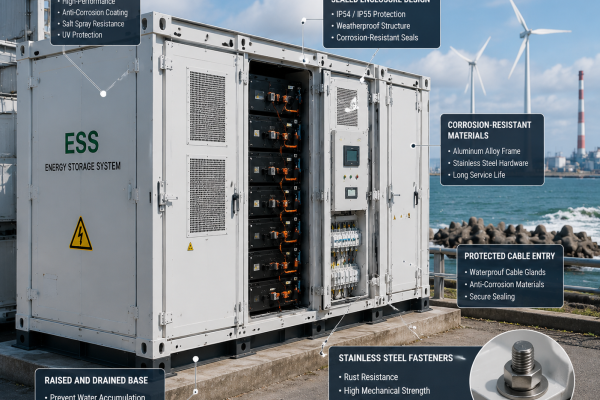
4. Sealing and Environmental Protection
- Gaskets and seals prevent moisture and dust ingress
- Critical for outdoor and harsh-environment applications
- Supports IP-rated designs (e.g., IP65, IP67)
Design Challenges for Long-Term Reliability
Fatigue and Material Degradation
Repeated thermal and mechanical cycling can weaken materials over time.
Cell Swelling and Expansion
Especially in high-energy-density cells, requiring adaptive structural design.
Interface Stability
Maintaining consistent contact between cells, TIMs, and cooling systems.
Manufacturing Tolerances
Tight tolerances are required to ensure uniform stress distribution.
Advanced Design Strategies
1. Finite Element Analysis (FEA)
- Simulates stress, deformation, and thermal behavior
- Identifies weak points before production
2. Modular Structural Platforms
- Standardized module frames for scalability
- Easier maintenance and replacement
3. Integration with Thermal Systems
- Structural components double as heat spreaders
- Reduced part count and improved efficiency
4. Use of Carbon-Based Structural Materials
- Lightweight with high strength
- Enhanced thermal conductivity
- Reduced overall system weight
Emerging Trends
Structural Battery Concepts
Battery modules acting as load-bearing components in vehicles and systems.
Lightweight Composite Enclosures
Replacing metals to reduce weight while maintaining strength.
Smart Structural Monitoring
Embedded sensors detect stress, deformation, and early failure signals.
Design for Disassembly
Supporting recycling and second-life applications.
Best Practices
- Design for both mechanical and thermal loads simultaneously
- Validate through accelerated lifecycle testing
- Use materials with matched thermal expansion properties
- Incorporate flexibility where needed to absorb stress
- Ensure ease of assembly and maintenance
Structural design is a foundational element in achieving long-term reliability in battery modules. By carefully balancing mechanical strength, thermal compatibility, and material performance, engineers can create robust systems that withstand years of operation under demanding conditions.
As battery applications expand into more challenging environments, structural innovation will play a key role in delivering safe, durable, and high-performance energy solutions.