


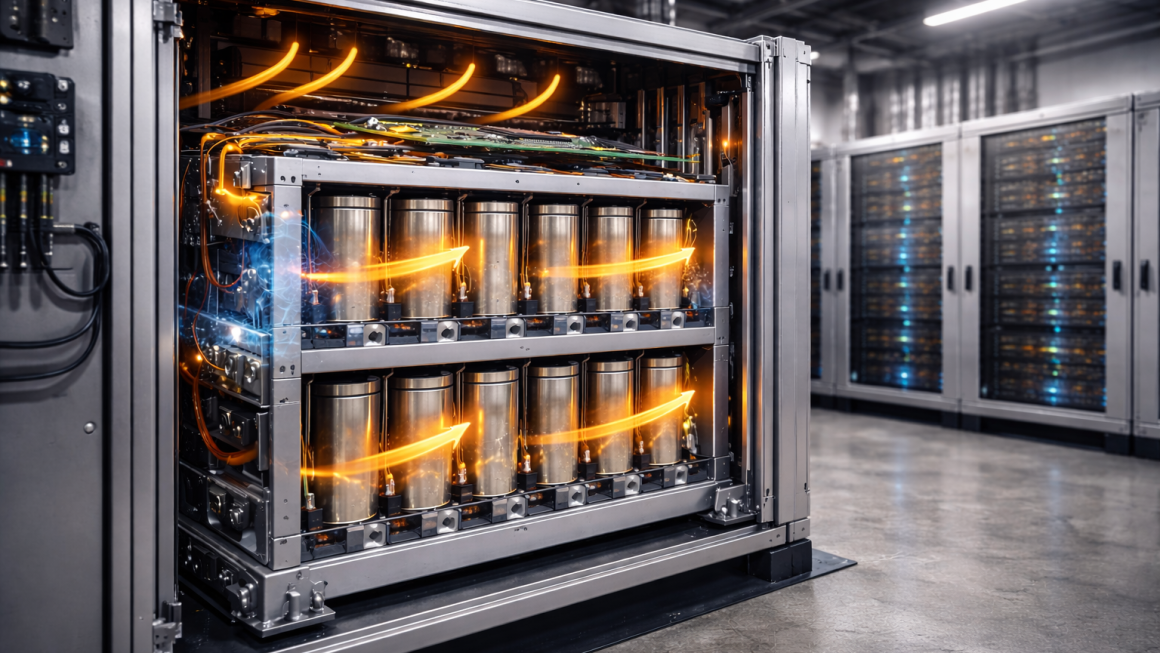
As energy storage systems (ESS) expand into high-demand sectors—commercial facilities, microgrids, EV fast-charging stations, and data centers—the expectations for reliability, safety, and power density continue to rise. Traditional materials often reach performance limits under high current loads and aggressive thermal cycles.
This is where graphene-enhanced materials are beginning to demonstrate measurable value.
Rather than being marketed as a “miracle material,” graphene in ESS applications is increasingly validated through real engineering case studies, particularly in areas where thermal control, conductivity, and durability directly impact long-term system stability.
1️⃣ Case Study: High-Power Commercial ESS Modules
Challenge
A commercial ESS integrator operating peak-shaving systems for industrial facilities experienced:
- Elevated busbar temperatures under high discharge rates
- Thermal imbalance between parallel battery strings
- Gradual efficiency loss during continuous high-load operation
In high-power modules (>1C discharge), even small increases in internal resistance can create localized heat accumulation, reducing system efficiency and increasing safety risks.
Solution
Graphene-enhanced conductive coatings were applied to:
- Busbars
- Current collectors
- Selected heat-spreading plates
The objective was not to replace copper or aluminum—but to:
- Reduce contact resistance
- Improve surface conductivity
- Enhance lateral heat spreading
Results
- Lower peak operating temperatures
- More uniform temperature distribution across modules
- Reduced energy loss during high current discharge
- Improved long-term cycling stability
The improvement was especially visible under continuous peak demand cycles, where thermal fatigue previously caused performance drift.
2️⃣ Case Study: Fast-Charge ESS Buffer Systems
Challenge
Fast-charging infrastructure for EVs requires short bursts of extremely high power. ESS buffer systems absorb grid power and discharge rapidly during charging events.
This created:
- Rapid thermal spikes
- Stress on interconnection materials
- Contact degradation over time
Solution
Graphene-based thermal interface materials (TIMs) and conductive composites were introduced into:
- Module interfaces
- Power connection points
- Heat dissipation layers
The high in-plane thermal conductivity of graphene composites improved heat spreading away from hotspot regions.
Results
- Faster thermal stabilization after discharge events
- Reduced hotspot formation
- Extended service intervals
- Improved high-current durability
In this case, graphene contributed not by increasing theoretical conductivity—but by improving real-world stability under dynamic loads.
3️⃣ Case Study: Microgrid Reliability in Harsh Environments
Challenge
Remote microgrid systems—especially in high-humidity or coastal regions—face:
- Corrosion risks
- Conductive degradation
- Long maintenance cycles
In these environments, material durability becomes more important than peak conductivity.
Solution
Graphene-enhanced anticorrosive conductive coatings were applied to:
- Module enclosures
- Electrical connectors
- Grounding components
Graphene’s layered structure helps form dense barrier networks that slow moisture and ion penetration.
Results
- Reduced corrosion-related conductivity loss
- Improved electrical stability over multi-year cycles
- Lower maintenance frequency
Here, graphene functioned as a protective reliability enhancer, not simply a conductivity booster.
4️⃣ Why Graphene Improves Reliability (Engineering Perspective)
Graphene contributes to ESS reliability through several mechanisms:
✔ Reduced Contact Resistance
Better electron pathways at micro-interfaces reduce Joule heating.
✔ Enhanced Heat Spreading
Graphene’s high in-plane thermal conductivity distributes localized heat before hotspots escalate.
✔ Mechanical Reinforcement
Nanocarbon networks can strengthen composite matrices, improving vibration and fatigue resistance.
✔ Barrier Protection
Layered graphene structures improve corrosion resistance in coatings.
5️⃣ When Graphene Makes Sense — And When It Doesn’t
It’s important to emphasize:
Graphene does not automatically improve every ESS system.
It provides the most value when:
- Current density is high
- Thermal gradients are critical
- Reliability cycles exceed 5–10 years
- Maintenance access is limited
- System downtime is costly
In low-power residential systems, the cost-performance balance must be carefully evaluated.
In high-power commercial and grid-scale systems, however, the reliability benefits can justify integration.
6️⃣ Key Takeaways for ESS Designers
- Graphene enhances system stability, not just conductivity.
- Thermal management improvements often outweigh raw electrical gains.
- Contact resistance reduction directly impacts long-term efficiency.
- Reliability case studies matter more than theoretical lab data.
The shift in ESS design thinking is moving from:
“What is the highest conductivity material?”
to
“What material improves total system stability over 10 years?”
Graphene increasingly plays a role in answering the second question.
Graphene in ESS applications is no longer just a research topic—it is entering practical, reliability-driven engineering deployment.
From commercial peak-shaving systems to fast-charging buffers and harsh-environment microgrids, case studies show that graphene-enhanced components can:
- Improve high-power stability
- Reduce thermal stress
- Extend service life
- Enhance long-term operational safety
For high-performance ESS modules, the value of graphene lies not in hype—but in measurable reliability under real-world stress conditions.