

Battery cycle life is one of the most frequently quoted specifications in energy storage system (ESS) marketing.
A battery advertised with 6,000, 8,000, or even 10,000 cycles may appear to offer an obvious advantage over competing products. However, these numbers do not tell the whole story.
How was the cycle life measured? At what Depth of Discharge (DoD)? Under what temperature and charging conditions? What capacity retention level defines the end of life? Does the warranty guarantee the same number of cycles?
For buyers evaluating residential energy storage, commercial and industrial battery energy storage systems (BESS), or off-grid applications, understanding these details is essential.
A high cycle-life rating does not automatically mean lower lifecycle cost or better project performance. The conditions behind the rating matter just as much as the number itself.
This guide explains how to interpret battery cycle life specifications, compare manufacturers, understand degradation, and evaluate long-term battery economics.
1. What Is Battery Cycle Life?
Battery cycle life refers to the number of charge and discharge cycles a battery can complete before its capacity or performance reaches a defined end-of-life criterion.
In most battery specifications, cycle life is expressed as the number of cycles completed before the battery’s remaining capacity falls to a specified percentage of its initial capacity.
For example, a manufacturer may specify:
- Initial capacity: 100 kWh
- Cycle-life rating: 6,000 cycles
- End-of-life criterion: 80% capacity retention
This means the battery is expected to retain approximately 80 kWh of its initial reference capacity after completing 6,000 cycles under the specified test conditions.
It does not mean the battery suddenly stops working after the 6,000th cycle.
Instead, the battery has reached the manufacturer’s defined performance threshold. It may continue operating, but with reduced available capacity and potentially different operating characteristics.
What does one cycle mean?
A complete charge-discharge cycle is often described as one full equivalent cycle.
However, real-world batteries rarely discharge from 100% to 0% and then recharge completely every day.
For this reason, battery performance is frequently evaluated using Equivalent Full Cycles (EFC).
An EFC represents cumulative energy throughput equivalent to one full discharge of the reference capacity.
For example:
- Two discharges of 50% DoD approximately equal one EFC.
- Four discharges of 25% DoD approximately equal one EFC.
- One discharge of 80% DoD contributes approximately 0.8 EFC.
The exact calculation should follow the manufacturer’s or testing standard’s definition of energy throughput and reference capacity.
2. How to Read Battery Cycle Life Specifications
A cycle-life figure should never be evaluated in isolation.
A meaningful specification normally includes several conditions.
| Specification | What it tells buyers |
|---|---|
| Cycle-life rating | Number of cycles under defined test conditions |
| DoD | Depth of discharge used during testing |
| Charge/discharge rate | Current or C-rate applied during cycling |
| Operating temperature | Temperature range during testing |
| End-of-life threshold | Capacity retention level defining the test endpoint |
| Charge voltage limits | Upper charging boundary |
| Discharge voltage limits | Lower discharging boundary |
| Rest periods | Time between charging and discharging |
| Test environment | Cell, module, or complete battery system |
Example: Two cycle-life claims
Consider two battery products.
| Parameter | Battery A | Battery B |
|---|---|---|
| Advertised cycle life | 6,000 cycles | 8,000 cycles |
| Test DoD | 100% | 80% |
| Test temperature | 25°C | 25°C |
| Capacity retention threshold | 80% | 80% |
| Charge/discharge rate | 0.5C | 0.5C |
Battery B advertises a higher cycle count.
However, the two ratings were measured at different DoD levels. The figures should not be treated as a direct comparison without considering the different test conditions.
Buyers should request full test documentation before drawing conclusions.
3. What Is 80% State of Health (SOH)?
State of Health (SOH) describes the battery’s condition relative to a defined reference state, often its initial capacity.
Capacity-based SOH is commonly expressed as:
SOH (%) = Current Measured Capacity / Initial Reference Capacity × 100%
For example:
A battery originally rated at 100 kWh has a measured capacity of 85 kWh after several years of operation.
Its capacity-based SOH is:
85 / 100 × 100% = 85%
This means the battery retains approximately 85% of its initial reference capacity.
However, SOH is not always calculated using capacity alone. Some battery management systems and manufacturers use additional indicators, such as internal resistance, power capability, or model-based estimates.
Buyers should confirm exactly how SOH is defined and measured.
Understanding common capacity-retention thresholds
| Capacity retention | General interpretation |
|---|---|
| 100% | Initial reference capacity |
| 95% | Limited capacity reduction |
| 90% | Moderate capacity reduction |
| 80% | Common example of an end-of-life threshold |
| Below 80% | Reduced capacity relative to the initial reference |
An 80% capacity-retention threshold is commonly used in battery cycle-life discussions, but it is not a universal retirement rule.
The actual replacement decision depends on application requirements, warranty terms, safety condition, power capability, and economic performance.
4. Why Do Battery Cycle-Life Ratings Differ?
Two batteries with similar chemistry may have different cycle-life ratings.
This is because cycle life is influenced by multiple factors, not simply the battery’s chemical composition.
4.1 Battery chemistry
Different battery chemistries have different electrochemical characteristics.
For example:
- Lithium Iron Phosphate (LFP) is widely used in stationary energy storage because of its thermal stability and generally favorable cycle-life characteristics.
- Nickel Manganese Cobalt (NMC) offers different energy-density and performance characteristics, but its cycle life depends strongly on cell design and operating conditions.
- Sodium-ion batteries have different material systems and degradation mechanisms, with commercial performance varying across manufacturers and product generations.
Chemistry alone does not determine cycle life. Electrode formulation, cell architecture, manufacturing quality, and operating conditions also matter.
4.2 Depth of Discharge
DoD is one of the most important variables in cycle-life testing.
Deeper discharge generally creates different electrochemical stress conditions from shallow cycling.
For example, a battery tested at 100% DoD may have a different cycle-life result from the same battery tested at 80% DoD.
However, the relationship is not linear and should not be estimated using a simple percentage conversion.
Buyers should use cycle-life curves or manufacturer test data for the intended operating window.
4.3 Charging and discharging rate
C-rate describes the current relative to the battery’s rated capacity.
For a 100 Ah battery:
- 0.5C corresponds to 50 A.
- 1C corresponds to 100 A.
- 2C corresponds to 200 A.
Higher charge or discharge rates can increase internal heating and electrochemical stress, depending on cell design and temperature management.
A battery tested at 0.5C should not automatically be assumed to achieve the same cycle life under continuous 1C operation.
4.4 Operating temperature
Temperature has a significant influence on battery degradation.
High temperatures can accelerate several aging mechanisms, while very low temperatures may restrict charging performance and increase the risk of undesirable electrochemical effects if the battery is operated outside its permitted limits.
A battery tested under controlled laboratory conditions may perform differently in an outdoor installation exposed to seasonal temperature changes.
Thermal management is therefore an important part of long-term battery performance.
4.5 Charging strategy and SOC window
The operating SOC range also affects battery aging.
For example, operating a battery continuously near its upper or lower SOC limits may create different aging conditions from operating within a more moderate SOC window.
The impact depends on chemistry, temperature, cell design, and the duration spent at different SOC levels.
A suitable BMS and EMS operating strategy can help keep the battery within its approved operating limits.
5. Cycle Aging vs. Calendar Aging
Battery degradation is generally influenced by two major processes: cycle aging and calendar aging.
Understanding the difference helps buyers estimate realistic battery service life.
Cycle aging
Cycle aging is associated with charging and discharging activity.
Its impact depends on:
- Number of equivalent full cycles
- Depth of discharge
- Charge and discharge rates
- SOC operating range
- Temperature
- Charging strategy
A battery used for frequent daily energy shifting may accumulate cycle-related degradation more quickly than one used only occasionally for emergency backup, all else being equal.
Calendar aging
Calendar aging refers to degradation that occurs over time, even when a battery is not actively cycling.
Factors include:
- Storage temperature
- Average SOC
- Cell chemistry
- Cell design
- Time spent at high or low SOC
- Manufacturing characteristics
This is particularly relevant for backup systems that may remain at a relatively high SOC for extended periods.
Why both matter
A battery may reach its end-of-life criterion through cycle aging, calendar aging, or a combination of both.
Therefore, a cycle-life rating alone cannot predict how long a battery will last in a real installation.
Buyers should also review the manufacturer’s calendar-life data and warranty duration.
6. What Does 6,000 or 8,000 Cycles Mean in Years?
A cycle-life number can be converted into an approximate operating duration when the expected number of cycles per year is known.
A simplified calculation is:
Estimated Cycle-Based Duration = Rated Cycle Life / Annual Equivalent Full Cycles
Consider a battery rated at 6,000 equivalent full cycles.
| Annual equivalent full cycles | Simplified cycle-based duration |
|---|---|
| 200 cycles/year | 30 years |
| 250 cycles/year | 24 years |
| 300 cycles/year | 20 years |
| 365 cycles/year | 16.4 years |
| 500 cycles/year | 12 years |
| 730 cycles/year | 8.2 years |
These are mathematical illustrations, not guaranteed service-life predictions.
Actual battery service life may be shorter because of calendar aging, temperature exposure, warranty limits, degradation, maintenance conditions, or changes in system requirements.
A battery with a 6,000-cycle rating does not necessarily provide 16 years of operation simply because it is cycled once per day.
The test conditions and actual project operating profile must be considered together.
7. How to Compare Battery Cycle Life Between Suppliers
When evaluating different battery manufacturers, buyers should request standardized technical information.
A useful comparison should include the following items.
| Comparison item | Questions to ask |
|---|---|
| Cycle-life rating | How many cycles are specified? |
| DoD | At what discharge depth was the test conducted? |
| Temperature | What was the test temperature? |
| C-rate | What charging and discharging rates were applied? |
| EOL criterion | Was the endpoint 80%, 70%, or another capacity threshold? |
| Cell or system level | Was testing conducted on cells, modules, or complete systems? |
| Test method | Which standard or internal procedure was followed? |
| Capacity measurement | Was capacity measured at DC or AC level? |
| Calendar life | What aging data is available over time? |
| Warranty | Does the warranty support the advertised operating conditions? |
A practical buyer’s checklist
Before approving a battery supplier, request:
- Complete cycle-life test report
- Defined DoD and SOC window
- Charge and discharge rate
- Test temperature
- End-of-life capacity threshold
- Capacity retention curve
- Calendar-aging information
- Product warranty document
- Annual energy throughput limits
- Recommended operating conditions
A supplier that provides clear test documentation makes it easier for buyers to assess the product’s actual value.
8. Battery Cycle Life vs. Warranty: Are They the Same?
No.
Cycle life and warranty are related, but they are not interchangeable.
Cycle life describes battery performance under defined test conditions.
Warranty defines the manufacturer’s contractual obligations and the conditions under which support or replacement may be provided.
For example, a battery may advertise 8,000 cycles, while its product warranty lasts 10 years and includes an annual energy throughput limit.
These three figures describe different things.
What should buyers review in the warranty?
1. Warranty duration
How many years does the manufacturer cover the battery?
2. Capacity retention guarantee
What minimum capacity is guaranteed at the end of the warranty period?
3. Energy throughput limit
Is there a maximum cumulative energy throughput?
4. Operating conditions
Are there restrictions on DoD, SOC, temperature, C-rate, or annual cycles?
5. Performance measurement
How is remaining capacity measured, and under what conditions?
6. Exclusions
Are certain installation conditions, operating practices, or maintenance failures excluded?
A high cycle-life claim has limited commercial value if the warranty does not support the intended application.
9. How Cycle Life Affects Total Cost of Ownership
Battery purchase price is only one part of the overall project cost.
For buyers, the more meaningful question is:
How much usable energy can the system deliver over its expected service life, and at what total cost?
A simplified lifecycle comparison can use:
Lifetime Energy Throughput = Average Usable Energy per EFC × Number of EFCs
For example, consider two hypothetical systems.
| Parameter | System A | System B |
|---|---|---|
| Initial nominal capacity | 100 kWh | 100 kWh |
| Initial usable DC energy per EFC | 80 kWh | 85 kWh |
| Cycle-life rating | 6,000 EFC | 8,000 EFC |
| Simplified theoretical throughput | 480,000 kWh | 680,000 kWh |
These figures are illustrative and assume constant usable energy throughout the rated cycle count.
In practice, battery capacity gradually decreases, and the actual lifetime energy delivered will be lower than this simplified calculation suggests.
A proper financial model should consider:
- Initial purchase and installation cost
- Usable energy at commissioning
- Capacity degradation over time
- Round-trip efficiency
- Actual annual energy throughput
- Electricity tariffs
- Replacement or augmentation costs
- Warranty conditions
- Maintenance and operational expenses
- Financing and discount rates
Why the lowest price is not always the best choice
A lower-cost battery may offer a shorter cycle-life rating or a less favorable warranty.
A higher-priced battery may deliver more lifetime energy and lower replacement costs.
However, a higher cycle-life rating does not automatically justify a higher purchase price.
The correct decision depends on the expected project operating profile and the cost per delivered kWh over the evaluation period.
10. What Can Battery Management Systems Do to Support Cycle Life?
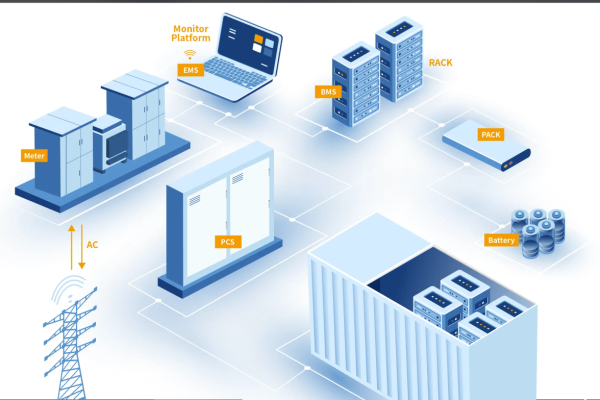
The Battery Management System (BMS) plays an important role in monitoring and protecting battery operation.
Depending on the system design, its functions may include:
- Monitoring cell and module voltages
- Monitoring battery temperatures
- Managing charge and discharge limits
- Monitoring current
- Cell balancing
- Detecting abnormal operating conditions
- Communicating with the Energy Management System
- Triggering protective actions when operating limits are exceeded
The Energy Management System (EMS) can also help coordinate battery operation according to project requirements.
For example, an industrial peak-shaving application may use EMS control to avoid unnecessary cycling when the expected electricity cost savings are small.
However, a BMS or EMS cannot eliminate battery aging.
Their role is to manage operating conditions and help keep the battery within its designed operating limits.
11. How Installation and Maintenance Conditions Influence Battery Performance
Battery cycle life is primarily determined by cell characteristics and operating conditions. However, the physical installation environment also matters.
A poorly designed installation can create additional risks for the complete energy storage system.
Important considerations include:
Thermal management
Battery enclosures and surrounding equipment should allow the designed cooling or ventilation system to operate effectively.
Blocked airflow, excessive ambient temperatures, and inadequate maintenance access may affect thermal performance.
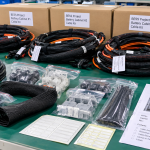
Cable routing and protection
Power and auxiliary cables should be routed and secured according to the equipment manufacturer’s requirements.
Appropriate cable protection can help address:
- Mechanical abrasion
- Cable movement and vibration
- Contact with sharp edges
- UV exposure where applicable
- Dust and environmental exposure
- Specified thermal exposure
Inspection and maintenance access
Cable assemblies, connections, and protective accessories should remain accessible for inspection and maintenance.
Protection products should not obstruct ventilation, cover equipment labels, interfere with connectors, or compromise required electrical clearances.
Environmental conditions
Outdoor installations may experience sunlight, moisture, dust, temperature variation, and corrosive environments.
The protection materials selected should match the actual exposure conditions and their verified product ratings.
These measures do not increase the electrochemical cycle-life rating of a battery, but they support safer, more manageable installation and maintenance practices.
12. How GR-NEWenergy Supports Long-Term Energy Storage Installation and O&M
GR-NEWenergy focuses on installation and operation-and-maintenance-related products for energy storage projects.
While battery cycle life is determined by battery technology, manufacturing quality, and operating conditions, the supporting installation infrastructure also requires attention throughout the system’s service life.
Our product categories include:
- Braided cable sleeves for mechanical cable protection
- Self-wrapping sleeves for accessible cable management
- High-temperature fiberglass sleeves
- Aluminum foil and thermal protection materials
- Corrugated conduits for cable routing
- Cable glands and grommets
- Cable clamps and fastening accessories
- Replacement and retrofit protection kits
For battery storage installations, these products can help organize and protect cable infrastructure according to the project’s environmental and mechanical requirements.
For long-term O&M, removable or openable cable protection products can also make certain inspection and replacement tasks easier.
Our focus is not to claim that cable protection products extend battery cell cycle life. Instead, we support the installation quality, accessibility, and maintainability of the surrounding cable infrastructure.
Reliable energy storage requires both suitable battery technology and a well-managed physical installation environment.
Battery cycle life is an important specification, but the advertised number alone is not enough to evaluate an energy storage product.
Buyers should understand the DoD, C-rate, operating temperature, end-of-life capacity threshold, test method, and warranty conditions behind every cycle-life claim.
They should also distinguish cycle aging from calendar aging and avoid assuming that a laboratory cycle count translates directly into a guaranteed number of operating years.
The most reliable purchasing decision comes from evaluating cycle life together with usable capacity, system efficiency, energy throughput, warranty coverage, and total cost of ownership.
Ultimately, the best battery is not necessarily the one with the highest advertised cycle count. It is the one that delivers the required energy and power reliably under the project’s actual operating conditions and economic requirements.
Questions
1. What does 6,000 cycles mean for a battery?
It means the battery has a specified cycle-life rating of 6,000 cycles under defined test conditions. Buyers should check the DoD, temperature, charge/discharge rate, and end-of-life capacity threshold before interpreting the figure.
2. Does one battery cycle mean one full charge and discharge?
Not necessarily. Many battery systems use Equivalent Full Cycles (EFC), which account for cumulative energy throughput. Several partial discharges can add up to one equivalent full cycle.
3. How many years will an 8,000-cycle battery last?
There is no fixed answer. The mathematical duration depends on annual equivalent full cycles, but actual service life is also affected by calendar aging, operating temperature, warranty conditions, and battery degradation.
4. What does 80% capacity retention mean?
It means the battery retains 80% of its defined initial reference capacity. For example, a battery that initially provides 100 kWh of measured capacity would retain approximately 80 kWh at that measurement point.
5. Does a higher DoD reduce cycle life?
Deeper cycling can increase battery stress and influence cycle life. However, the relationship varies by chemistry, cell design, temperature, and operating conditions. Buyers should compare manufacturer test data rather than assume a fixed relationship.
6. Is cycle life the same as battery warranty?
No. Cycle life is a performance rating under specified conditions. Warranty is a contractual commitment that defines coverage, duration, operating restrictions, and performance guarantees.
7. Which battery chemistry has the longest cycle life?
LFP batteries are widely used in stationary energy storage because of their favorable cycle-life characteristics. However, actual performance depends on cell design, manufacturing quality, operating conditions, and test methods. Chemistry alone is not sufficient for ranking individual products.
8. Can a battery continue working after reaching 80% SOH?
Yes. Reaching 80% capacity retention does not automatically mean the battery stops operating. Whether it remains suitable depends on the application, power requirements, safety condition, and manufacturer’s warranty or retirement criteria.
9. Does battery cycle life decrease in hot environments?
High temperatures can accelerate several battery aging mechanisms. Proper thermal management and operation within the manufacturer’s specified temperature range are important for long-term performance.
10. What is more important: cycle life or calendar life?
Both matter. Cycle life is particularly important for frequently cycled applications, while calendar life matters for all batteries, including systems that operate infrequently. Buyers should consider both when estimating service life.
Q&A
Q: What does battery cycle life mean?
A: Battery cycle life is the number of charge and discharge cycles a battery can complete before reaching a defined end-of-life criterion, commonly based on remaining capacity under specified test conditions.
Q: How should buyers compare battery cycle-life ratings?
A: Buyers should compare cycle-life ratings using consistent test conditions, including DoD, C-rate, temperature, capacity retention threshold, and testing method. The warranty and annual energy throughput limits should also be reviewed.
Q: What is the difference between cycle life and calendar life?
A: Cycle life relates to degradation associated with charging and discharging, while calendar life describes degradation over time, including periods when the battery is not actively cycling.
Q: What does 80% SOH mean in an energy storage battery?
A: An 80% capacity-based SOH means the battery retains approximately 80% of its initial reference capacity. It does not necessarily mean the battery has stopped functioning.
Q: Does a battery with 8,000 cycles last twice as long as one with 4,000 cycles?
A: Not necessarily. Cycle-life ratings depend on test conditions, while actual service life also depends on annual cycling, calendar aging, temperature, and operating strategy.
Q: Can installation quality affect battery cycle life?
A: Installation quality does not change the cell’s rated cycle-life specification, but appropriate thermal management, cable routing, protection, and maintenance access help support reliable operation of the complete energy storage system.
Q: Why should buyers consider lifetime energy throughput?
A: Lifetime energy throughput helps buyers understand how much energy a battery may deliver over its operating life. It provides a more useful basis for lifecycle cost comparison than the advertised cycle count alone.