
As global energy systems transition toward decentralization and renewable integration, battery modules have become a critical building block in modern energy storage systems (ESS). Positioned between individual battery cells and full-scale systems, battery modules play a decisive role in determining performance, safety, scalability, and system reliability.
For developers, integrators, and project owners, understanding the design and function of battery modules is essential to building efficient and adaptable energy storage solutions.
⚙️ What Are Battery Modules?
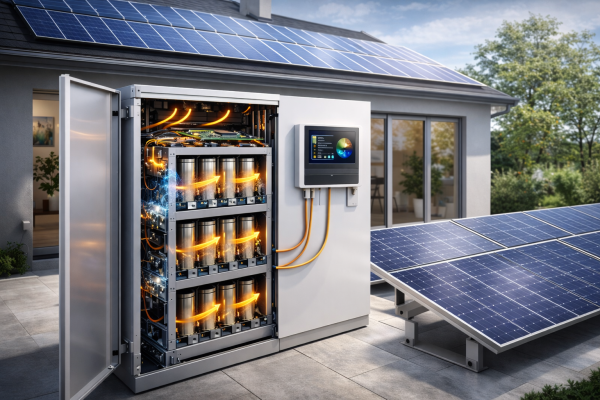
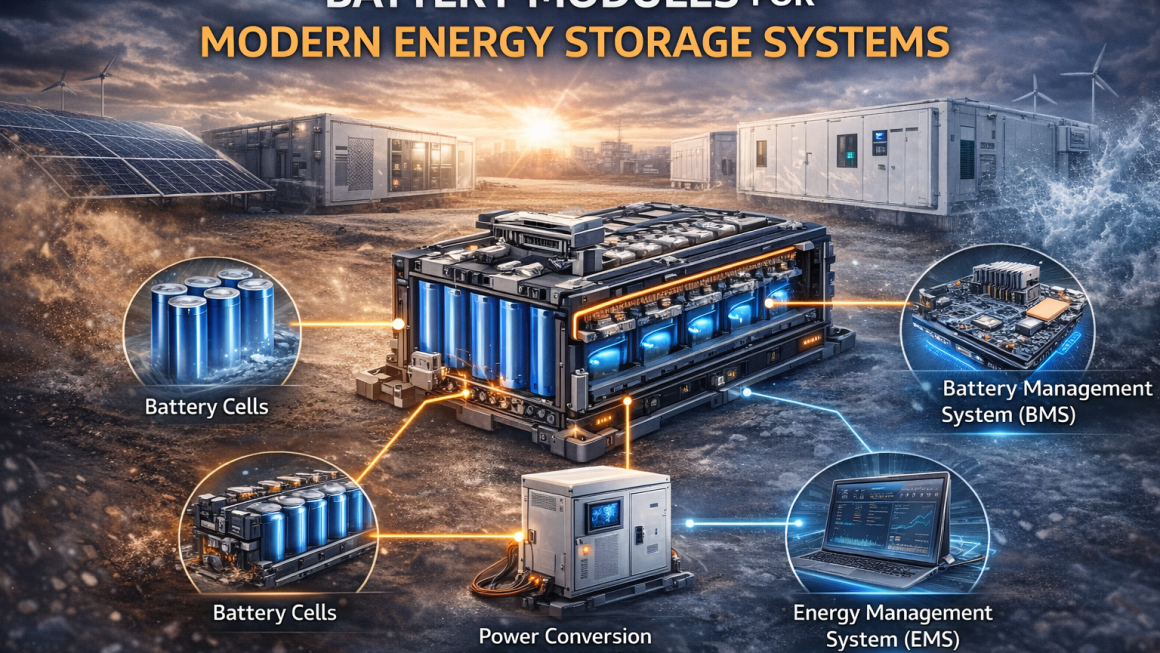
A battery module is an intermediate assembly that groups multiple battery cells into a structured, manageable unit. It typically includes:
- Electrical connections (busbars, terminals)
- Mechanical structure (frames, supports)
- Thermal management components
- Monitoring elements (temperature, voltage sensors)
Battery modules serve as the foundation for building larger battery packs and complete energy storage systems. By standardizing this layer, system design becomes more flexible and scalable.
🧩 Why Battery Modules Matter in Modern ESS
1. Scalability and Flexibility
Battery modules enable system designers to scale energy storage capacity based on project requirements. Whether for small commercial systems or large industrial installations, modular design allows for:
- Easy capacity expansion
- Flexible configuration
- Reduced engineering complexity
This is particularly important in projects where energy demand evolves over time.
2. System Integration Efficiency
Battery modules simplify integration with key system components such as:
- Power Conversion Systems (PCS)
- Energy Management Systems (EMS)
- Battery Management Systems (BMS)
A well-designed module ensures electrical compatibility, mechanical alignment, and communication readiness, reducing integration risks at the system level.
3. Enhanced Safety Design
Safety is a core requirement in energy storage systems. Battery modules incorporate multiple layers of protection, including:
- Electrical isolation
- Thermal barriers
- Structural containment
- Monitoring interfaces
Proper module design helps prevent fault propagation and improves overall system stability.
4. Optimized Thermal Management
Thermal performance directly affects battery lifespan and efficiency. Battery modules are designed to manage heat through:
- Air or liquid cooling pathways
- Heat dissipation structures
- Interface materials for thermal conduction
Effective thermal control ensures consistent performance across different operating conditions.
5. Maintenance and Serviceability
Modular design makes maintenance more efficient. Instead of replacing entire systems, operators can:
- Inspect individual modules
- Replace faulty units
- Perform targeted upgrades
This reduces downtime and operational costs over the lifecycle of the system.
🏗️ Key Design Considerations for Battery Modules
Designing battery modules for modern ESS requires balancing multiple engineering factors:
🔹 Electrical Design
- Voltage and current configuration
- Series and parallel connections
- Protection against overcurrent and short circuits
🔹 Mechanical Structure
- Structural integrity and load-bearing capacity
- Compact and space-efficient layout
- Ease of installation and replacement
🔹 Thermal Strategy
- Uniform temperature distribution
- Compatibility with cooling systems
- Performance under high load conditions
🔹 Safety Integration
- Fire resistance
- Fault isolation
- Monitoring and control interfaces
🔌 Battery Modules in Different Applications
Battery modules are widely used across various energy storage scenarios:
Renewable Energy Integration
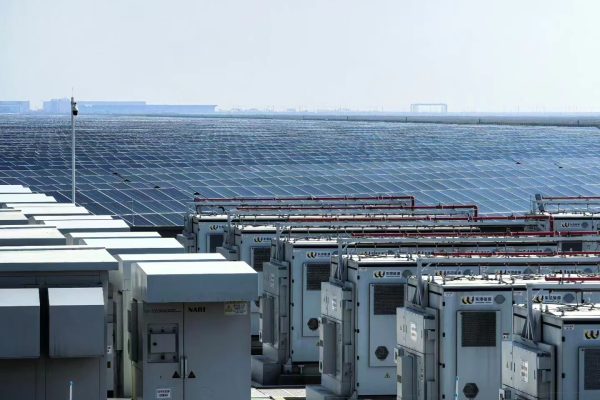
Supporting solar and wind systems by stabilizing output and storing excess energy.
Commercial & Industrial (C&I) Systems
Providing peak shaving, load shifting, and energy cost optimization.
EV Charging Infrastructure
Enabling high-power, fast-response energy delivery for charging stations.
Microgrid Systems
Ensuring energy independence and resilience in distributed energy networks.
🔄 From Modules to Systems: A Critical Link
Battery modules act as the bridge between cell-level technology and full energy storage systems. Their design determines how effectively a system can be:
- Scaled
- Integrated
- Operated
- Maintained
A well-engineered module simplifies system architecture and improves overall project outcomes.
🚀 The Future of Battery Modules in ESS
As energy storage systems evolve, battery modules are becoming:
- More compact and energy-dense
- Easier to integrate into diverse systems
- Better optimized for thermal and safety performance
- Designed for flexible deployment across applications
The shift toward modular architectures will continue to drive innovation in system design and deployment strategies.
By enabling scalability, enhancing safety, and simplifying integration, they form the backbone of reliable and efficient ESS solutions.
For projects across renewable energy, industrial applications, and emerging infrastructure, the right battery module design can significantly influence system performance and long-term value.