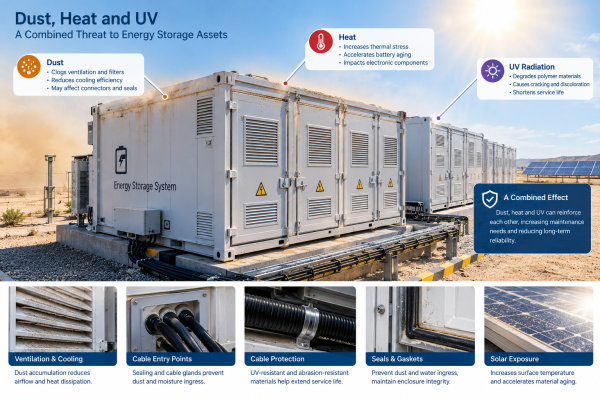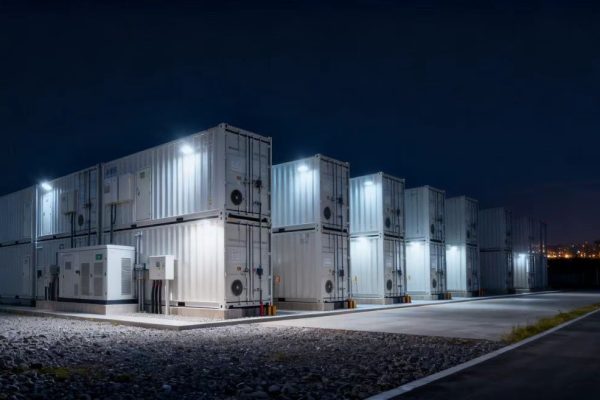
As energy storage systems (ESS) evolve toward higher energy and power densities, the challenges of maintaining safe and reliable operation become increasingly critical. High-density ESS, whether used in grid applications, electric mobility, or industrial microgrids, inherently carry higher risks due to:
- Concentrated energy storage
- Faster charge/discharge cycles
- Greater thermal and electrical stress
These factors demand a comprehensive approach to protection systems that spans from the cell level to the full system, integrating materials, electronics, and control strategies.
Why Advanced Protection Is Essential in High-Density ESS
High-density ESS amplifies several potential risks:
1. Thermal Runaway
With more energy stored per unit volume, localized heating can trigger cascading thermal events if not properly managed.
2. Electrical Overstress
High currents and voltages increase the likelihood of short circuits, overcurrent, or overvoltage events.
3. Mechanical Stress
Modules experience expansion, vibration, and physical shocks that can compromise cell integrity.
4. Degradation and Imbalance
Cells in high-density configurations are more sensitive to uneven aging, which can reduce performance and increase failure risk.
These hazards necessitate multi-layered protection to maintain both safety and system longevity.
Multi-Layer Protection Strategy
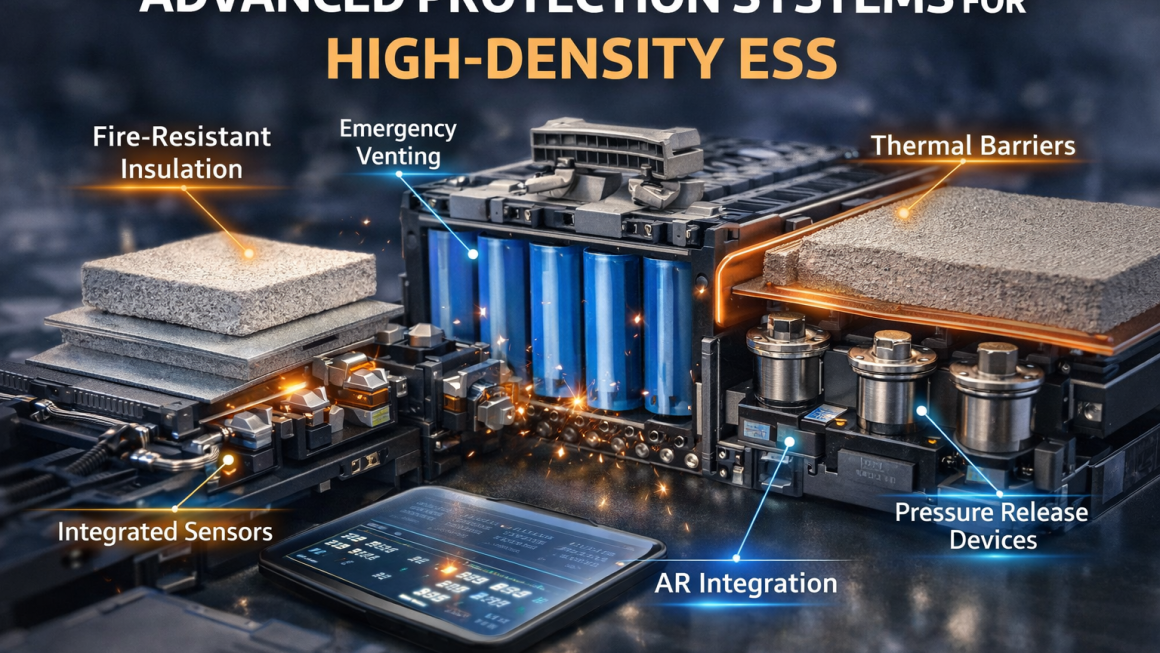
Effective ESS protection is achieved by combining material-based, component-level, and system-level safeguards.
1. Material-Based Protection
Materials play a fundamental role in mitigating risks at the smallest scales:
- Separator Materials: High-performance separators prevent internal short circuits and improve thermal stability.
- Thermal Interface Materials (TIMs): Improve heat dissipation and prevent hotspot formation.
- Phase Change Materials (PCMs): Absorb transient heat spikes to stabilize temperature during rapid cycling.
- Fire-Retardant Coatings: Reduce propagation in case of thermal events.
2. Component-Level Protection
Components integrate sensors, electronics, and local control to prevent faults from escalating.
Battery Management Systems (BMS)
Key functions include:
- Monitoring voltage, current, and temperature at the cell and module level
- Detecting early signs of imbalance or overheating
- Isolating faulty cells to prevent cascading failures
Fuses and Circuit Protection
- Overcurrent and overvoltage protection devices prevent catastrophic failures.
- Redundant circuits provide fail-safe operation.
3. Module-Level Protection
High-density ESS modules are prone to localized failures if not properly managed.
Design Considerations:
- Thermal uniformity across cells to prevent hotspots
- Mechanical buffers to absorb expansion and vibrations
- Intelligent interconnects for reliable current distribution
4. System-Level Protection
At the full-system level, protection strategies coordinate modules, power electronics, and external interfaces.
Energy Management Systems (EMS)
- Balances energy flow between modules and loads
- Implements safe charge/discharge profiles
- Manages redundancy and system-level fault tolerance
Power Conversion and Grid Interface
- Smooths transients from high-power charging/discharging
- Provides overvoltage and short-circuit protection for grid-tied ESS
Monitoring and Diagnostics
- Continuous real-time monitoring for predictive maintenance
- Alerts operators to abnormal trends before faults occur
Key Advanced Protection Features
High-density ESS protection systems integrate multiple advanced features:
Thermal Mitigation
- Active cooling (air or liquid)
- Integrated heat sinks and thermal pads
- PCMs and high-conductivity TIMs
Electrical Isolation
- High-quality insulation materials
- Galvanic isolation in converters and interfaces
- Redundant protection circuits
Fault Containment
- Module-level isolation to prevent propagation
- Intelligent shutdown of affected circuits
- Safe disconnection from grid or load
Predictive Analytics
- AI and algorithmic monitoring predict failures before they occur
- Real-time data analysis supports proactive intervention
The Role of Materials in Protection Systems
Materials are not passive—they actively contribute to ESS safety and efficiency:
- Conductive additives improve current uniformity and reduce local heating
- Thermally conductive and fire-resistant layers prevent thermal runaway
- Mechanical support materials reduce stress on high-density cells
By optimizing material choice and placement, the risk profile of high-density ESS can be significantly reduced, enhancing both safety and lifespan.
Challenges in Implementing Protection Systems
Despite technological advances, designing protection for high-density ESS presents challenges:
- Thermal Complexity: Managing heat in tightly packed cells is difficult
- High-Speed Fault Response: High energy densities require milliseconds-level protection
- System Integration: Protection must work across multiple layers—cell, module, and system—without compromising performance
- Material Compatibility: Protective materials must integrate seamlessly with electrodes, separators, and enclosures
Addressing these challenges requires a holistic, multi-disciplinary approach.
Safety and Longevity Synergy
Advanced protection systems not only prevent catastrophic events—they also extend system life:
- Reducing thermal and electrical stress slows degradation
- Maintaining balanced operation across cells ensures uniform aging
- Avoiding early failures minimizes replacement and maintenance costs
This synergy between safety and longevity is a hallmark of high-density ESS design.
Future Directions in Protection Systems
Emerging trends in ESS protection include:
- Integrated AI Monitoring: Machine learning models predict faults from subtle signals
- Smart Thermal Management: Adaptive cooling responding to real-time heat distribution
- Material Innovations: Next-generation TIMs, PCMs, and flame-retardant composites
- Modular Protection: Standardized module-level protections that scale across system sizes
These innovations will become increasingly important as ESS energy density continues to rise.
How gr-newenergy.com Approaches ESS Protection
At gr-newenergy.com, our focus is on understanding and exploring mechanism-driven safety solutions:
- Advanced thermal and conductive materials for high-density modules
- Component and module-level protection strategies
- Guidance on integrating materials, electronics, and system-level design
Rather than claiming large-scale deployment, our emphasis is on research, pilot exploration, and theoretical frameworks for high-density ESS protection.
High-density energy storage systems offer unmatched potential for grid, industrial, and mobility applications—but their advantages come with increased risk.
Advanced protection systems are essential to ensure:
- Safe operation under high energy densities
- Prevention of thermal, electrical, and mechanical failures
- Long-term system efficiency and longevity
By combining material innovations, component design, and system-level intelligence, engineers can design high-density ESS that is both safe and reliable, paving the way for future energy storage solutions.