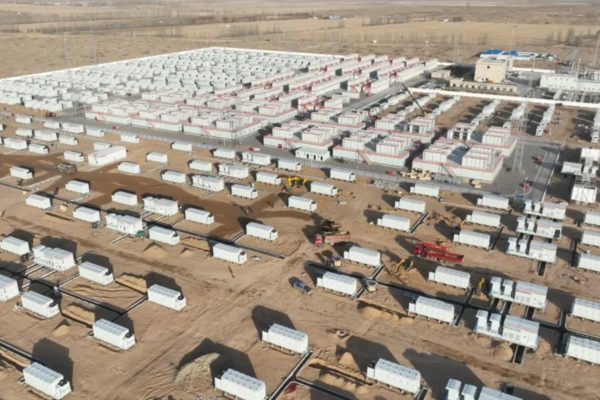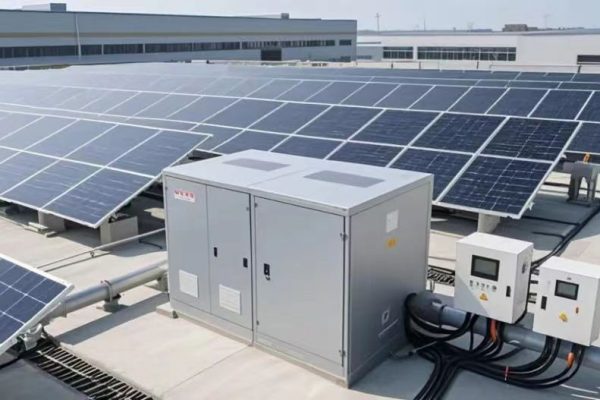
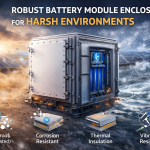
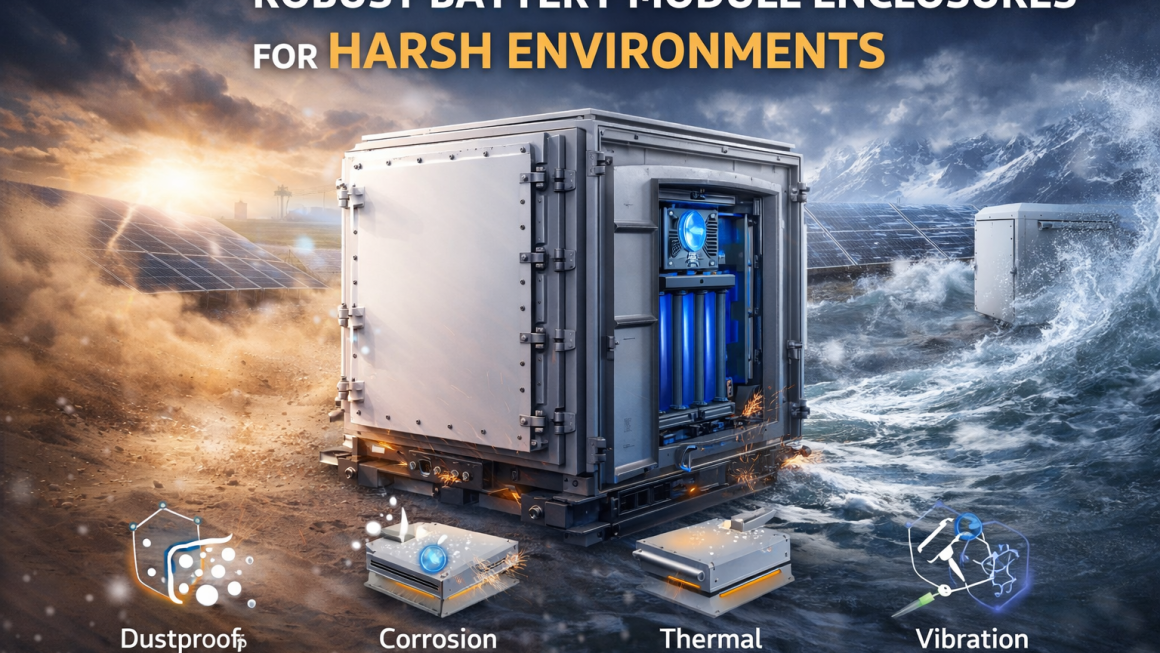
As energy storage systems (ESS) expand into increasingly demanding applications—such as desert solar farms, offshore wind installations, mining operations, and remote industrial sites—the importance of robust battery module enclosures has become more critical than ever.
In these environments, battery modules are exposed to extreme conditions, including:
- High and low temperatures
- Humidity and condensation
- Dust, sand, and corrosive particles
- Mechanical vibration and shock
Under such conditions, enclosure design is not just about housing components—it becomes a core factor in system safety, reliability, and longevity.
Why Enclosures Matter More in Harsh Environments
In controlled indoor environments, battery modules operate within relatively stable conditions. However, in harsh environments, external stressors can directly impact:
- Electrical performance
- Thermal stability
- Mechanical integrity
- Safety behavior
A poorly designed enclosure can lead to:
- Moisture ingress and short circuits
- Dust accumulation causing overheating
- Corrosion of conductive components
- Structural damage under vibration
Therefore, enclosure systems must act as multi-functional protective layers, rather than passive casings.
Key Functions of Battery Module Enclosures
A well-designed enclosure must simultaneously address several challenges:
1. Environmental Protection
Preventing ingress of external elements is essential.
Key Strategies:
- High IP-rated sealing (e.g., IP65, IP67)
- Gasket materials resistant to temperature and aging
- Filtered ventilation systems
2. Thermal Regulation
Even in harsh environments, internal temperature control remains critical.
Design Considerations:
- Heat dissipation pathways
- Integration with cooling systems (air or liquid)
- Use of thermally conductive materials
3. Mechanical Strength
Modules must withstand:
- Vibration (transport, industrial equipment)
- Impact (handling, environmental hazards)
- Structural stress from thermal expansion
Robust enclosures use reinforced structures and optimized geometries to maintain integrity.
4. Electrical Safety
Enclosures contribute to electrical safety by:
- Providing insulation barriers
- Supporting grounding strategies
- Preventing accidental contact with live components
Material Selection for Harsh Environments
Materials are the foundation of enclosure performance.
Metal Enclosures (Aluminum, Steel)
Advantages:
- High mechanical strength
- Good thermal conductivity
- EMI shielding capability
Challenges:
- Susceptibility to corrosion (especially in marine environments)
- Higher weight
Polymer and Composite Enclosures
Advantages:
- Corrosion resistance
- Lightweight
- Electrical insulation
Challenges:
- Lower thermal conductivity
- Potential aging under UV exposure
Hybrid Structures
Combining metals and composites allows designers to balance:
- Strength
- Weight
- Thermal performance
- Corrosion resistance
Corrosion Resistance: A Critical Factor
In harsh environments such as coastal or industrial areas, corrosion can severely impact system performance.
Protection Strategies:
- Anti-corrosion coatings
- Anodized or treated aluminum surfaces
- Sealed connectors and interfaces
Material degradation not only reduces structural strength but can also increase electrical resistance and heat generation.
Thermal Challenges in Extreme Conditions
Harsh environments often introduce extreme thermal conditions:
- High ambient temperatures in deserts
- Low temperatures in cold climates
- Rapid temperature fluctuations
Thermal Design Solutions:
Passive Cooling
- Heat sinks integrated into enclosure walls
- Thermal interface materials (TIMs) for efficient heat transfer
Active Cooling
- Forced air systems
- Liquid cooling loops
Insulation
- Thermal barriers to protect against external heat or cold
Key Insight:
Thermal management must be integrated into the enclosure—not treated as an external system.
Sealing and Moisture Protection
Moisture ingress is one of the most common causes of ESS failure in harsh environments.
Risks Include:
- Short circuits
- Corrosion
- Insulation degradation
Design Approaches:
- High-performance gaskets
- Pressure equalization vents to prevent condensation
- Waterproof connectors and cable entries
Dust and Particle Protection
Dust and sand can accumulate inside enclosures, leading to:
- Blocked cooling pathways
- Increased thermal resistance
- Electrical faults
Mitigation Strategies:
- Sealed designs with appropriate IP ratings
- Replaceable air filters
- Positive pressure systems to prevent ingress
Mechanical Design for Durability
Harsh environments often involve continuous mechanical stress.
Key Design Features:
- Reinforced frames
- Shock-absorbing mounts
- Vibration-resistant fasteners
Expansion Management
Battery modules expand and contract during operation.
Enclosures must accommodate this without:
- Damaging cells
- Loosening connections
- Creating internal stress
Integration with Module and System Design
Enclosures cannot be designed in isolation—they must align with:
- Battery module layout
- Thermal management systems
- Electrical architecture
Interface Engineering
Critical interfaces include:
- Cell-to-enclosure contact
- Cooling system integration
- Electrical connections
Optimizing these interfaces improves:
- Heat transfer
- Structural stability
- System efficiency
Safety Considerations
In addition to environmental protection, enclosures must support safety features:
- Pressure relief mechanisms
- Flame-resistant materials
- Controlled venting pathways
These features help contain and manage potential failure events.
Modularity and Maintenance
In real-world applications, maintenance and scalability are essential.
Benefits of Modular Enclosures:
- Easier replacement of faulty modules
- Scalable system expansion
- Reduced downtime
Serviceability Features:
- Accessible panels
- Standardized connections
- Clear internal layout
Challenges in Harsh Environment Design
Designing enclosures for extreme conditions involves trade-offs:
- Sealing vs heat dissipation
- Strength vs weight
- Cost vs durability
Balancing these factors requires a system-level perspective.
How gr-newenergy.com Approaches Enclosure Design
At gr-newenergy.com, our focus is on exploring how material and structural design can enhance enclosure performance in challenging environments.
We emphasize:
- Advanced materials for thermal and mechanical performance
- Interface optimization between modules and enclosures
- Integration of protection, thermal, and structural functions
Rather than focusing on standardized products, our approach highlights:
Mechanism-driven design strategies for robust energy storage systems
Robust battery module enclosures are essential for enabling reliable energy storage in harsh environments. They serve as:
- Protective barriers against environmental stress
- Thermal management platforms
- Structural supports for system integrity
- Safety enablers for fault containment
By combining advanced materials, integrated thermal design, and mechanical robustness, engineers can create enclosures that support long-term ESS performance under extreme conditions.
As energy storage continues to expand into more demanding applications, enclosure design will play an increasingly central role in ensuring system safety, efficiency, and longevity.