
As energy storage systems grow in scale and energy density, preventing thermal runaway has become one of the most critical engineering challenges. Thermal runaway is a self-accelerating reaction that can lead to fire, explosion, and system failure if not properly controlled. Effective prevention requires a multi-layered approach spanning materials, design, monitoring, and system integration.
What Is Thermal Runaway?
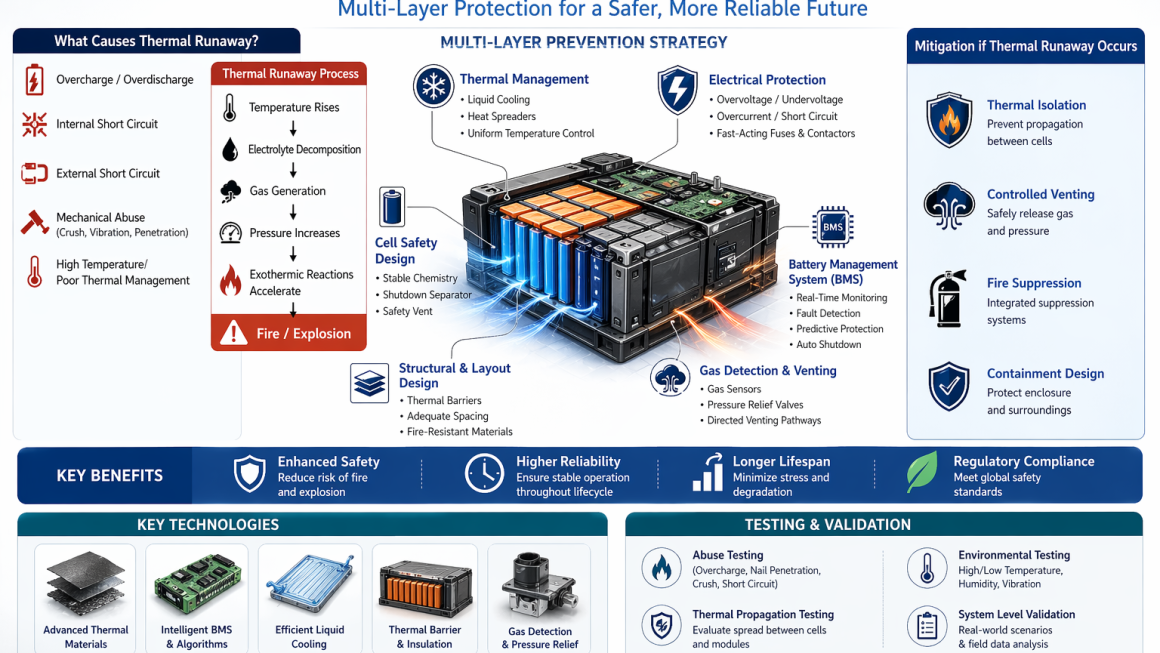
Thermal runaway occurs when heat generated inside a battery exceeds its ability to dissipate it, triggering a chain reaction:
- Internal temperature rises rapidly
- Electrolyte decomposition begins
- Gas generation increases internal pressure
- Exothermic reactions accelerate
- Fire or explosion may occur
Once initiated, thermal runaway can propagate from one cell to neighboring cells if not contained.
Key Causes of Thermal Runaway
- Overcharging or overdischarging
- Internal short circuits (manufacturing defects or damage)
- External short circuits
- Mechanical abuse (crush, vibration, penetration)
- High operating temperatures or poor thermal management
Understanding these triggers is essential for prevention.
Multi-Layer Prevention Strategies
1. Cell-Level Safety Design
- Use thermally stable chemistries (e.g., LFP)
- Incorporate shutdown separators and safety vents
- Ensure high manufacturing consistency and defect control
2. Advanced Thermal Management
Effective heat control is the first line of defense:
- Maintain uniform temperature across cells (<5°C gradient)
- Use liquid cooling or hybrid cooling systems
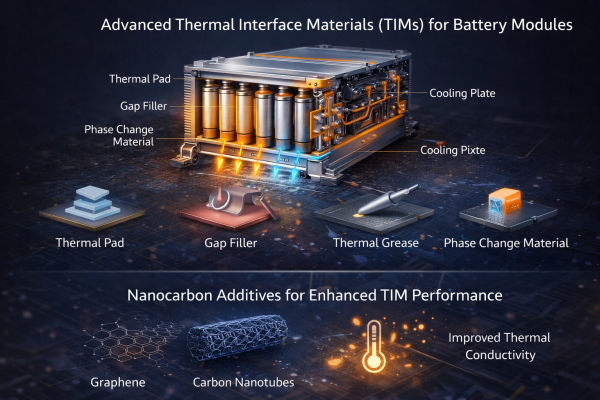
- Integrate high-performance thermal interface materials (TIMs)
- Apply heat spreaders (graphite, graphene) to avoid hotspots
3. Electrical Protection Systems
Prevent abnormal operating conditions:
- Overvoltage and undervoltage protection
- Overcurrent and short-circuit protection
- Fast-acting fuses and contactors
- Isolation monitoring in high-voltage systems
4. Module and Pack Design
Structural and layout strategies to prevent propagation:
- Thermal barriers between cells
- Adequate spacing and insulation
- Fire-resistant materials
- Directed venting pathways to release heat and gas safely
5. Battery Management System (BMS)
Real-time monitoring and control:
- Continuous tracking of temperature, voltage, and current
- Early detection of abnormal conditions
- Automated shutdown or derating strategies
- Predictive algorithms for failure prevention
6. Gas Detection and Venting
- Sensors detect early gas release before thermal runaway escalates
- Pressure relief valves prevent enclosure rupture
- Controlled venting reduces explosion risk
Thermal Runaway Mitigation vs. Prevention
- Prevention: Avoid triggering conditions through design and control
- Mitigation: Limit damage if thermal runaway occurs
Mitigation strategies include:
- Fire suppression systems
- Thermal insulation to delay propagation
- Module-level containment design
Design Challenges
- Balancing energy density with safety margins
- Managing heat in compact systems
- Ensuring reliability over long lifecycle
- Meeting strict regulatory standards
Testing and Validation
Thermal runaway prevention must be validated through:
- Abuse testing: overcharge, nail penetration, crush tests
- Thermal propagation testing: evaluate spread between cells
- Environmental testing: high/low temperature, humidity
- System-level validation: real-world operating scenarios
Emerging Technologies
1. Solid-State Batteries
Reduced flammability compared to liquid electrolytes.
2. AI-Based Predictive Monitoring
Early fault detection using data analytics.
3. Advanced Thermal Materials
Graphene and phase-change materials for improved heat control.
4. Integrated Safety Systems
Combining sensing, cooling, and protection into unified architectures.
Best Practices
- Design safety at every level: cell, module, and system
- Prioritize thermal management early in development
- Use redundant protection mechanisms
- Validate designs through rigorous testing
- Continuously monitor system performance in operation
Preventing thermal runaway in energy storage systems requires a holistic, multi-layered approach that integrates materials science, thermal engineering, electrical protection, and intelligent control systems. As energy systems become more powerful and compact, effective thermal runaway prevention will be essential to ensuring safety, reliability, and long-term performance.