(For SMEs, Workshops, Rural Sites, Micro Facilities, and Light Commercial Users)
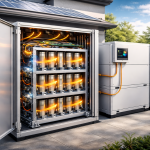
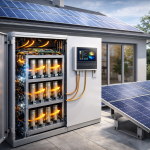
Small-scale PV + battery systems (typically 3–50 kWp PV with 5–100 kWh storage) are becoming increasingly common in workshops, retail storefronts, farms, communication huts, and rural micro facilities. These systems are affordable, compact, and relatively simple—but many deployments still suffer from avoidable performance issues due to incorrect configuration.
This guide outlines practical, field-tested configuration tips to help EPC teams, installers, and small-facility owners achieve higher yield, better reliability, and longer system life.
1. Size the System Based on Load Patterns, Not Just Daily kWh
Most configuration mistakes begin during sizing.
Key Tips
- Analyze load profiles in 15–30 minute resolution, not only total daily energy.
- Identify peaks that demand high instantaneous inverter power.
- For small sites:
- Workshops often have short bursts from motors/compressors.
- Retail shops have morning AC load spikes.
- Farms have pump/irrigation cycles.
Practical rule:
If peak load exceeds the inverter’s continuous rating by >20%, oversize the inverter or adjust cycling strategy.
2. Choose the Right System Topology
Small ESS deployments generally fall into three designs:
A. AC-Coupled (Most common)
- Flexible PV sizing
- Easy retrofit
- Lower efficiency in full-cycle operation
Best for: retrofits, mixed inverter brands, facilities using microinverters.
B. DC-Coupled
- Higher round-trip efficiency
- Better for new installations
- PV and battery share a charge controller
Best for: new sites focused on maximizing solar self-consumption.
C. Hybrid Inverter All-in-One
- Simplifies installation
- Reduces wiring errors
- Single-point control
Best for: small commercial customers who value simplicity over flexibility.
3. Configure Charge/Discharge Windows Based on Tariffs
Small commercial customers often have dual goals:
- Utility cost reduction
- Reliable backup
Recommended settings
- Charge from PV first, then grid only during low tariffs.
- Discharge during peak tariff windows or high demand periods.
- Maintain a backup reserve of 15–30% SOC (configurable by site).
Important: Never allow the battery to drop below 10–15% SOC, even if the inverter allows it.
4. Avoid Over-Saturating the PV Input
A common configuration error is oversizing PV far beyond the MPPT input current/power rating.
Oversizing Guidelines
- 110–130% oversizing is usually safe.
- 150%+ is only acceptable:
- in cold climates
- with strict current-limiting MPPTs
- with daily shading windows (e.g., morning or late afternoon)
Too much oversizing can result in:
- MPPT clipping
- Excessive heat
- Frequent PV derating
- Reduced inverter lifespan
5. Configure BMS–Inverter Communication Correctly
Small ESS systems suffer many operational issues due to mismatched protocols.
Ensure:
- Correct CAN/RS485 protocol is selected
- Battery model is correctly imported
- Voltage limits match battery specifications
- SOC calibration is done after installation
If SOC drifts, perform a controlled calibration cycle:
- Charge to 100%
- Hold at absorption
- Discharge to recommended low limit
- Recharge normally
6. Configure Protective Limits Conservatively
Small inverters often have limited thermal headroom.
Use conservative settings:
- Discharge current: ≤80% of battery rating
- Charge current: ≤0.5C unless the manufacturer requires more
- Temperature limits:
- Charge allowed: 10°C – 45°C
- Discharge allowed: –10°C – 55°C
Avoid high-C-rate charging in hot climates, especially when batteries are installed in metal cabins.
7. Optimize Backup Mode Settings
For facilities that depend on backup:
Recommended:
- Maintain a minimum backup SOC (15–40% depending on site).
- Enable critical load prioritization during outages.
- Set the inverter to auto-restart when grid returns.
- Keep non-essential loads on a separate DB (distribution board).
If the site has motor loads (pumps, compressors), enable soft-start settings if available.
8. Implement Simple but Effective Monitoring
Small sites often skip monitoring—leading to silent, long-term performance loss.
Minimum monitoring requirements:
- PV generation
- Battery SOC, SOH
- Charge/discharge power
- Grid import/export
- Historical trends for at least 30 days
Early signs of misconfiguration:
- Battery stuck at high SOC
- PV clipping during low-load hours
- Excessive nighttime grid charging
- SOC oscillation even in stable load conditions
9. Keep Wiring and Grounding Clean
In small systems, many failures originate from construction quality, not equipment.
Best practices:
- Balance battery cable lengths
- Use correct torque on terminals
- Provide surge protection on PV, AC, and battery lines
- Separate communication cables from power cables
- Ensure grounding meets local electrical code
If the system includes modular batteries, verify each module is recognized by the BMS.
10. Document and Save All Configuration Parameters
Always export:
- Inverter configuration file
- BMS settings
- Communication parameters
- Firmware versions
- Single-line diagram
A properly documented configuration significantly reduces:
- Service time
- Warranty disputes
- Remote troubleshooting delays
Well-configured small PV + storage systems can deliver:
- Lower energy bills
- Greater energy independence
- Better backup capability
- Longer battery life
- Reduced operational risk
These systems may be small, but configuration quality has a massive impact on long-term performance. A clean, well-documented, conservatively configured ESS routinely outperforms higher-spec systems that were installed with poor planning.