



Industrial parks increasingly face rising demand charges, time-of-use tariffs, and transformer loading constraints. As energy costs escalate, peak shaving has become one of the most practical and ROI-driven applications of modular energy storage systems (ESS). Instead of upgrading transformers, adjusting operations, or paying for expensive peak demand penalties, many industrial parks are adopting modular, scalable ESS to manage short-duration demand spikes.
This article outlines a replicable technical approach, real deployment insights, and key reliability principles for peak shaving in industrial parks. The content is designed for EPC teams, system integrators, plant engineers, and energy managers seeking a clear framework for implementing modular ESS-based peak shaving.
1. Why Peak Shaving Matters for Industrial Parks
Industrial parks often have highly dynamic loads driven by:
- HVAC and cooling chillers
- Motor startups
- Production line surges
- Compressed air systems
- Welding and machining equipment
- Multiple tenant operations
These short-duration spikes—often less than 15–45 minutes—can create:
1) High demand charges
Utilities calculate monthly peak based on the highest 15–30 min load window.
2) Transformer overloading risk
Especially for aging park infrastructure.
3) Unnecessary capacity upgrades
A single 2–3 minute spike can trigger expensive infrastructure reinforcement.
4) Difficult-to-control load coordination
Tenants operate independently; coordination is nearly impossible.
Modular ESS provides a controllable, repeatable way to flatten peaks without interrupting operations.
2. A Replicable Modular ESS Peak Shaving Architecture
A typical industrial park peak shaving solution includes the following layers:
2.1 Core Components
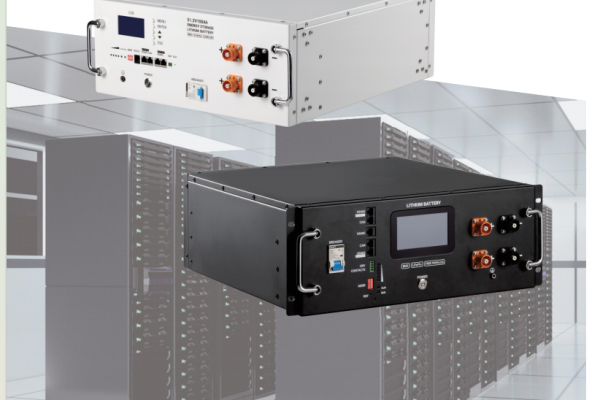
- Modular lithium battery system (LFP)
- Bi-directional PCS (30–250 kW per module)
- Smart EMS with load forecasting
- HT/LT-side metering or transformer-level CTs
- Optional integration with PV systems
2.2 System Operating Logic (Simplified)
Peak window detected → ESS discharges to cap grid load
Off-peak → ESS charges (low tariff or PV surplus)
Control priority:
- Maintain transformer loading within threshold
- Control demand spikes before utility metering window closes
- Ensure adequate SoC for upcoming peaks
This architecture is scalable from 100 kWh to multi-MWh, depending on the park’s load profile.
3. Practical Peak Shaving Strategies (Field-Proven)
Different industrial parks require different peak shaving approaches. Below are three strategies that are repeatedly successful in real-world MWh-scale deployments.
3.1 Strategy 1 — Static Power Limit (Simple & Reliable)
The ESS caps the transformer load at a fixed threshold.
How it works
- EMS sets a “grid limit,” e.g., 1.2 MW
- Whenever load > 1.2 MW → ESS discharges
- Whenever load < 1.2 MW → ESS recharges
Advantages
- Easy to commission
- Very predictable and safe
- Works for sites with stable patterns
Best for
- Industrial parks with predictable daytime peaks
- Sites with strict transformer overload limitations
3.2 Strategy 2 — Dynamic Peak Prediction (Adaptive Control)
Load forecasting is used to predict spikes 5–15 minutes ahead.
How it works
- EMS analyzes real-time power + historical patterns
- If a spike is expected, ESS precharges
- During the spike, ESS aggressively discharges
- After spike, ESS returns to optimal SoC
Advantages
- Increased efficiency
- Lower cycling stress
- Better for variable or multi-tenant sites
Best for
- Parks with unpredictable load behavior
- Multi-shift operations
3.3 Strategy 3 — PV-Coupled Peak Shaving (High ROI)
ESS charges from PV during the day and discharges during peak windows.
How it works
- PV charges ESS when load is low
- ESS discharges when demand spikes
- EMS balances PV variability using short ESS bursts
Advantages
- Lower charging cost
- Reduces peak demand + increases PV self-consumption
- Delivers fastest ROI
Best for
- Industrial parks with large rooftop PV
- Sites with high afternoon loads
4. Case Study: Modular ESS Peak Shaving in a Mid-Sized Industrial Park
Location: East Asia
Park Size: 11 tenants
Peak Demand: 1.8–2.3 MW
Grid Constraint: Transformer rated at 2.0 MW
Energy Cost Issue: Monthly demand charges ≥ 25% of total bill
Challenge
- Short 10–20 minute spikes repeatedly exceeded 2.0 MW
- Transformer near overload at least 15 times per month
- Tenants unable to coordinate consumption
Solution
A 500 kW / 1,000 kWh modular ESS installed at the park’s main distribution point:
- PCS configured at 500 kW
- Static 1.95 MW grid-cap strategy
- Predictive EMS for multi-spike days
- PV-coupled charging (350 kWp rooftop)
Results After Deployment
- Maximum peak reduced from 2.22 MW → 1.94 MW
- Transformer overload incidents = zero
- Demand charges reduced by 28%
- ESS cycling ≤ 0.6 cycles/day (long life expected)
- Payback period ≈ 3.2 years
A second ESS expansion of 1 MWh is now planned due to the success of Phase 1.
5. Key Design Principles for Industrial Park Peak Shaving
5.1 Always Keep Reserve SoC Ready
A common mistake is keeping ESS fully discharged after a peak.
Best practice:
Maintain 40–65% SoC before peak hours.
5.2 Use Fast-Control PCS for Sub-Second Response
Industrial spikes happen within seconds.
- PCS must respond within 20–100 ms
- Avoid low-speed PLCs that cause overshoot
5.3 Avoid Oversizing
Oversizing increases costs without improving effectiveness.
Right-sizing rule:
ESS energy = (Expected spike duration) × (Required shaving kW) × (Safety factor 1.1–1.3)
5.4 Ensure Scalability
A modular system should allow adding:
- Extra PCS racks
- Additional battery cabinets
- Secondary ESS nodes
Scalability lowers future upgrade costs.
5.5 Provide Transparent Monitoring
Industrial park operators need simple visibility:
- Transformer load
- ESS discharge profile
- Peak windows
- Real savings summary
Clear displays increase operator confidence.
6. Implementation Framework for EPC and Integrators
A repeatable deployment workflow:
Step 1 — Load & Tariff Assessment
- Identify 15–30 minute peak windows
- Determine transformer restrictions
- Estimate price-based ROI
Step 2 — ESS Right-Sizing
- Define shaving target
- Calculate energy capacity and PCS rating
- Include PV integration if applicable
Step 3 — EMS Configuration
- Static limit, predictive model, or PV-coupled
- SoC window rules
- Multi-tenant balancing logic
Step 4 — Field Deployment
- Install at transformer or MV/LV feeder
- Conduct peak simulation tests
- Validate PCS response time
Step 5 — Monitoring & Optimization
- Weekly review of peak windows
- Monthly savings summary
- Cycle optimization to maximize battery life
This structure allows EPCs to replicate the same solution across multiple industrial parks.
Modular energy storage is transforming how industrial parks manage rising demand charges and transformer limitations. With the right architecture and EMS strategies, peak shaving becomes:
- Predictable
- ROI-driven
- Scalable
- Low-maintenance
- Field-proven across diverse industrial customers
For multi-tenant parks, modular ESS offers the most practical and cost-effective pathway to stabilize load, avoid infrastructure upgrades, and significantly cut monthly energy bills.