

Cost and Risk Comparison for Industrial Energy Systems
As energy storage becomes a core asset in industrial energy systems, one of the most important early decisions is architecture:
Should storage be deployed as a single centralized system, or as multiple modular units distributed across the site?
This choice has long-term consequences for capital cost, operational risk, scalability, and financial performance. This article provides a practical, experience-based comparison to help EPCs and industrial decision-makers choose the right approach.
1. Defining the Two Architectures
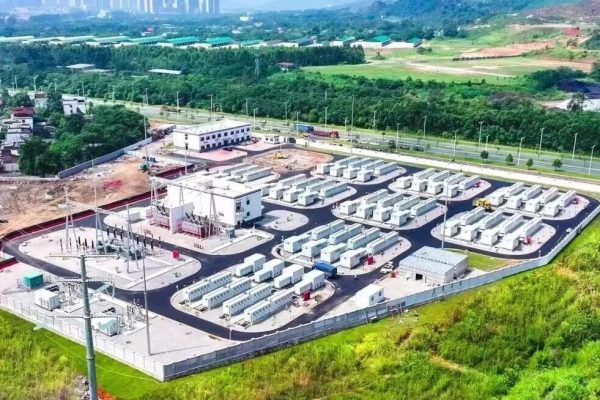
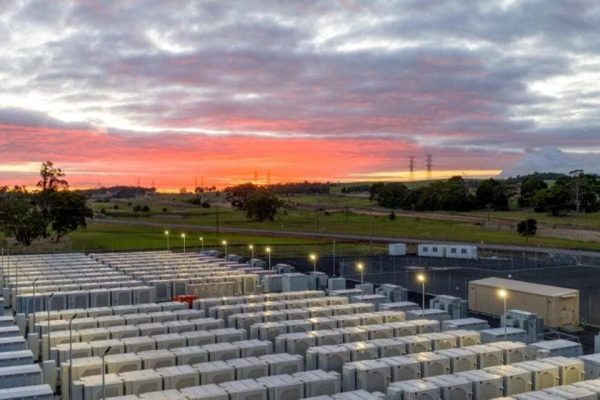
Centralized Storage
- One large battery system
- Typically located near the main substation
- Single PCS and EMS interface
- High power and energy density
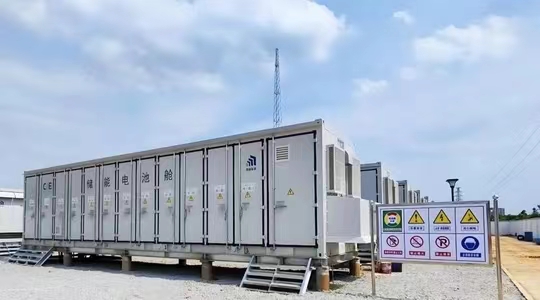
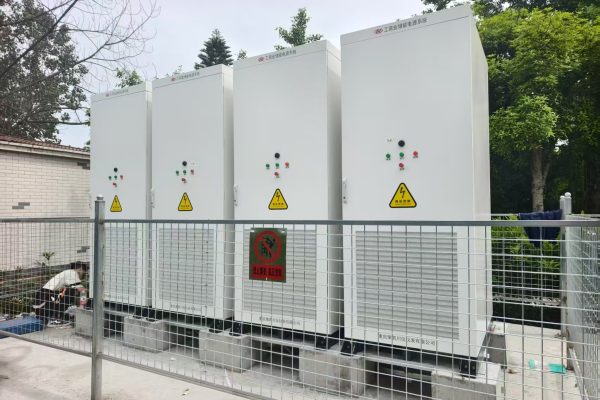
Modular Storage
- Multiple smaller storage units
- Deployed near loads or generation
- Independent or semi-independent control
- Coordinated by a higher-level EMS
2. Capital Cost: Upfront vs Phased Investment
Centralized Storage Costs
Advantages:
- Lower cost per kWh on paper
- Fewer enclosures and interfaces
Hidden costs:
- High upfront CAPEX
- Overdesign to meet worst-case demand
- Larger PCS and grid interconnection upgrades
Modular Storage Costs
Advantages:
- Phased investment aligned with load growth
- Smaller interconnection upgrades
- Reduced overdesign
Trade-off:
- Slightly higher per-kWh equipment cost
In real projects, modular systems often achieve lower total lifecycle cost, despite higher unit pricing.
3. Operational Risk and Resilience
Centralized Storage Risk Profile
- Single point of failure
- Maintenance requires full or partial shutdown
- Thermal events affect entire system
- Higher impact of commissioning errors
Modular Storage Risk Profile
- Fault isolation at module level
- Maintenance without site-wide disruption
- Progressive commissioning
- Reduced impact of individual failures
For industrial operations, risk concentration is often more expensive than equipment.
4. Availability and Uptime
| Aspect | Centralized | Modular |
|---|---|---|
| Fault impact | High | Low |
| Maintenance flexibility | Limited | High |
| Redundancy | Expensive | Inherent |
| Expansion downtime | Significant | Minimal |
In facilities where downtime has real cost, modular storage offers superior availability.
5. Control Complexity and EMS Design
Centralized Systems
- Simpler topology
- Easier initial commissioning
- Less communication overhead
Modular Systems
- Hierarchical control required
- More communication points
- Greater flexibility in dispatch
Well-designed modular EMS architectures remain robust when control priorities are clearly defined.
6. Grid and Electrical Infrastructure Impact
Centralized Storage
- Large power injections at a single point
- Higher transformer and switchgear stress
- Stricter grid compliance requirements
Modular Storage
- Distributed power flow
- Reduced local congestion
- Easier integration with distributed PV and loads
7. Scalability and Future Adaptation
Industrial sites evolve:
- New buildings
- Electrification of processes
- EV charging
- Tariff structure changes
Centralized Storage
- Expansion often requires major redesign
- Limited flexibility
Modular Storage
- Add modules where needed
- Mix technologies over time
- Adapt without disruption
8. Safety and Thermal Management
Centralized systems:
- High energy density
- Complex fire suppression
- Higher consequence of thermal events
Modular systems:
- Lower energy density per enclosure
- Easier thermal management
- Reduced safety risk concentration
9. When Centralized Storage Still Makes Sense
Centralized storage can be appropriate when:
- Loads are highly uniform
- Space is constrained
- Operational simplicity is paramount
- Short-term project timelines dominate
10. When Modular Storage Is the Better Choice
Modular storage is usually preferred when:
- Loads vary by zone or tenant
- Phased growth is expected
- Reliability is critical
- Multiple revenue or optimization use cases exist
Architecture Is a Risk Decision, Not Just a Cost Decision
The choice between modular and centralized storage is not about technology—it’s about risk allocation, financial flexibility, and operational reality.
For most industrial sites:
- Modular storage reduces downside risk
- Improves resilience and uptime
- Aligns investment with actual needs
Centralized storage may look cheaper at first glance, but modular architectures often win where it matters most: long-term performance and controllable risk.