

7
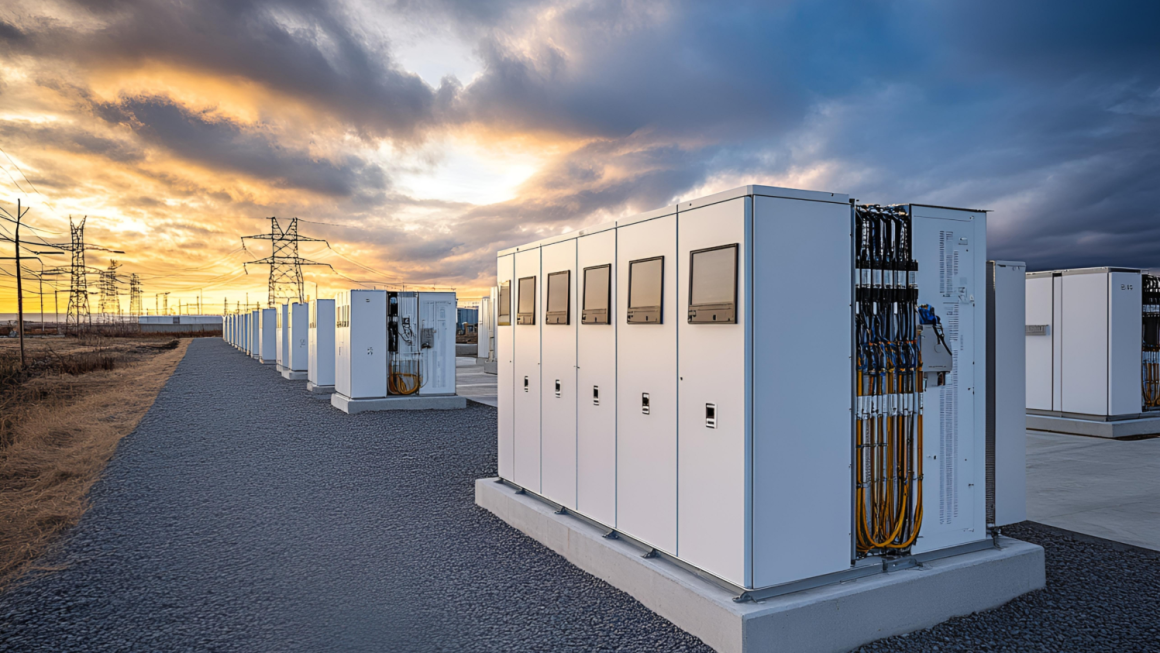
As commercial energy demands grow more complex, energy storage systems (ESS) are no longer viewed as standalone battery units. Instead, they are increasingly designed as integrated systems, where performance depends on how well multiple components work together.
From battery modules and power electronics to thermal management and control software, a system-level approach is essential for delivering reliable, efficient, and scalable energy storage solutions.
For businesses aiming to reduce energy costs, improve resilience, or integrate renewable energy, understanding ESS from a system perspective is key.
Why a System-Level Approach Matters
Traditional thinking often focuses heavily on battery chemistry or capacity. However, in commercial applications, overall system performance is influenced by interactions between components, not just individual parts.
A system-level approach ensures:
- Balanced performance across all components
- Improved energy efficiency
- Enhanced safety and reliability
- Better scalability for future expansion
In other words, a well-designed ESS is not just a battery—it is a coordinated energy platform.
Core Components of a Commercial ESS
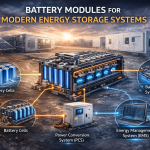
To understand system-level design, it’s helpful to break down the main building blocks of a commercial energy storage system.
1. Battery Modules
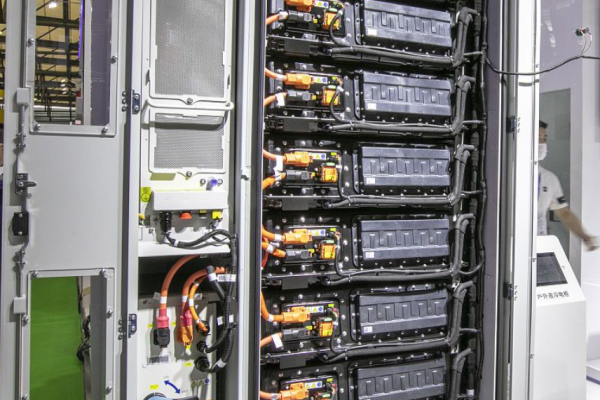
Battery modules are the core energy storage units. Their design determines:
- Energy density
- Power capability
- Cycle life
- Thermal behavior
However, even the best battery modules cannot perform optimally without proper integration into the overall system.
2. Battery Management System (BMS)
The BMS monitors and controls battery operation by managing:
- Voltage and current balancing
- Temperature monitoring
- State of charge (SOC) and health (SOH) estimation
A robust BMS is essential for ensuring safe and efficient battery operation.
3. Power Conversion System (PCS)
The PCS connects the battery system to the grid or load.
Its functions include:
- Converting DC to AC power
- Managing energy flow
- Supporting grid stability
Efficiency at this stage directly impacts overall system performance and energy losses.
4. Energy Management System (EMS)
The EMS acts as the “brain” of the ESS.
It optimizes:
- Charging and discharging schedules
- Load balancing
- Renewable energy integration
- Peak shaving and demand response
A well-designed EMS enables intelligent energy use and cost optimization.
5. Thermal Management System
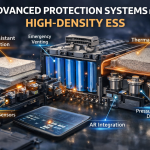
Thermal control is critical for maintaining battery performance and safety.
This includes:
- Cooling systems (air or liquid)
- Thermal interface materials (TIMs)
- Heat spreaders and conductive components
Effective thermal design ensures:
- Uniform temperature distribution
- Reduced degradation
- Improved safety margins
6. Structural and Electrical Components
Often overlooked, these include:
- Busbars and interconnects
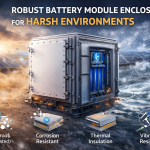
- Enclosures and module housings
- Insulation and protective materials
These components play a major role in:
- Electrical efficiency
- Mechanical stability
- Long-term durability
How Materials Influence System Performance
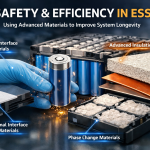
At the system level, materials engineering becomes a key differentiator.
Advanced materials can enhance:
- Electrical conductivity (reducing losses)
- Thermal conductivity (improving heat dissipation)
- Corrosion resistance (extending lifespan)
- Mechanical strength (ensuring structural integrity)
Examples include:
- Graphene-enhanced conductive coatings
- Carbon-based conductive additives
- Advanced thermal interface materials
- High-performance aluminum components
These materials act as enablers, improving the performance of multiple system layers simultaneously.
Integration: Where Performance Is Won or Lost
The real challenge in commercial ESS design lies in integration.
Even high-quality components can underperform if they are not properly coordinated.
Key integration considerations include:
- Matching battery modules with PCS capacity
- Aligning thermal design with power density
- Ensuring compatibility between BMS and EMS
- Optimizing electrical pathways to reduce resistance
A system-level approach focuses on how components interact, not just how they perform individually.
Application Scenarios for Commercial ESS
Different commercial applications require different system designs.
Peak Shaving and Demand Management
Businesses use ESS to reduce electricity costs by:
- Storing energy during low-demand periods
- Discharging during peak pricing hours
This requires strong EMS optimization and fast response capability.
Renewable Energy Integration
ESS enables smoother use of solar and wind energy by:
- Storing excess generation
- Providing stable output
This demands high cycle life and efficient energy conversion.
Backup Power and Resilience
For critical facilities, ESS provides backup during outages.
This requires:
- High reliability
- Fast response time
- Strong safety performance
Microgrids and Distributed Energy Systems
In microgrids, ESS acts as a central balancing unit.
System-level coordination is essential for:
- Load stability
- Energy optimization
- Grid independence
Scalability and Modular Design
Commercial ESS systems must often scale over time.
A system-level design enables:
- Modular expansion
- Flexible capacity upgrades
- Easier maintenance
This is particularly important for businesses planning long-term energy strategies.
The Future of System-Level ESS Design
As energy systems become more complex, the trend is moving toward:
- Higher integration between hardware and software
- Smarter control systems driven by data
- More advanced materials improving efficiency and durability
- Greater emphasis on safety and lifecycle performance
In this context, companies that understand both materials and system design will have a significant advantage.
Commercial energy storage is no longer just about batteries—it is about systems thinking.
A system-level approach integrates battery modules, power electronics, thermal management, and control systems into a unified solution. This leads to:
- Higher efficiency
- Improved safety
- Greater reliability
- Better scalability
As the industry evolves, the ability to design and optimize energy storage systems at the system level will be essential for delivering real-world performance and long-term value.