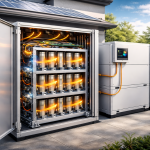
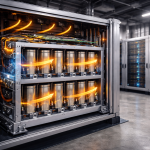
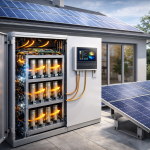
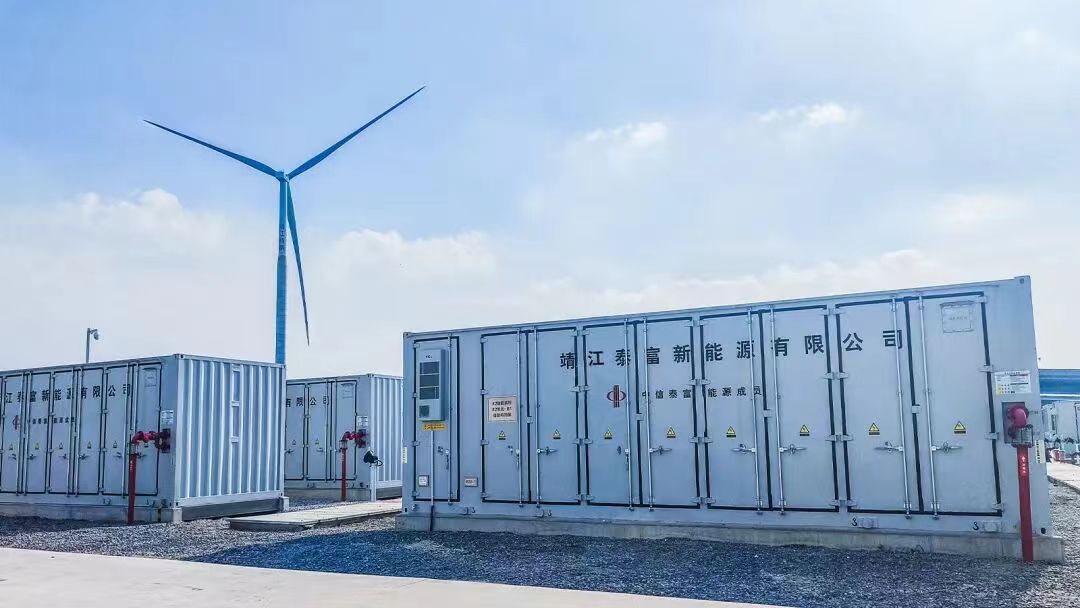
Reliable power is the backbone of any communication tower—whether it supports mobile networks, IoT infrastructure, emergency response systems, or microwave relay stations. As telecom operators expand coverage into remote regions and increase capacity in urban areas, the dependence on stable, uninterrupted power has only grown. Energy storage systems (ESS) are now central to ensuring availability, reducing operational costs, and improving grid independence.
This article explores energy storage solutions for communication towers, focusing on technical considerations, design best practices, and real-world deployment insights that ensure high availability.
1. Why High Availability Matters in Communication Towers
Communication towers operate 24/7 and have strict uptime requirements. Even a few seconds of power interruption can cause:
- Service outages over large geographic areas
- Dropped calls and data interruptions
- Failures in emergency communication networks
- Reduced network reliability metrics (QoS, SLA compliance)
- Increased OPEX due to backup generator overuse
As telecom networks continue evolving toward 5G and massive IoT connectivity, power loads at tower sites are increasing, making reliable energy storage more critical than ever.
2. Key Power Challenges at Tower Sites
2.1 Unstable Grid Supply
Many tower locations rely on weak or intermittent grid power, leading to:
- Frequent undervoltage
- Sudden blackouts
- Phase imbalance
These conditions can damage rectifiers and shorten battery life.
2.2 Remote or Off-Grid Locations
Rural, mountainous, and desert communication sites often depend on:
- Diesel generators
- Solar PV
- Wind turbines
Each source introduces variability, requiring a stable ESS to maintain uptime.
2.3 Rising Energy Costs
Diesel-based systems can account for 50–70% of tower OPEX, particularly in remote areas.
Modern ESS solutions significantly reduce fuel consumption and operational costs.
2.4 Harsh Environmental Conditions
Communication towers may face:
- High temperatures
- Sandstorms
- Humidity
- Poor ventilation
- Vibration from generators
ESS systems must be engineered for durability.
3. Energy Storage Technologies Used in Communication Towers
3.1 Lithium Iron Phosphate (LFP) Batteries – The Industry Standard
LFP batteries are now the dominant choice due to:
- High cycle life (4,000–8,000 cycles)
- Excellent temperature stability
- High safety
- Fast charging
- Minimal maintenance
They are suitable for both hybrid and zero-diesel tower systems.
3.2 VRLA Lead-Acid Batteries – Being Phased Out
Still used in older deployments but suffer from:
- Shorter lifespan
- Sensitivity to high temperature
- Slow charging
- Higher maintenance
Most operators globally are transitioning to lithium-based solutions.
3.3 Hybrid Supercapacitors
Useful for:
- Smoothing generator start-stop
- Handling peak loads
- Extending battery lifespan
However, high cost limits widespread adoption.
4. Designing High-Availability Energy Storage for Communication Towers
4.1 Determine Precise Load Profile
Tower loads typically include:
- Baseband units (BBU)
- Remote radio units (RRU)
- Transmission systems (microwave, fiber amplifiers)
- Cooling or ventilation
- Control systems
A typical single-operator 4G/5G tower consumes 1–4 kW, while multi-tenant towers may require 5–10 kW.
Accurate load measurement is essential for ESS sizing.
4.2 Redundancy Design (N, N+1, 2N Architecture)
High-availability sites implement redundancy such as:
- N+1: One additional battery module as backup
- 2N: Fully duplicated ESS for critical towers
- Distributed redundancy: Multi-string systems controlled by EMS
Redundancy directly correlates with the required SLA level.
4.3 Backup Time Requirements
Different operators specify different autonomy times:
- 2–4 hours for grid-connected towers
- 6–12 hours for weak-grid sites
- 24–72 hours for off-grid or mission-critical towers
Solar-hybrid systems can reduce battery size by generating daytime power.
4.4 Thermal Management
Temperature is one of the top causes of early battery failure.
Solutions include:
- Passive ventilation
- DC-powered EC fans
- Battery heaters (for cold regions)
- Outdoor battery cabinets with thermal insulation
LFP batteries typically operate between −20°C to 55°C, depending on BMS.
4.5 Smart EMS Integration
A modern telecom ESS must include:
- Automated charge/discharge logic
- Fuel-saving generator control
- Remote monitoring (4G/5G/Wi-Fi)
- Fault log recording
- Temperature and performance logging
An EMS dramatically improves uptime and reduces maintenance costs.
5. Common System Architectures for Tower ESS
5.1 Grid + ESS Backup
For urban and peri-urban installations:
- ESS provides short-term backup during grid outages
- Reduces diesel generator activation
- Low OPEX
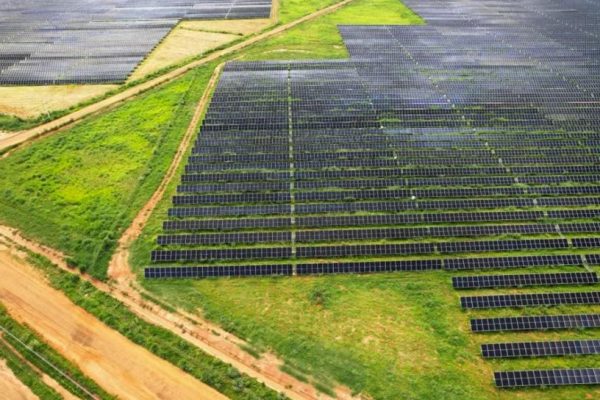
5.2 Solar Hybrid Tower (PV + ESS + Generator)
Most common in remote areas:
- PV covers daytime load
- ESS provides nighttime power
- Generator serves as emergency backup
Savings include:
- 40–80% less diesel consumption
- Reduced generator runtime
- Longer maintenance cycles
5.3 Generator + ESS System (No PV)
Used in heavily shaded or cold regions:
- ESS reduces generator runtime through cycling
- Optimized start/stop logic reduces fuel usage
- Prolongs generator lifespan
5.4 Fully Off-Grid Microgrid for Communication Towers
Includes:
- PV + ESS
- Backup generator
- Smart EMS
Achieves near 100% availability even without grid.
6. Lessons Learned from Real Deployments
6.1 Battery Oversizing Is Rarely the Best Solution
Operators often oversize battery banks to get longer backup.
However, better solutions include:
- Adding PV
- Improving thermal management
- Upgrading EMS logic
These yield longer lifespan and lower cost.
6.2 Generator Control Strategy Determines Fuel Savings
Smart generator control can reduce fuel consumption by 20–40%:
- Avoid short runtime cycles
- Use battery-first priority
- Apply “quiet hours” mode for residential regions
6.3 Modular ESS Improves Maintenance Efficiency
Modular racks (48V or 51.2V modules) allow:
- Hot-swapping
- Fast troubleshooting
- Flexible upgrades for tower expansions
6.4 Remote Monitoring Is Essential
Unmonitored off-grid towers suffer:
- Hidden battery degradation
- Late response to faults
- Unexpected outages
Remote monitoring reduces field visits and saves OPEX.
7. Safety Considerations for Communication Tower ESS
7.1 BMS Requirements
A telecom-grade ESS must include:
- Overcharge/overcurrent protection
- Cell balancing
- Temperature safety controls
- Short-circuit protection
- Isolation monitoring
7.2 Fire Safety
Key protective features:
- Flame-retardant enclosures
- Aerosol fire suppression (optional)
- Thermal runaway detection
- Ventilation paths
7.3 IP and IK Ratings
Outdoor sites require:
- IP54–IP65 for dust & water protection
- IK10 for impact resistance
8. Future Trends in Telecom ESS
8.1 AI-Driven Demand Forecasting
Predicting power usage improves battery lifecycle and generator scheduling.
8.2 Higher-Voltage Battery Systems
Deployments are moving from:
- 48V → 100V+ DC buses for higher efficiency
8.3 Zero-Diesel Towers
Driven by carbon-reduction mandates using:
- Large PV arrays
- High-density LFP packs
- Advanced EMS
8.4 Integrated PV-Battery Shelters
Hybrid shelters combine:
- Thermal insulation
- Roof-mounted PV
- Internal ESS
- Passive cooling
Communication towers require high-availability energy storage to ensure continuous network operation. As networks expand into remote and demanding environments, robust ESS design becomes critical for reliability, safety, and cost-efficiency. LFP-based ESS systems combined with smart EMS, PV integration, and proper thermal management deliver the most reliable performance.
With the right energy storage solution, telecom operators can dramatically reduce outages, cut diesel consumption, and ensure stable connectivity—anytime, anywhere.