
As energy storage systems (ESS) become essential for modern power infrastructure, selecting the right battery chemistry is one of the most critical decisions for commercial projects. Whether the goal is to support renewable energy integration, stabilize microgrids, or reduce peak electricity costs, the performance of an ESS largely depends on the characteristics of its battery technology.
Different battery chemistries offer varying strengths in terms of energy density, safety, cycle life, cost, and power output. For commercial applications, system designers must balance these factors carefully to achieve reliable long-term operation.
This article explores the key battery chemistries used in commercial energy storage and explains how the right selection can improve system efficiency, safety, and scalability.
Why Battery Chemistry Matters in Commercial ESS
Commercial energy storage systems operate under demanding conditions. They often require:
- Long cycle life (10–20 years)
- High reliability
- Stable thermal performance
- Safe operation under varying loads
- Low maintenance
Battery chemistry directly influences all of these factors. For example, a battery designed for high energy density may not necessarily deliver the best safety performance, while a chemistry optimized for power output might sacrifice capacity.
Therefore, engineers must select a battery chemistry that aligns with the specific operational goals of the ESS system.
The Most Common Battery Chemistries for Commercial ESS
Several battery chemistries dominate the commercial ESS market today. Each offers distinct advantages depending on system requirements.
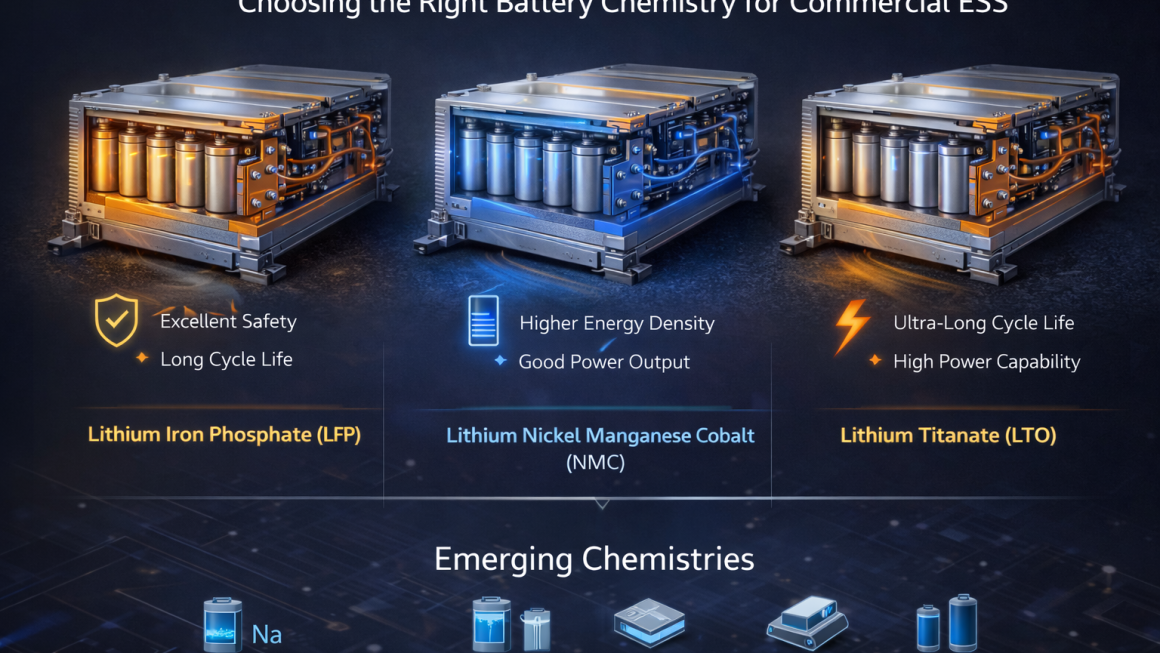
1. Lithium Iron Phosphate (LFP)
Lithium iron phosphate batteries have become one of the most widely adopted technologies in commercial and grid-scale energy storage.
Key advantages:
- Excellent thermal stability
- Long cycle life (often exceeding 6000 cycles)
- High safety performance
- Lower risk of thermal runaway
Because of these characteristics, LFP batteries are commonly used in:
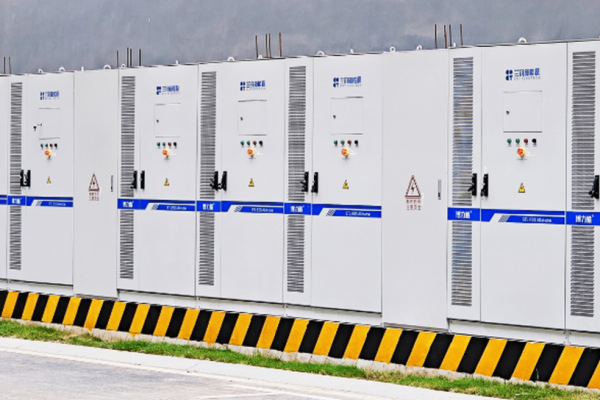
- Commercial energy storage cabinets
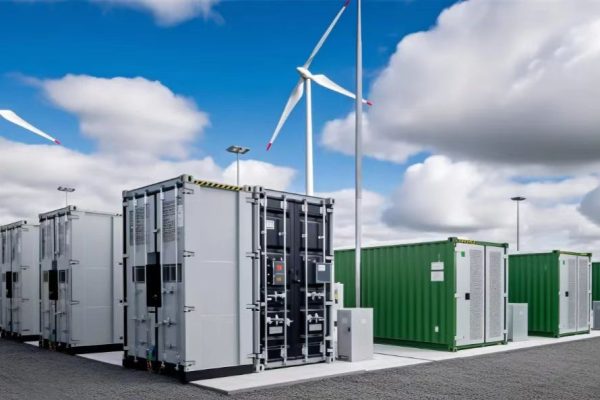
- Renewable energy integration systems
- Industrial backup power
Although LFP batteries have slightly lower energy density than some other lithium chemistries, their safety and durability make them ideal for stationary storage.
2. Lithium Nickel Manganese Cobalt (NMC)
NMC batteries are widely used in electric vehicles, but they also appear in some commercial ESS applications where high energy density is required.
Key advantages:
- Higher energy density
- Strong performance in compact systems
- Good balance between power and energy
However, compared with LFP, NMC batteries typically require more advanced thermal management and safety systems.
For this reason, NMC-based ESS designs often incorporate:
- Improved cooling structures
- Advanced battery management systems (BMS)
- Enhanced thermal interface materials
3. Lithium Titanate (LTO)
Lithium titanate batteries are less common but offer unique advantages in high-power and fast-charging applications.
Key advantages:
- Extremely fast charge and discharge
- Exceptional cycle life (up to 20,000 cycles)
- Excellent low-temperature performance
- Very high safety margin
Because of their durability, LTO batteries are often used in:
- Grid stabilization systems
- Frequency regulation applications
- High-power industrial systems
The main limitation is lower energy density and higher cost, which makes them suitable for specialized use cases rather than large-scale deployment.
4. Emerging Chemistries and Hybrid Systems
Beyond traditional lithium-ion batteries, several new chemistries are gaining attention in the ESS industry.
These include:
- Sodium-ion batteries
- Solid-state batteries
- Hybrid capacitor-battery systems
- Flow batteries
While many of these technologies are still developing, they may offer advantages such as:
- Lower material costs
- Improved safety
- Enhanced sustainability
However, lithium-based systems currently remain the dominant technology for commercial ESS deployments.
Key Factors When Choosing Battery Chemistry
Selecting the best battery chemistry requires evaluating multiple technical and economic factors.
1. Cycle Life
Commercial ESS projects must operate for many years with minimal performance degradation. Chemistries such as LFP and LTO are particularly attractive due to their long operational lifetimes.
2. Safety and Thermal Stability
Battery safety is a top priority for commercial installations. Thermal stability reduces the risk of overheating and system failure.
Design strategies often include:
- Thermal management materials
- Conductive coatings for improved heat spreading
- Advanced battery monitoring systems
3. Energy Density vs Power Density
Different applications prioritize different performance metrics.
For example:
- Energy shifting systems prioritize energy density
- Grid support systems prioritize power output
Choosing the correct chemistry ensures that the ESS meets operational performance targets.
4. Cost and Supply Chain
Battery chemistry also affects long-term project economics.
Factors include:
- Raw material availability
- Manufacturing cost
- Lifecycle replacement costs
LFP batteries, for example, often provide a cost-effective balance between performance and longevity.
The Role of Advanced Materials in Battery Performance
While battery chemistry is critical, materials engineering inside the battery system also plays a major role in overall performance.
Advanced materials can enhance:
- Electrical conductivity
- Thermal management
- Mechanical stability
- Long-term reliability
Examples include:
- Nanocarbon conductive additives
- Graphene-enhanced coatings
- High-performance thermal interface materials
These materials help improve heat dissipation, power delivery, and battery lifetime, making them increasingly important in modern ESS module design.
System-Level Design Matters
Selecting the right battery chemistry is only one part of designing an effective energy storage system.
Other important factors include:
- Module architecture
- Busbar and interconnect design
- Battery management systems
- Cooling strategies
- Structural durability
When these elements work together, the result is a high-performance and reliable commercial ESS platform capable of supporting modern energy infrastructure.
Choosing the right battery chemistry is a foundational step in designing commercial energy storage systems. Technologies such as LFP, NMC, and LTO each offer unique benefits depending on system goals, operating conditions, and project economics.
However, battery chemistry alone does not determine system success. Advances in materials engineering, module design, and thermal management are equally important in delivering safe, durable, and efficient energy storage solutions.
As the global demand for energy storage continues to grow, optimized battery chemistries combined with innovative materials will play a crucial role in building the next generation of reliable and scalable commercial ESS systems.