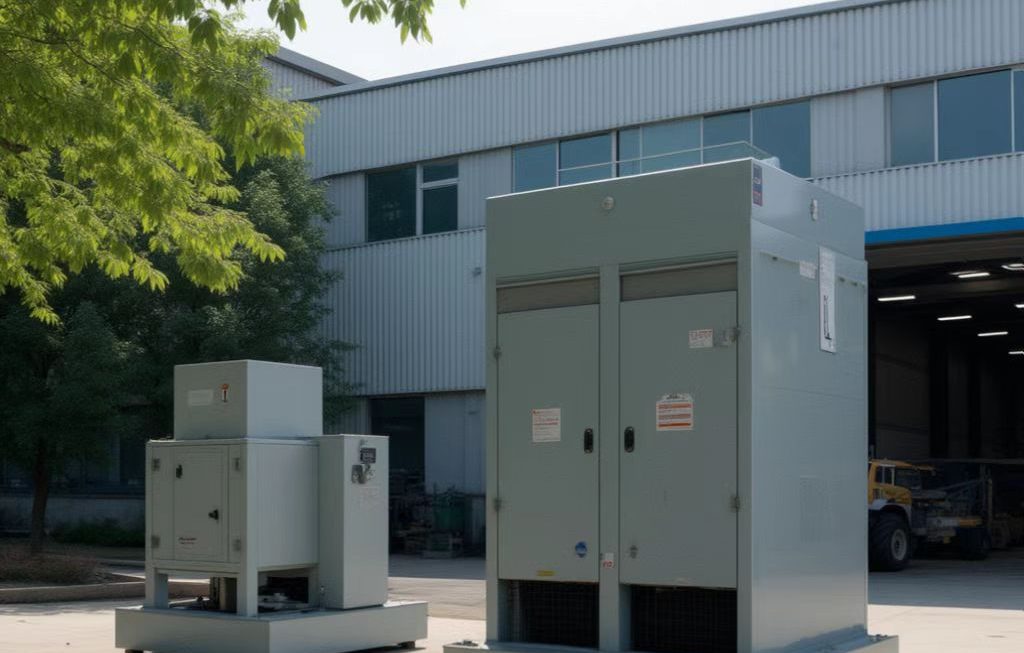
How Thoughtful Design Delivered Stability Without Over-Engineering
Small PV + storage systems are often underestimated. Many are designed quickly, installed cheaply, and expected to “just work.” In reality, these systems frequently fail—not because of component quality, but because reliability is sacrificed for speed or cost.
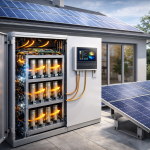
This case study examines a small-scale PV + battery system designed with reliability as the primary objective. The lessons apply broadly to EPCs, integrators, and decision-makers deploying distributed energy systems in real-world conditions.
1. Project Overview
Project Type: Small commercial / remote hybrid system
System Size:
- PV: ~30–50 kWp
- Battery Storage: ~60–100 kWh (LFP-based)
- Inverter: Hybrid, grid-forming capable
Primary Objectives:
- Stable power supply
- Reduced grid dependency
- Minimal operational intervention
- Long-term reliability over peak ROI
2. Key Design Constraint: Reliability Over Optimization
Unlike many projects focused on maximizing arbitrage or incentives, this system prioritized:
- Simplicity
- Robust operating margins
- Predictable behavior under partial failure
This design philosophy influenced every technical decision.
3. PV Design Choices That Improved Stability
3.1 Conservative PV-to-Inverter Ratio
Instead of aggressive oversizing:
- DC/AC ratio kept near 1.1–1.2
- Reduced clipping complexity
- Lower thermal stress on inverters
3.2 String-Level Fault Isolation
- Limited number of strings per MPPT
- Easier troubleshooting
- Reduced cascading faults
4. Storage System Design Decisions
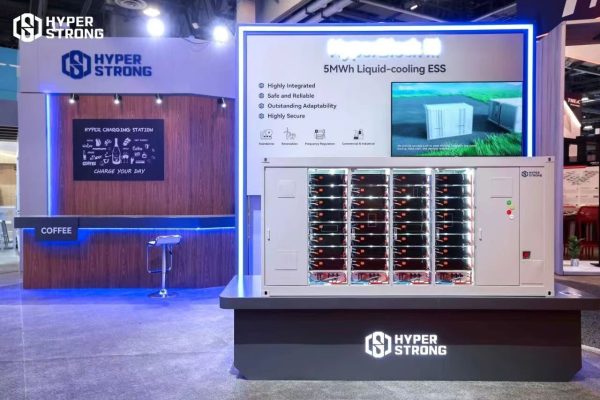
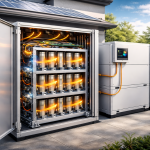
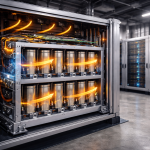
4.1 Modular Battery Architecture
- Multiple smaller battery modules
- Independent BMS per module
- Fault-tolerant operation
A single module failure did not impact system availability.
4.2 Conservative Depth of Discharge (DoD)
- Operating DoD limited to ~70%
- Improved cycle life
- Reduced degradation risk
Reliability was valued over maximum usable capacity.
5. Inverter and Control Strategy
5.1 Grid-Forming Capability
The inverter was selected to:
- Maintain voltage and frequency stability
- Seamlessly transition between grid-connected and island mode
- Support critical loads without delay
5.2 Rule-Based Energy Management
Instead of complex optimization algorithms:
- Fixed SOC windows
- Clear charging/discharging priorities
- Simple fail-safe logic
This reduced software-related failures.
6. Protection, Redundancy, and Fail-Safe Logic
Key reliability measures included:
- Conservative thermal margins
- Redundant communication paths
- Manual override capability
- Clear alarm hierarchy
The system could degrade gracefully rather than fail abruptly.
7. Commissioning and Testing Approach
Commissioning emphasized:
- Partial load testing
- Grid outage simulations
- Battery isolation scenarios
- Communication loss scenarios
Testing focused on failure modes, not ideal operation.
8. Operational Results After Deployment
After extended operation:
- High system availability (>98%)
- No critical outages
- Stable battery health metrics
- Minimal operator intervention required
While energy optimization was modest, system confidence was high.
9. What This Case Study Teaches EPCs and Integrators
Key lessons:
- Small systems deserve serious design discipline
- Simpler control logic often outperforms complex optimization
- Modular storage improves fault tolerance
- Reliability builds long-term trust faster than aggressive ROI claims
10. Why Small Systems Matter More Than Ever
As distributed energy grows:
- Small systems scale by replication
- Failures propagate reputational risk
- Reliability determines long-term success
The most valuable small system is not the one that maximizes revenue—but the one that keeps working.
Reliability Is a Design Choice
This case study demonstrates that reliable PV + storage systems are not the result of premium components alone. They are the outcome of intentional design decisions that prioritize stability, simplicity, and resilience.
For EPCs and system integrators, reliability is not a feature—it is a strategy.