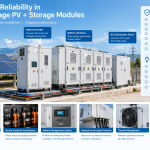
Practical Engineering Strategies for Reliability Where the Grid Cannot Be Trusted
In many regions, the grid is not a reliable partner. Voltage fluctuations, frequent outages, poor frequency control, and unstable protection coordination are everyday realities.
For small PV + storage systems deployed in these environments, standard design practices often fail. Systems optimized for stable grids quickly become fragile.
This article focuses on how to design small storage systems that remain reliable when the grid is harsh, weak, or unpredictable—using practical, field-tested engineering principles.
1. What Defines a Harsh or Unstable Grid?
A harsh grid environment typically includes:
- Frequent outages or brownouts
- Large voltage swings
- Weak short-circuit capacity
- Poor frequency regulation
- Uncoordinated protection devices
In these grids, the system must protect itself first—before optimizing energy use.
2. Design Philosophy: Stability Before Efficiency
In unstable grids:
- Reliability outweighs optimization
- Conservative margins outperform aggressive tuning
- Predictable behavior is more valuable than maximum utilization
This philosophy should guide all design decisions.
3. Inverter Selection: Grid-Forming Is Not Optional
3.1 Grid-Forming Capability
Choose inverters that can:
- Establish voltage and frequency autonomously
- Seamlessly transition between grid-connected and island modes
- Support black start scenarios
Grid-following-only inverters are a common failure point.
3.2 Fault Ride-Through Behavior
Inverters should:
- Tolerate short grid disturbances
- Avoid unnecessary shutdowns
- Recover gracefully after faults
4. Storage System Design for Harsh Conditions
4.1 Modular Batteries Improve Survival
- Smaller battery modules
- Independent BMS units
- Fault isolation capability
A single module failure should never take down the system.
4.2 Conservative Operating Windows
- Limit depth of discharge
- Avoid aggressive charge rates
- Maintain thermal headroom
Battery longevity is directly tied to stability.
5. Control Strategy: Rule-Based Beats Optimization
In harsh grids:
- Predictability beats complexity
- Fixed SOC bands prevent chaotic cycling
- Clear priority logic avoids conflicts
Avoid EMS designs that rely heavily on:
- Real-time price signals
- Perfect grid availability
- Continuous communication
6. Protection and Isolation Strategy
Critical measures include:
- Fast islanding detection
- Manual isolation capability
- Surge protection on all interfaces
- Clear grounding strategy
Protection failures often matter more than energy losses.
7. Communication: Design for Failure, Not Perfection
Assume:
- Communication links will fail
- Data will be delayed or lost
Design systems that:
- Operate safely in offline mode
- Log data locally
- Resume normal operation automatically
8. Commissioning Under Realistic Conditions
Commissioning should include:
- Simulated grid faults
- Black start tests
- Load rejection scenarios
- Communication loss scenarios
Testing only under ideal conditions creates false confidence.
9. Common Mistakes to Avoid
- Over-sizing PV without storage control headroom
- Using grid-following inverters in weak grids
- Relying on complex cloud-based EMS
- Designing without manual override options
These mistakes are costly in harsh environments.
10. Why Small Systems Are Especially Vulnerable
Small systems:
- Have limited redundancy
- Operate closer to limits
- Are often under-engineered
This makes disciplined design even more critical.
Harsh Grids Require Humble Design
In unstable grid environments, success comes from respecting reality.
Reliable small storage systems:
- Assume the grid will misbehave
- Prioritize self-protection
- Favor simplicity and robustness
For EPCs and system integrators, designing for harsh grids is not about advanced technology—it is about disciplined engineering.