Practical Architectures for Stable, Efficient, and Resilient Energy Systems
Most microgrids today are designed around electricity first. Thermal systems—heating, cooling, and process heat—are often added later as secondary loads. In industrial and commercial environments, this approach leads to higher costs, larger batteries, and unstable operation.
A hybrid electrical–thermal microgrid treats electricity and thermal energy as equal, coordinated assets, using thermal storage and controllable loads to improve overall system performance.
This article presents a practical design framework for hybrid electrical–thermal microgrids, focusing on architecture, control priorities, and real-world reliability.
1. Why Electrical-Only Microgrids Underperform
Electrical-only microgrids struggle when:
- Thermal loads dominate total energy consumption
- Load peaks are driven by heating or cooling
- Batteries are forced to absorb thermal variability
- PV curtailment occurs during low electrical demand
In many sites:
- Thermal energy represents 60–80% of total demand
- Electrical optimization alone delivers limited returns
Ignoring thermal energy turns microgrids into expensive battery systems.
2. Core Components of a Hybrid Microgrid
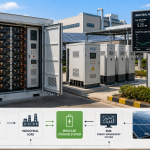
A hybrid electrical–thermal microgrid integrates:
Electrical Domain
- PV or wind generation
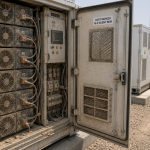
- Battery energy storage system (BESS)
- Grid connection or generators
- Inverters and protection systems
Thermal Domain
- Waste heat recovery (WHR)
- Heat pumps and chillers
- Thermal energy storage (hot/chilled water, PCM)
- Heating and cooling distribution networks
Control Layer
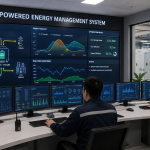
- Energy management system (EMS)
- Local thermal controllers
- Fail-safe and manual override logic
3. Design Principle: Thermal First, Electrical Smart
The most effective hybrid microgrids follow one key rule:
Use thermal flexibility to protect electrical assets.
This means:
- Shift heating and cooling demand in time
- Store thermal energy instead of electricity when possible
- Reduce battery cycling and peak inverter loading
- Let electrical systems focus on power quality and resilience
4. System Architecture Options
Centralized Thermal Buffer (Recommended)
- One or more large thermal storage tanks
- Connected to WHR, heat pumps, and chillers
- Acts as the primary system buffer
Advantages:
- Simple control logic
- High reliability
- Easy maintenance
Distributed Thermal Storage
- Smaller storage units near loads
- Useful for large campuses or district energy systems
Trade-offs:
- More complex control
- Higher commissioning effort
5. Control Hierarchy That Works
A proven priority-based control strategy:
- Serve real-time electrical and thermal loads
- Use waste heat whenever available
- Charge thermal storage with surplus heat or PV-driven heat pumps
- Discharge thermal storage to cover peaks
- Use batteries for electrical balancing only
- Dispatch generators or grid as last resort
This hierarchy minimizes:
- Battery stress
- Electrical peak demand
- Fuel consumption
6. Role of Heat Pumps in Hybrid Microgrids
Heat pumps are the bridge between electrical and thermal systems.
Practical Functions
- Convert surplus PV electricity into stored heat or cooling
- Upgrade low-grade waste heat
- Shift energy use across time periods
Design Guidelines
- Size for average, not peak, demand
- Optimize for steady operation
- Integrate tightly with thermal storage
7. Storage Strategy: Thermal vs Electrical
| Aspect | Thermal Storage | Battery Storage |
|---|---|---|
| Cost per kWh | Low | High |
| Lifetime | 15–25 years | 8–12 years |
| Cycling tolerance | Very high | Limited |
| Response speed | Minutes | Milliseconds |
| Best use | Load shifting | Power quality |
Use batteries for power; use thermal storage for energy.
8. Resilience and Islanded Operation
In islanded mode, hybrid microgrids:
- Maintain stable frequency with fewer battery cycles
- Reduce generator runtime
- Extend fuel autonomy
- Keep critical thermal processes running
Thermal storage acts as a resilience multiplier.
9. Common Design Errors to Avoid
- Oversizing batteries to cover thermal loads
- Treating heat pumps as primary heat sources
- Ignoring operator interaction
- Over-optimizing EMS algorithms
- Underestimating thermal peak events
10. EPC and Integrator Design Checklist
Before finalizing a hybrid microgrid:
- Confirm thermal load profiles
- Define clear control priorities
- Ensure process safety isolation
- Design conservative operating margins
- Document control logic clearly
Hybrid Microgrids Are System Designs, Not Product Bundles
Hybrid electrical–thermal microgrids succeed when architecture and control logic are prioritized over individual equipment efficiency.
By coordinating:
- Electrical generation
- Battery storage
- Thermal storage
- Heat pumps and WHR
EPCs and system integrators can deliver systems that are:
- More stable
- More economical
- Easier to operate
- Better suited to industrial reality
Hybrid microgrids are not the future—they are the necessary evolution of modern energy systems.