


Practical Engineering Methods for Reliable Remote Microgrid Operation
Off-grid microgrids operate in isolated environments where every component must remain functional without grid support. Unlike grid-connected systems—where failures often have minimal impact—off-grid failures directly cause outages, unstable voltage, or excessive diesel consumption.
This article expands on the previous part (“Monitoring and Control”) and focuses on how to diagnose faults and design practical redundancy strategies for small and medium off-grid deployments used in remote industrial sites, agricultural operations, telecom, and rural electrification.
The goal is simple:
Make small off-grid microgrids operate like utility-grade systems, even in harsh conditions.
1. Why Fault Diagnostics & Redundancy Matter More in Off-Grid Systems
In grid-connected ESS, the grid absorbs disturbances.
In an off-grid microgrid, the system must handle:
- Sudden load changes
- PV generation fluctuations
- Battery degradation
- Generator instability
- Harsh environmental conditions
- Limited technician access
Failures propagate much faster in off-grid environments.
A weak cable, a misconfigured inverter, or a failing battery cell can collapse the system.
Therefore, fault diagnostics + redundancy are not optional—they are the foundation of system reliability.
2. Framework for Off-Grid Fault Diagnostics (Replicable for EPC/O&M)
A practical diagnostic framework includes five layers:
2.1 Layer 1 — Electrical Measurements (Reality Check)
Many off-grid faults can be diagnosed by checking:
- AC bus voltage stability
- Frequency oscillation
- Battery voltage ripple
- Sudden DC bus fluctuations
- Harmonic distortion under motor loads
Typical symptoms and their meaning:
| Symptom | Likely Cause |
|---|---|
| Voltage dips when motors start | Undersized inverter OR no soft-start |
| Fast frequency swings | Weak grid-forming control |
| Rapid SOC drops | Battery SOH loss OR incorrect calibration |
| DC ripple spikes | Inverter IGBT aging OR cabling issues |
This is the “truth layer.” Software readings must match real measurements.
2.2 Layer 2 — Component-Level Diagnostics
Common diagnostic points include:
Inverter
- Overcurrent faults under load steps
- Overtemperature during midday
- AC output distortion
- Fan failures
- Misconfigured grid-forming parameters
Battery/BMS
- Cell imbalance
- Temperature sensor drift
- Intermittent communication loss
- SOH anomalies
- Pack-level overvoltage/undervoltage spikes
Diesel Generator
- Inconsistent RPM
- Voltage instability when load changes
- Relay misbehavior
- Slow auto-start
PV Array
- String mismatch
- Dirt/soiling impact
- Incorrect MPPT voltage window
- Cable corrosion
This layer identifies which component is misbehaving.
2.3 Layer 3 — Communication Diagnostics
Off-grid microgrids often fail due to:
- RS485/CAN wiring errors
- Loose terminal blocks
- EMI noise causing interruptions
- Gateway module resets
- Firmware mismatches
Best practices include:
- Keep communication cables < 50 m or properly shielded
- Avoid star topology in RS485 (use daisy-chain)
- Separate power and communication by >10 cm
- Enable watchdog timers in controllers
Communication is the “invisible fault source” in many rural microgrid failures.
2.4 Layer 4 — EMS Logic Diagnostics
When hardware is fine but system behavior is abnormal, the EMS logic may be the root cause.
Common EMS logic issues:
- Incorrect SOC thresholds
- Generator starting too early or too late
- Load-shedding rules not triggering
- PV curtailment applied prematurely
- Inverter mode stuck in wrong state
EMS logic must be validated with real-life load profiles, not simulated assumptions.
2.5 Layer 5 — Environmental Diagnostics
Off-grid systems often operate under:
- High temperature (>45°C)
- Dust, insects, rodents
- High humidity
- Salt fog
- Poor ventilation
- Weak signal coverage
Environmental impacts include:
- Corrosion of PCB components
- Cooling system failure
- Battery thermal imbalance
- Cable insulation degradation
- Intermittent communication due to EMI
This layer ensures long-term survivability.
3. Redundancy Design for Off-Grid Microgrids
Redundancy is not about duplicating everything—it is about reinforcing critical paths.
Below is a modular redundancy strategy that EPC teams can replicate.
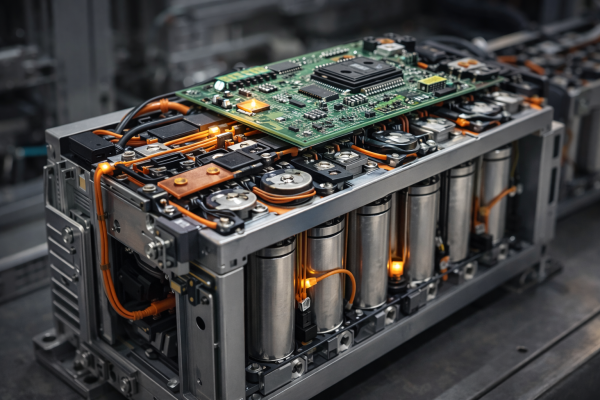
3.1 Battery Redundancy (Most Critical)
A single battery pack failure must not bring down the system.
Best practices:
- Use modular battery blocks in parallel
- Ensure BMS isolation so one block can be disconnected safely
- Keep at least 10–20% reserve SOC for unexpected events
- Use redundant temperature sensors
A failed module should be bypassable without shutting down the system.
3.2 Inverter Redundancy
For small off-grid systems, full N+1 redundancy is expensive.
But you can implement:
- Parallel inverter architecture
- “Load-sharing mode” with dynamic balancing
- Soft-start profiles to avoid simultaneous stress
- Overload derating during inverter cooling failure
This prevents single-point inverter failures.
3.3 Communication Redundancy
Off-grid microgrids rely heavily on communication.
Add redundancy through:
- Dual communication paths (CAN + RS485, or RS485 + TCP)
- Backup remote access via 4G router
- Local display or local HMI even when cloud fails
- Auto-reconnect logic in EMS
Communication must survive unstable signal environments.
3.4 Generator Redundancy
If diesel generators are part of the system:
- Ensure at least 2 independent start triggers (EMS + local controller)
- Keep a small DC UPS to support generator control electronics
- Install fuel-level sensors
- Allow manual override
This ensures the generator can recover the system during emergencies.
3.5 PV Redundancy
PV rarely “fails completely,” but local issues happen:
- One MPPT per string group
- Fuse-protected combiner boxes
- Redundant surge protection
- Avoid oversized strings in high-heat regions
This ensures the PV portion continues working even with partial damage.
4. Practical Troubleshooting Flow (Replicable for Technicians)
Below is a simple, field-tested sequence:
Step 1 – Check AC bus voltage & frequency
If unstable → inverter or load problem.
Step 2 – Check battery SOC and voltage
If dropping fast → battery or EMS logic issue.
Step 3 – Check communication status
If communication fails → no EMS control → cascade failure.
Step 4 – Check inverter temperature & load
If hot → ventilation or derating issue.
Step 5 – Check generator auto-start logic
If generator fails to start → battery will collapse during low SOC.
Step 6 – Check environmental conditions
High heat or dust often explains the root cause.
A structured flow avoids guesswork—critical for remote sites where technician time is limited.
5. Real Case Study: Power Instability in a Remote Mining Camp
Site Overview
- 25 kWp PV
- 80 kWh modular ESS
- 20 kVA inverter (parallel architecture)
- Diesel generator auto-backup
- Harsh desert conditions
Symptoms
- Evening lights flickered
- Generator stayed on longer than expected
- PV output lower than design
- Battery SOC dropped unpredictably
Diagnostics
- AC frequency oscillation → traced to inverter load-sharing mismatch
- Battery imbalance → one module aging faster
- PV wiring corrosion → partial shading effect
- EMS generator logic incorrect → started earlier than needed
Redundancy & Fixes
- Rebalanced inverter parameters
- Replaced one degraded battery module
- Rewired PV strings and added corrosion-resistant connectors
- Updated EMS logic with dynamic SOC thresholds
- Added airflow improvement in battery room
Results
- Generator runtime reduced by 38%
- Voltage stability improved
- Battery life extended
- Remote alarms became accurate
- No nighttime outages for 7 months
6. SEO-Optimized Key Takeaways
- Off-grid microgrids must diagnose faults across electrical, communication, and environmental layers
- Redundancy design prevents outages in remote sites
- Modular battery architecture is the most important redundancy
- Inverter load-sharing and communication wiring are common fault sources
- EMS logic must be validated with real-world load profiles
Off-grid microgrids succeed not because of expensive equipment but because of strong fault diagnostics and redundancy design.
When EPC teams follow a structured diagnostic framework and implement targeted redundancy—not excessive duplication—they achieve:
- Higher uptime
- Lower diesel use
- Longer battery lifespan
- Faster issue resolution
- More stable long-term operation
In harsh environments, these practices transform small microgrids into robust, utility-like power systems.