

Practical Strategies, Architecture Choices, and Real-World Case Insights
Small commercial facilities—retail units, workshops, small factories, office buildings—are increasingly relying on compact energy storage systems (ESS) to ensure continuity during grid interruptions. However, many deployments still face backup performance challenges: slow transfer times, insufficient reserve capacity, unstable inverter behavior, or load misclassification leading to premature shutdown.
This article presents a replicable, engineering-focused framework for improving backup performance in small commercial ESS deployments. It includes practical methods, a modular design approach, and real-world field observations, helping EPCs, integrators, and facility managers raise system reliability without overcomplicating the setup.
1. Core Framework for Improving Backup Performance
Enhancing backup performance hinges on three engineering pillars:
1.1 Backup Power Prioritization Structure
A reliable ESS backup system begins with proper load classification:
Tier 1 – Critical Loads (Always Supported)
• Lighting for safety
• Network equipment
• Communication systems
• Industrial control PLCs
• POS systems for retail
Tier 2 – Conditional Loads (Supported Depending on SOC)
• Small HVAC units
• Pumps
• Computer servers
Tier 3 – Non-Critical Loads (Off During Backup)
• Large HVAC or chillers
• Heating elements
• Electric vehicle chargers
• High-power motors (>5 kW starting current)
This segmentation ensures backup continuity even when battery capacity is modest, preventing overload events.
1.2 Reserve Energy Management (REM)
Reserve capacity must be dynamic, not fixed.
Better design approach:
- SOC reserve varies based on forecasted outage risk
- Reserve adapts to load profile changes
- Inverter derating strategies are integrated into REM
- EMS automatically adjusts minimum SOC during business hours vs. night hours
Example strategy:
- Minimum SOC on normal days: 20%
- Minimum SOC before predicted storms/maintenance: 40–60%
- Minimum SOC during peak solar season: 10–15%
Adaptive reserve management alone can dramatically improve backup length and quality.
1.3 Millisecond-Level Transfer Optimization
Backup reliability is highly correlated with transfer behavior.
Key technical factors affecting switchover performance:
| Issue | Impact | Best Practice |
|---|---|---|
| Slow ATS or relay response | System reboot, PLC faults | Use hybrid inverter with built-in fast transfer (<10 ms) |
| Incorrect grounding method | N-G instability, trip faults | Establish separate backup grounding bar |
| Overloaded inverter during transfer | Dropout/shutdown | Pre-check load surge (motor start, compressors) |
| DC voltage sags | Flickering, unstable motors | Ensure battery has adequate C-rate |
A well-designed transfer system often makes more difference than energy capacity.
2. Engineering Methods to Improve Backup Performance
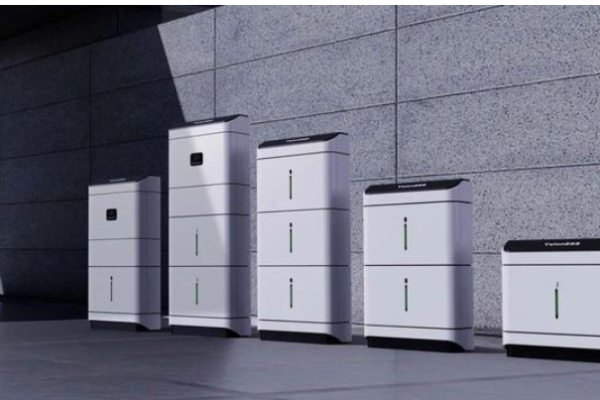
2.1 Use a Modular ESS Architecture
A modular ESS (5–15 kWh blocks + stackable inverter power stages) unlocks:
- Higher peak backup power with parallel output
- Independent health monitoring of each module
- Redundancy when one battery module degrades
- Plug-in expansion as facility loads grow
Modularity equals resilience.
2.2 Proper Surge Handling for Motor and HVAC Loads
Most backup failures in small commercial ESS happen during motor startup.
Solutions:
- Add soft starters to motors >1.5 HP
- Use inverter “grid-forming” mode with enhanced surge support
- Pre-program load shedding during transfer
- Introduce delay relays for HVAC compressors (2–5 mins)
These simple adjustments significantly improve survival rate during backup transitions.
2.3 Intelligent SOC Management with PV Coordination
When PV is present, backup performance improves dramatically if:
- The inverter supports solar priority during outages
- PV current directly charges the battery during backup
- EMS throttles low-priority loads when PV drops (cloud passages)
This can extend backup time from 2–4 hours → 6–10 hours depending on sunlight.
2.4 Thermal Stability Improvements
Small ESS units installed in shops or workshops often operate in:
- High ambient temperatures
- Narrow electrical rooms
- Outdoor environments with direct sun exposure
High temperature accelerates battery voltage drop and reduces backup duration.
Best practices:
- Install ESS in ventilated locations
- Use BMS with real-time temperature derating
- Add optional cabinet-level active cooling for hot climates
- Keep battery temperature in 15–35°C range for optimal performance
3. Real-World Case Study: Backup Optimization for a Small Commercial Workshop
Site Profile
- 20 kWh modular ESS
- 5 kW hybrid inverter
- Backup loads: lighting, routers, PLC, two small motors
- Frequent 5–10 minute utility outages
Initial Issues
- Motors caused inverter dropouts
- Backup time inconsistent (1 to 3 hours)
- SOC dropped too fast due to misclassified loads
- Transfer delay caused PLC resets
Implementation Steps
- Load classification separated motors into Tier 2
- Soft starter added to 1.8 kW motor
- Minimum SOC increased from 20% → 35%
- Delay relay installed for motors (3-minute delay)
- Cooling fan added to battery compartment
Results
- Transfer stabilized within <10 ms
- Backup duration standardized to 3+ hours
- No more inverter dropouts
- PLC stayed operational during transitions
- Customer upgraded to 30 kWh capacity after observing benefits
Key insight:
Small engineering adjustments—especially load management—yield huge reliability gains.
4. Practical Checklist for EPCs and Technicians
Before Installation
✔ Verify surge loads
✔ Measure insulation and grounding
✔ Classify loads into three tiers
✔ Validate battery C-rate requirements
During Commissioning
✔ Test transfer under full load
✔ Simulate outage during peak demand
✔ Check neutral-ground bonding behavior
✔ Validate SOC reserve behavior
After Deployment
✔ Set seasonal SOC strategy
✔ Enable PV-first logic during outages
✔ Add thermal monitoring alerts
✔ Perform quarterly battery health checks
This checklist helps standardize reliability across multiple small commercial sites.
5. Key Technical Highlights (SEO-Friendly Summary)
- Modular ESS architectures significantly improve backup resilience
- Adaptive SOC reserve management is essential for consistent backup time
- Fast transfer (<10 ms) prevents PLC and IT equipment resets
- Proper motor surge handling eliminates inverter overload trips
- PV-ESS coordination extends backup duration and reduces SOC stress
- Thermal stability directly impacts battery backup performance
Improving backup performance in small commercial ESS does not require oversized hardware—it requires smart engineering, modular architecture, and predictable operational behavior.
By applying structured load classification, fast transfer optimization, adaptive SOC management, and real-world field techniques, EPC teams and facility managers can deploy small ESS solutions that deliver true backup reliability, not just theoretical specifications.